


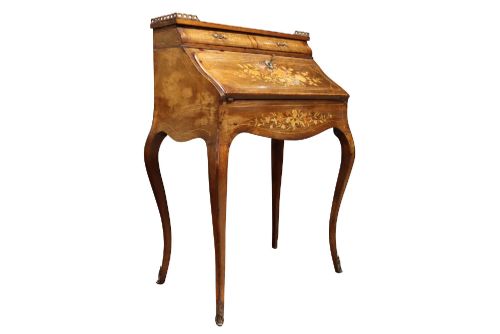
Inlaid Marquetry Desk
An inlaid marquetry desk brings patterned floral and figurative woods into a room, offering a surface for correspondence that carries centuries of cabinet-making skill.
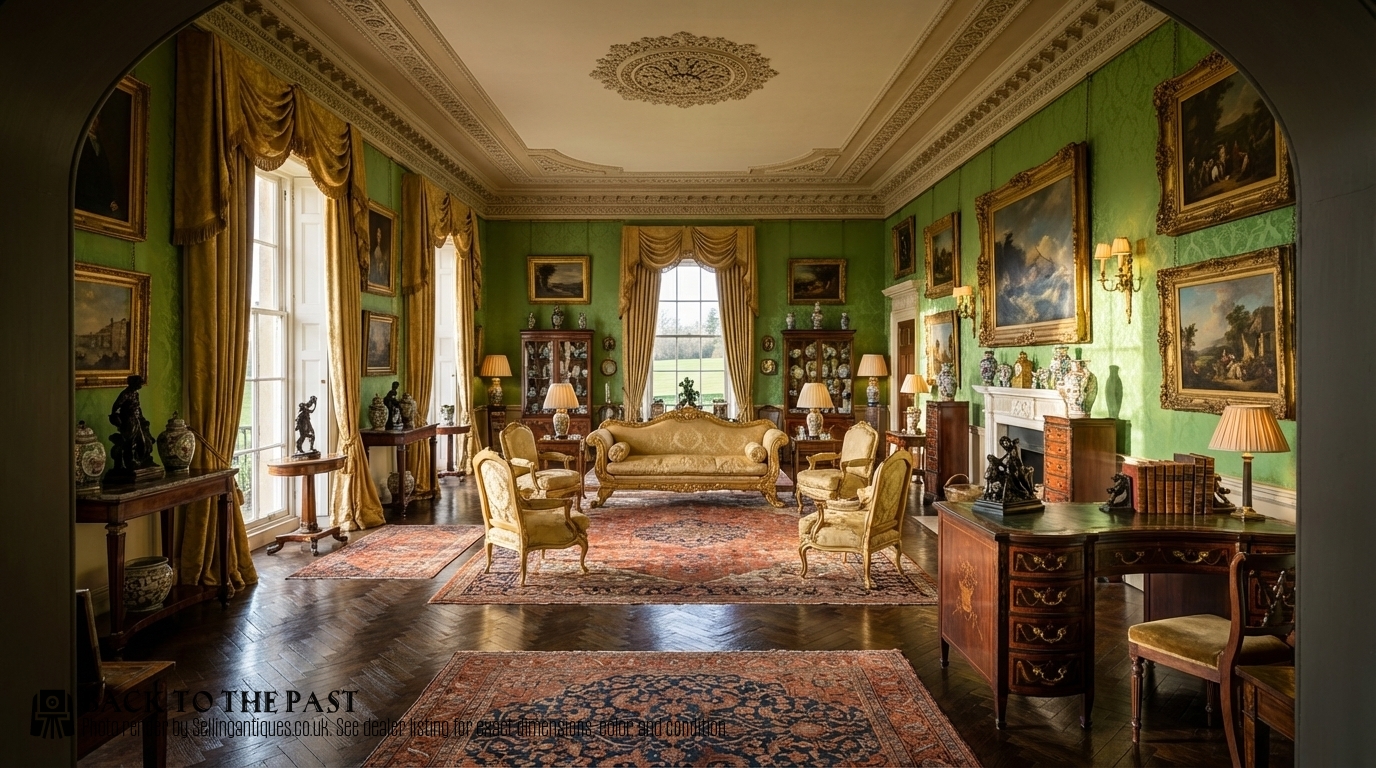
Inlaid Marquetry Desk
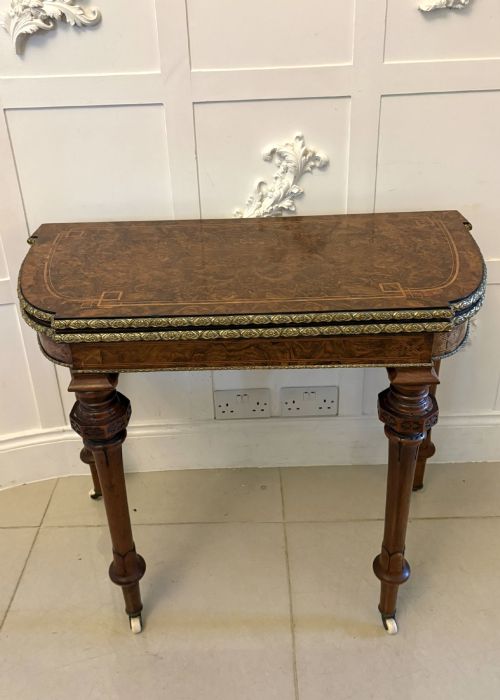
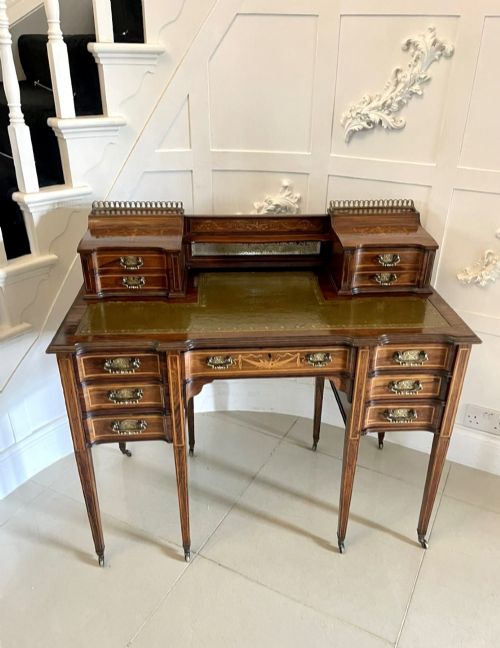
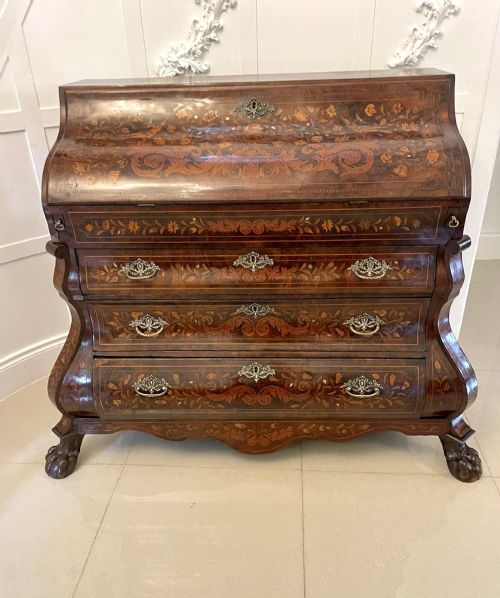
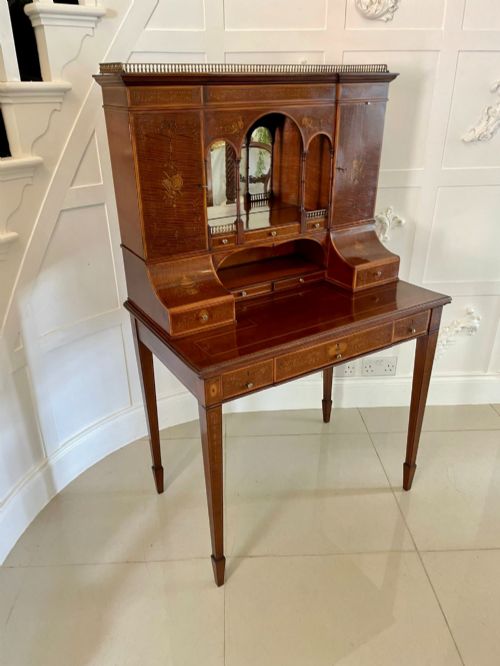
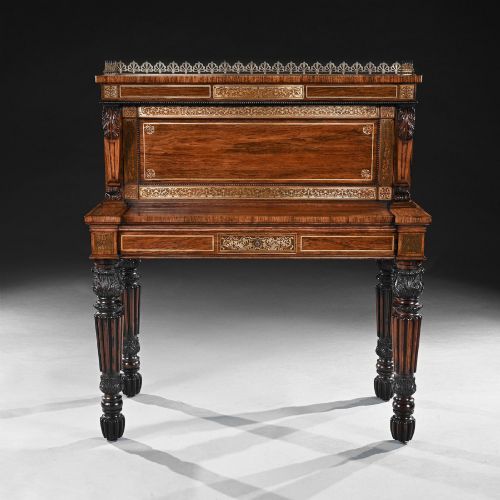
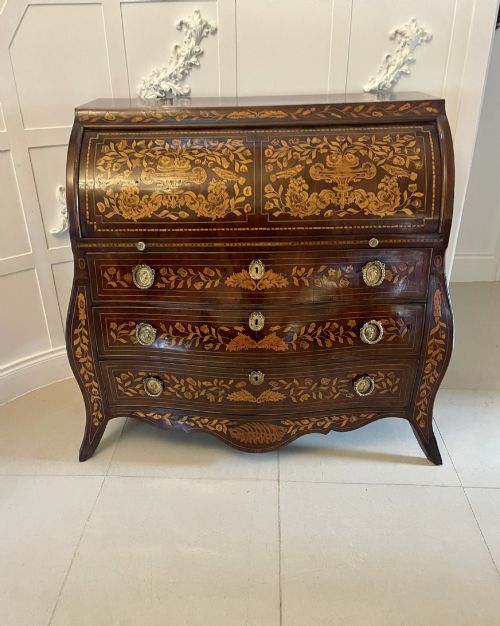
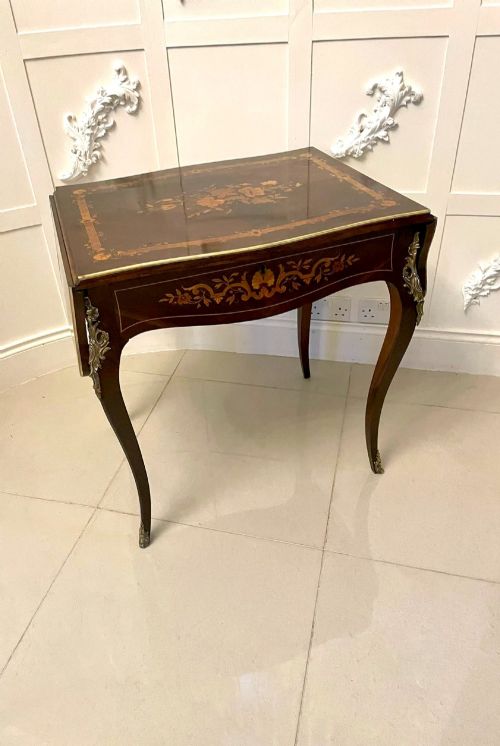
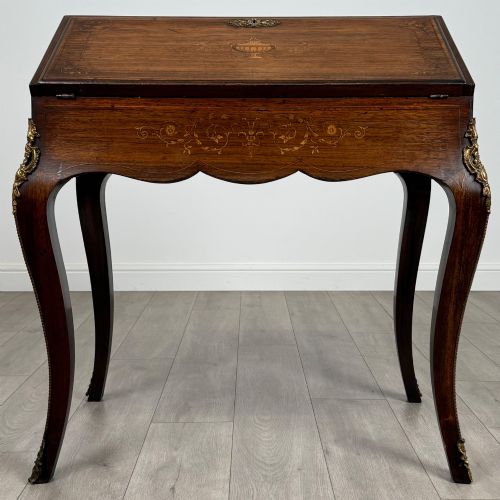
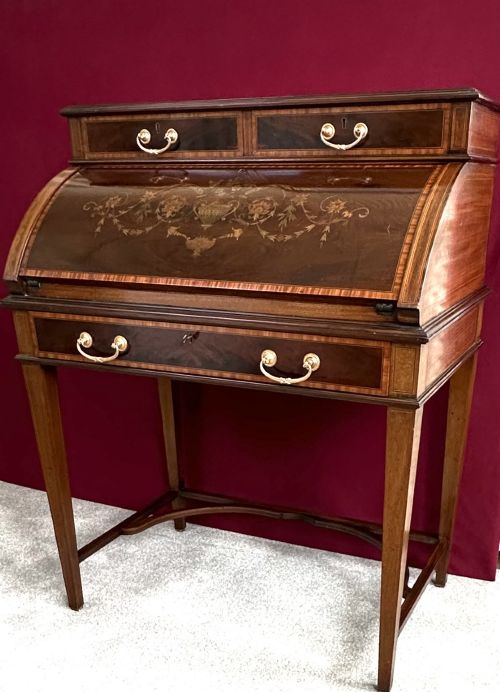
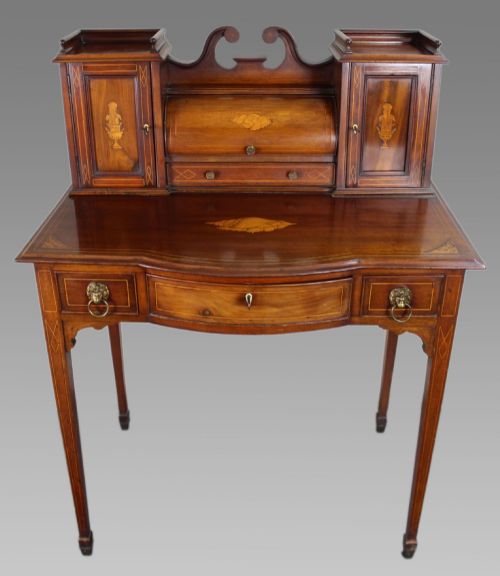
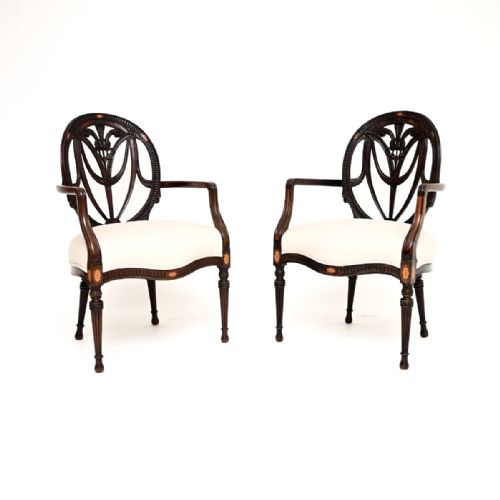
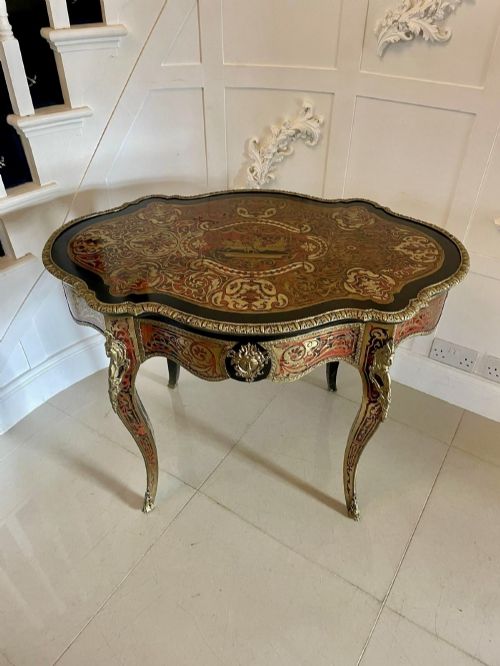
When searching for an inlaid marquetry desk, a buyer encounters pieces spanning the eighteenth, nineteenth and early twentieth centuries, with Edwardian and Victorian examples appearing frequently alongside earlier Dutch and French forms. These range from freestanding centre tables and writing desks to bureau bookcases, cylinder desks and delicate lady's writing tables.
The selection includes serpentine bureau desks, kidney-shaped tables, and sophisticated writing surfaces featuring elaborate floral and geometric veneers. Many follow French Louis XV revival or Sheraton revival styles, incorporating shaped fronts and fitted interiors designed for writing and storage.
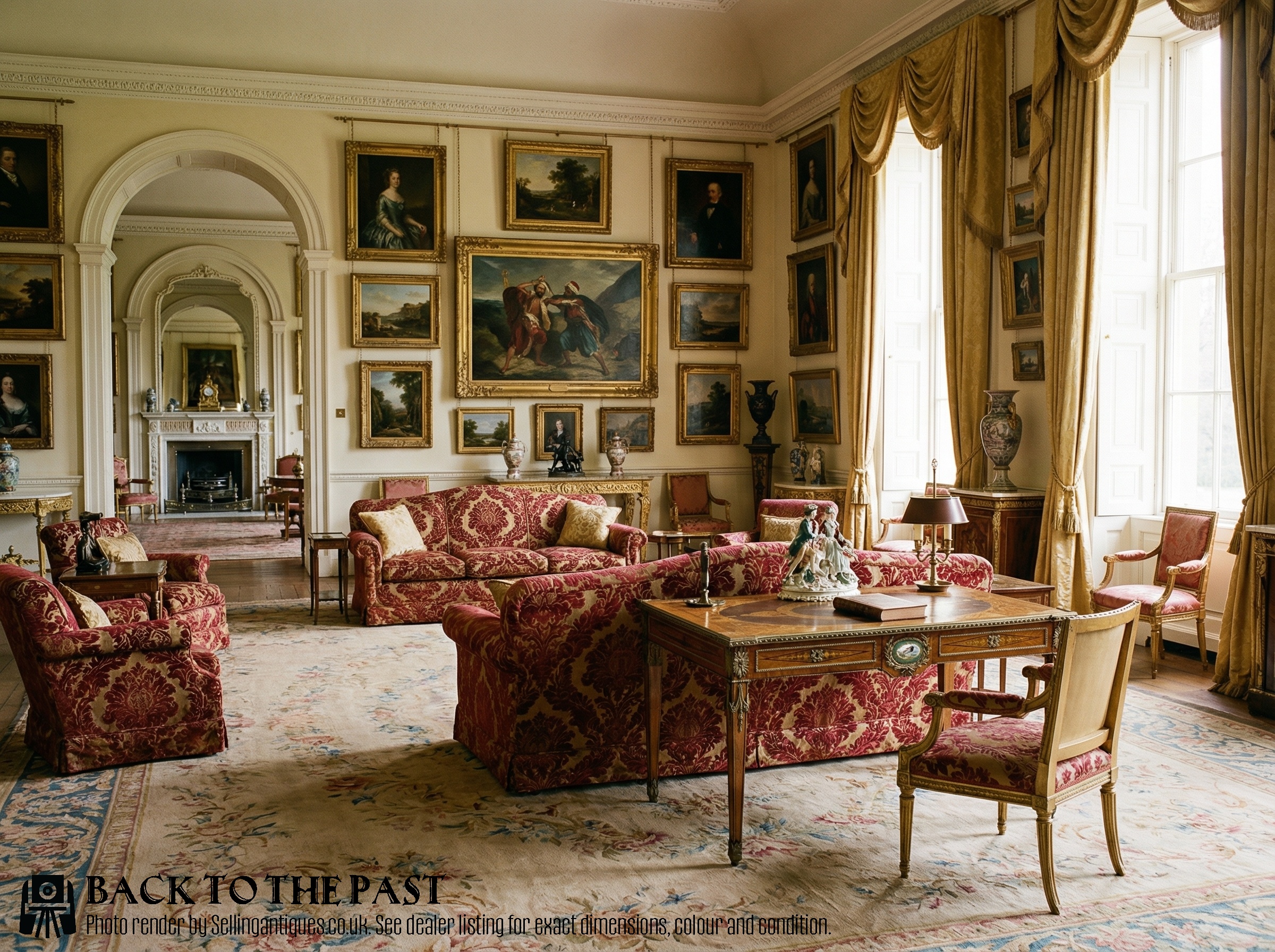
How they were made
Cabinet-makers constructed these pieces using dense structural timbers like mahogany, walnut and ebonised woods, onto which fine veneers of satinwood, rosewood, kingwood and burr walnut were applied. Marquetry entails cutting thin pieces of varied woods and sometimes brass to form pictorial or floral motifs, which are then fitted together and glued onto the carcase.
Many nineteenth-century examples incorporate cast or chased ormolu mounts to accent curves and corners, while others utilise brass stringing or inlay alongside the wood veneers to define panels and writing surfaces.
Inlaid Marquetry Desk Retail Price Guide 2026
Typical asking prices for inlaid marquetry desk among the pieces listed under this phrase on Sellingantiques today, from the lower quarter to the upper quarter. They describe what is for sale here now, not the wider market.
Among the formal writing tables rest tiny desktop boxes intended solely for storing stray pen nibs.
What varies in quality
Quality rests in the precision of the veneer work and the complexity of the timber selection, where tightly fitted floral motifs and well-matched burr walnut or satinwood display superior craftsmanship. The execution of secondary details, such as the quality of ormolu mounts, the depth of carving on serpentine frames, and the internal fitting of drawers, separates standard production from exhibition pieces.
Makers such as Edwards & Roberts or Maple & Co produced writing furniture where the structural integrity matches the intricacy of the surface decoration, ensuring the desk remains stable and balanced across its writing surface and legs.
Gillows Oxford Street Workshop·Edwards & Roberts·Maison Krieger·Maple & Co·Druce & Co
The Inlaid Marquetry Desk Glossary
- Marquetry
- The art of forming decorative patterns by fitting together thin slices of wood, veneer, and sometimes metal onto a structural base. This technique creates pictorial floral or geometric designs across the top and front of a desk.
- Ormolu
- Gilded bronze mounts used decoratively on furniture legs, corners, and borders. These metal additions became popular on nineteenth-century French revival pieces.
- Cylinder bureau
- A desk featuring a rolling cylindrical shutter that conceals interior pigeonholes and a pull-out writing slide. The curved surface provides an expansive canvas for detailed wood veneers.
Inlaid Marquetry Desk: Frequently Asked Questions
How do I care for a marquetry desk?
Keep wooden writing furniture away from direct sunlight and steady heat sources to protect the delicate veneer from drying and cracking over time. Regular gentle dusting with a dry cloth maintains the polished finish without harming the fine wood inlays.
Avoid using harsh chemical polishes or excessive moisture on antique surfaces. Natural beeswax applied sparingly helps nourish older woods and preserves the sheen of the marquetry panels.
Were these desks used for writing?
Most pieces served as functional writing furniture for households, providing designated spaces for correspondence, accounts, and reading. Many incorporate fitted interiors with small drawers and pigeonholes for stationery storage.
Some refined forms, such as the bonheur-du-jour or lady's writing desk, were designed specifically for light correspondence in drawing rooms, balancing decorative elegance with practical utility.
How can I tell the period of a desk?
Dating relies on observing the combination of structural timbers, veneer choices, and stylistic revival influences. Eighteenth-century and early nineteenth-century pieces often display richer walnut or mahogany carcases with hand-cut floral marquetry, while Edwardian versions frequently utilise lighter satinwood and rosewood.
Construction methods inside the drawers and cabinet backs also help determine age. Machine-cut dovetails typically point towards later nineteenth or twentieth-century production, whereas hand-cut joints indicate earlier craftsmanship.
What is the difference between marquetry and parquetry?
Marquetry involves arranging varied veneers to form pictorial, floral, or curvilinear scenes across a surface. Artisans use this technique to create elaborate botanical displays and decorative motifs on desk lids and drawer fronts.
Parquetry uses geometric pieces of wood to create repeating patterns such as cubes, chequers, or basket-weave designs. While both methods decorate the exterior of fine tables, marquetry focuses on illustrative forms.