




Serpentine Writing Desk
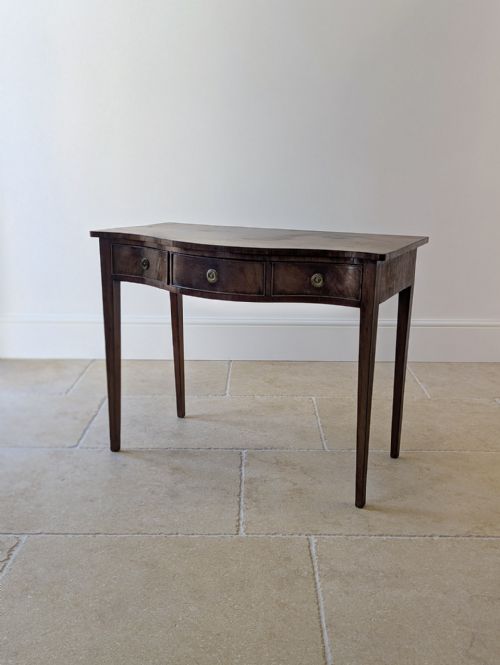
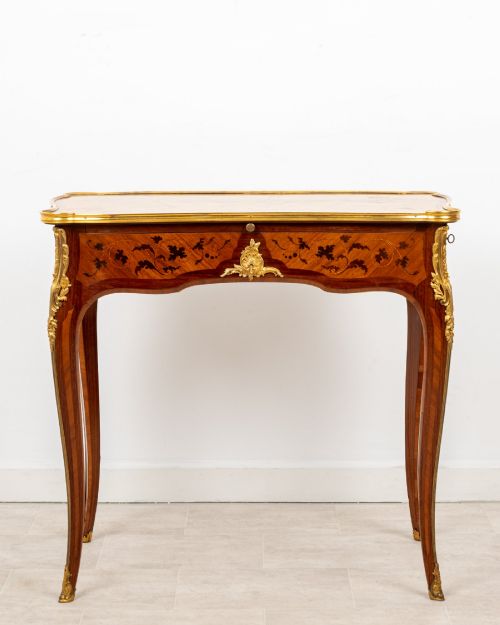
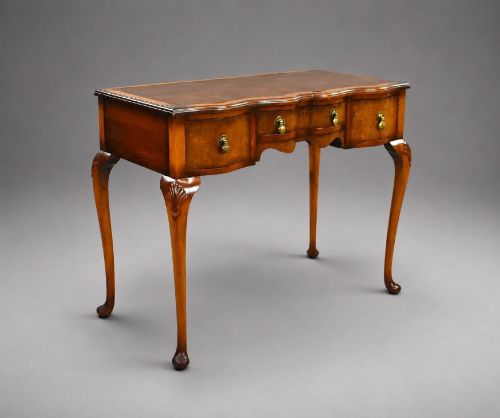
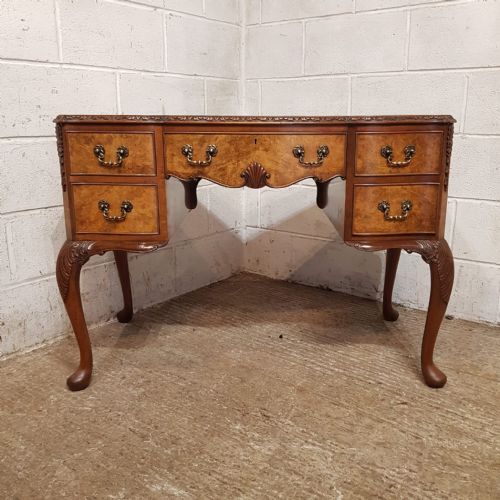
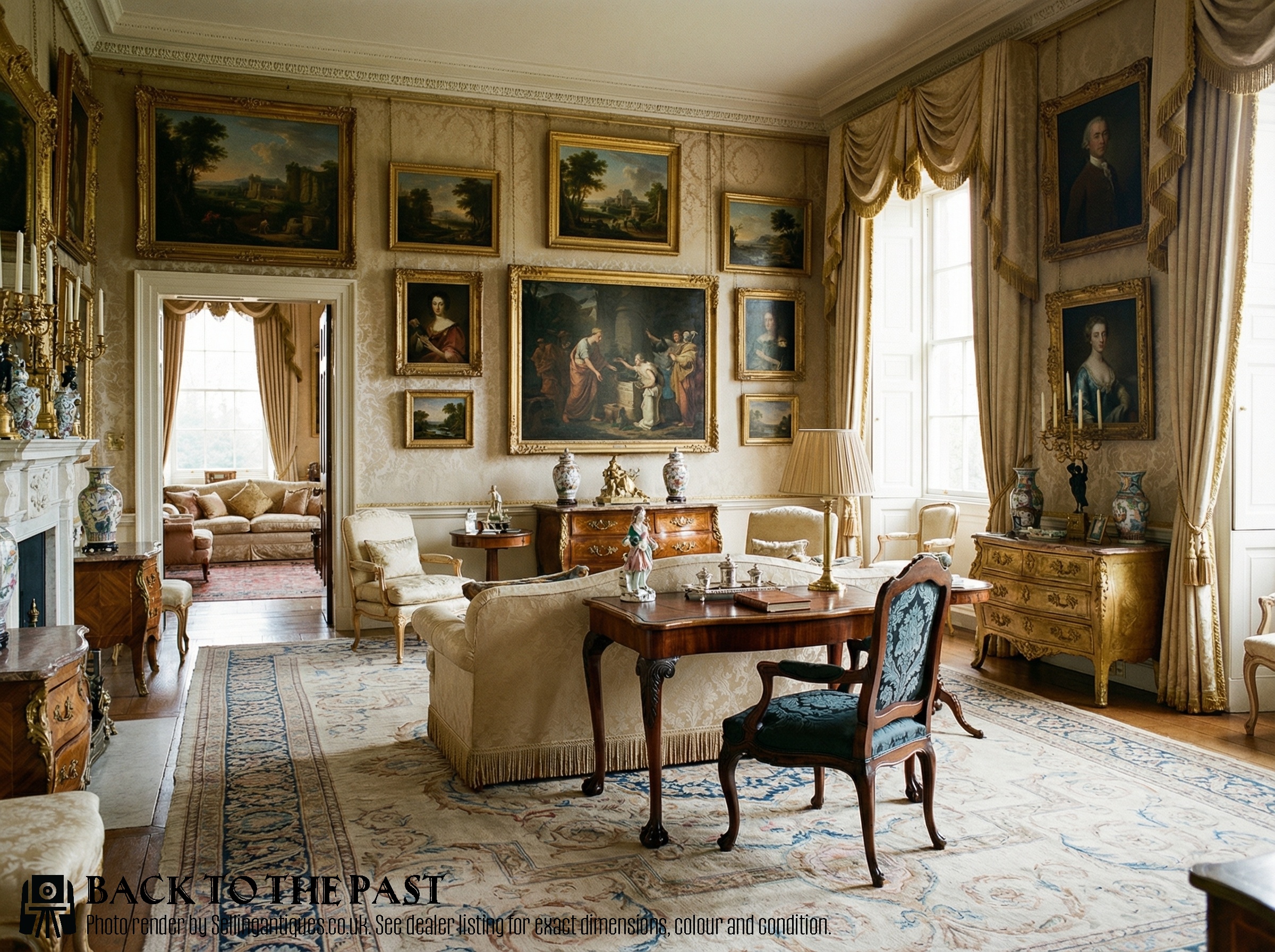
A serpentine writing desk brings fluid, undulating curves to a traditional workspace through masterly cabinetmaking.
The Nature of a Serpentine Writing Desk
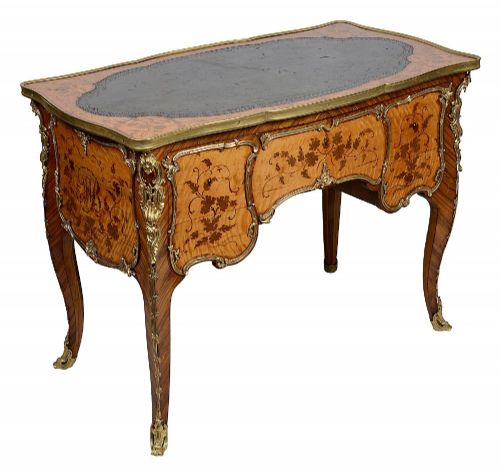
Makers on both sides of the Channel produced these desks, with French examples often embracing Louis XV styles and English pieces following Georgian or Victorian traditions. The form serves as both a functional writing surface and a statement of refined interior design.
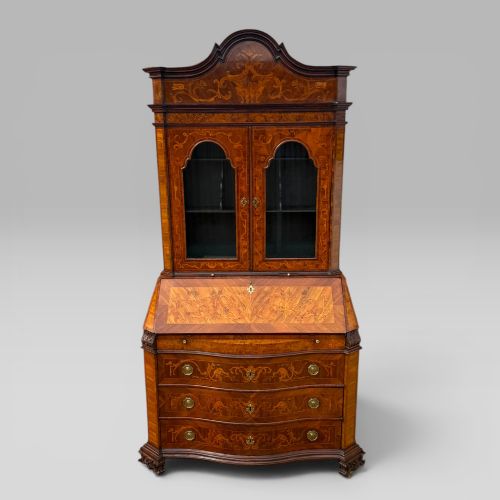
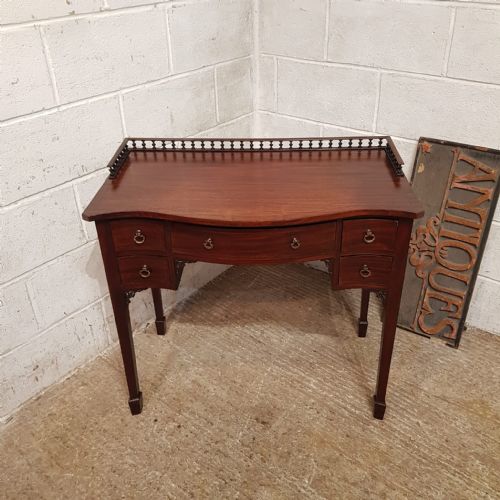
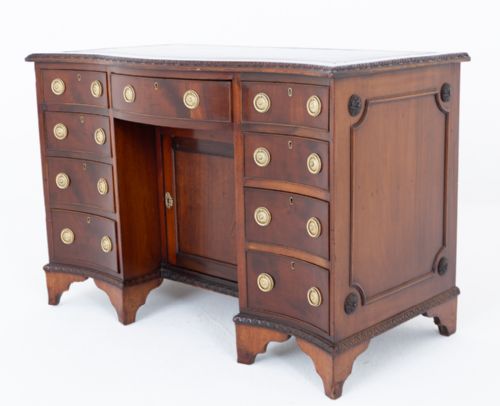
Desks on offer range from compact ladies' writing tables to substantial pedestal and bureau formats. The undulating outline demands precise carpentry, making each surviving piece a testament to period craftsmanship.
Materials and Construction
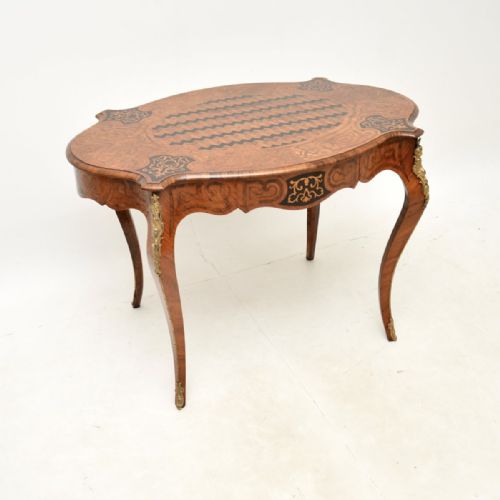
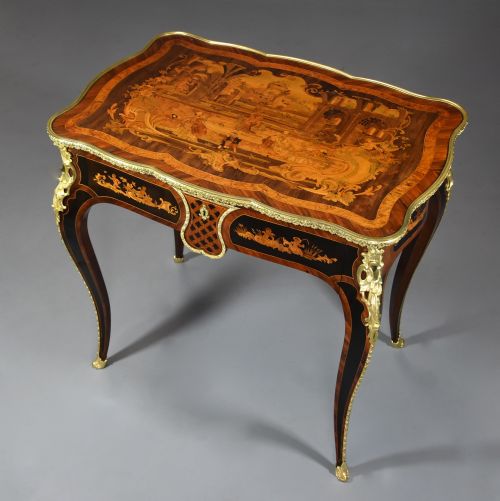
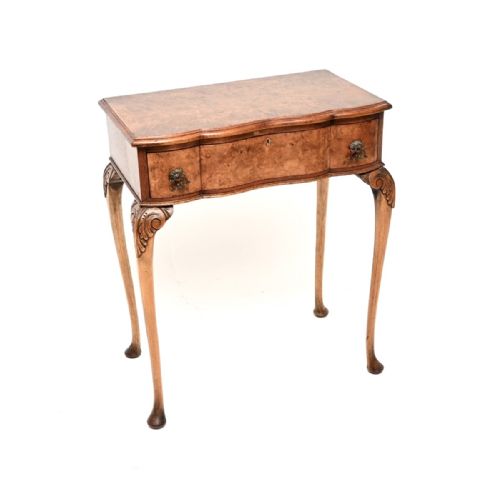
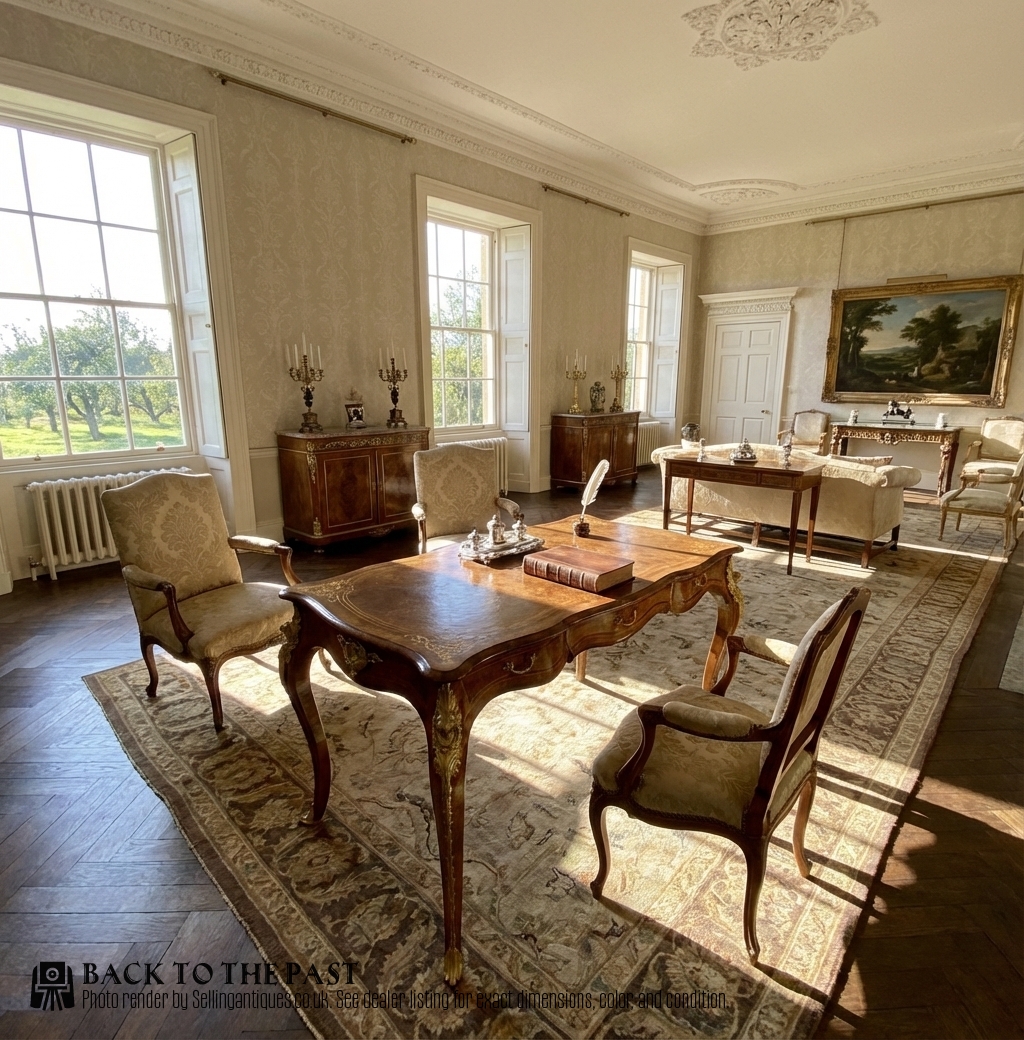
Craftsmen built these desks using solid timbers like mahogany, oak, and walnut, frequently applying fine wood veneers and marquetry inlay to create patterned surfaces. Burr walnut varieties showcase intricate natural grain swirls that catch the light along the curved drawer fronts.
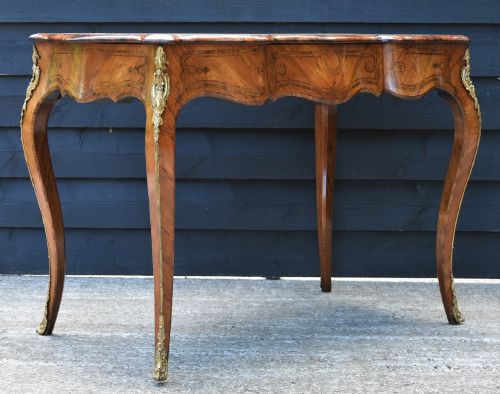
Metal ornamentation played a significant role, particularly in French pieces decorated with cast ormolu, gilt bronze, and brass mounts. Ebonised wood details and brass stringing further accentuated the complex serpentine contours of the cabinetry.
Retail Price Guide 2026
Typical UK retail prices for serpentine writing desk, calculated from the Sellingantiques database of over a million retail prices indexed since 2003. This retail price guide relies exclusively on Sellingantiques data; no external sources or auction records are used, so the figures do not describe the wider market.
Listings feature woods including walnut, kingwood, mahogany, and oak, often accented with brass and ormolu mounts.
Assessing Quality and Execution
Quality rests upon the precision of the timber shaping and the continuity of the grain across the curving drawers. Superior examples display seamless veneer matching that follows the difficult contours without buckling or lifting.
The sophistication of the mounts and the interior arrangement separate standard production from exceptional pieces. Finely chased ormolu, well-figured burr walnut, and fitted pigeonholes with secret compartments elevate the standing of a desk.
The Serpentine Writing Desk Glossary
- Serpentine
- A shape characterised by a double curve, convex at the centre and concave at the ends. This contour requires immense skill to veneer and construct accurately.
- Bureau Plat
- A French freestanding writing table, typically with drawers along the frieze. These desks were designed to sit away from the wall in the middle of a room.
- Ormolu
- Gilt bronze ornamentation applied to furniture mounts and details. The technique involves a mercury and gold amalgam fired onto cast bronze.
- Marquetry
- Decorative veneer work arranged in pictorial or geometric patterns. Craftsmen cut thin slices of various coloured woods to assemble intricate designs.
- Frieze
- The horizontal band running directly beneath the top surface of the desk. This area frequently houses one or more drawers.
Frequently Asked Questions
How do I care for burr walnut veneer?
Keep wooden writing desks away from direct sunlight and radiators to prevent the delicate veneer from drying and cracking.
Apply a traditional beeswax polish occasionally and buff gently with a soft cloth to maintain the natural lustre of the grain.
Where should I place a freestanding desk?
A bureau plat or finished pedestal desk looks best positioned in the centre of a study or living room. Because the back receives the same decorative attention as the front, it does not need to anchor against a wall.
How do I distinguish French revival styles from original pieces?
French nineteenth-century revival pieces often incorporate specific Louis XV or Napoleon III design motifs alongside distinct ormolu mounts. Examining the secondary timbers inside the drawer construction helps confirm the period and regional origin.