


French Parquet Table
When you search for a french parquet table, you are looking at timber furniture built with geometric veneer patterns.
French Parquet Table
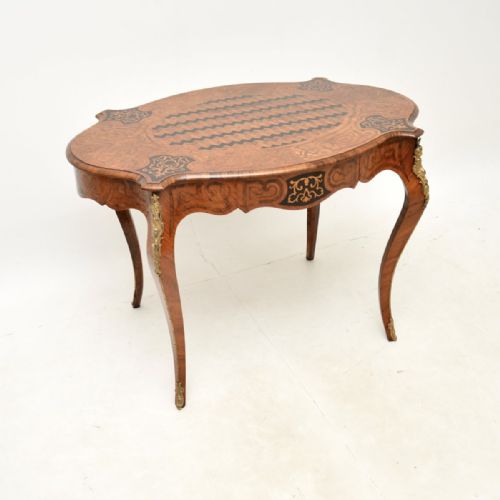
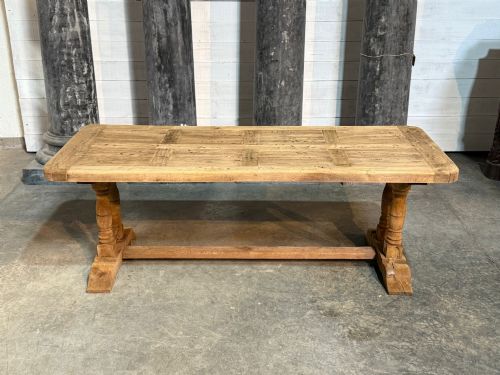
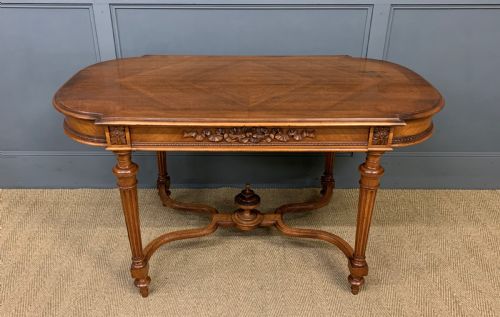
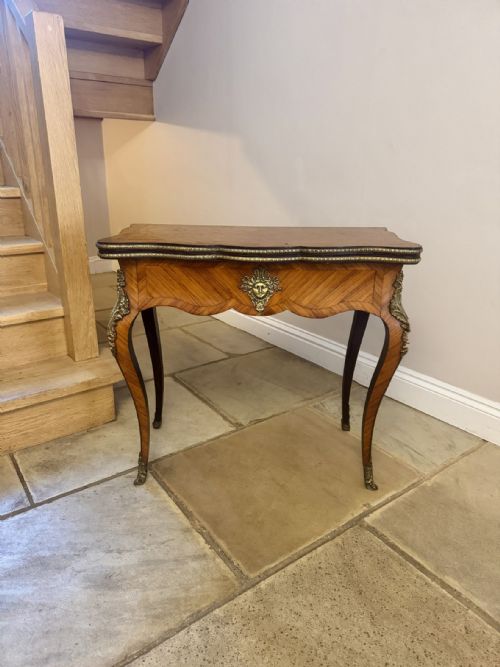
A french parquet table brings geometric timber surfaces into a room, utilising small wooden blocks arranged in patterns such as cubes, chevrons, or herringbone. When searching this phrase, buyers encounter everything from large oak farmhouse dining tables to refined kingwood card tables and occasional side tables.
The versions most commonly met on this page span the nineteenth century into the early twentieth century, reflecting revival styles like Louis XV and Louis XVI alongside rustic provincial forms. These pieces serve practical functions as dining surfaces, desks, writing tables, and bedside stands while displaying intricate woodcraft.
Makers and workshops across France produced these items in various scales, from expansive refectory tables down to compact nest tables and small gueridons. The unifying element is the parquet top, which transforms a functional surface into a decorative focal point through patterned timber arrangement.
Materials and technique
Cabinetmakers constructed these tables using a stable secondary timber carcass, such as oak or walnut, onto which thin veneers of decorative woods were applied. Kingwood, satinwood, mahogany, and rosewood provided contrasting tones for the geometric parquet blocks, creating depth and visual movement across the tabletop.
Metal elements frequently complemented the woodwork, with cast or chased brass and ormolu mounts fitted to corners, legs, and drawer edges. Artisans also integrated marble tops into certain bedside and occasional tables, securing the stone within wooden frames alongside the parquetry.
The object forms range from expansive refectory dining tables and bureau plat desks down to compact nest tables and bedside nightstands.
What separates the range
The standard of a french parquet table rests on the precision of the veneer work and the selection of timber grains. Tighter, more complex geometric patterns matched across complex curves or large dining surfaces require advanced carpentry skills compared to straightforward square layouts on smaller side tables.
Secondary detailing dictates the standing of a piece within its category. Finely cast ormolu mounts, well-integrated drawers with smooth operation, and heavy timber construction elevate certain examples above simpler provincial equivalents.
Francois Linke·Zweiner
The French Parquet Table Glossary
- Parquetry
- Wood pieces arranged in geometric patterns to form a decorative surface. This technique contrasts different timber grains and colours across tabletops.
- Ormolu
- Gilded bronze used for decorative mounts and fittings. Makers applied these metal accents to table corners and legs.
- Bureau Plat
- A flat-topped writing desk fitted with drawers. These tables often feature leather inserts and parquetry borders.
- Gueridon
- A small round table supported by a central pillar or multiple legs. These pieces function as occasional or side tables.
- Cross-banding
- A border strip of veneer where the grain runs perpendicular to the main panel. This frames the central parquetry design.
- Draw-leaf table
- A dining table with extension leaves stored beneath the main surface. Pulling them out expands the table length.
French Parquet Table: Frequently Asked Questions
What is a french parquet table used for?
These tables function as everyday dining surfaces, writing desks, and small bedside stands depending on their scale and form. Their decorative tops allow them to serve as focal points in reception rooms and hallways.
Larger oak and walnut versions accommodate family meals, while smaller occasional tables, card tables, and nests hold lamps and decorative items.
How do I identify the period of a table?
Dating relies on stylistic clues such as cabriole legs, straight tapered legs, or heavy farmhouse framing, alongside the specific timber combinations used. Nineteenth-century pieces frequently adopt Louis XV or Louis XVI revival characteristics.
Makers' labels, stamps on the timber, and the style of ormolu mounts also help narrow down the decade of production.
How do I care for a parquet surface?
Maintenance involves keeping the timber away from direct heat sources and strong sunlight to prevent the veneer from drying or cracking. Regular dusting with a soft, dry cloth preserves the polished finish.
Applying appropriate wax occasionally nourishes the wood and protects the geometric parquetry blocks from moisture.
What timber types appear most often?
Oak and walnut form the primary structure for many farmhouse and provincial dining tables, providing heavy and durable foundations. Exotic hardwoods such as kingwood, satinwood, and rosewood supply the contrasting tones needed for detailed geometric parquetry.
Brass and ormolu provide metallic accents, while marble occasionally surfaces on bedside and occasional tables.