





English Walnut Executive Desk
An english walnut executive desk brings rich grain and practical workspace into a room, offering the classic form buyers seek for a study.
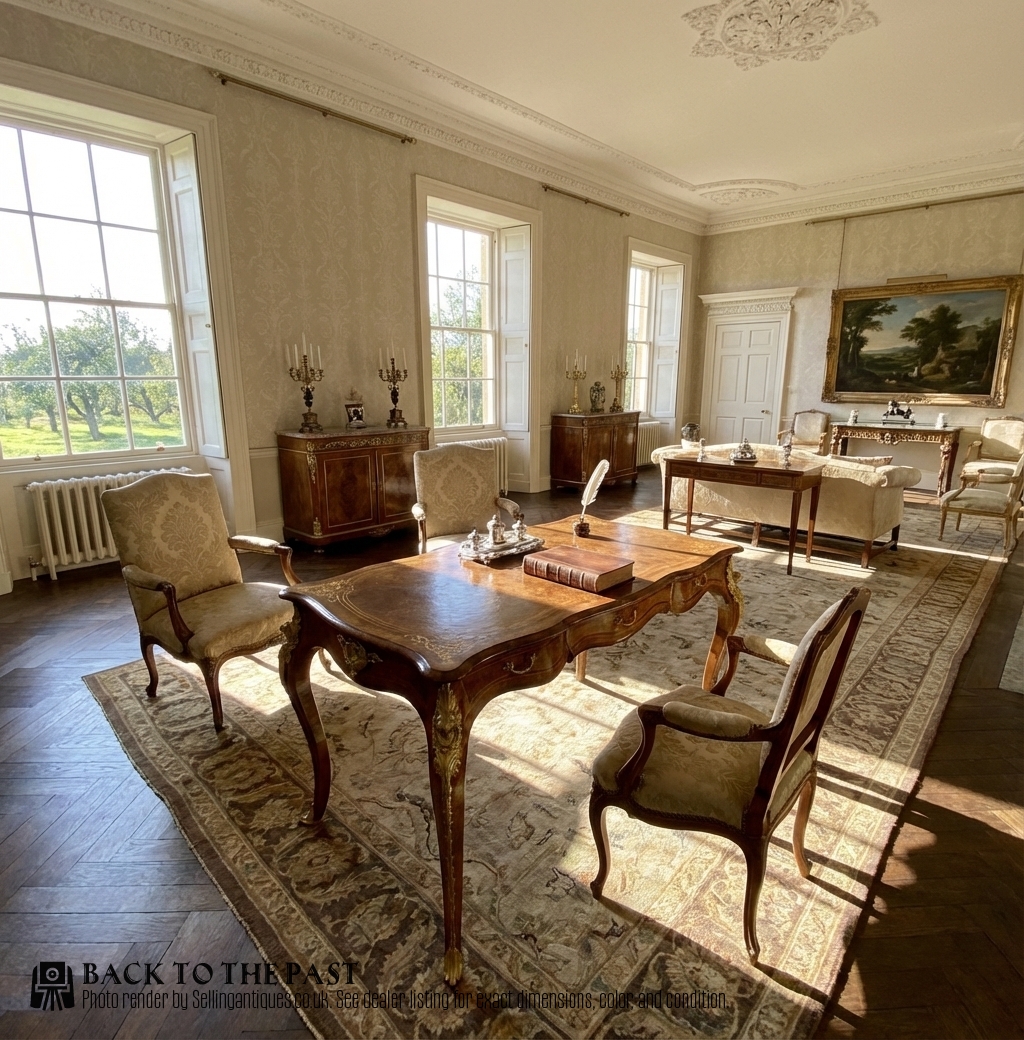
English Walnut Executive Desk
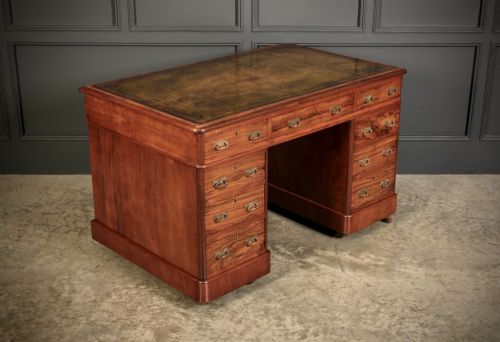
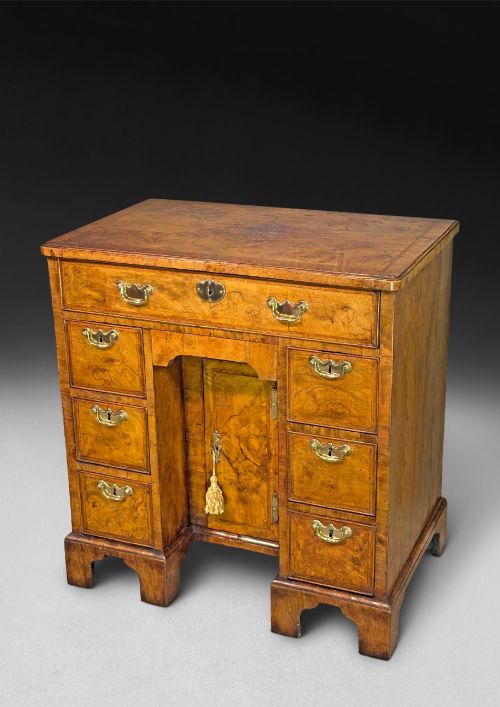
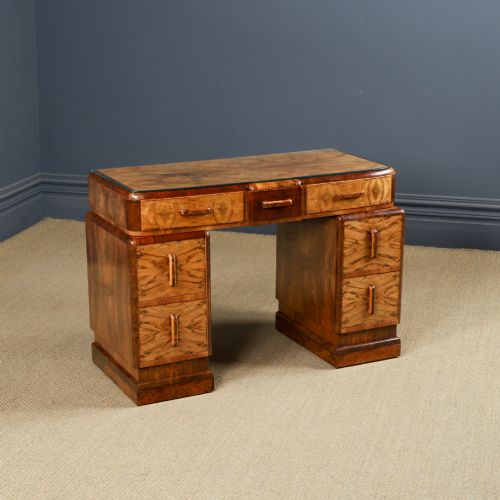
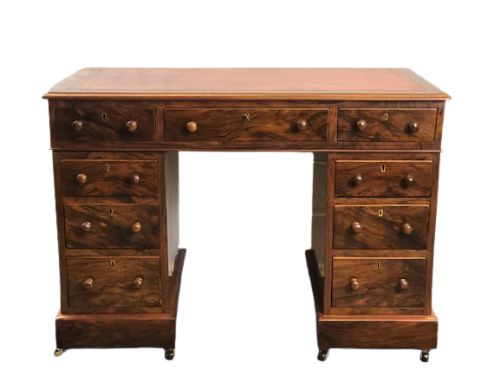
An english walnut executive desk encompasses pieces built from walnut and burr walnut, spanning periods from the eighteenth century through the Victorian era and into the nineteen-thirties. Buyers searching this phrase look for substantial writing surfaces combined with pedestals, drawers, or kneeholes.
The versions most commonly met on this page range from George I and George II kneehole desks to nineteenth-century pedestal desks, Victorian Dickens desks, and nineteen-thirties Art Deco skyscraper writing desks. Oak often appears as a secondary wood within these constructions.
The origins documented here point to English workshops, including pieces attributed to makers such as Druce & Co. and the manner of Gillows, alongside ormolu-mounted bureau plat forms.
How they were made
Construction relies upon solid timber and decorative veneers, notably burr walnut and figured walnut, applied to secondary woods like oak. Cabinetmakers shaped these materials into pedestal and kneehole forms, often incorporating inset leather writing surfaces.
Hardware and decorative elements involve cast brass handles, escutcheons, and occasional ormolu mounts. Glass panels also feature in specific Art Deco skyscraper designs from nineteen thirty.
English Walnut Executive Desk Retail Price Guide 2026
Typical asking prices for english walnut executive desk among the pieces listed under this phrase on Sellingantiques today, from the lower quarter to the upper quarter. They describe what is for sale here now, not the wider market.
Listings span the eighteenth century, the Victorian era with its Dickens and pedestal desks, and nineteen-thirties Art Deco glass skyscraper forms.
What varies in quality
Quality rests upon the selection and matching of walnut veneers, where symmetrical figure and rich grain command attention. The depth of colour achieved through traditional finishing methods distinguishes finer examples.
Structural integrity of the pedestals, drawer construction, and the preservation of original brass hardware or leather inserts separate standard commercial pieces from exceptional workshop productions.
Druce & Co.·Gillows
The English Walnut Executive Desk Glossary
- Burr walnut
- A prized veneer taken from the wart-like growths on walnut trees, yielding highly swirled and mottled grain patterns. Cabinetmakers used it on primary display surfaces.
- Kneehole desk
- A compact desk featuring a central recessed space for the legs, flanked by pedestals of small drawers. This form became popular in the eighteenth century.
- Pedestal desk
- A heavy freestanding desk supported by two matching banks of drawers or cupboards down to the floor. It provides significant storage and a large working area.
- Ormolu
- Gilded bronze ornamentation applied to furniture mounts and details, particularly favoured in formal nineteenth-century pieces.
- Dickens desk
- A high-backed Victorian desk featuring a sloping writing surface above banks of small pigeonholes and drawers. It takes its name from associations with traditional clerical writing furniture.
English Walnut Executive Desk: Frequently Asked Questions
What is an english walnut executive desk?
An english walnut executive desk is a substantial writing table or pedestal desk constructed from walnut, featuring drawers and workspace for administrative tasks. These pieces range from eighteenth-century kneehole forms to twentieth-century Art Deco designs.
Buyers choose them for their rich timber figuring, historic craftsmanship, and functional storage capacity within a study or office.
How do I date an antique walnut desk?
Dating involves examining the construction methods, drawer linings, hardware styles, and overall architectural proportions of the piece. Eighteenth-century examples display different kneehole arrangements and dovetailing compared to Victorian pedestal desks or nineteen-thirties Art Deco designs.
Matching the secondary woods, such as oak, and stylistic details like ormolu mounts helps place the desk within its specific period.
How do I care for walnut furniture?
Walnut furniture requires placement away from direct sunlight and sudden temperature shifts to protect the timber and veneer from drying or cracking. Regular dusting with a soft, dry cloth maintains the polished surface.
Applying appropriate specialist wax sparingly preserves the depth of colour in the figured grain without building up heavy residues.
Where were these desks used?
Historically, these desks served in private libraries, executive offices, and drawing rooms for correspondence, bookkeeping, and estate management. Their finished backs and substantial proportions allowed them to sit centrally within a room rather than strictly against a wall.
Today, they fulfill similar functional roles in home studies while acting as focal points of traditional interior design.