
French Style Bureau Plat
A French style bureau plat brings the grand writing tables of continental courts into domestic rooms, offering a freestanding desk surface framed in bronze.
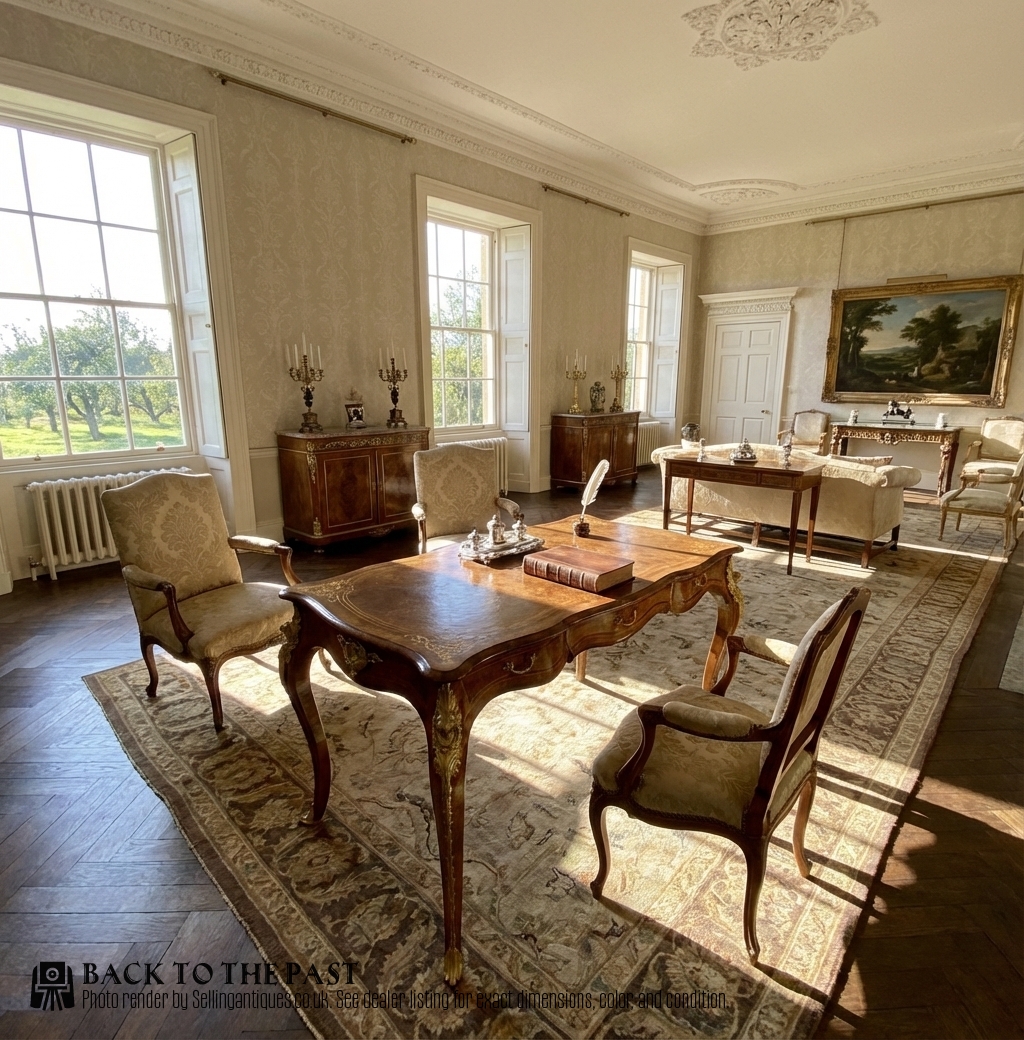
French Style Bureau Plat
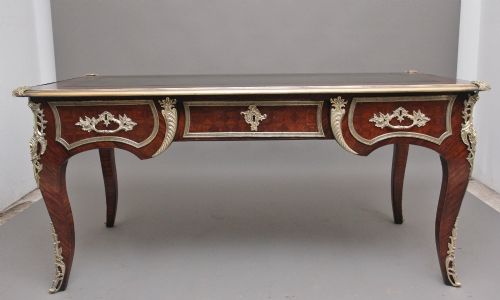
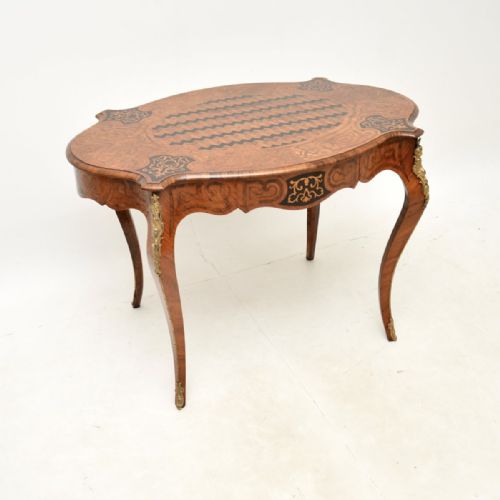
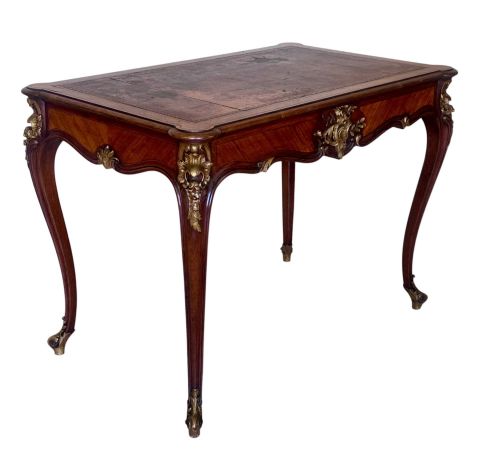
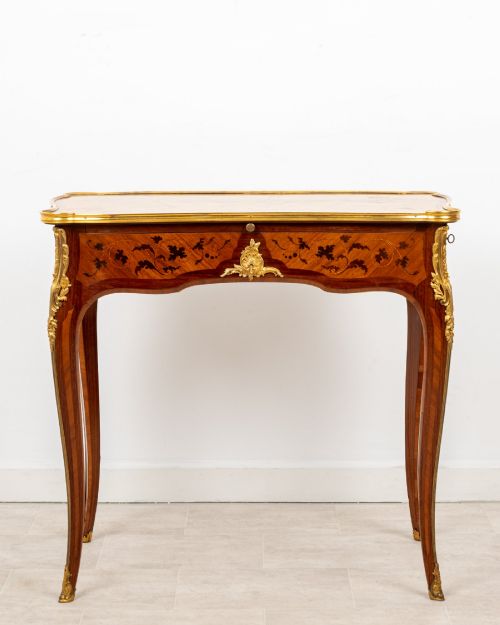
A french style bureau plat is a freestanding writing table designed to sit away from the wall, finished on all sides with decorative veneers and mounts. Most examples appearing here date from the nineteenth century, channelling earlier court aesthetics through revival movements.
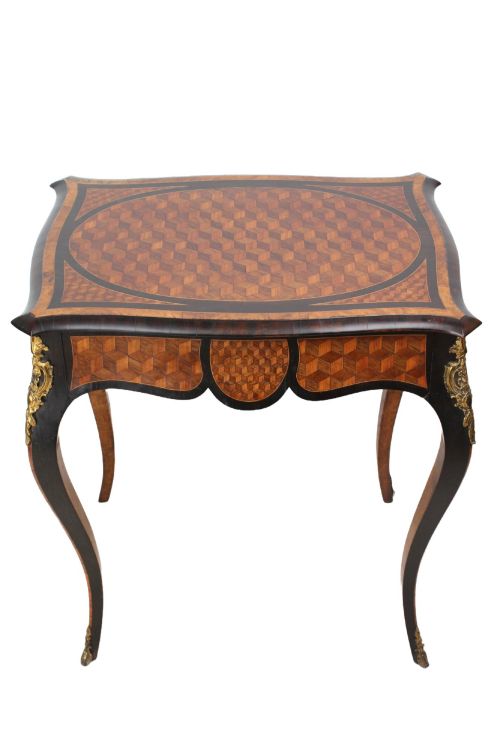
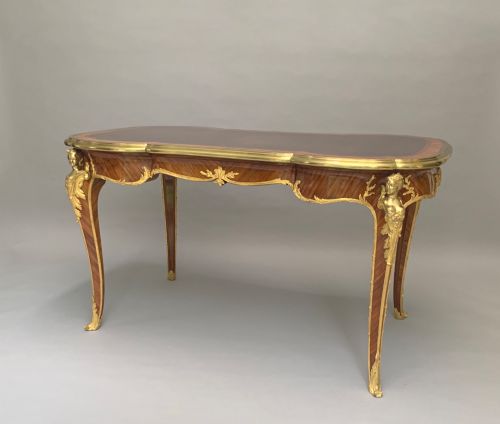
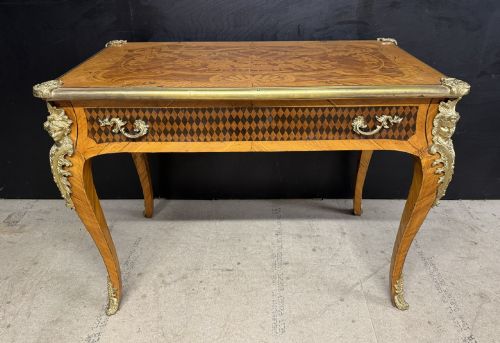
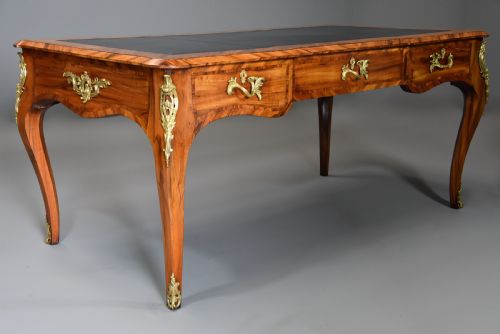
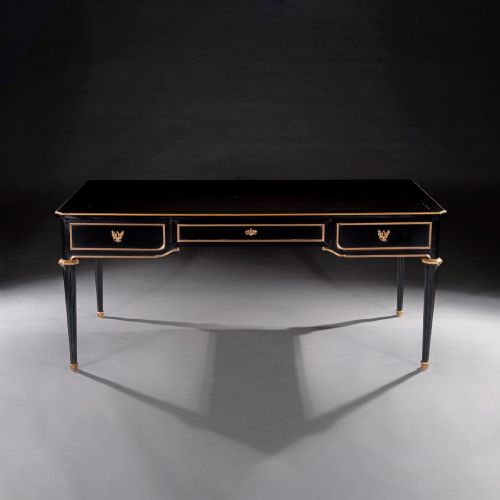
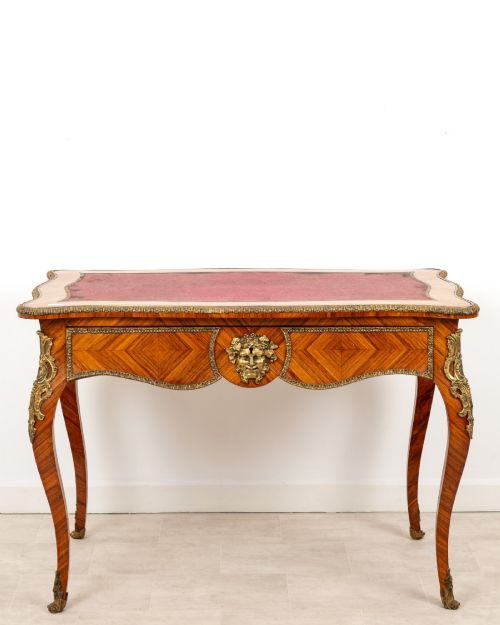
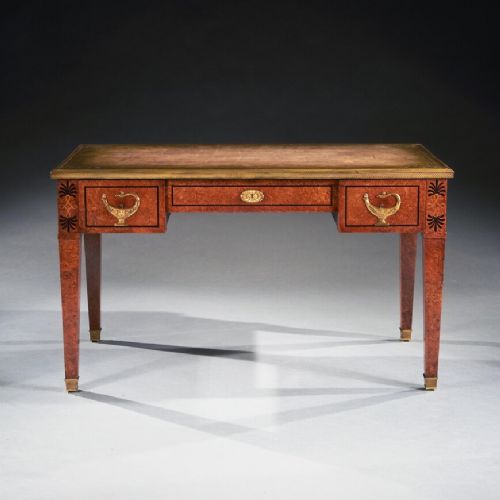
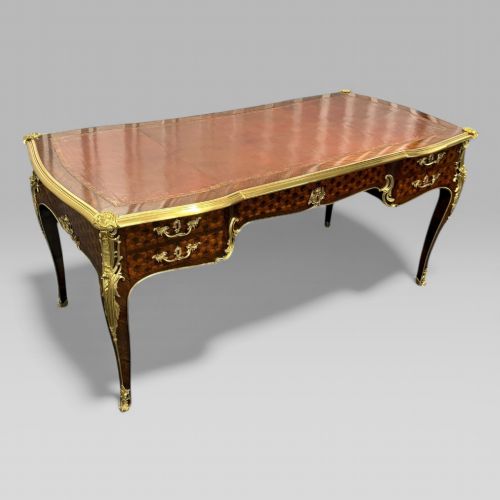
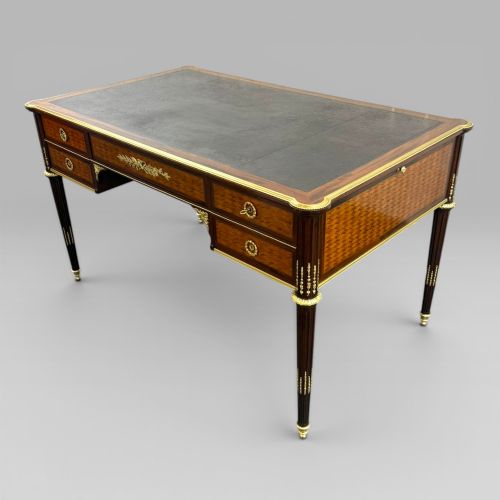
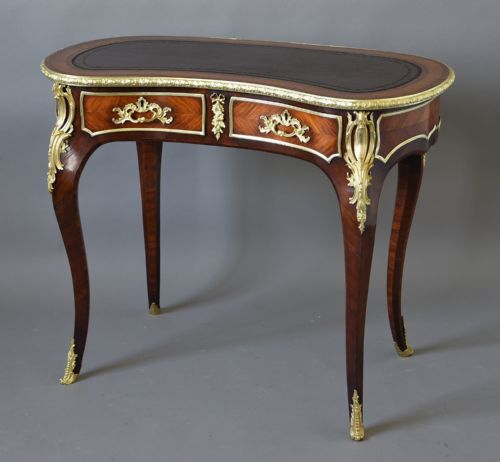
The dominant forms follow Louis XV and Louis XVI designs, presenting either serpentine outlines with rich floral marquetry or rectilinear neoclassical geometries defined by strict symmetry. Makers often integrated gilt bronze mounts to accentuate the structural corners and apron edges.
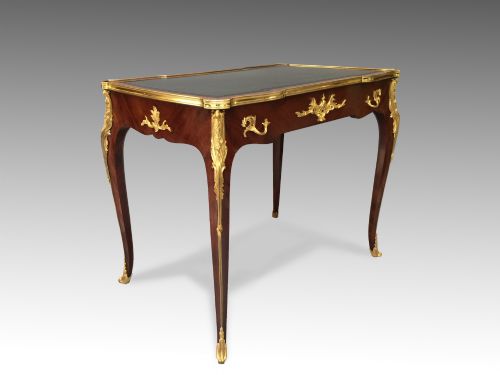
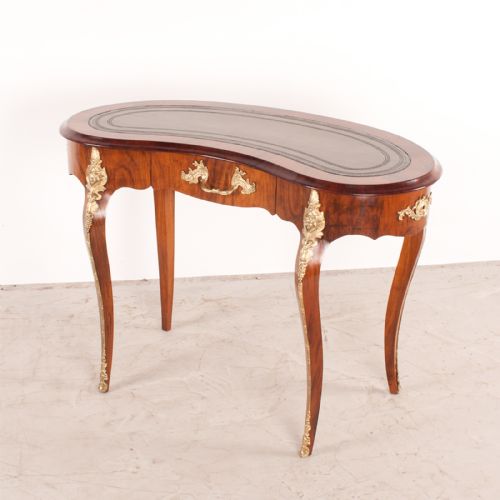
Writing surfaces typically feature inset leather panels, sometimes edged in gilt tooling, surrounded by crossbanded timber borders. These tables function as functional desks or grand centre tables within a room, possessing finished backs that allow them to occupy prominent open floor spaces.
Materials and construction
Carcase structures rely on native timbers like walnut, mahogany, or oak as a stable foundation, overlaid with decorative exotic veneers including kingwood, rosewood, and tulipwood arranged in parquetry or intricate floral marquetry patterns.
Cast ormolu and gilt bronze mounts define the decorative vocabulary, requiring skilled chasing and fire-gilding techniques to achieve crisp relief along handles, sabots, and cartouches.
Writing surfaces incorporate supple leather inserts, while drawer frames utilise traditional hand-cut dovetail joinery to ensure enduring mechanical integrity.
French Style Bureau Plat Retail Price Guide 2026
Typical asking prices for french style bureau plat among the pieces listed under this phrase on Sellingantiques today, from the lower quarter to the upper quarter. They describe what is for sale here now, not the wider market.
Materials span exotic woods like kingwood and rosewood, paired with ormolu mounts and leather writing surfaces.
What separates the finest examples
Quality rests upon the crispness of the bronze casting and the depth of the timber selection, where dense figuring and precise parquetry alignment indicate superior workshop output.
Master makers distinguished their desks through heavier, more deeply chased mounts and hand-selected veneers that wrap seamlessly around complex serpentine curves without buckling.
The integration of functional elements, such as smoothly operating drawers and well-fitted leather writing panels, marks the division between standard commercial production and exceptional cabinet-making.
François Linke·Edwards and Roberts·Durand·CH Jeanselme and Co·Gillows of Lancaster·JAS Shoolbred
The French Style Bureau Plat Glossary
- Bureau plat
- A freestanding writing table fitted with one or more drawers in the frieze, designed for placement in the centre of a room rather than against a wall.
- Ormolu
- Gilded bronze mounts applied to furniture to protect vulnerable corners and enhance decorative richness through contrasting metallic gleam against dark woods.
- Marquetry
- The art of forming decorative patterns on a wooden carcase using thin veneers of various coloured timbers, metals, or shells.
- Parquetry
- Geometric mosaic woodwork arranged in repeating patterns such as squares, lozenges, or cubes across the top surface of a desk.
- Cartonnier
- A matching desk-top cabinet or folio stand designed to hold papers and correspondence, frequently encountered alongside writing tables.
French Style Bureau Plat: Frequently Asked Questions
How do I care for the leather top?
Leather writing surfaces benefit from periodic treatment with specialist balms to maintain suppleness and prevent cracking from ambient dryness. Avoid placing damp items directly onto the hide to preserve the gilded tooling along the borders.
Dust the surrounding wooden veneers regularly with a soft cloth rather than silicone-based polishes, which can build up a hazy film over time. Maintaining stable room humidity protects both the underlying timber carcase and the delicate veneer layers from splitting.
Can these desks be used daily?
These tables served as functional writing desks originally and remain fully capable of accommodating modern daily tasks. Their sturdy timber carcases and durable leather inserts handle standard writing implements and light computer use easily.
Care should be taken with heavy office equipment or unpadded objects that might scratch the polished veneer surfaces or dent the softer mahogany and walnut frames. Using protective blotters helps preserve the antique finish during routine work.
How do I distinguish Louis XV from Louis XVI?
Louis XV designs rely on asymmetrical curves, cabriole legs, and flowing rococo bronze mounts that emphasise organic movement. The silhouettes feel rounded, fluid, and exuberant in their decorative program.
Louis XVI pieces pivot toward neoclassical strictness, featuring straight tapered legs, fluted columns, and geometric parquetry patterns. The overall impression is balanced, restrained, and architectural by comparison.
Where should I place a bureau plat?
Because these tables feature finished backs and decorative detailing on all four sides, they perform best floating in the middle of a study or library. Placing them away from walls showcases the full extent of the marquetry and bronze mounts.
Positioning the desk away from direct sunlight protects vulnerable exotic veneers and coloured leather from fading unevenly over the years. Adequate surrounding floor space allows the drawers to be pulled fully without obstruction.