



Geometric Inlaid Side Table
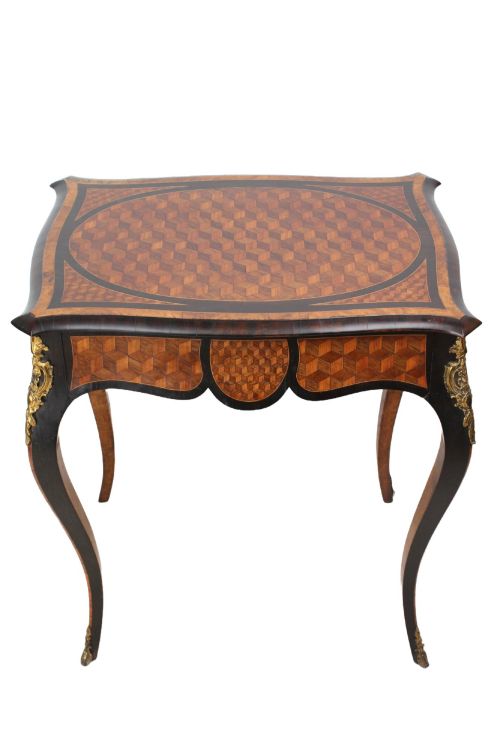
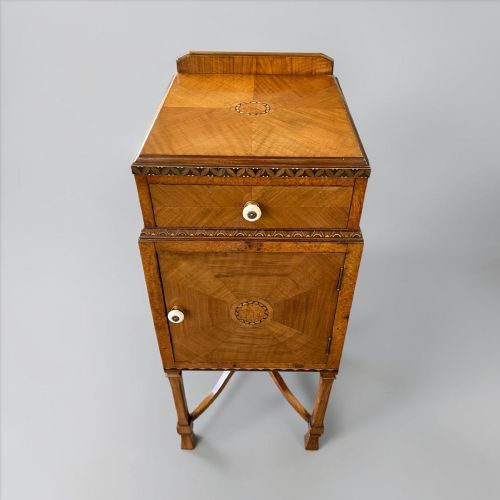
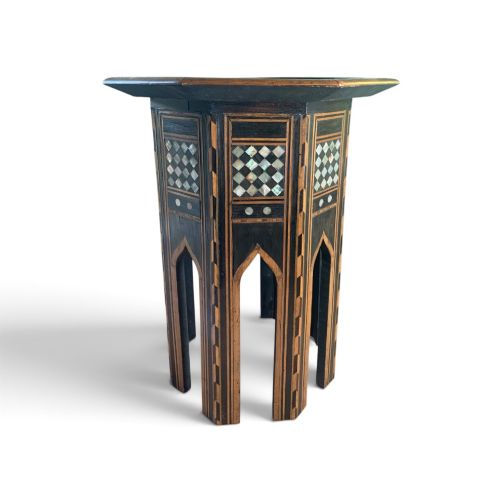
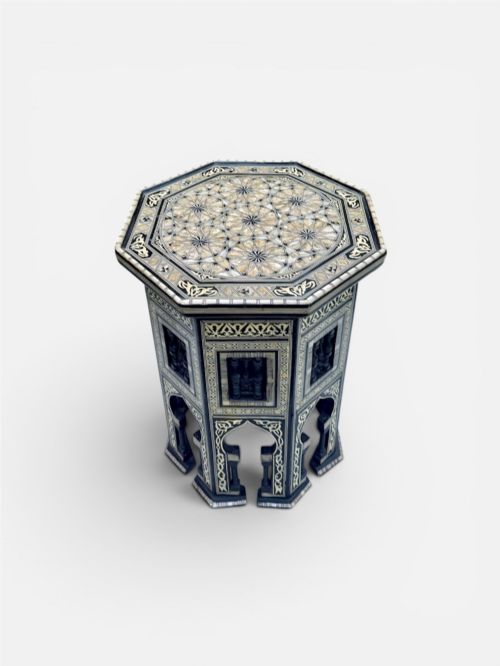
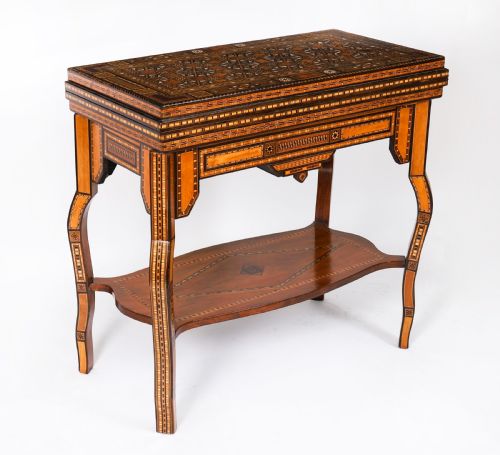
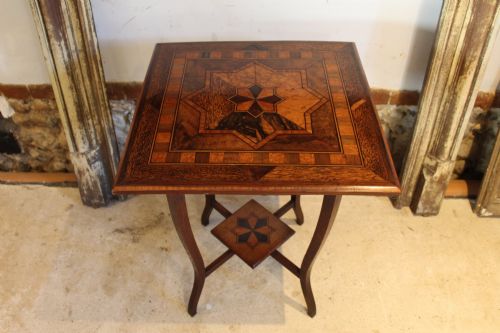
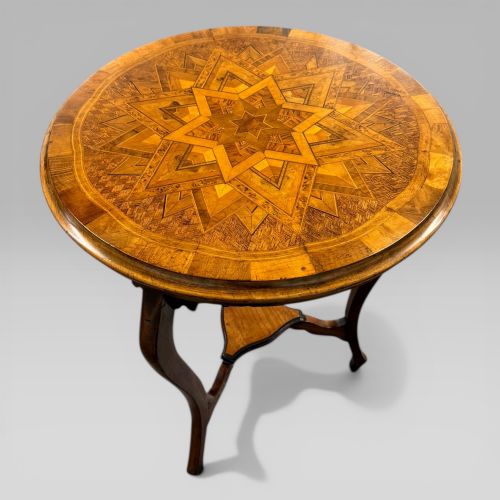
A geometric inlaid side table brings intricate parquetry, banded borders and patterned timber surfaces into a room.
Geometric Inlaid Side Table
A geometric inlaid side table appears across nineteenth-century and early twentieth-century periods, taking forms such as occasional tables, centre tables, and games tables. The listings show examples spanning Victorian, Edwardian, and Regency eras alongside revival styles.
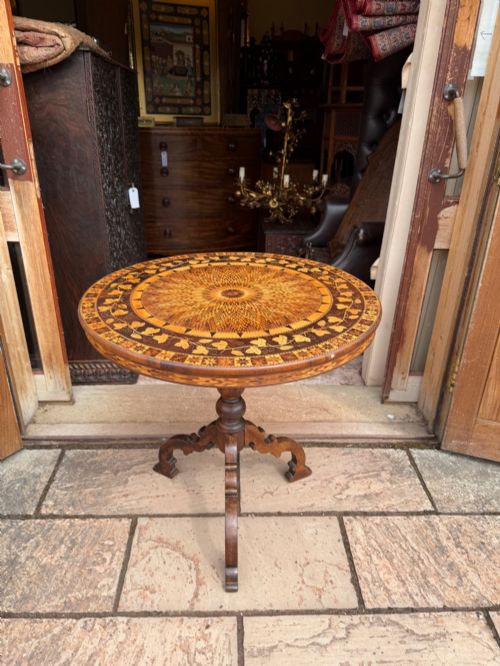
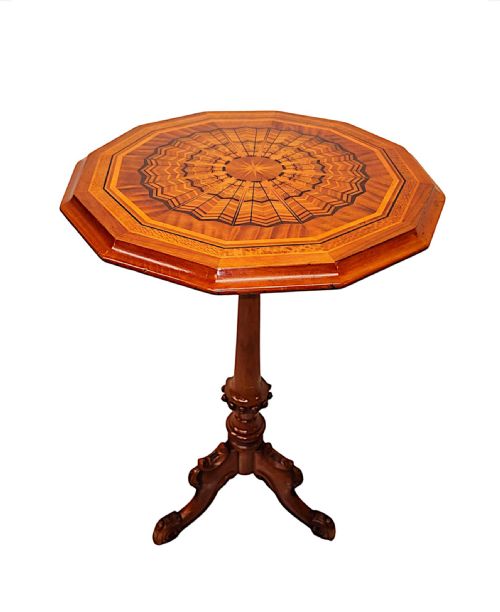
Most pieces met here date from the nineteenth century, including circular pedestals, octagonal frames, and tripod bases. Makers from Italy, Britain, and New Zealand utilised native and exotic timbers to construct these decorative surfaces.
Materials and technique
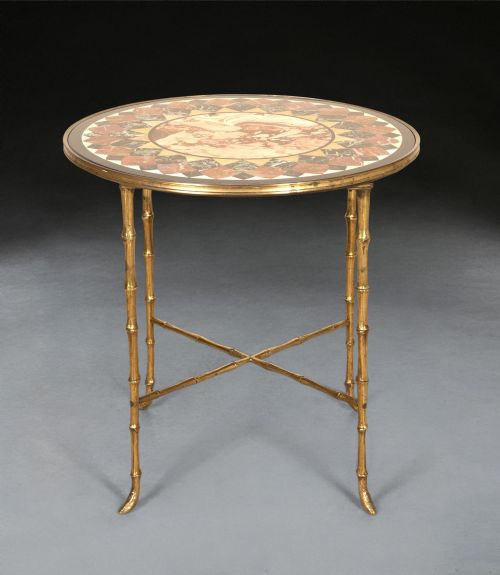
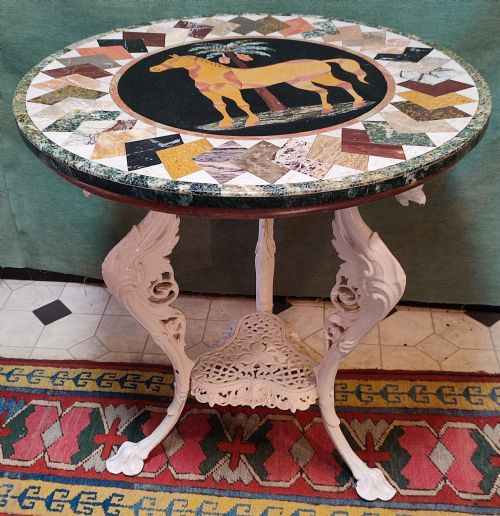
Craftsmen built these tables using hardwoods such as walnut, mahogany, oak, and rosewood, applying contrasting veneers in geometric and parquetry patterns. Surfaces often incorporate detailed bone, mother-of-pearl, or specimen marble inserts.
Makers cut small pieces of various timbers to form precise tessellated designs, securing them to stable timber bases. Specialised regional workshops in Italy, Syria, and New Zealand employed distinct geometric motifs and local wood species.
Listings demonstrate geometric inlaid side tables spanning from the seventeenth century through to the Edwardian period in walnut, mahogany, and oak.
Judging quality
Quality rests upon the precision of the inlay work and the tightness of the timber joints. Superior pieces maintain flush surfaces where different materials meet, without gaps or excessive filler.
The choice of secondary woods and the complexity of the geometric layout dictate the standard of the piece. Selected examples combine diverse specimen timbers and shell or bone elements with steady, well-turned structural frames.
JAS Shoolbred·Gillows·Anton Seuffert
The Geometric Inlaid Side Table Glossary
- Parquetry
- Geometric mosaic woodwork formed by small pieces of veneer arranged in repeating patterns. It appears frequently on tabletops from the nineteenth century.
- Specimen wood
- Timbers collected for their distinct natural colours and grain patterns, often gathered from distant regions. Tables utilise these to create contrasting geometric pictures.
- Occasional table
- A small, movable table designed for general use in a reception room. These pieces provide surface space without dominating a room.
- Pedestal table
- A standalone table supported by a central pillar resting on a footing or tripod base. This form allows maximum legroom around the perimeter.
Geometric Inlaid Side Table: Frequently Asked Questions
Where do these inlaid tables originate?
The pieces originate from various regions including Britain, Italy, New Zealand, and the Middle East. Different areas utilised local timbers and distinct regional motifs.
Italian workshops often produced Sorrento wares, while New Zealand makers favoured native timbers arranged in intricate geometric layouts.
How should I clean a parquetry top?
Dust the surface regularly with a soft, dry cloth to prevent dirt accumulation in the veneer joints. Avoid excess moisture or harsh chemical sprays.
Occasional application of appropriate wax polish maintains the timber lustre and protects the inlaid materials from drying out.
Can I use a games table daily?
These tables function well for everyday placement as lamp or side surfaces in a sitting room. Many include folding or reversible tops designed for active use.
Protecting the veneered surface with coasters prevents heat rings and moisture damage during regular use.
What defines a specimen table?
A specimen table incorporates numerous distinct varieties of wood, marble, or stone assembled into a decorative surface. Makers documented the variety of materials utilised.
These pieces showcase natural colour variations through geometric banding and tessellated arrangements.