
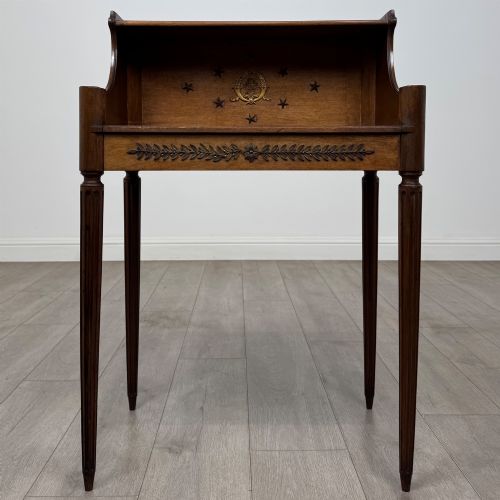
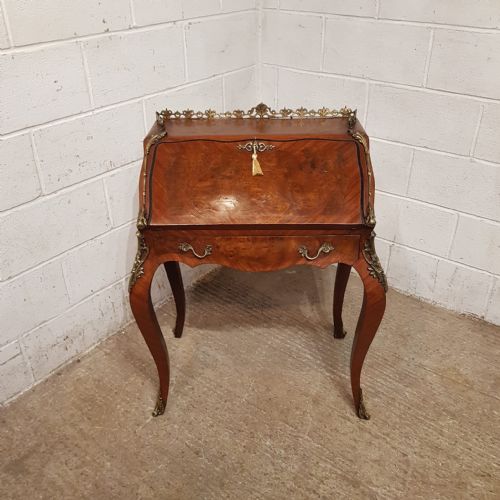
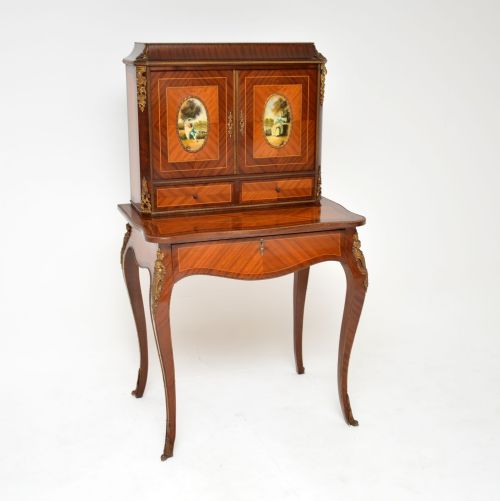
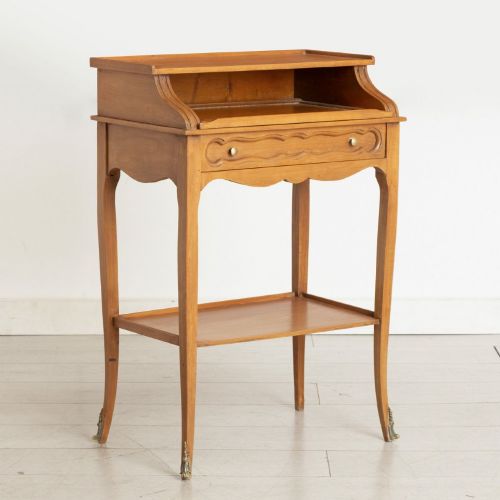
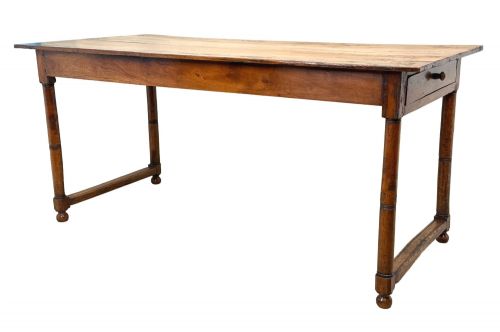


Small French Writing Table
A small french writing table brings elegance and compact workspace to a room, offering refined surfaces and historical charm.
Small French Writing Table
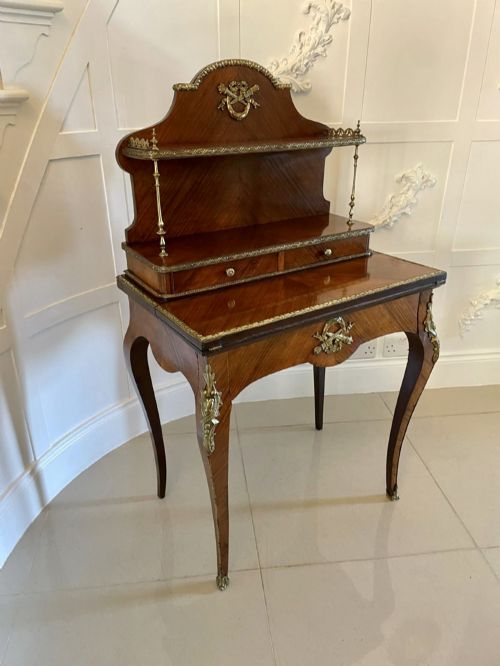
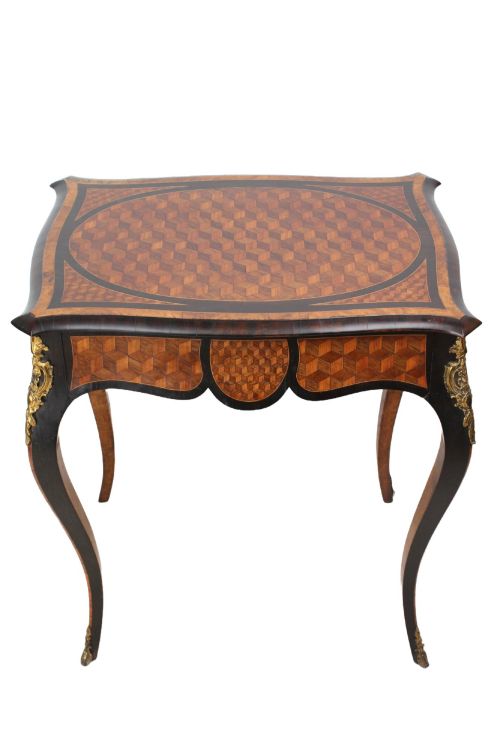
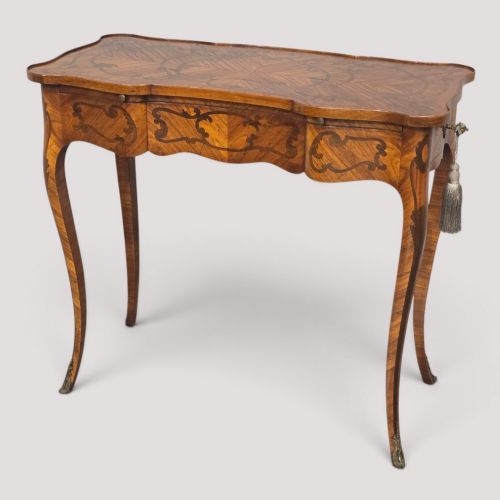
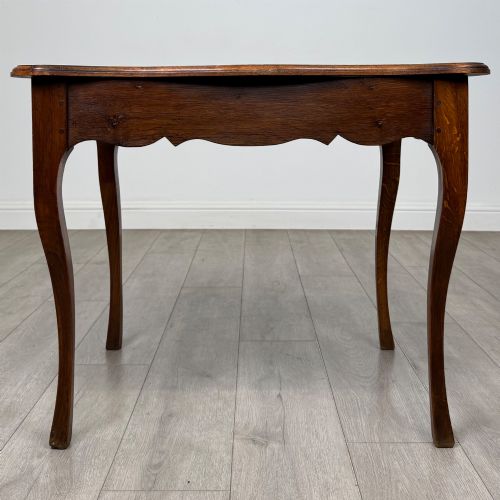
A small french writing table encompasses refined desks, writing tables, and bonheur du jours originating from the nineteenth and early twentieth centuries. These pieces reflect revival aesthetics including Louis XV, Louis XVI, and French Rococo styles, designed for domestic correspondence and lighter study.
Buyers regularly encounter walnut, kingwood, and rosewood examples alongside mahogany and fruitwood pieces, often fitted with compartments or leather writing surfaces. The selection ranges from provincial tables to highly decorated satinwood and parquetry specimens.
How they were made
Cabinetmakers utilised dense hardwoods such as mahogany, walnut, and kingwood as foundations, frequently applying intricate marquetry, parquetry, and quartered veneers to the exterior surfaces. Structural stability relied on traditional joinery paired with finely cast brass and ormolu mounts.
Surfaces often incorporated inset leather panels for writing, while subsidiary elements like porcelain plaques and glass components added decorative refinement to the desks and bonheur du jours.
Listings feature woods including kingwood, rosewood, walnut, burr walnut, mahogany, fruitwood, satinwood, and amboyna.
What varies in quality
The degree of hand-craftsmanship in the marquetry inlay and the crispness of the cast ormolu mounts distinguish standard production from superior pieces. Timber selection also dictates grade, with figured burr walnut and matched kingwood veneers commanding greater attention.
Proportion and structural integrity define the higher end of the scale, where internal drawer construction and original brass hardware remain intact and uncompromised by later alterations.
JAS Shoolbred·John McLean
The Small French Writing Table Glossary
- Bonheur du jour
- A small ladies writing desk featuring a tiered superstructure with shelves, drawers, or a small cabinet above the writing surface. This form gained popularity during the eighteenth century and persisted through Victorian revivals.
- Ormolu
- Gilt bronze mounts applied to furniture for decorative enrichment. The technique involves treating bronze with a gold amalgam.
- Parquetry
- Geometric patterns formed by fitting wood veneer tiles together on a surface. It differs from marquetry by relying on angular, repeating shapes rather than pictorial motifs.
- Marquetry
- The art of applying pieces of veneer to a structure to form decorative designs. Craftsmen combine various coloured woods to depict foliage, flowers, or geometric scenes.
- Escritoire
- A writing cabinet or desk equipped with a sloping flap or cylinder front enclosing pigeonholes and small drawers. These pieces provide concealed storage for writing materials.
Small French Writing Table: Frequently Asked Questions
What is a bonheur du jour?
A bonheur du jour is a small ladies writing desk featuring an upper tier of shelves, drawers, or a cabinet above the writing surface. The compact design made it popular for private correspondence in boudoirs and drawing rooms.
First appearing in France during the mid-eighteenth century, the form saw extensive revival during the Victorian era using exotic timbers and intricate marquetry.
How do I identify French revival styles?
French revival styles on these tables typically draw from Louis XV and Louis XVI periods, showing curved cabriole legs, asymmetrical mounts, or restrained neoclassical lines. Look for specific decorative vocabulary such as ormolu scrollwork and floral marquetry.
Nineteenth-century cabinetmakers frequently reinterpreted these historical motifs to satisfy demand for ornate, decorative antique furniture.
Where should I place a small writing table?
These compact desks suit reception rooms, bedrooms, or entrance halls where larger furniture would overwhelm the space. Their finished backs often allow them to sit freestanding in the centre of a room rather than against a wall.
Ensure the table receives indirect natural light to protect delicate wood veneers and leather writing inserts from fading.
How do I care for antique wood surfaces?
Maintain antique timber surfaces by dusting with a soft, dry cloth and avoiding silicone-based polishes. Period wax applied sparingly helps nourish aged veneers without building up harmful residues.
Keep these tables away from direct heat sources and strong sunlight to prevent timber shrinkage and veneer lifting.