

French Rococo Side Desk
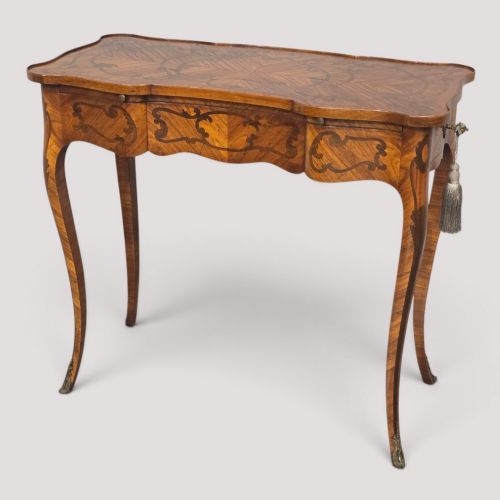
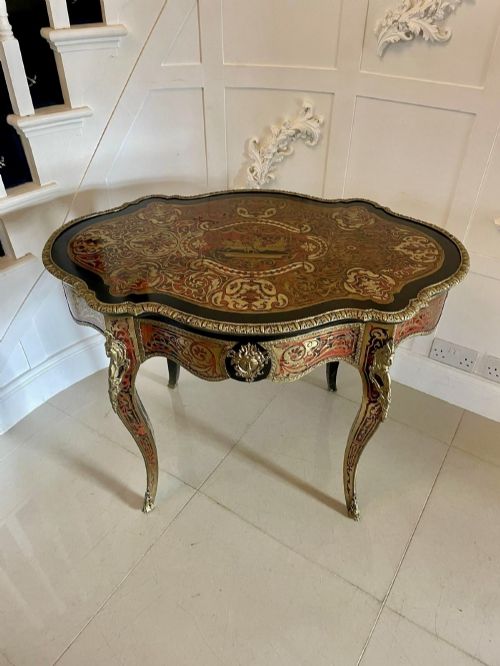
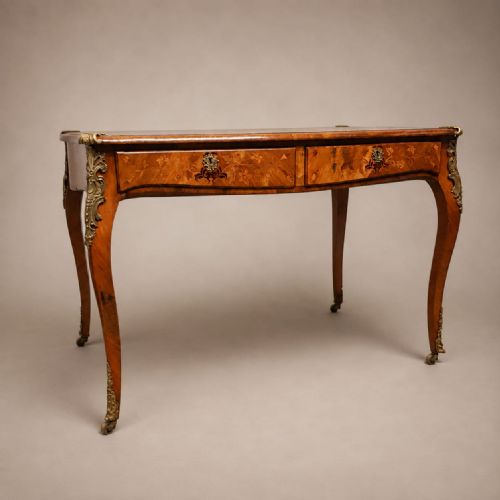
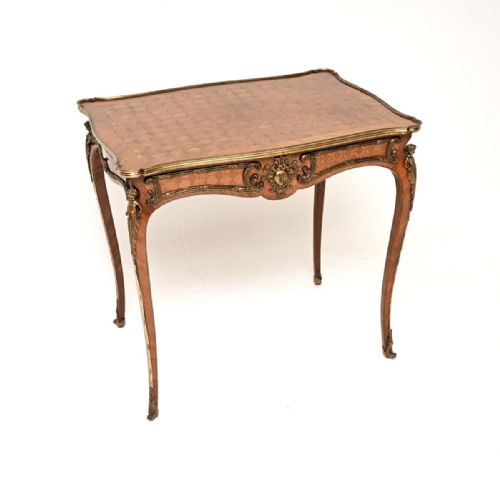
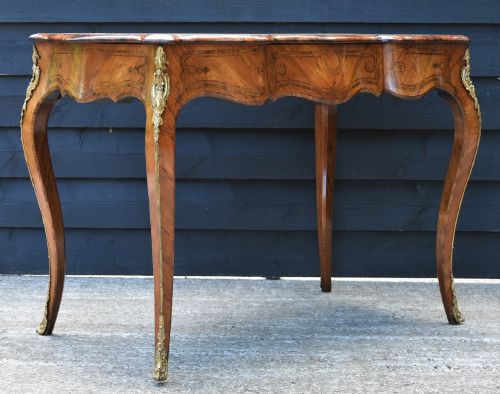
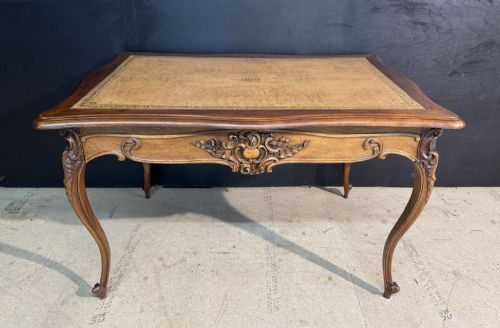
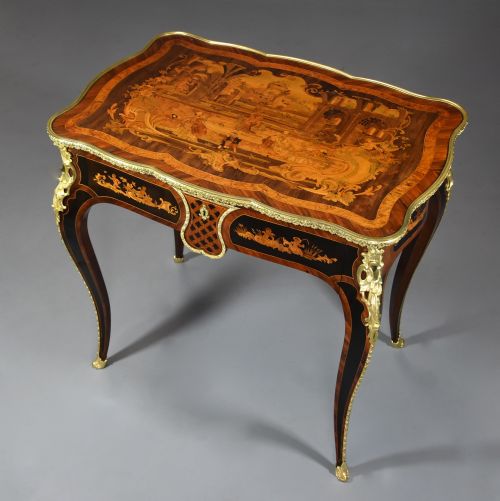
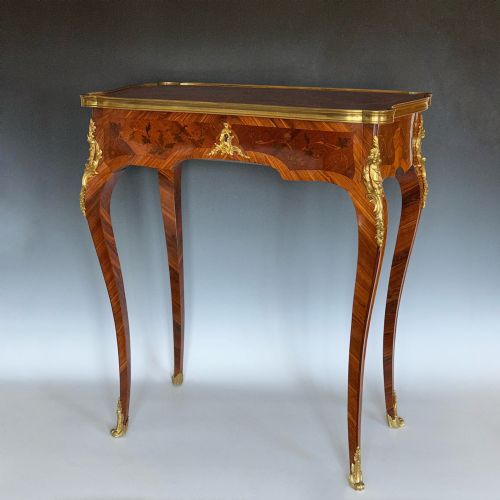
These french rococo side desk pieces combine sweeping serpentine forms and elaborate metal mounts to bring continental flair into a room.
French Rococo Side Desk
When searching for a french rococo side desk, you encounter writing furniture and tables reflecting the ornate revival tastes of the nineteenth century. The examples found here span from the eighteenth century through to the early twentieth century, incorporating styles such as Louis XV and French Chateau.
Most pieces on this page lean towards writing tables and bureau plat forms rather than monumental library furniture. They function as compact writing surfaces or decorative side tables while displaying the characteristic asymmetry and curves of the revival period.
How They Were Made
Cabinet makers utilised dense hardwoods including walnut, kingwood, rosewood, and satinwood as the structural foundation for these items. Marquetry and parquetry patterns arranged in geometric or floral motifs cover the surfaces of the best examples.
Casters and craftsmen embellished the wooden frames with cast ormolu, gilt bronze, and brass mounts. These metallic additions highlight the serpentine outlines and protect the vulnerable corners and feet of the furniture.
The site listings feature eighteenth century origins alongside Victorian revivals executed in walnut, kingwood, and ormolu.
What Varies in Quality
The precision of the marquetry inlay and the crispness of the bronze and ormolu chasing dictate the standing of a piece. Superior examples show meticulous hand-chiselling on the metal mounts rather than smooth, cast surfaces.
The selection of cabinet timbers and the flow of the grain across curved serpentine drawers reveal the skill of the original maker. Subtleties in the joinery and the integration of matching veneers separate standard production from exceptional artistry.
Millet
The French Rococo Side Desk Glossary
- Bureau Plat
- A freestanding writing table fitted with one or more drawers in the frieze. This form usually stands on cabriole legs decorated with bronze mounts.
- Ormolu
- Gilt bronze mounted onto furniture or functioning as decorative hardware. The process involves applying a gold amalgam to bronze through heat.
- Marquetry
- Decorative veneer patterns formed from pieces of contrasting timber, shell, or ivory arranged into pictorial or geometric designs. Craftsmen apply these veneers to tabletops and drawer fronts.
- Parquetry
- Geometric wood inlay forming repetitive patterns such as cubes or lozenges across a surface. This technique demonstrates precision in timber cutting.
- Serpentine
- A curved line that bends outward then inward in a wave-like contour. This profile appears frequently on the edges and drawer fronts of tables.
French Rococo Side Desk: Frequently Asked Questions
How are these desks used today?
These writing tables function effectively as compact home office desks or decorative console surfaces in reception rooms. Their finished backs allow them to sit away from walls in the middle of a space.
They provide a practical surface for correspondence while adding period character to domestic interiors.
What is a bureau plat?
A bureau plat is a traditional freestanding writing table featuring a wide top and drawers integrated into the frieze. These tables were designed for central placement in a room rather than against a wall.
They often incorporate leather writing inserts and elaborate gilt bronze mounts along the legs and apron.
How do I care for wood surfaces?
Maintain the timber by keeping pieces away from direct heat sources and sudden changes in humidity. Regular dusting with a soft cloth preserves the polish on the veneer and bronze.
Avoid commercial silicone sprays and rely instead on traditional microcrystalline wax to protect the historic polish.
How do I spot revival pieces?
Revival items from the nineteenth century display construction techniques and timber milling methods characteristic of that later era rather than the eighteenth century. Examining the secondary timbers inside the drawer boxes reveals the true age of the construction.
Metal casting styles and fixing screws also provide clues to distinguish nineteenth century interpretations from original period items.