

French Cabriole Leg Desk
A french cabriole leg desk brings curvilinear elegance and refined writing surfaces into a room, drawing on revival periods and continental forms.
French Cabriole Leg Desk
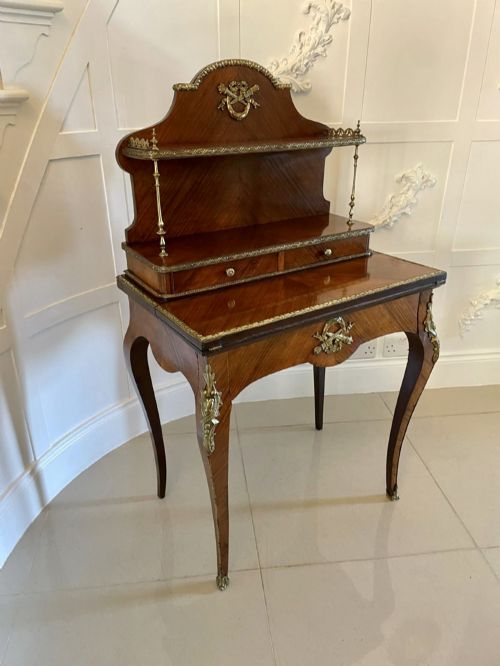
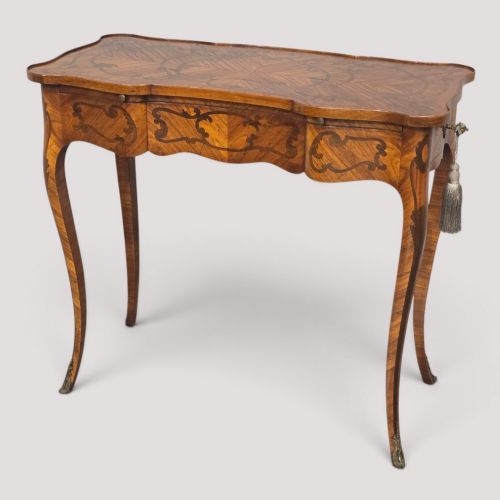
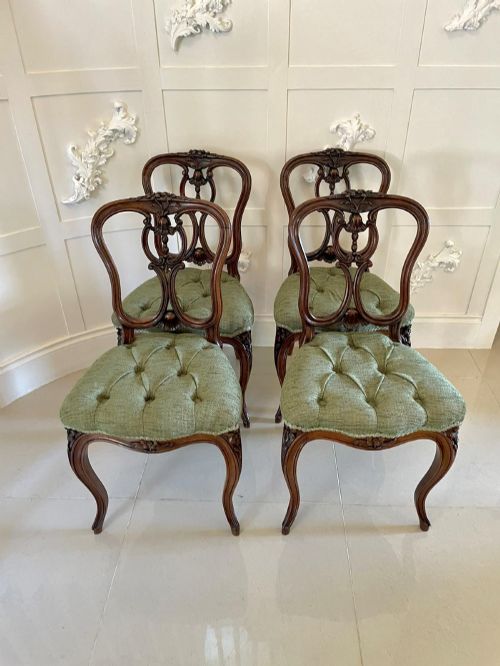
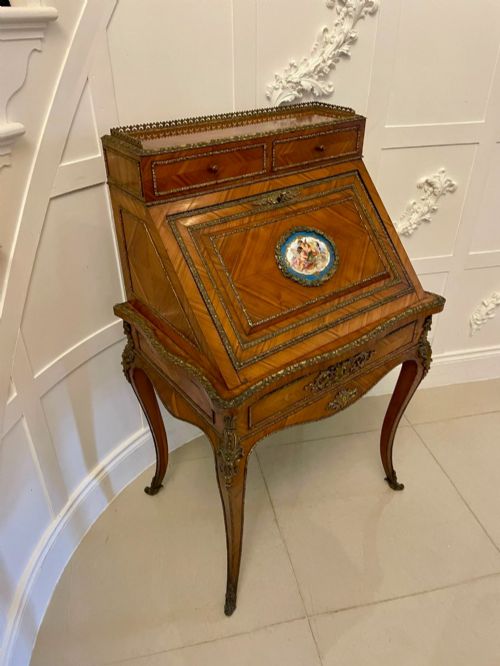
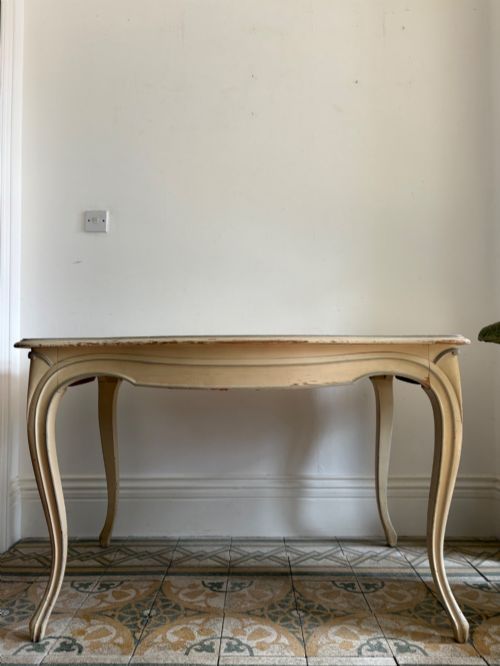
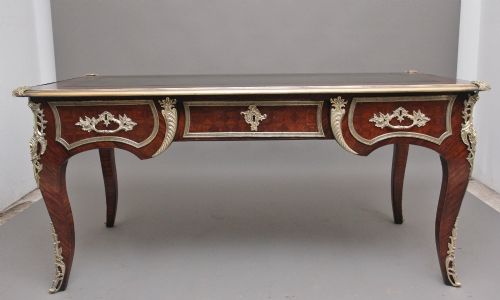
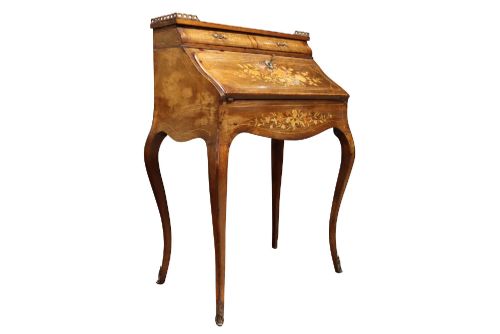
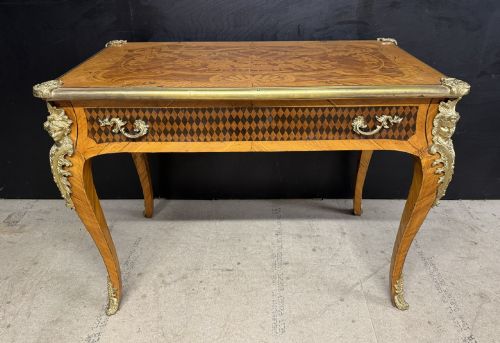
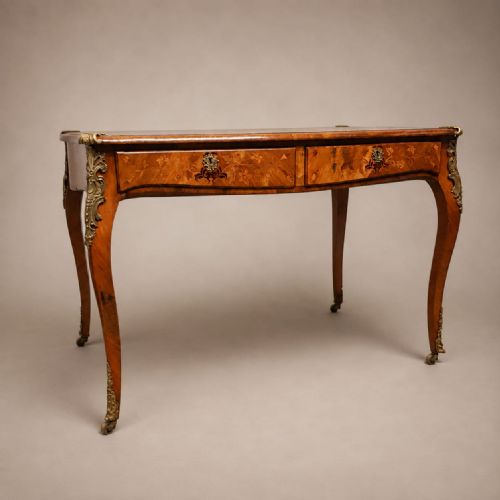
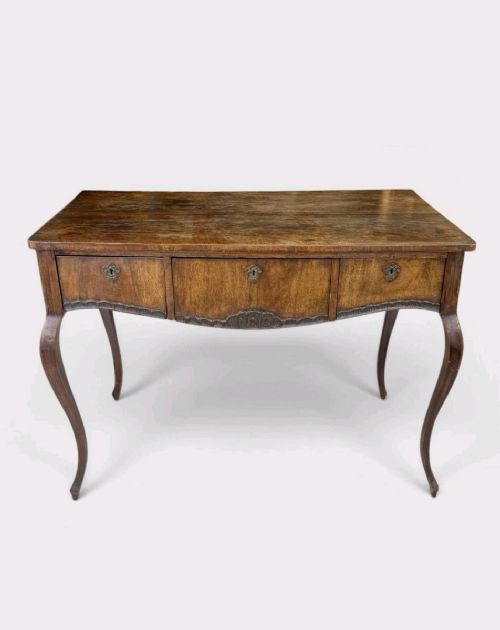
A french cabriole leg desk encompasses writing tables, bureau plats, and bonheur du jours originating from nineteenth-century revival movements and provincial workshops. These pieces typically display the double-curved leg profile characteristic of Louis XV and rococo designs, supporting compact writing surfaces fitted with drawers.
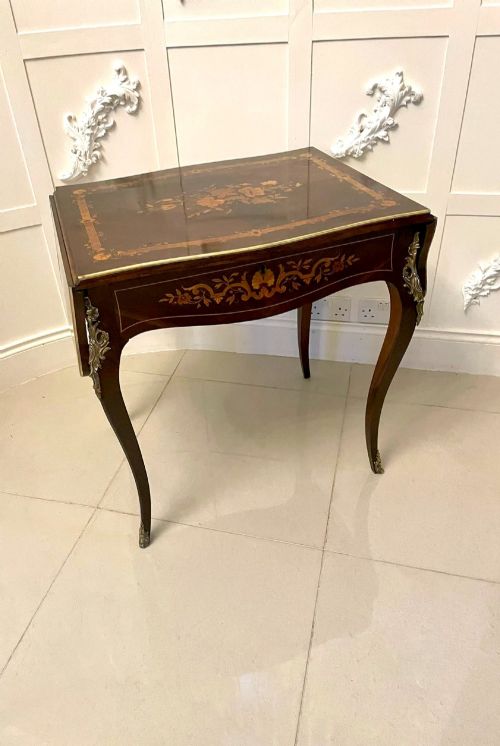
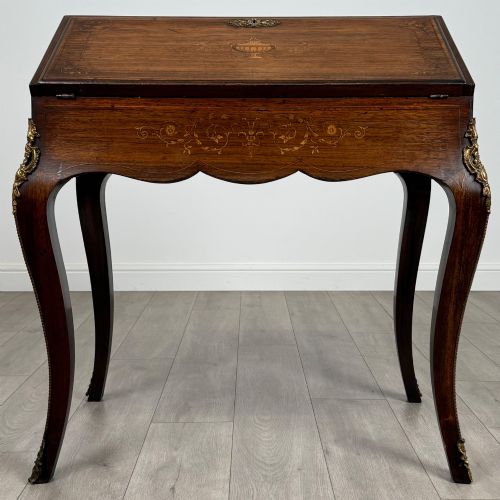
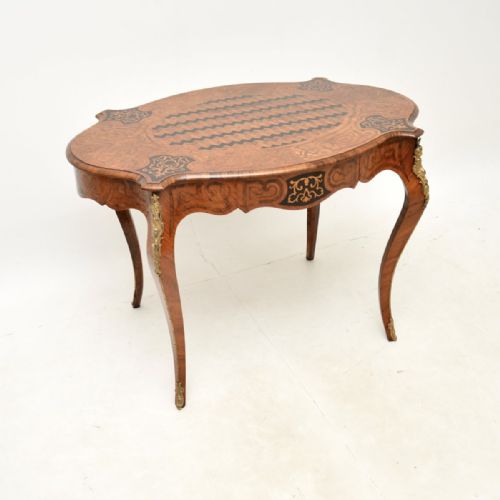
Buyers encountering this search phrase frequently find desks executed in kingwood, rosewood, and walnut, often embellished with marquetry or parquetry patterns. Forms range from freestanding centre tables adapted for correspondence to elaborate escuttoirs and kneehole desks featuring inset leather or suede tops.
Construction and Materials
Cabinet makers built these desks using foundational timbers such as mahogany, walnut, and oak, applying decorative veneers of kingwood, rosewood, and satinwood to the exterior surfaces. Marquetry and parquetry techniques created intricate floral or geometric designs across the tops and drawer fronts.
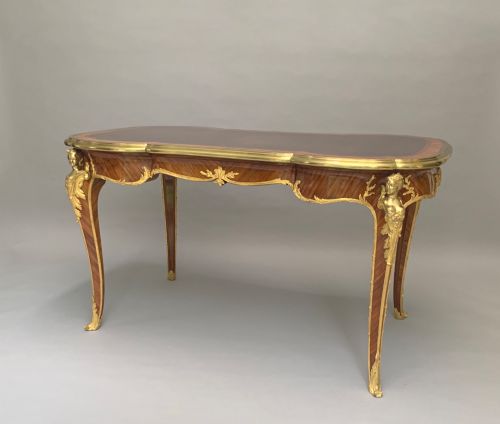
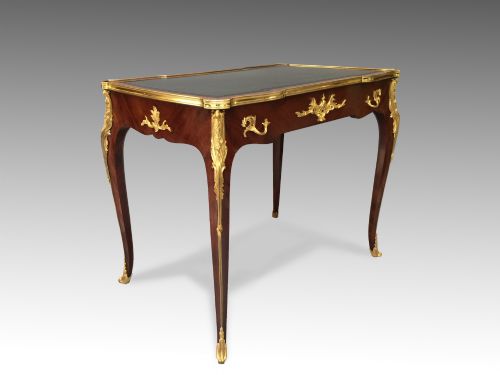
Gilt bronze and ormolu mounts were cast and chased to accentuate the shoulders and feet of the cabriole legs, while brass hardware secured the key escutcheons. Writing surfaces were routinely inset with tooled leather or suede to provide a durable writing plane.
Listings feature 19th-century pieces alongside 18th-century examples, utilising kingwood, rosewood, walnut, and ormolu.
Assessing Quality
The standard of a piece depends heavily on the precision of the cabinet work, particularly the alignment of the parquetry and the crispness of the cast ormolu mounts. Finer examples exhibit hand-chased bronze details that integrate smoothly with the timber contours rather than appearing stiff or poorly fitted.
Selection of timber veneers and the fluency of the serpentine curves further distinguish workshop output, with superior items showing balanced grain patterns and careful attention to secondary woods inside the drawers.
Francois Linke·Edwards and Roberts·Durand·CH Jeanselme and Co
The French Cabriole Leg Desk Glossary
- Cabriole leg
- A furniture leg that curves out at the knee and tapers inward to the foot, mimicking animal limbs in the rococo style. This profile defines the silhouette of these desks.
- Ormolu
- Gilded bronze mounts applied to furniture edges and legs for decorative effect. The metal is cast and then finished with mercury gilding or modern electroplating.
- Marquetry
- Decorative veneer work forming pictures or patterns using various woods. Craftsmen assemble thin slices of timber to create floral or architectural motifs on the desk surface.
- Parquetry
- Geometric wood inlay forming repeating patterns such as cubes or chequers. It provides a structured textural contrast to organic floral marquetry.
- Bureau plat
- A flat-topped writing table with drawers in the frieze, typically freestanding. These tables form a primary category of continental desks.
- Bonheur du jour
- A small lady's writing desk featuring a tiered superstructure with shelves and small drawers above the main writing surface. They often stand on slender cabriole legs.
French Cabriole Leg Desk: Frequently Asked Questions
What is a bureau plat?
A bureau plat is a freestanding writing table featuring drawers within the frieze and a finished back, allowing it to sit in the centre of a room.
These tables provide a generous writing surface, often lined with leather, supported by four cabriole legs.
How do I identify Louis XV style?
Louis XV style furniture relies on asymmetrical curves, floral marquetry, and sweeping cabriole legs that avoid straight lines.
Ormolu mounts frequently accent the knees and feet, echoing the rococo aesthetic popular during revival periods.
Where were these desks placed?
These desks served as writing and correspondence tables in private sitting rooms, salons, and home libraries.
Freestanding models sat away from walls to display finished backs and decorative parquetry.
What woods are common?
Makers utilised kingwood, rosewood, walnut, and mahogany as primary structural and decorative timbers for these pieces.
Satinwood and amboyna also appear in veneers, contrasted with gilt bronze ormolu mounts.