
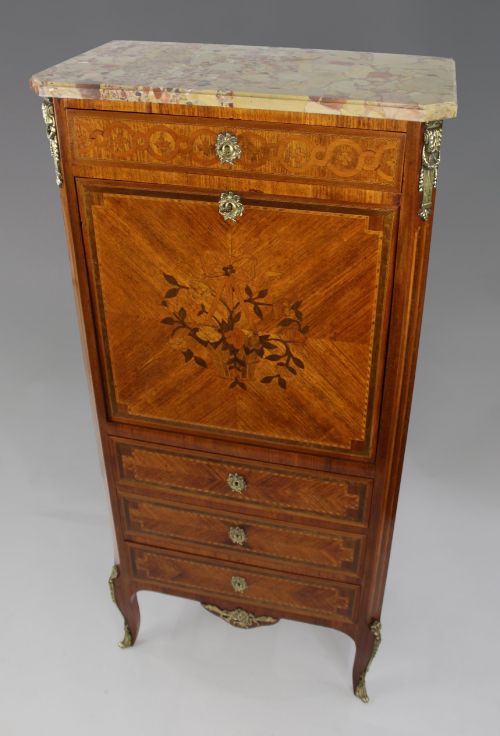
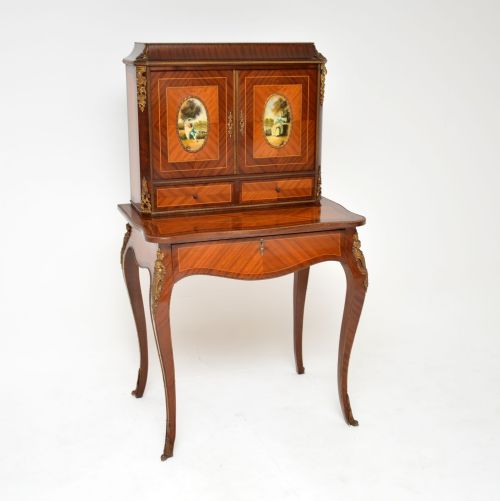


Louis XV Escritoire
These pieces known as louis xv escritoire examples bring continental curves and fitted writing surfaces into a room.
Louis XV Escritoire
A louis xv escritoire represents a specific form of continental writing furniture designed for private correspondence and the storage of papers. The pieces appearing here span the nineteenth century, including revival eras from eighteen seventy through to nineteen thirty, alongside earlier seventeenth and eighteenth century origins.
Buyers encounter various formats within this search phrase, ranging from tall secretaire a abattant cabinets to kidney shaped ladies writing desks and bureau de dame tables. Most items originate from French workshops following the rococo revival style, though related English interpretations also appear in the record.
The construction frequently incorporates a drop front writing flap that conceals internal pigeonholes and small drawers. Smaller variants such as the bonheur du jour and writing cabinets provide compact surfaces suited to domestic writing tasks.
What varies in quality
The refinement of the marquetry and the precision of the wood matching dictate the primary tier of craftsmanship in these pieces. Finer cabinets display complex floral or pictorial inlaid scenes executed with varied timbers rather than simple geometric banding.
The weight and detail of the cast ormolu mounts separate standard production from superior examples. Hand chased bronze or ormolu elements that integrate smoothly with the wood contours demonstrate higher workshop standards.
The integrity of the internal mechanisms, including the drop front hinges and locking systems, marks the distinction between utilitarian items and exceptional cabinet work.
Some nineteenth century ladies love writing desks complete with hidden compartments designed for secret love letters.
Saunier
The Louis XV Escritoire Glossary
- Escritoire
- A writing cabinet featuring a sloping or drop down writing surface. These pieces often include internal compartments for stationery and letters.
- Ormolu
- Gilded bronze applied as decorative mounts to furniture frames. The technique involves mercury amalgamation on cast brass or bronze.
- Marquetry
- Decorative veneer work formed by fitting pieces of various coloured woods into a design. Craftsmen apply these patterns to exterior cabinet surfaces.
- Secretaire a abattant
- An upright writing cabinet with a fall front panel that opens to reveal drawers and pigeonholes. This tall form conserves floor space while offering substantial storage.
- Bonheur du jour
- A light lady's writing desk featuring a small cabinet or set of shelves upon the upper surface. The form emerged during the mid eighteenth century and remained popular through revival periods.
Louis XV Escritoire: Frequently Asked Questions
What is a louis xv escritoire?
A louis xv escritoire is a compact writing cabinet or desk characterised by curved cabriole legs and serpentine outlines. These pieces typically include a fall front flap that opens to create a writing surface.
They emerged from French cabinet making traditions and saw significant revival production throughout the nineteenth century. The design prioritises domestic utility combined with decorative wood veneers and metal mounts.
How do I use an escritoire daily?
An escritoire functions well as a practical writing desk or laptop station within a study or living room. The drop front panel provides a stable surface for correspondence when open.
Internal compartments organise stationery, letters, and small accessories. Closing the front conceals the working area and restores a tidy appearance to the room.
Where should I place this desk?
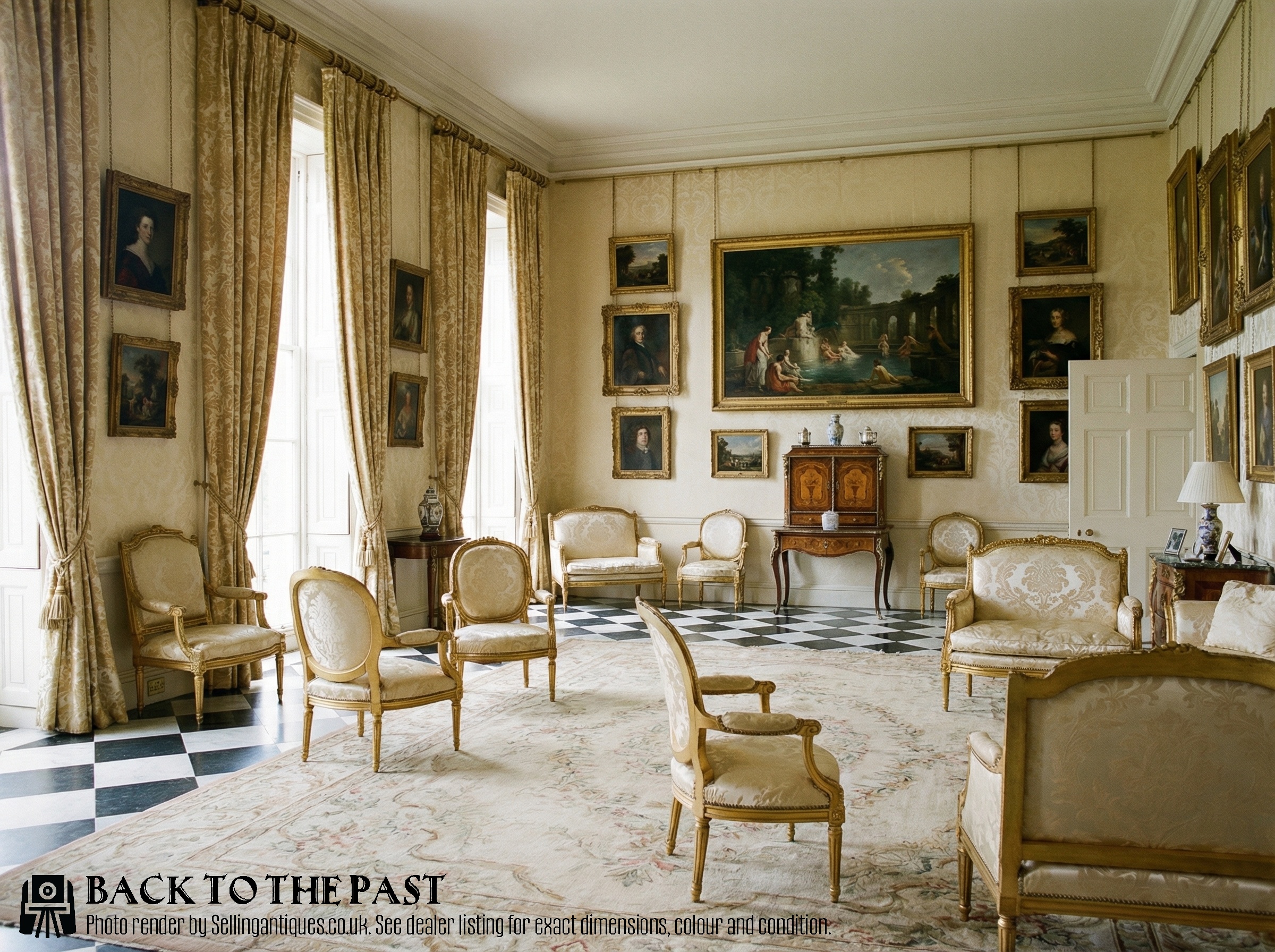
These pieces suit placement against a principal wall where their marquetry and ormolu mounts receive adequate light. Avoid positioning them in direct sunlight to protect the polished wood surfaces and leather inserts.
Because many examples feature finished backs or refined proportions, certain models can also anchor the perimeter of a larger reception room.
How do I distinguish revival periods?
Nineteenth century revival pieces often combine eighteenth century stylistic elements with construction methods typical of the Victorian era. Examining the secondary timbers inside the drawers helps clarify the manufacturing date.
Earlier eighteenth century examples display hand cut joinery and native continental woods, whereas later nineteenth century iterations frequently incorporate machine sawn components alongside revival aesthetics.