


Brass Mounted Escritoire
A brass mounted escritoire is a fitted writing cabinet defined by metal mounts, built for private correspondence and prized for refined French styling.
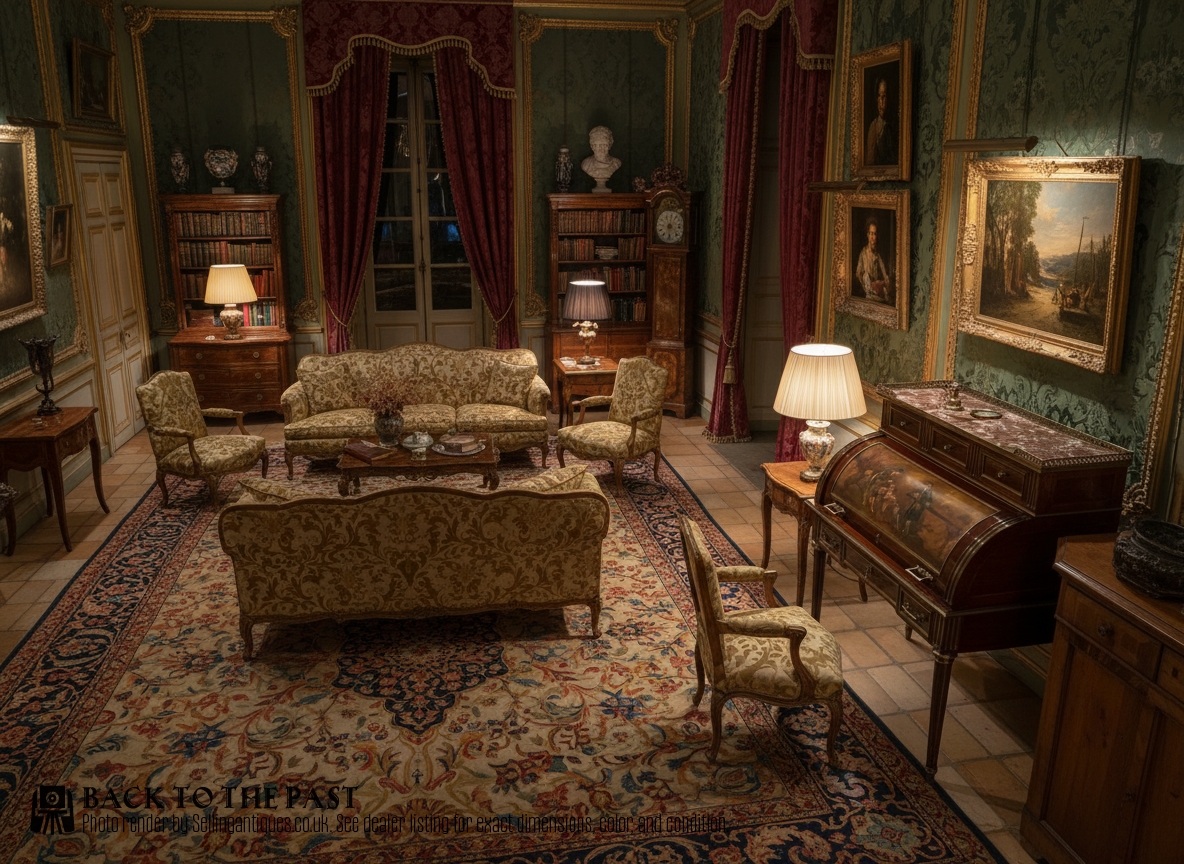
Brass Mounted Escritoire
When you search for a brass mounted escritoire, you encounter sophisticated writing furniture rooted primarily in French design traditions. These pieces combine a vertical or slant-front cabinet with integrated writing surfaces and internal compartments.
The selections available here lean heavily into 19th-century interpretations, including Regency examples and revival pieces. Forms range from compact ladies desks and bonheur du jours to full-scale cylinder escritoires.
Originating largely from French workshops, these items reflect the enduring appeal of Louis styles and Victorian adaptations. The typical piece employs exotic timbers accented by metallic enrichment to frame the writing space.
How they were made
Cabinetmakers constructed these writing pieces using dense hardwoods such as mahogany, walnut, and rosewood as a foundation. Skilled artisans often applied intricate marquetry inlay or applied lacquer finishes like Vernis Martin to enhance the timber surfaces.
Metal enrichment forms a defining characteristic, utilising cast brass and ormolu mounts to edge drawers, frame panels, and cap feet. Additional detailing incorporates inset leather writing surfaces and marble tops.
Internal compartments frequently conceal secret drawers and small pigeonholes designed for stationery and valuables. Construction methods prioritised both display elegance and functional security for personal correspondence.
Secret drawers lurk within these cabinets, waiting for letters written when ink pots ruled the desk.
What varies in quality
Quality differences stem from the precision of the timber selection and the sharpness of the brass or ormolu mounts. Finer examples display crisply chased metalwork integrated seamlessly into the cabinet structure rather than superficial application.
The sophistication of the internal mechanism, such as cylinder actions or concealed secret drawers, separates standard production from superior craftsmanship. Marquetry detail and the integrity of marble tops further distinguish the hierarchy of pieces.
John MaClean
The Brass Mounted Escritoire Glossary
- Escritoire
- A writing cabinet featuring a fall-front or cylinder desk configuration. It typically conceals a fitted interior with small drawers and pigeonholes.
- Ormolu
- Gilded bronze used for decorative mounts and furniture trim. It provides a bright metallic contrast against dark hardwoods.
- Bonheur du jour
- A light lady writing desk featuring a small tiered cabinet or superstructure on the top. This French form gained popularity during the 18th and 19th centuries.
- Marquetry
- Decorative veneer patterns formed by fitting together small pieces of wood and other materials. It creates pictorial or geometric designs across the surface.
Brass Mounted Escritoire: Frequently Asked Questions
What is a brass mounted escritoire used for?
These cabinets serve as dedicated writing desks designed for private correspondence and the storage of stationery. The drop-front or cylinder mechanism provides a concealed writing surface that closes away when not in use.
Internal compartments and secret drawers offer secure spaces for letters, documents, and small valuables. Beyond utility, they function as decorative display furniture within a room.
How do I identify a French revival escritoire?
Revival pieces display stylistic elements borrowed from Louis XV and Louis XVI periods, often executed during the 19th century. Look for characteristic curves, floral marquetry, and prominent brass or ormolu mounts.
Construction details and timber ageing help distinguish these later interpretations from original 18th-century pieces. The presence of marble tops and specific revival proportions offer further clues.
Where should I place an escritoire at home?
An escritoire suits study spaces, living rooms, or bedrooms where its decorative front can be appreciated. Because many finished backs are designed to face walls, placement typically relies on positioning the front outward.
Consider room lighting to highlight the brass mounts and timber grain without exposing the wood to direct sunlight that might fade veneers.