




French Escritoire Desk
A French escritoire desk combines refined continental cabinetry with a drop-front writing surface designed for correspondence and private papers.
French Escritoire Desk
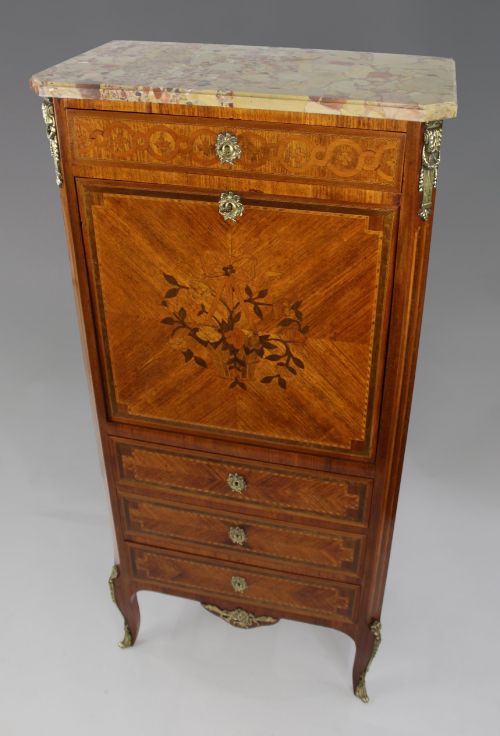
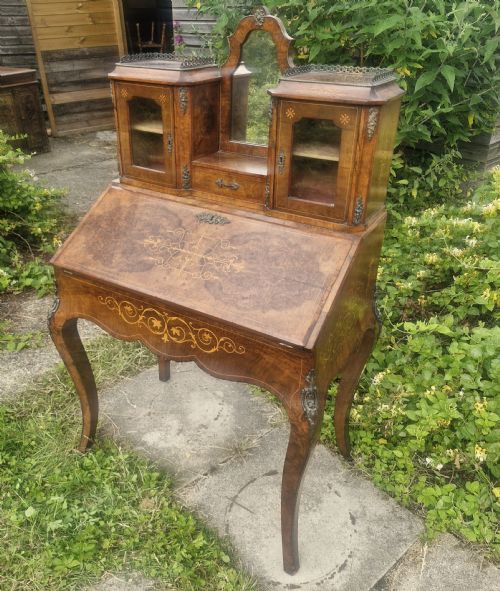
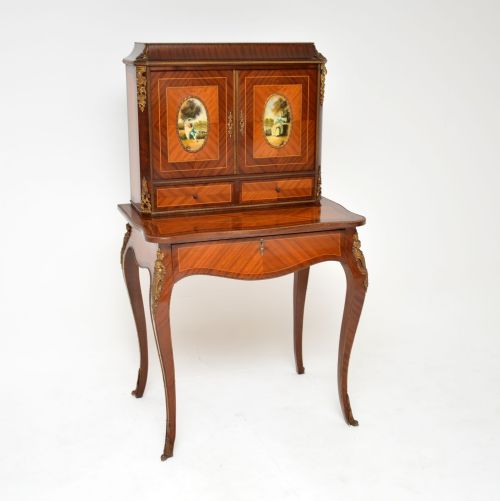
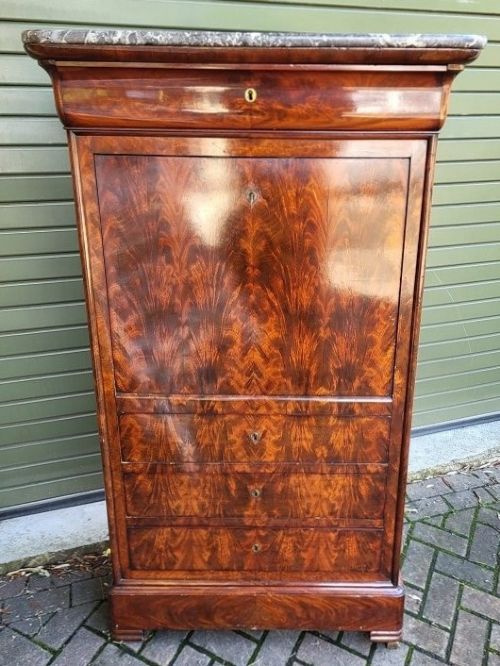
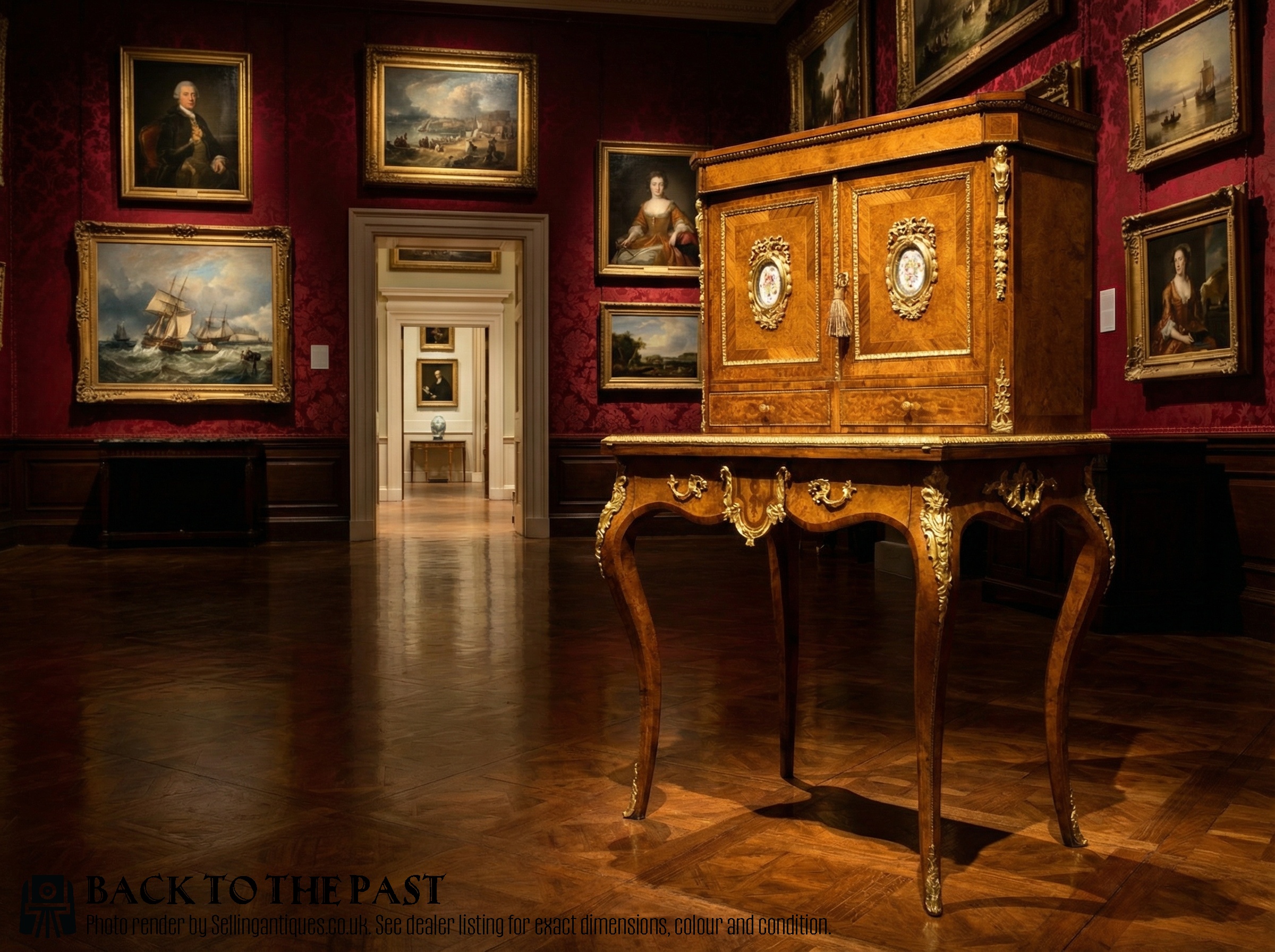
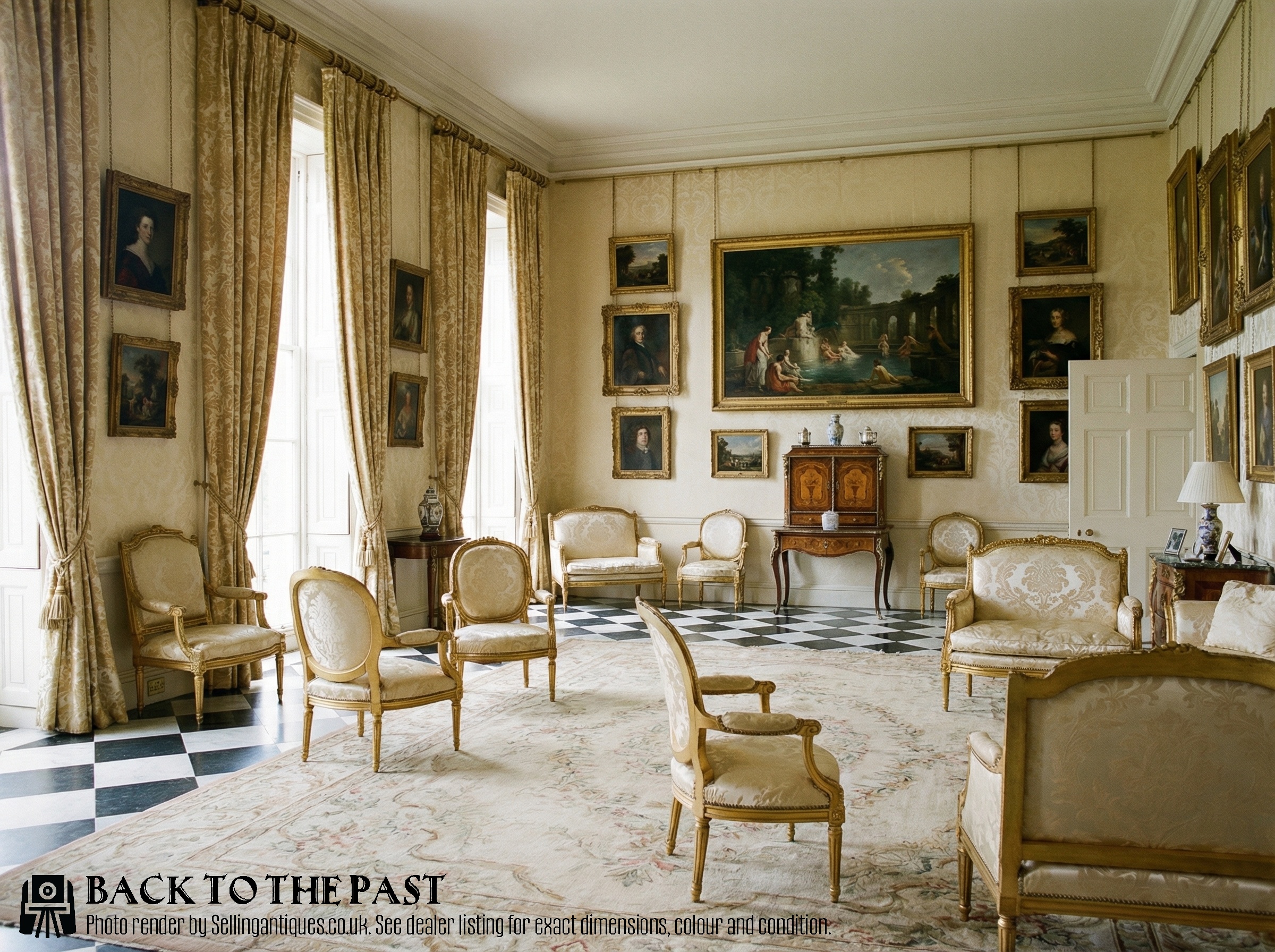
A French escritoire desk is primarily encountered in nineteenth-century forms, including the tall secretaire à abattant and the smaller bonheur du jour designed for ladies. These pieces bridge the gap between ornamental cabinetry and functional writing furniture, featuring internal compartments suited for letters and stationery.
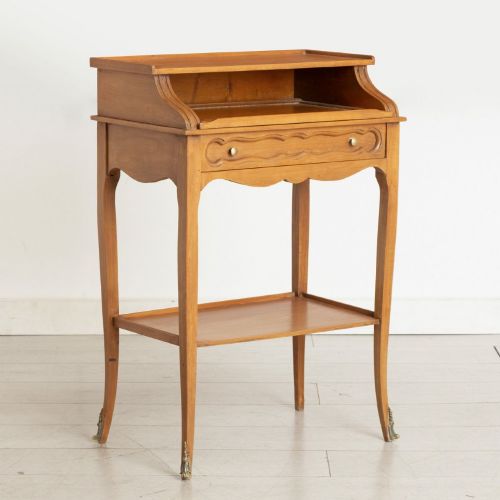
The selection ranges from robust mahogany and walnut iterations to highly decorative marquetry pieces dressed in ormolu mounts and marble tops. Buyers will find variations from provincial fruitwood writing tables to elaborate revival styles influenced by Louis XV and Louis XVI aesthetics.
Materials and construction
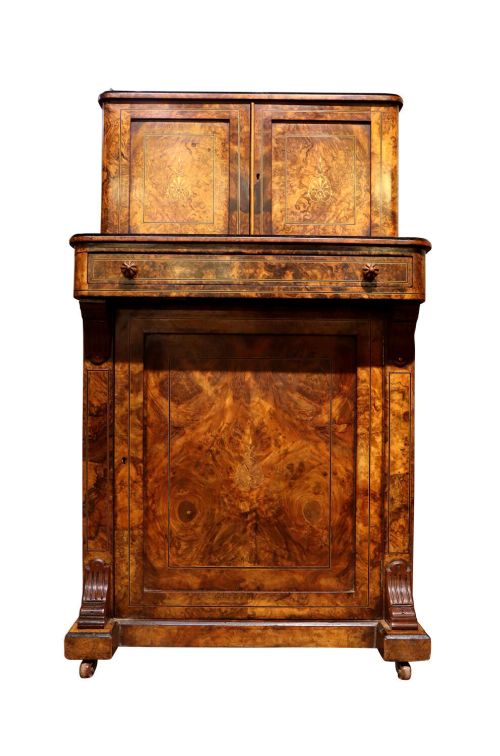
Cabinetmakers utilised dense hardwoods such as mahogany, rosewood, kingwood, and burr walnut as foundational timbers, frequently applying intricate marquetry patterns across the exterior surfaces. Decorative veneers were carefully selected for grain movement and visual contrast.
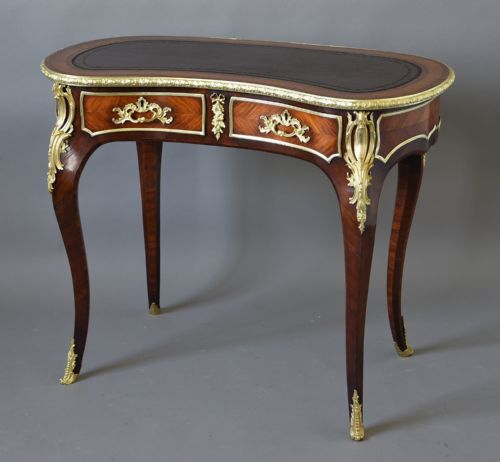
Cast bronze ormolu mounts, brass inlay, and polished marble tops complete the construction of many pieces, while specialised panels employ Vernis Martin finishes to achieve glossy, painted pictorial scenes.
French Escritoire Desk Retail Price Guide 2026
Typical asking prices for french escritoire desk among the pieces listed under this phrase on Sellingantiques today, from the lower quarter to the upper quarter. They describe what is for sale here now, not the wider market.
Many writing cabinets conceal secret drawers designed to outsmart curious visitors.
Elements of quality
Quality rests upon the precision of the marquetry work, the crispness of the cast ormolu mounts, and the integration of functional elements like secret drawers and drop-front mechanisms. Superior examples display seamless veneering across curved surfaces and heavy, well-cast bronze details rather than light pressed metal.
The structural integrity of the fall-front writing surface and the choice of secondary timbers inside the drawers indicate the standard of workshop execution, distinguishing mass-produced commercial items from finer cabinetwork.
Befort Jeune
The French Escritoire Desk Glossary
- Secretaire à abattant
- A tall upright writing cabinet with a hinged fall-front panel that opens to reveal a fitted interior of small drawers and pigeonholes. This vertical format maximises writing space while occupying a modest floor footprint.
- Bonheur du jour
- A light lady's writing desk featuring a small cabinet or tiered superstructure on top of the writing surface. The form gained popularity during the eighteenth century and remained a staple of Victorian revival furniture.
- Ormolu
- Gilded bronze mounts applied to the corners, feet, and friezes of furniture for decorative effect. The technique involves applying a gold amalgam to cast bronze before heating.
- Marquetry
- The art of applying pieces of veneer to a structure to form decorative patterns and pictures. Craftsmen cut various exotic woods to fit tightly together within geometric or floral designs.
- Vernis Martin
- A type of simulated Japanese lacquer developed in France during the eighteenth century. It uses multiple layers of varnish to create a translucent, polished surface over painted decorations.
French Escritoire Desk: Frequently Asked Questions
What is a french escritoire desk?
A french escritoire desk is a dedicated writing cabinet featuring a vertical body and a hinged fall-front writing flap. These pieces originated in France and provide hidden compartments alongside a polished desktop.
They serve as both ornamental furniture and practical storage for stationery and correspondence in domestic settings.
How were they used?
Owners used these desks for writing letters, managing household accounts, and storing private documents behind locked fall-front panels or secret drawers. The interior compartments kept inkwells, pens, and paper organised.
Smaller versions like the bonheur du jour were kept in sitting rooms for casual daytime correspondence rather than formal business.
How do I live with one?
Place the desk away from direct sunlight and heat sources to protect delicate wood veneers and marble surfaces. Ensure the fall-front hinges and supportstays are treated with care when opening the writing flap.
Regular polishing with appropriate wax maintains the lustre of woods like kingwood, walnut, and mahogany without harming the finish.
How do I identify periods?
Dating relies on stylistic revival cues, such as nineteenth-century interpretations of Louis XV rococo curves or Louis XVI neoclassical symmetry. Burr walnut, heavy ormolu mounts, and specific brass inlay techniques often point toward Victorian production.
Construction methods, timber choices, and secondary woods inside the drawers provide further clues to the decade of manufacture.