


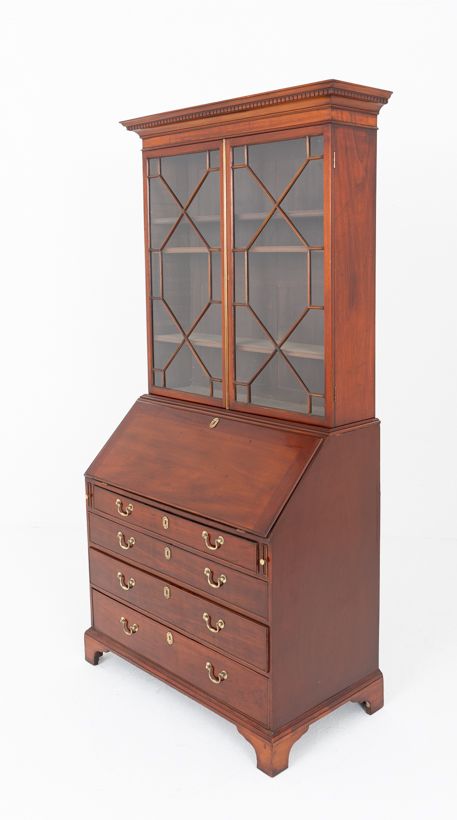
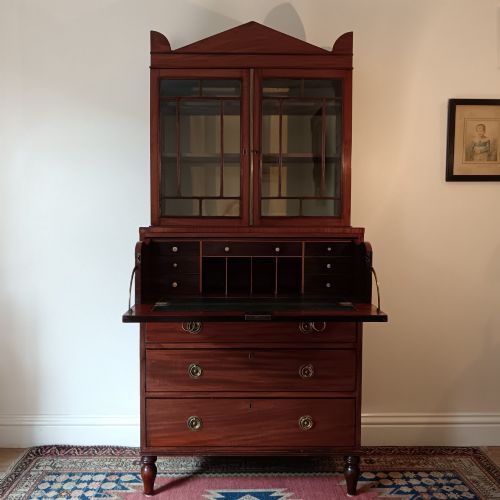
Glazed Secretary Desk
A glazed secretary desk combines a towering bookcase with a fitted writing drawer, offering both a display cabinet and a private workspace.
Glazed Secretary Desk
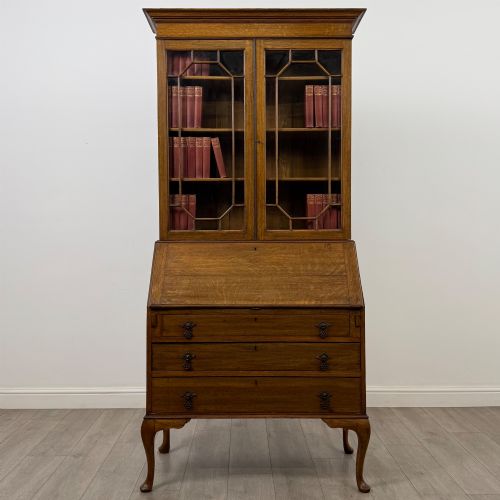
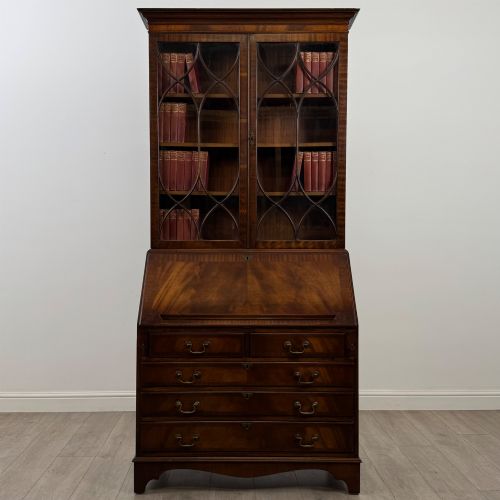
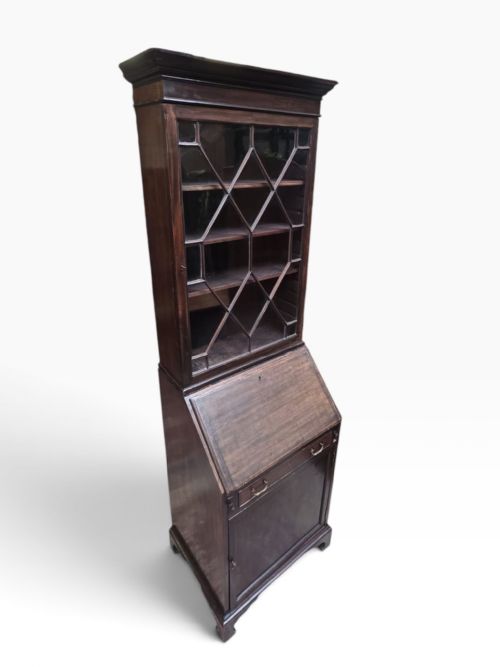
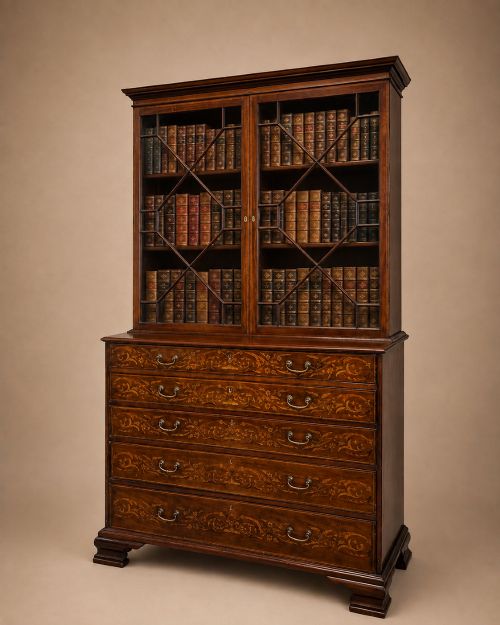
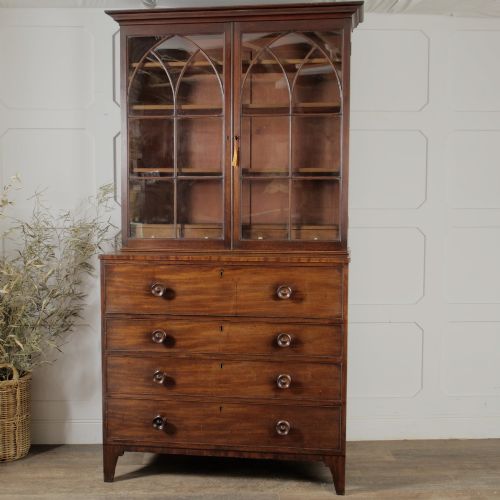
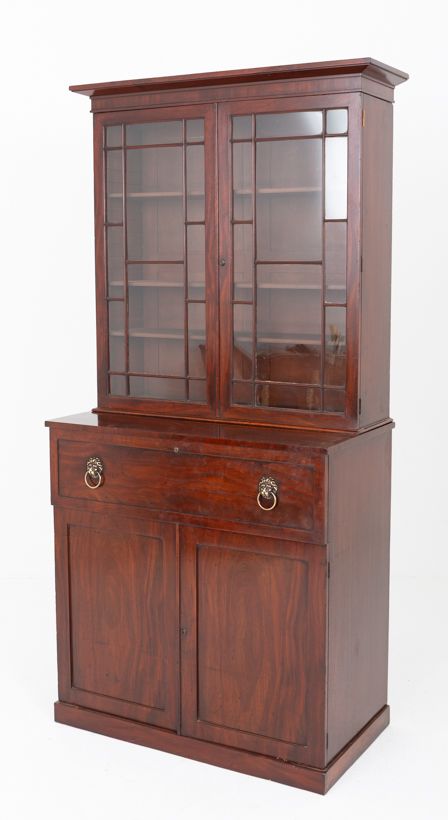
A glazed secretary desk, appearing in records as a bureau bookcase or secretaire bookcase, serves as a dual-purpose piece of furniture designed for writing and storage. The form pairs an upper cabinet enclosed by glass doors with a lower chest featuring a drop-front or cylinder desk section.
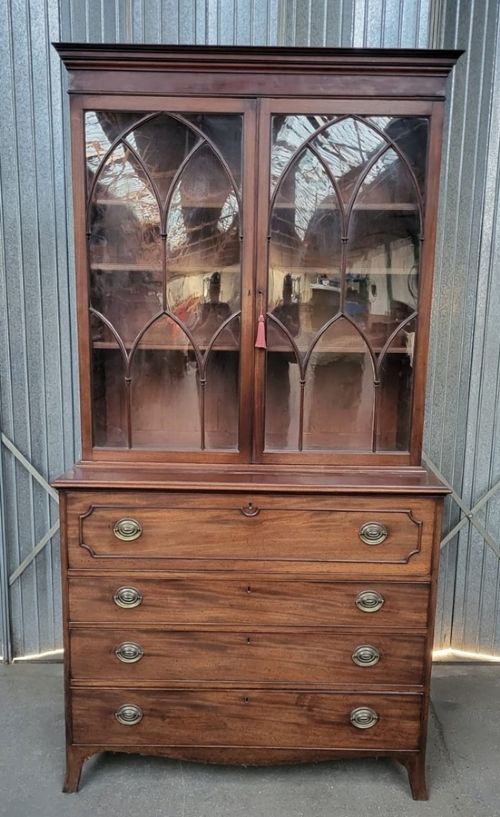
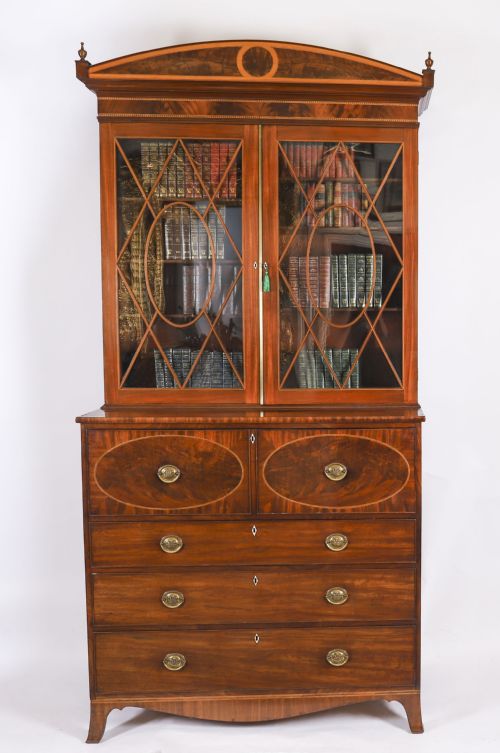
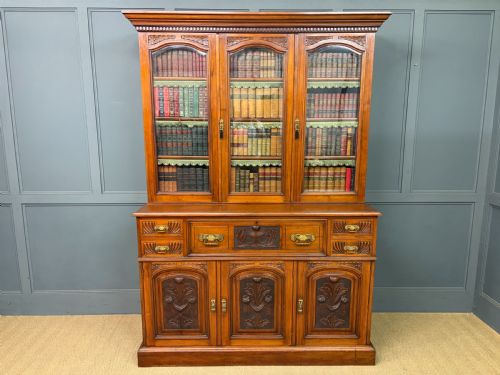
Examples on this page span several centuries, with Georgian and Regency mahogany pieces appearing alongside 19th-century walnut variants and Edwardian oak interpretations. The upper section typically shelters shelves for books or display, while the drop-down writing drawer conceals numerous small compartments and pigeonholes.
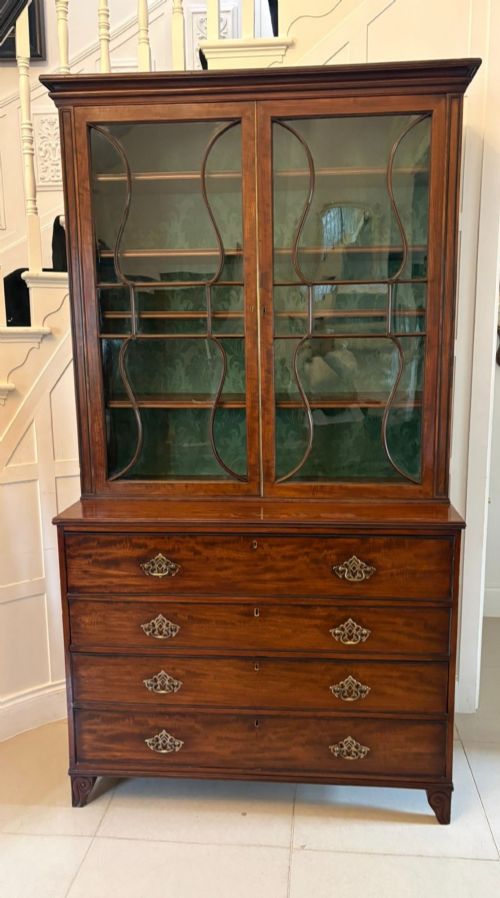
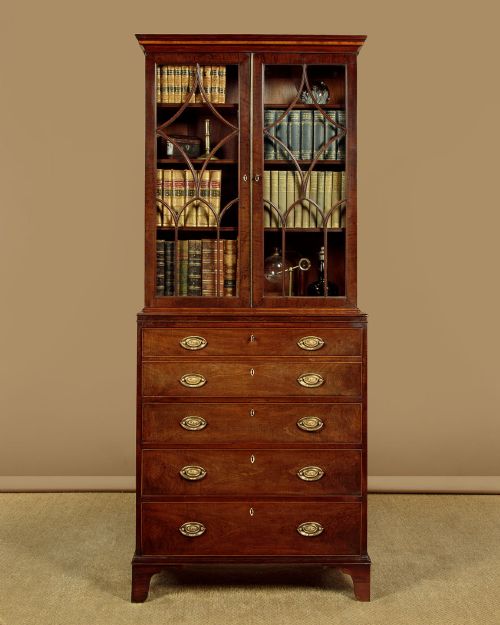
Buyers encounter variations ranging from tall, imposing George III libraries to smaller, more compact Edwardian formats. The combination of glazed upper doors and a concealed writing surface remains the defining characteristic across all periods.
How they were made
Cabinet makers constructed these pieces primarily using solid and veneered hardwoods, selecting mahogany, walnut, and oak for their structural stability and rich grain patterns. Satinwood and yew wood also appear as decorative accents, particularly in later Edwardian examples.
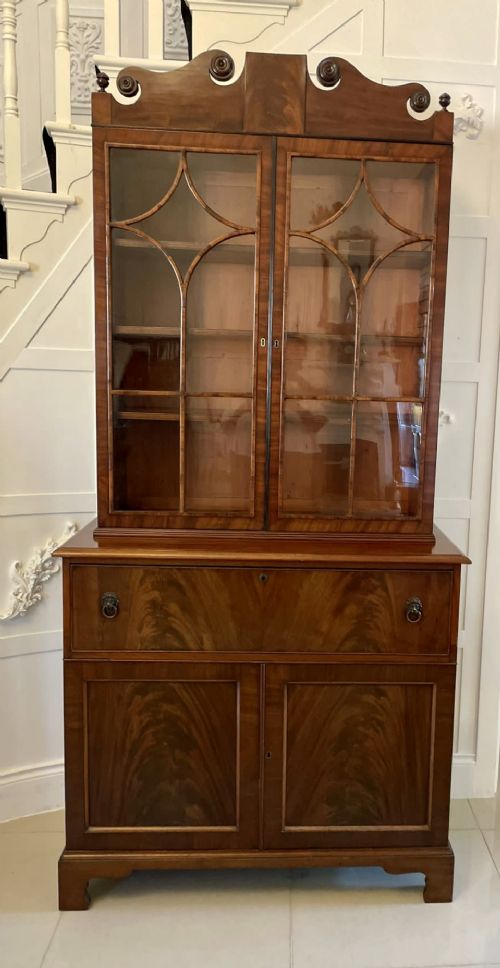
The upper glazed doors incorporate timber framing arranged in geometric or astragal patterns to hold individual panes of glass. Lower writing sections utilise hinged fall-fronts or cylinder mechanisms supported by internal brackets or pulls to create a sturdy writing surface.
Listings feature glazed secretary desk variants spanning the Georgian, Regency, and Edwardian eras, constructed in mahogany, oak, and walnut.
What varies in quality
The selection of timber grain largely dictates the visual merit of a piece, with figured mahogany, burr walnut, and matched flame veneers commanding higher regard than plain or unfigured boards. Inlaid details, such as satinwood banding or marquetry work, demand precise execution by the cabinet maker.
Construction methods reveal the standard of workshop output, particularly in the dovetailing of internal drawers and the thickness of secondary timbers used for drawer linings. Superior examples exhibit seamless integration of the writing mechanism and robust brass fittings that match the period of the piece.
Proportion and scale influence desirability, as taller carcasses require careful balancing to maintain elegance across the glazed top and lower bureau base. The clarity of the glass panes and the delicacy of the timber astragals further separate standard production from exceptional library furniture.
Tudor And Burrey·George Oakley·Edwards And Roberts·Gillows Of Lancaster
The Glazed Secretary Desk Glossary
- Secretaire
- A desk or writing cabinet featuring a fall-front drawer that pulls out to reveal a fitted interior of pigeonholes and small drawers.
- Astragal
- Moulding profiles used to hold glass panes within a door frame, dividing the glazed upper section into smaller geometric lights.
- Fitted interior
- The collection of small drawers, concealed compartments, and pigeonholes housed inside the writing section of the desk.
- Cylinder bureau
- A desk variation where the writing surface encloses beneath a rolling or rotating quarter-cylinder wooden drum.
- Flame mahogany
- Timber veneer cut from the branch forks of the mahogany tree, displaying a distinctive flamed or swirling grain pattern.
Glazed Secretary Desk: Frequently Asked Questions
What is stored in the upper section?
The upper cabinet houses wooden shelves designed to hold books, library volumes, or decorative ceramics behind glass doors. Adjustable shelf heights accommodate varying book sizes.
Glass panels protect the contents from dust while maintaining visibility across the room.
How do I date a glazed secretary desk?
Dating relies on timber selection, handle styles, and construction techniques visible in the drawer joints and internal framing. Georgian pieces often show hand-cut dovetails and solid mahogany construction.
Later Edwardian and Victorian examples introduce different veneer cuts, lighter secondary woods, and machine-assisted joinery.
Where does a glazed secretary desk fit best?
These tall pieces suit studies, libraries, or drawing rooms with sufficient wall space and ceiling height to accommodate their vertical presence. Placement near natural light helps illuminate the writing surface.
Floor protection and stable room humidity preserve the dry hardwood and antique glass construction.