
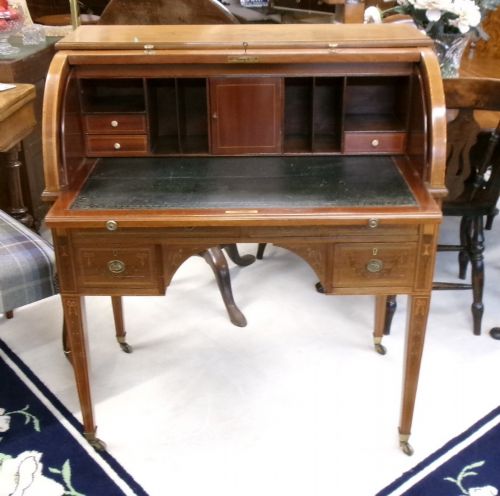
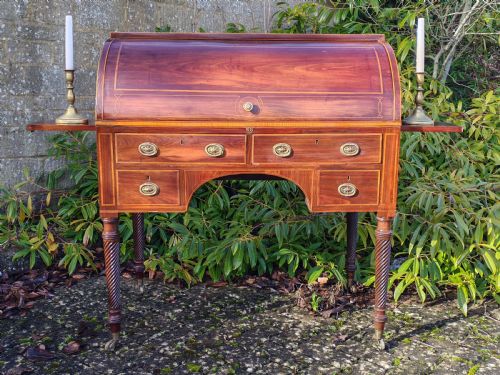
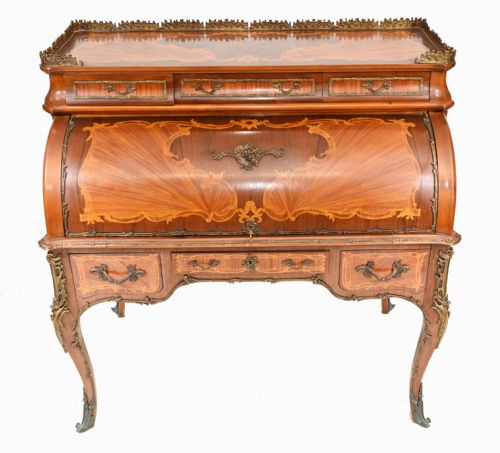


Inlaid Cylinder Bureau
An inlaid cylinder bureau conceals a sliding writing surface beneath a rolling cylindrical shutter, offering a sophisticated solution for private correspondence.
Inlaid Cylinder Bureau
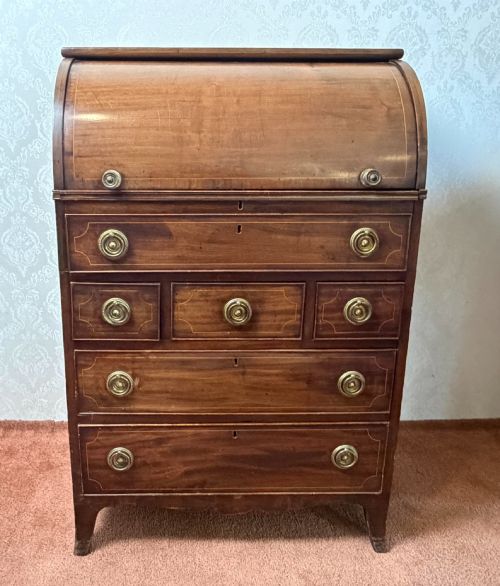
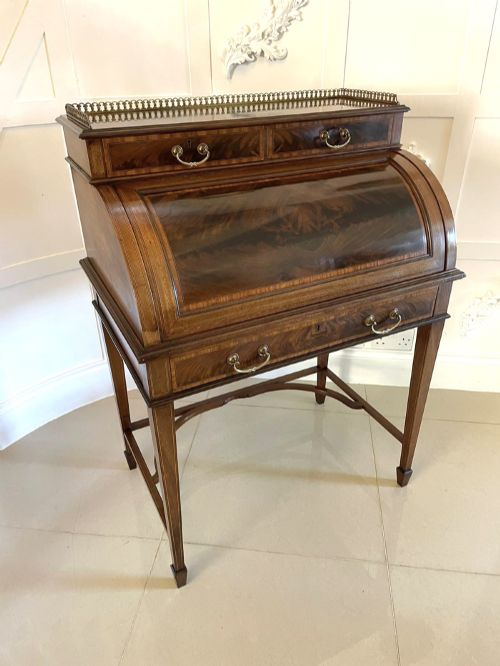
An inlaid cylinder bureau combines a curved wooden shutter with a pull-out desk surface, appearing across Georgian, Regency, and Edwardian periods. These pieces range from compact ladies desks to substantial bureau bookcases fitted with upper shelving.
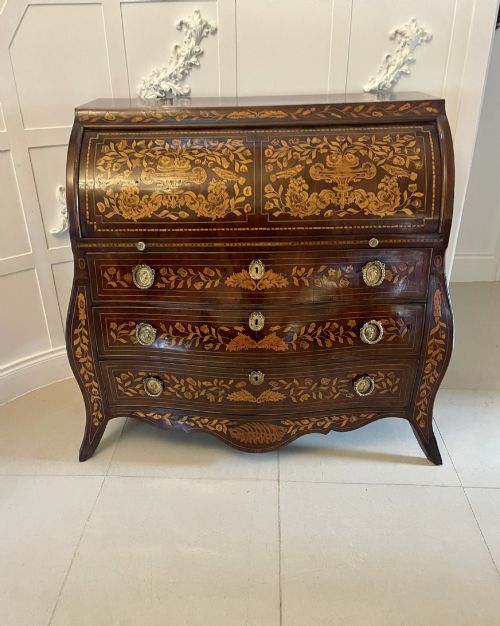
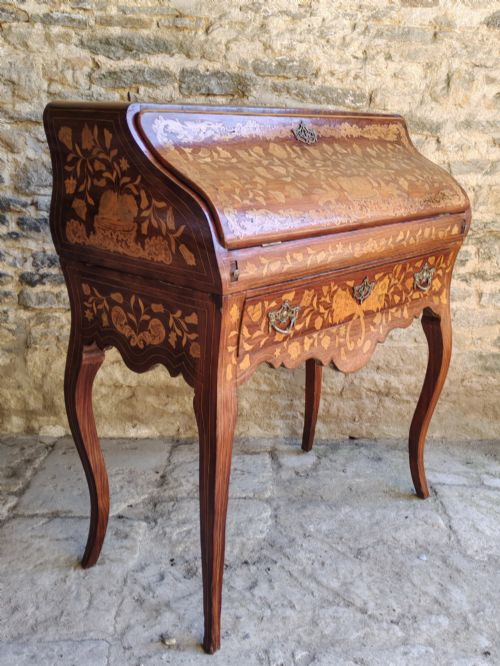
Makers utilised mahogany, satinwood, and walnut as primary carcases, often embellished with elaborate floral marquetry or contrasting stringing. Continental examples frequently display Dutch floral motifs on burr walnut or bombe fronts.
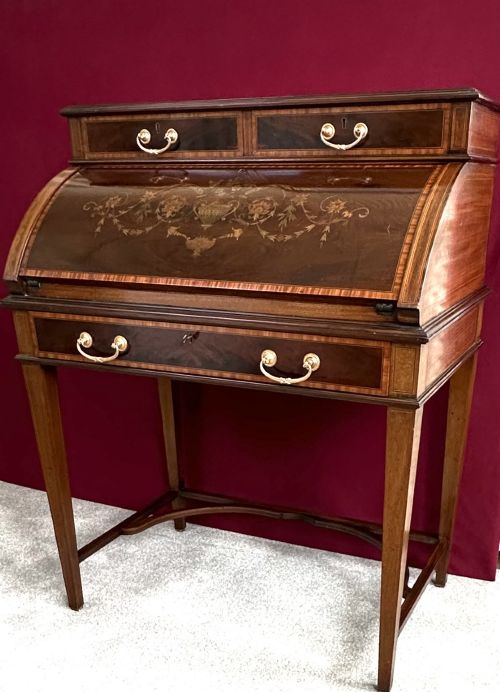
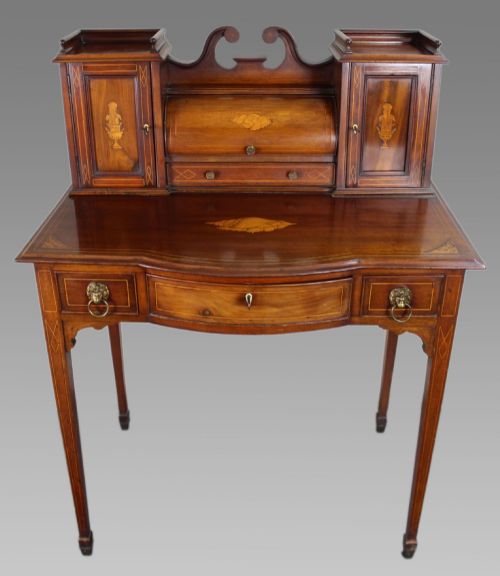
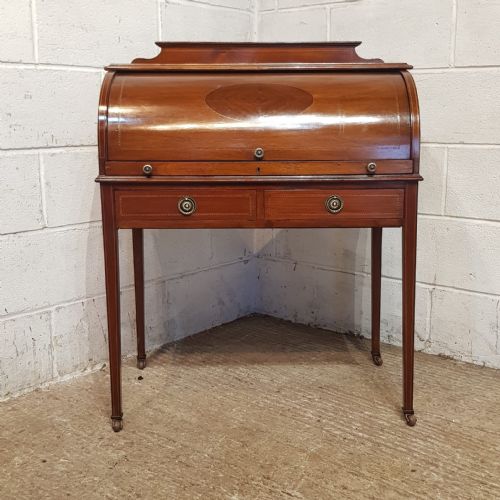
The Edwardian era produced numerous satinwood and mahogany versions in the Sheraton Revival style, alongside practical freestanding models designed for central room placement.
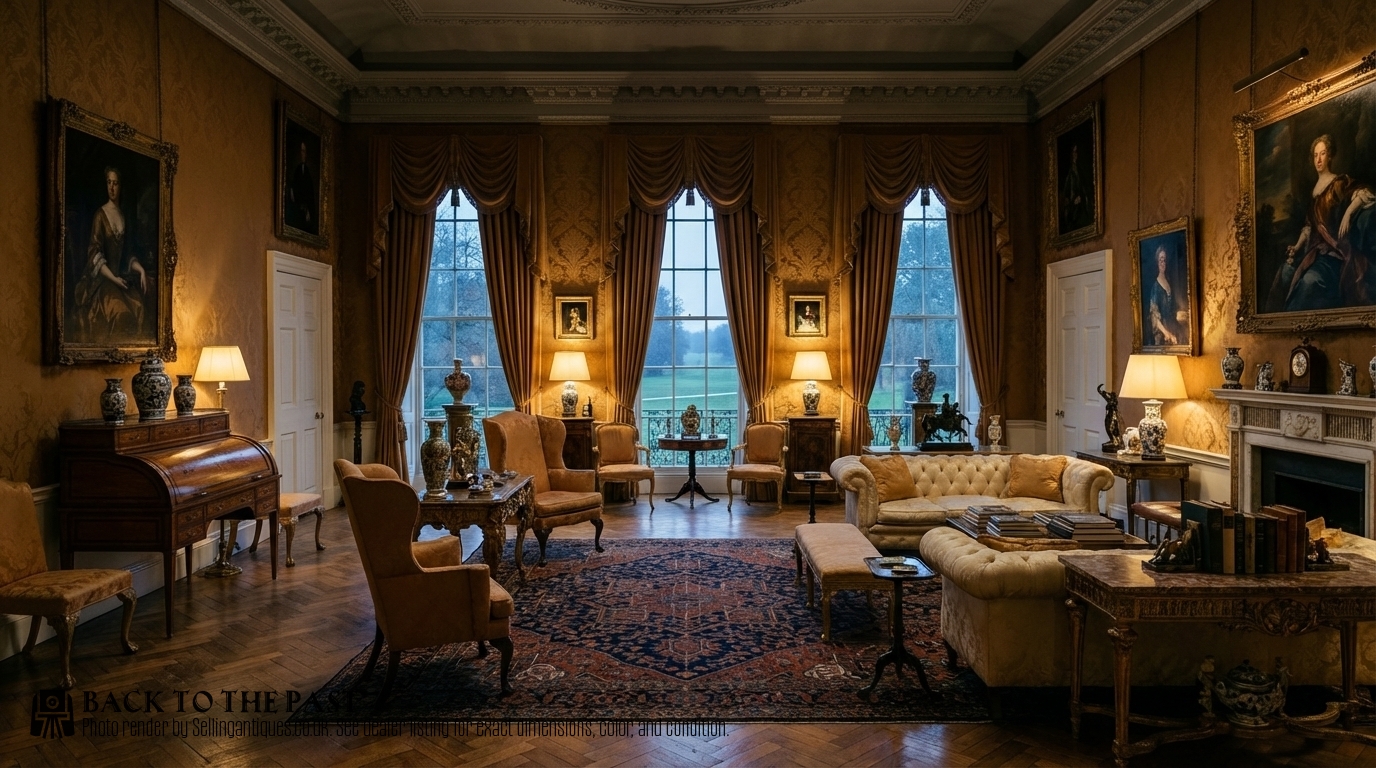
Craftsmanship and Proportion
Superior examples exhibit precise marquetry alignment across the rolling shutter and carcase, ensuring patterns flow continuously when closed.
The mechanical action of the interior mechanism dictates grade, where top-tier pieces feature synchronized writing surfaces that glide without lateral binding.
Timber selection and secondary wood usage separate standard production from master workshops, visible in the depth of grain and thickness of mahogany drawer linings.
Maple & Co·Edwards & Roberts·Jas Shoolbred·John Mclean
The Inlaid Cylinder Bureau Glossary
- Cylinder
- A rounded wooden shutter that rolls back into the desk body to reveal the interior fitted compartments.
- Marquetry
- Decorative patterns formed by fitting contrasting veneers into a prepared wooden ground.
- Tambour
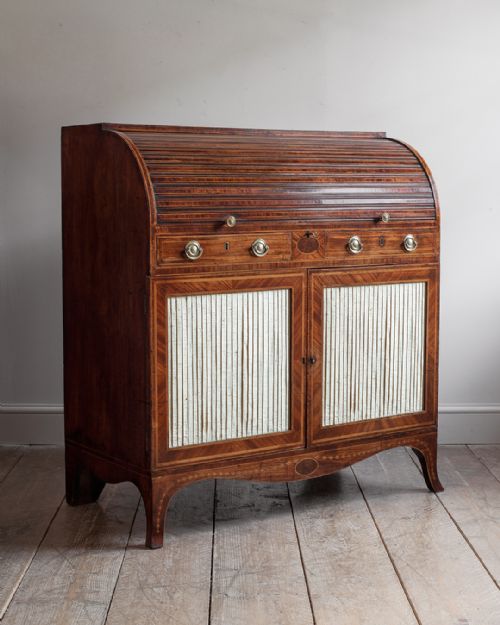
- A sliding shutter constructed from narrow strips of wood glued to fabric.
- Secretaire
- A desk fitted with drawers and pigeonholes designed for confidential writing.
- Stringing
- Fine inlay lines of contrasting timber used to outline panels and drawer fronts.
Inlaid Cylinder Bureau: Frequently Asked Questions
How does the cylinder mechanism operate?
The curved wooden shutter runs on tracks cut into the desk sides, guided by flexible backing strips that bend around the radius.
Pulling the writing slide forward often draws the cylinder back simultaneously through internal linkage arms.
What is the difference between a cylinder desk and a tambour desk?
A cylinder desk uses a solid curved wooden shell formed from staves, whereas a tambour desk employs individual slats joined to cloth.
Both serve the same function of concealing the desk interior when closed.
Where should I place a cylinder bureau in a room?
Many Edwardian and Regency models feature finished backs, allowing them to stand away from walls in the middle of a study.
Wall placement suits taller bureau bookcases with integrated glass display cabinets.
How do I date an inlaid cylinder bureau?
Georgian and Regency pieces display hand-cut dovetails and rich mahogany or satinwood patination, whereas Edwardian revivals often incorporate lighter satinwood and machine-made secondary woods.
Maker stamps from firms like Maple & Co usually point to late nineteenth or early twentieth-century production.