
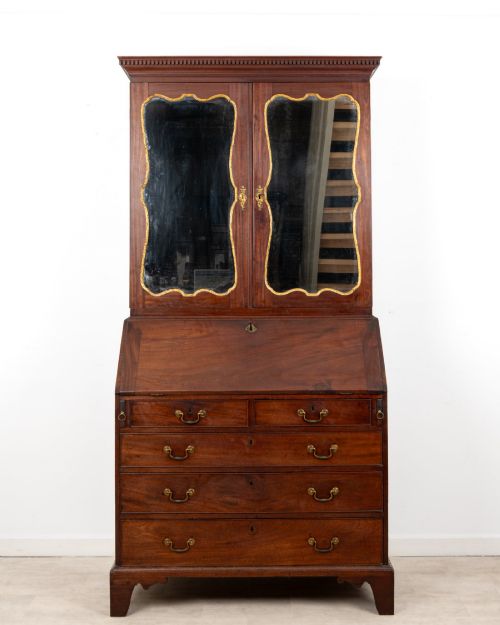
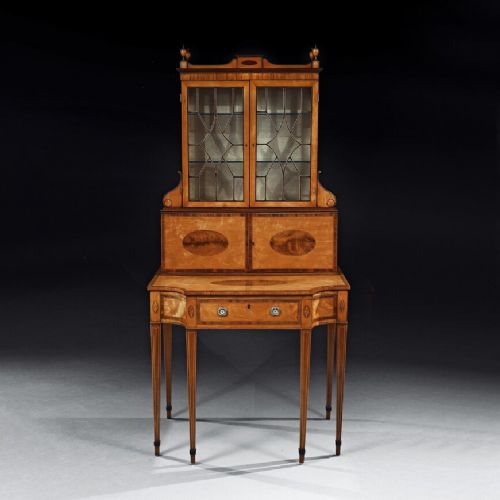
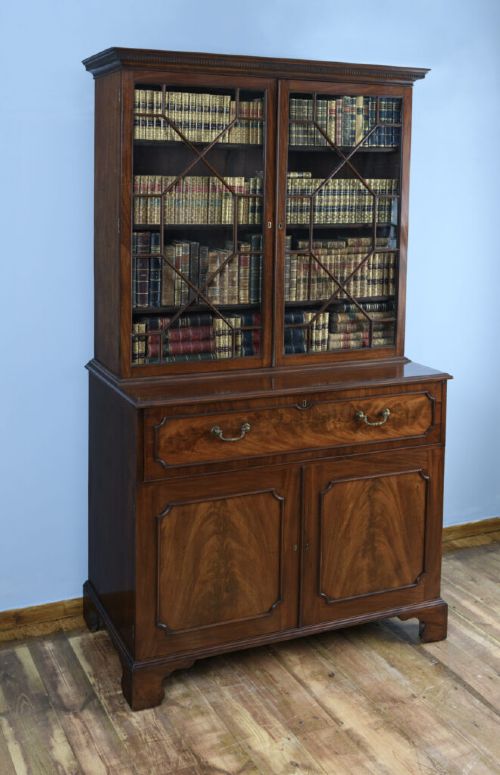

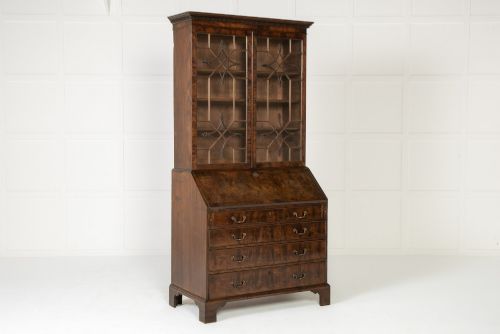


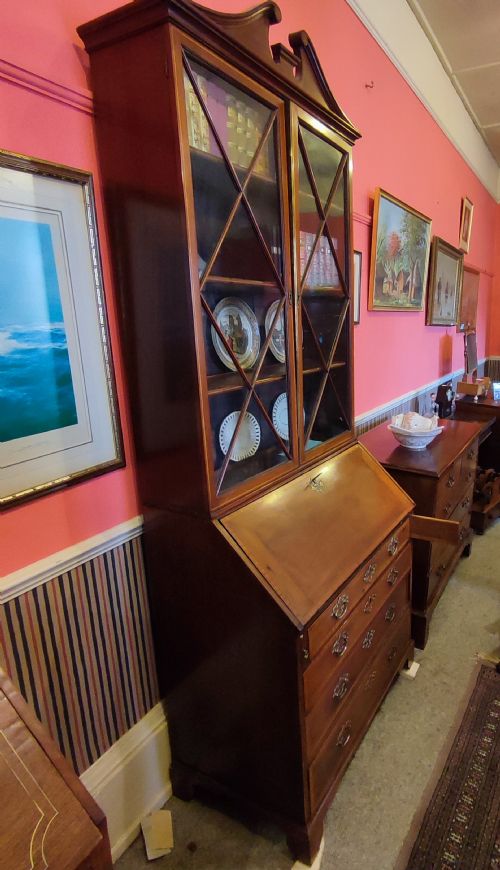


George III Bureau Bookcase
A george iii bureau bookcase is a dual-purpose storage cabinet and writing desk that brings grand proportions and architectural presence to a room.

George III Bureau Bookcase
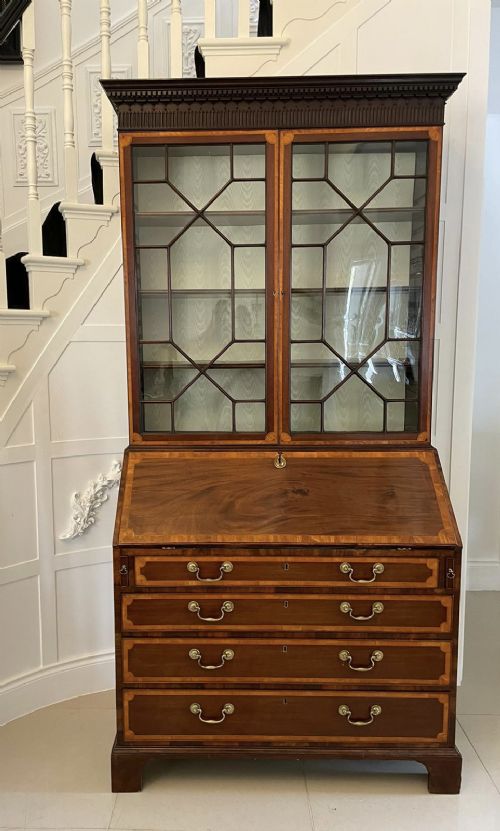
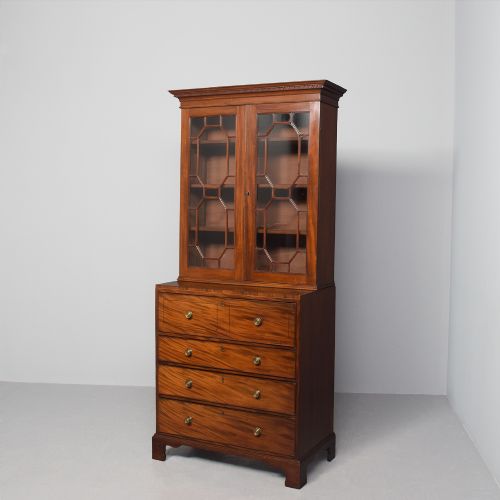
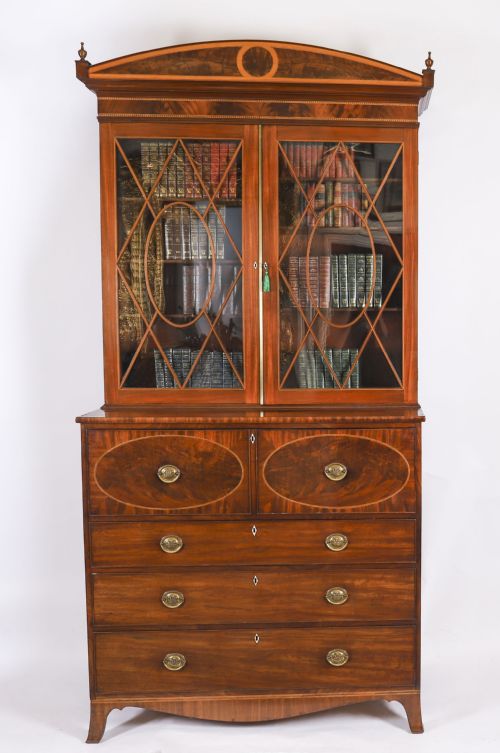
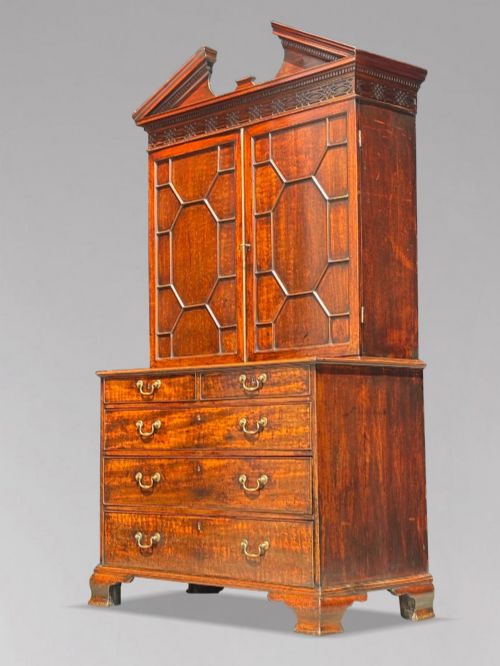
A george iii bureau bookcase combines a fitted writing drawer or fall-front bureau with upper shelving enclosed by glazed doors, dating predominantly from the eighteenth and early nineteenth centuries. These pieces reflect the neoclassical tastes of the Georgian period, often constructed as breakfront or library bookcases with panelled or glazed upper sections.
The dominant material found across these listings is mahogany, alongside figured flame mahogany, oak, satinwood, walnut, and sabicu. Pieces appear in various formats including secretaire bookcases, writing cabinets, and cylinder desks from around seventeen-seventy up to eighteen-twenty.
Buyers encounter variations ranging from compact bureau cabinets to substantial breakfront library bookcases. The lower section typically houses drawers or a drop-front writing surface concealing pigeonholes and small drawers.
Materials and Construction
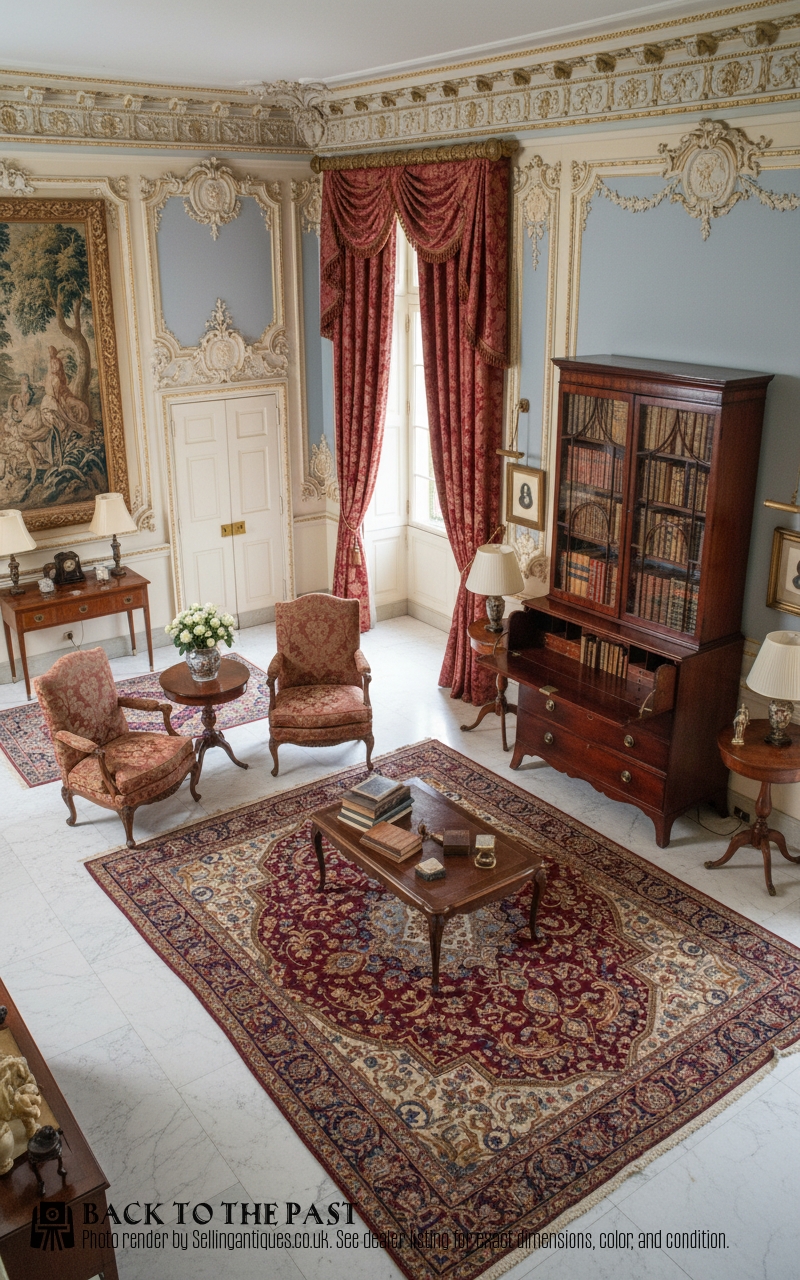
Cabinet makers utilised solid timbers and selected veneers such as flame mahogany and satinwood, often enhanced with contrasting stringing and inlay. Glass panes within the upper doors were held in wooden astragals, creating geometric or Gothic-inspired patterns.
Internal fittings rely on traditional joinery, with oak and mahogany secondary woods used for drawer linings. Brass hardware, including drop handles and escutcheons, secures the fitted compartments and external doors.
George III Bureau Bookcase Retail Price Guide 2026
Typical asking prices for george iii bureau bookcase among the pieces listed under this phrase on Sellingantiques today, from the lower quarter to the upper quarter. They describe what is for sale here now, not the wider market.
Many secretaire drawers hide tiny secret compartments behind dummy pigeonholes, designed for keeping private letters and spare keys.
Proportion and Detail
Quality rests upon the selection of timber veneers, such as well-figured flame mahogany or contrasting satinwood, matched symmetrically across the fall-front or drawer facades. Finer examples display meticulous inlay work and refined architectural cornices.
Structural proportions and the crispness of carved mouldings or astragal bars distinguish exceptional pieces from simpler utilitarian cabinets. The integration of internal secret compartments and the retention of original brass hardware elevate the standing of a piece.
Thomas Chippendale·Gillows
The George III Bureau Bookcase Glossary
- Secretaire
- A fitted writing drawer that pulls out from the main chest, dropping its front to reveal a leather-lined writing surface and internal pigeonholes. This innovation replaced the sloping fall-front bureau in many cabinet designs.
- Breakfront
- A cabinet design where the central section projects forward from the flanking outer sections. This architectural arrangement creates depth and visual weight.
- Astragal
- The slender moulded wooden strip that holds individual panes of glass within the upper bookcase doors. These bars form geometric patterns characteristic of the period.
- Flame mahogany
- A veneer cut from the fork of the mahogany tree where the branch joins the trunk. It produces a distinctive fiery, rippled grain pattern.
- Sabicu
- A dense tropical hardwood resembling mahogany, utilised in select cabinet pieces during the eighteenth century. It provides exceptional weight and a rich dark tone.
George III Bureau Bookcase: Frequently Asked Questions
How do I date a george iii bureau bookcase?
Dating relies on examining secondary woods, handle fixings, and overall stylistic changes between seventeen-sixty and eighteen-twenty. Earlier pieces often display robust Chippendale influences and solid proportions, whilst later examples incorporate satinwood veneers and cylinder desks.
Construction methods inside the drawer linings and the design of the astragal bars on the upper glass doors also offer clear chronological markers.
Where should I place a large breakfront bookcase?
These substantial cabinets require a substantial wall with stable environmental conditions, away from direct sunlight and sudden temperature fluctuations that affect wood and veneer. Their architectural presence suits traditional libraries, studies, or spacious living rooms with high ceilings.
Ensure adequate floor clearance for dropping the writing flap or pulling out the secretaire drawer.
Are the glass doors on these bookcases original?
Original glass panes often display minor bubbles, imperfections, or slight waviness consistent with eighteenth and early nineteenth-century manufacturing techniques. The wooden astragals holding the glass should match the internal construction wood and show consistent wear.
Examining the rebate holding the glass helps confirm whether the glazing dates to the original period of manufacture.