


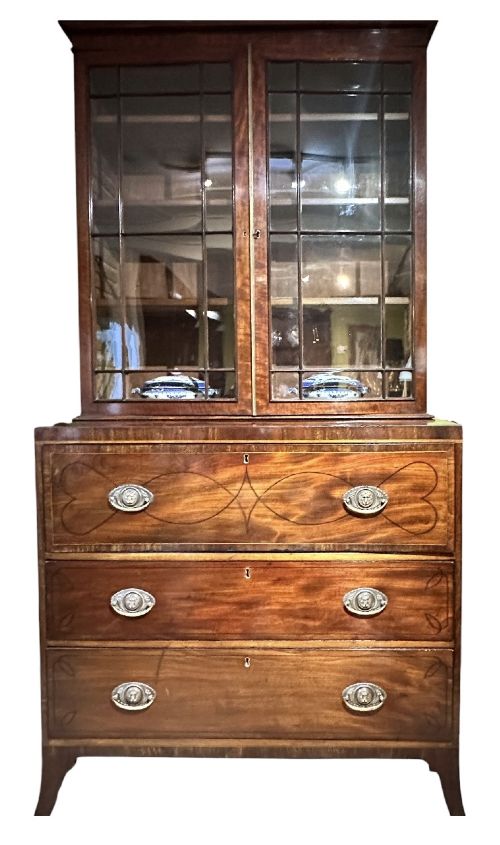
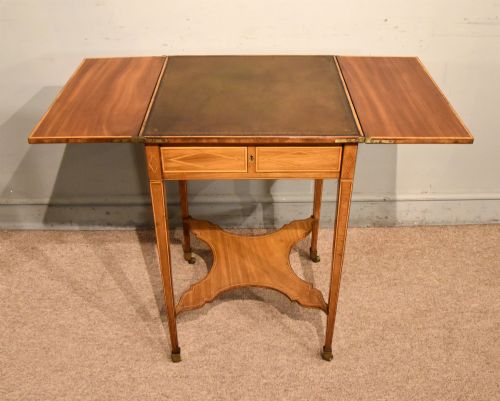
Inlaid Wood Desk
When you search for an inlaid wood desk, you encounter centuries of cabinet-making skill that bring rich visual detail into a room.
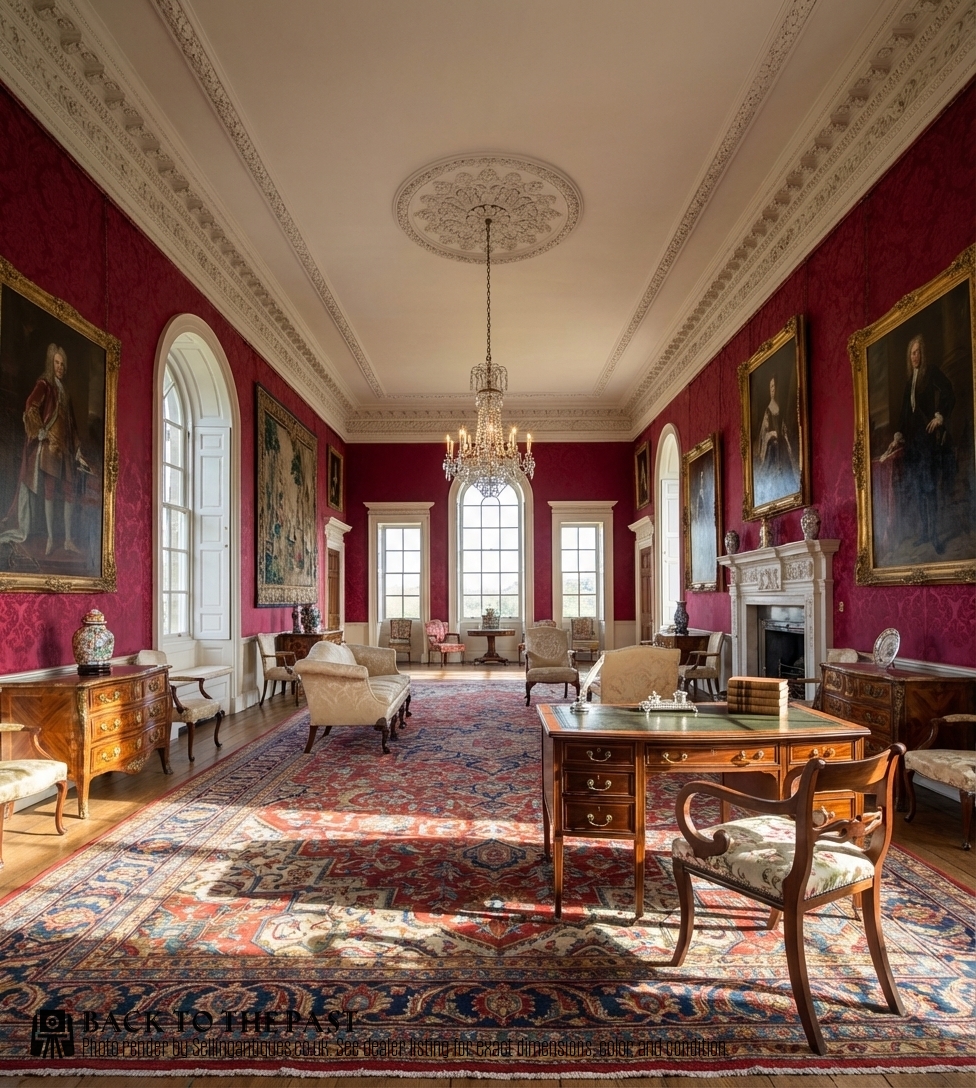
Inlaid Wood Desk
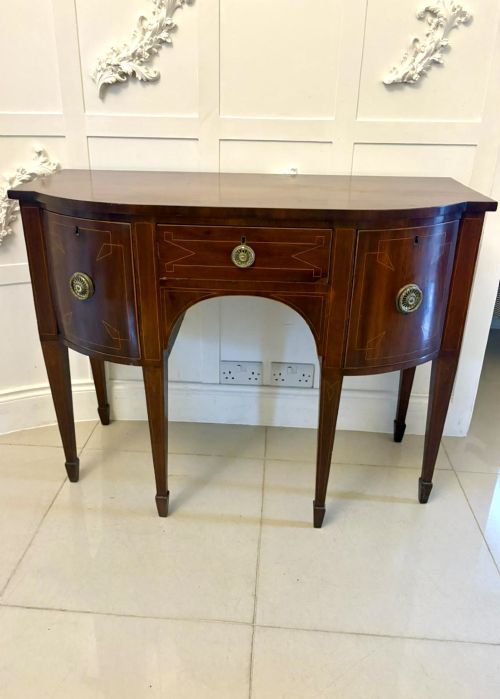
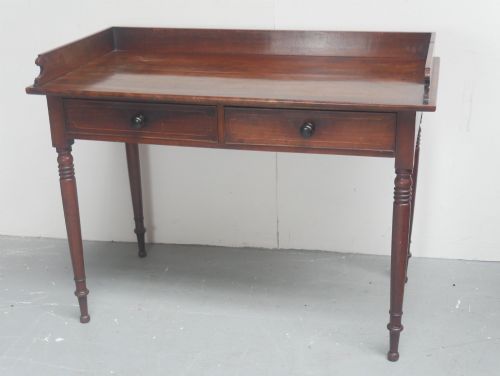
An inlaid wood desk is a practical writing surface ornamented with contrasting woods or materials embedded into its primary surface. The pieces on this page span several eras, from the Georgian period through the Regency and Victorian eras into Edwardian interpretations.
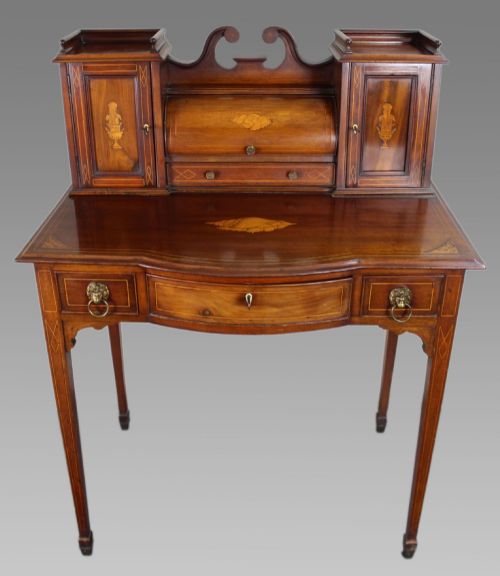
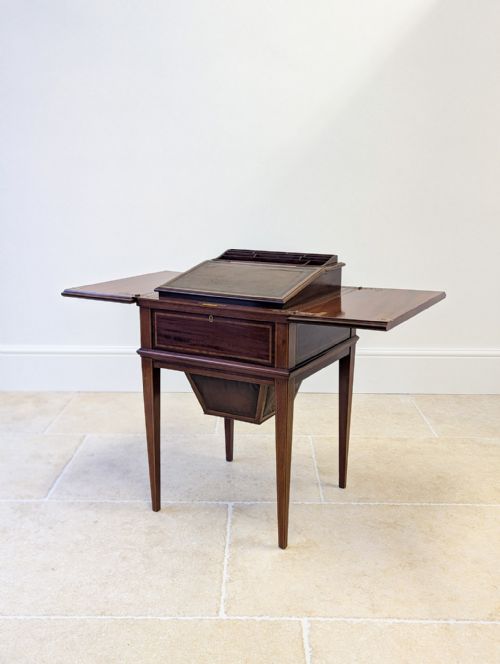
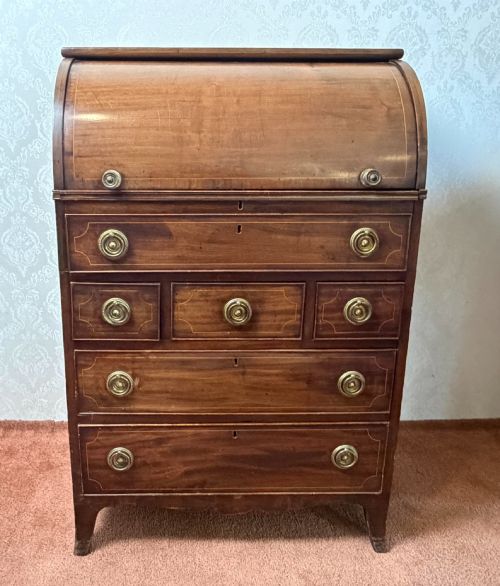
You will most frequently meet Edwardian satinwood or rosewood ladies writing desks, alongside larger Victorian pedestal desks and Georgian tambour or cylinder versions. These pieces served as the centrepiece of private studies, drawing rooms and libraries for correspondence and record-keeping.
The form adapts to the era, shifting from architectural eighteenth-century proportions to lighter, serpentine or kidney-shaped Edwardian formats. Each variation offers different drawer configurations, writing surfaces and compartments suited to period stationery.
How they were made
Cabinet-makers constructed the primary carcase using timbers like mahogany, satinwood, rosewood or walnut, often employing solid frames alongside veneered surfaces. Marquetry techniques involved cutting thin sheets of wood or shell to form pictorial or floral motifs, which were then fitted precisely into routed channels.
Contrasting materials such as boxwood, brass, ivory and ebony provided sharp outlines and geometric stringing. Leather inserts frequently formed the writing surface, secured within a gilded or blind-tooled border.
Listings demonstrate that Edwardian makers heavily favoured satinwood and rosewood for ladies writing desks featuring floral marquetry.
What varies in quality
Quality rests upon the precision of the joinery, the thickness and stability of the timbers, and the complexity of the decorative scheme. Superior pieces display seamless integration of contrasting veneers where individual leaf or floral elements fit without visible gaps or excessive filler.
Internal construction reveals the maker's hand through dovetailed drawer boxes, secondary lining timbers of consistent grade, and retained period hardware. The depth and clarity of the original cabinet-maker's finish distinguish standard production items from exhibition pieces.
Jackson & Graham·Collinson & Lock·Edwards & Roberts·William H Vaughan & Co·James Shoolbred
The Inlaid Wood Desk Glossary
- Marquetry
- Decorative veneer work arranged in pictorial or patterned designs using various coloured woods, shells or metals. This technique differs from simple inlay by covering the entire surface in a mosaic composition.
- Satinwood
- A lustrous, hard timber native to the West Indies and India, prized for its golden-yellow sheen. It frequently forms the primary surface veneer for Edwardian writing furniture.
- Pedestal desk
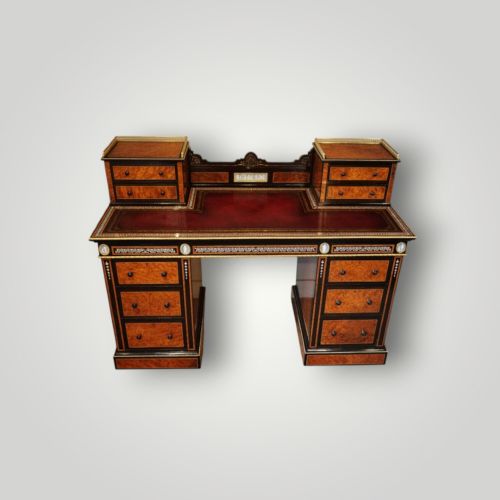
- A heavy freestanding writing table supported by two banks of drawers forming the pedestals. This form provides substantial storage beneath a broad leather-lined top.
- Stringing
- Thin lines of contrasting timber inlaid into grooves around the edges of drawers or tabletops. It defines structural boundaries and accentuates the contours of the piece.
- Bonheur du jour
- A light lady's writing desk featuring a small cabinet or tiered superstructure above the writing surface. The name translates from French as daylight joy.
Inlaid Wood Desk: Frequently Asked Questions
How do I care for an inlaid wood desk?
Keep the desk away from direct sunlight and heat sources to prevent the veneers and delicate inlay from lifting or drying out. Dust regularly with a dry cloth and apply a quality beeswax sparingly to nourish the timber.
Avoid liquid polishes containing silicone, which can penetrate hairline cracks in old finishes.
What is a Carlton house desk?
A Carlton house desk is a form of writing table featuring a curved superstructure fitted with small drawers and compartments wrapping around the back and sides. It originated around the late eighteenth century and saw revival periods.
The design offers structured organisation while maintaining a finished appearance on all sides.
How can I tell an Edwardian piece from a Georgian one?
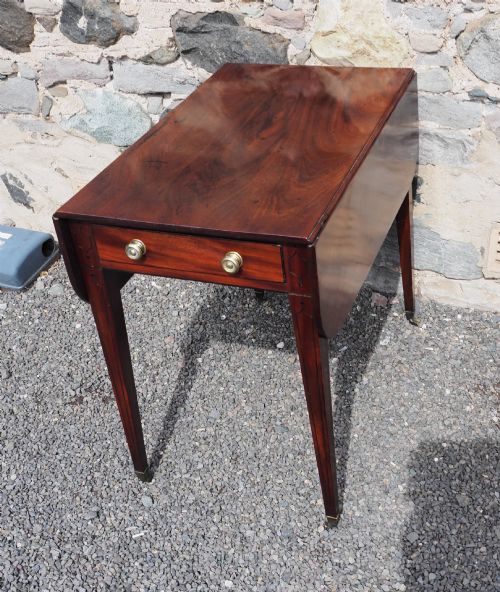
Georgian desks typically exhibit heavier proportions, deeper mahogany tones and architectural details like bracket feet or cockbeaded drawer edges. Edwardian pieces often utilise lighter satinwood veneers, finer stringing and delicate tapered legs.
The secondary timbers inside the drawers also help distinguish the century of manufacture.