

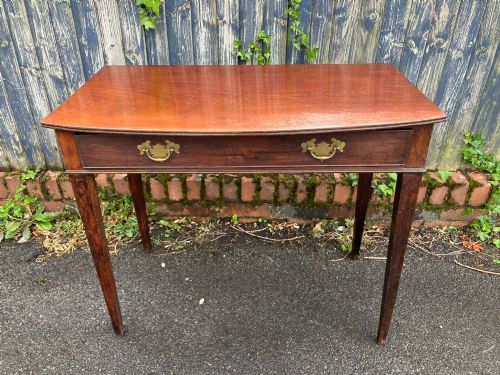


Bow Front Desk
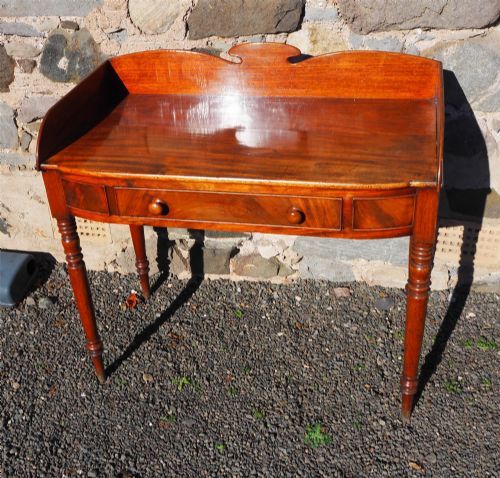
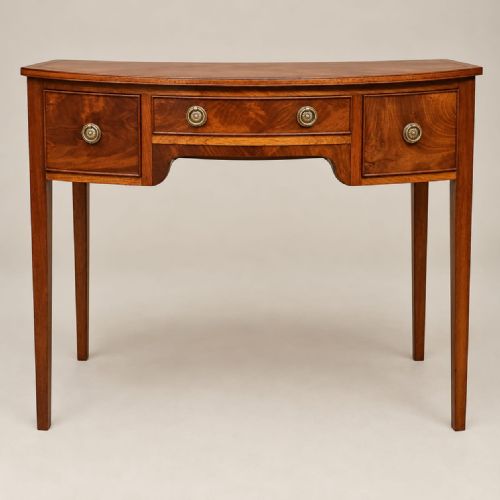
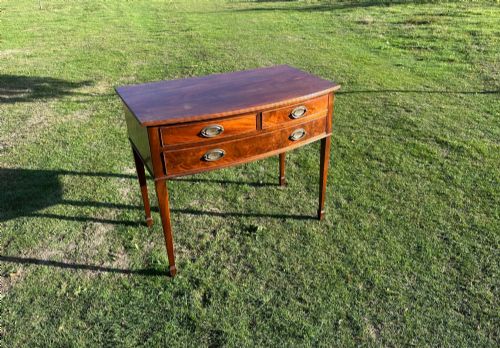
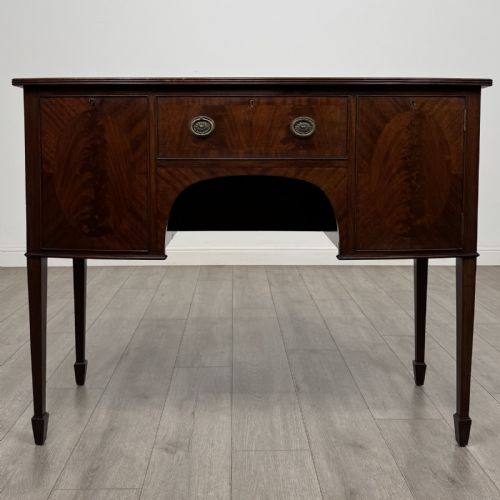
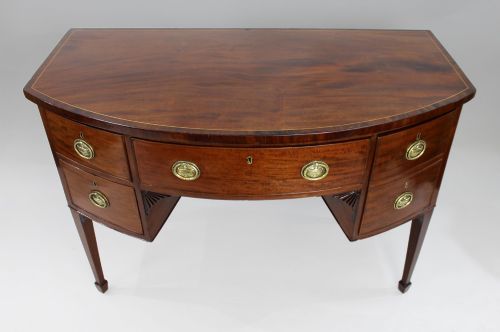
A bow front desk brings together the graceful curve of a convex projecting front and the practical surface needed for daily correspondence.
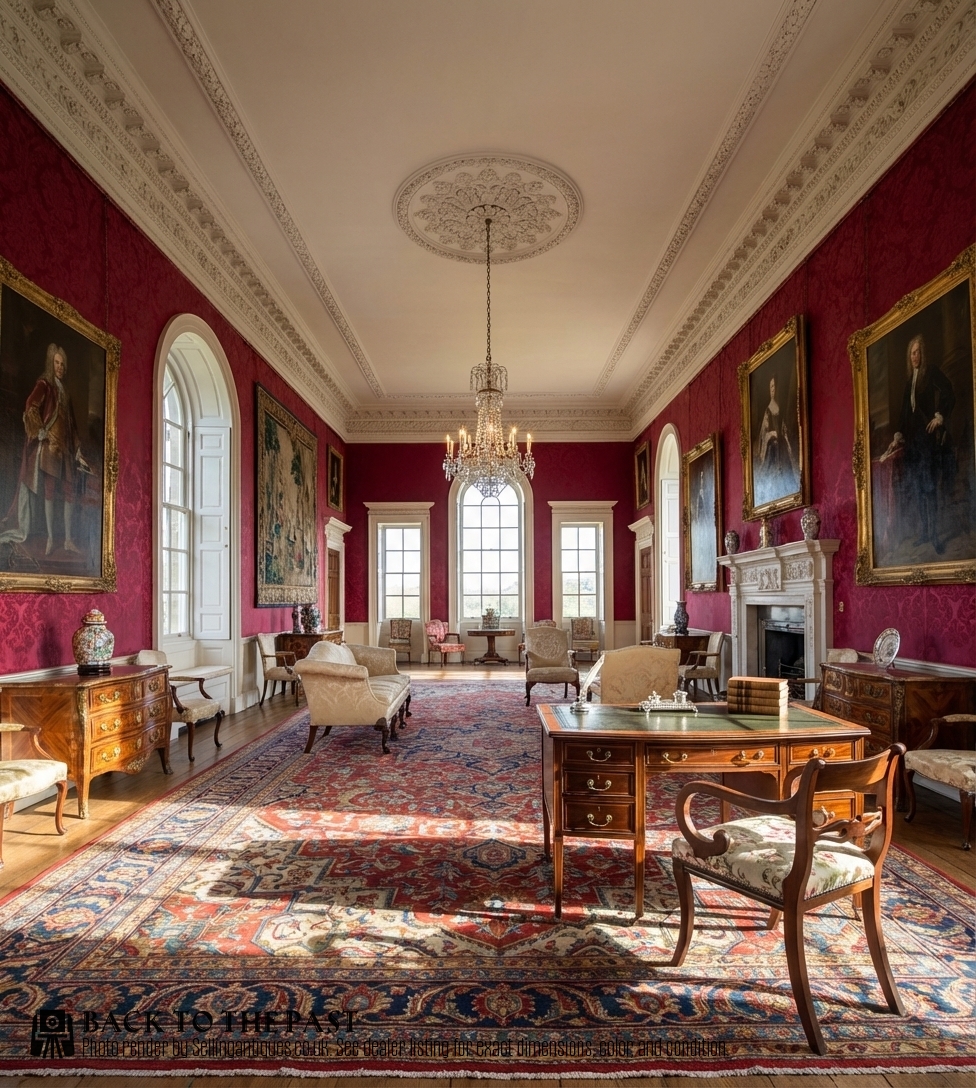
Bow Front Desk
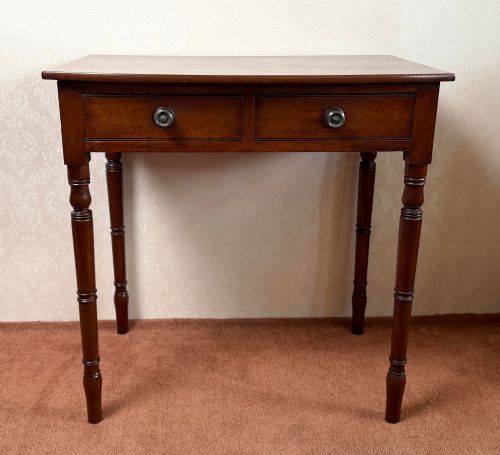
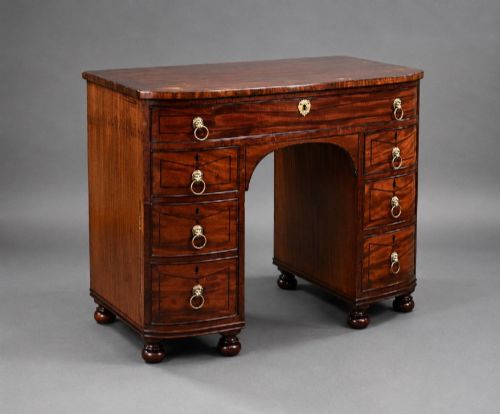
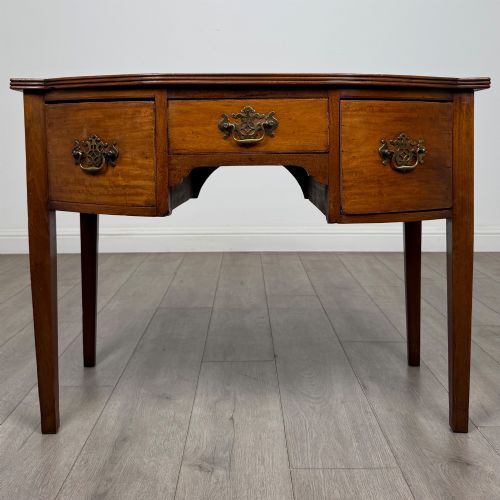
When you search for a bow front desk, you encounter pieces that span the Georgian, Regency, Victorian, and Edwardian periods, alongside revival styles from the late nineteenth and early twentieth centuries. These items serve primarily as writing tables, pedestal desks, and kneehole desks, often sharing design traits with sideboards and dressing tables that feature the same curved profile.
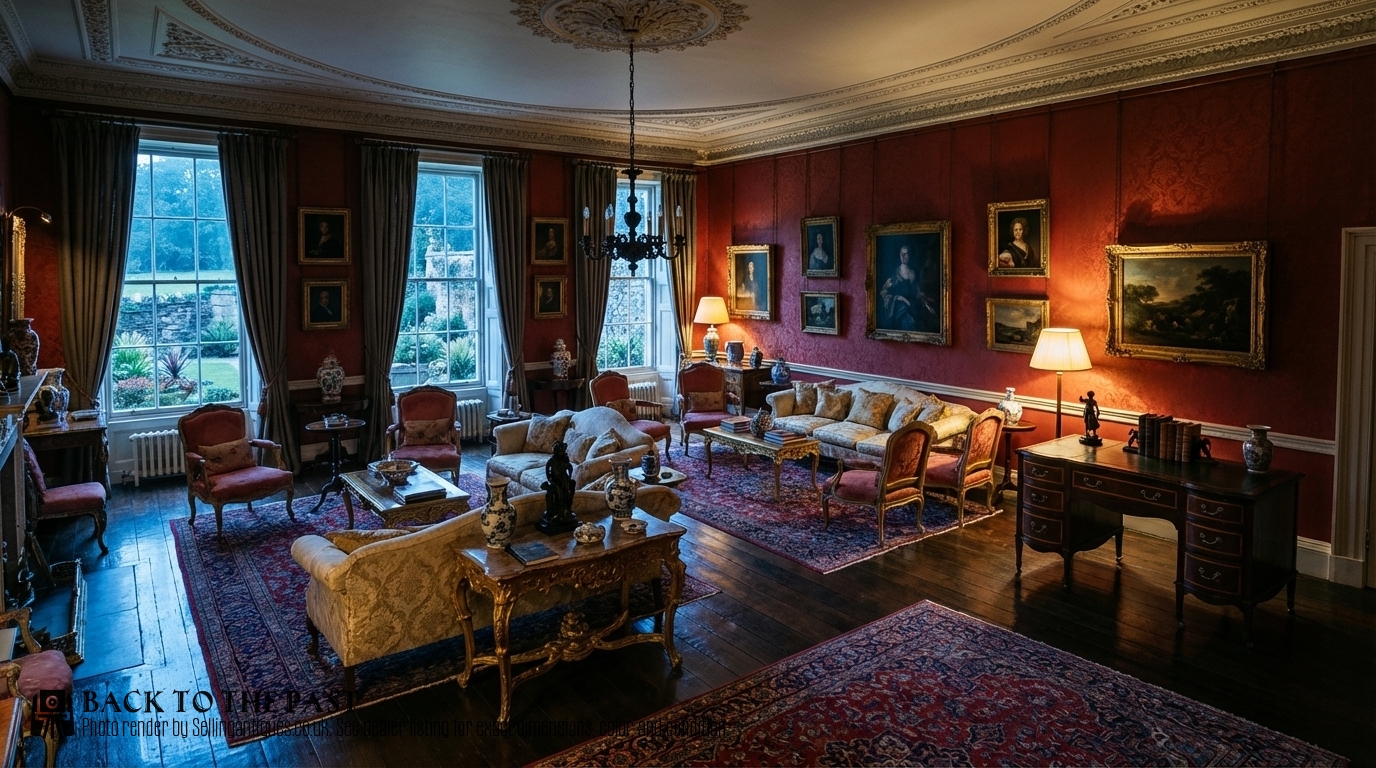
Materials and Construction Techniques
Cabinet makers built these frames predominantly using solid mahogany and flame mahogany veneers, sometimes turning to burr walnut, pitch pine, or satinwood for particular decorative effects. The curved front required specialist steam-bending or segmented construction of the rails to achieve the characteristic outward sweep without compromising the structural integrity of the drawers.
Surface ornamentation relied heavily on fine wood inlay, boxwood stringing, and brass hardware such as drop handles and escutcheons. Writing surfaces were frequently inset with tooled leather panels, while secondary woods like oak or pine lined the interior drawer boxes.
Bow Front Desk Retail Price Guide 2026
Typical asking prices for bow front desk among the pieces listed under this phrase on Sellingantiques today, from the lower quarter to the upper quarter. They describe what is for sale here now, not the wider market.
Some Victorian variations include lift-up lids on pitch pine demi-lune hall stands, hiding unexpected storage beneath the curve.
Markers of Distinction
The hierarchy of quality rests on the selection of timber veneers, particularly the use of highly figured flame mahogany or burr walnut across the curved drawer fronts. Superior pieces exhibit precise matching of the grain patterns so that the sweep of the curve appears continuous and uninterrupted.
Construction subtleties also separate standard workshop output from finer productions, including hand-cut dovetails on the drawer linings, original brass fittings, and delicate stringing that remains intact without lifting. The integration of secondary woods and the crispness of any inlaid marquetry further define the standing of an individual desk.
Maples·Edwards and Roberts·S and H Jewell·JAS Shoolbred
The Bow Front Desk Glossary
- Bow front
- A convex, outwardly curved front elevation typical of case furniture and desks originating from the late eighteenth century onward.
- Stringing
- A narrow strip of contrasting wood inlaid into the surface of furniture to create delicate geometric borders.
- Flame mahogany
- A distinct veneer pattern cut from the fork of the mahogany tree, producing a characteristic flickering flame-like figure.
- Pedestal desk
- A heavy freestanding desk comprising two supporting banks of drawers beneath a rectangular writing top.
- Marquetry
- Decorative patterns formed by the insertion of various woods, veneers, or shell into a solid wood matrix.
Bow Front Desk: Frequently Asked Questions
What is a bow front desk?
A bow front desk is a writing table or pedestal desk featuring a convex, outwardly curved front facade. This shape softens the angular appearance of standard rectangular furniture while providing a generous central working area.
Such pieces emerged strongly during the Georgian and Regency periods and remained popular through the Victorian and Edwardian eras. They function as both decorative reception pieces and practical working desks.
How do I date a bow front desk?
Dating relies on examining the secondary timbers, the style of the drawer construction, and the overall decorative vocabulary. Georgian and Regency examples often display simpler linear proportions and flame mahogany veneers, whereas Edwardian pieces frequently incorporate heavier revival styling and elaborate inlay.
Hardware styles, such as brass ring pulls versus stamped backplates, also offer reliable clues to the decade of manufacture. Comparing the construction methods inside the drawer boxes helps confirm whether a piece is an eighteenth-century original or a later revival.
Were these desks used in offices?
Many larger pedestal and partners versions served professional administrative functions in nineteenth-century libraries and studies. Smaller writing tables and dressing desks were typically placed in private sitting rooms or bedrooms for personal correspondence.
The inclusion of multiple banks of drawers or a central kneehole catered to the storage needs of paperwork and ledgers. Their finished backs often allowed them to sit away from the wall in the centre of a room.
How should I care for the leather top?
Leather writing surfaces require gentle maintenance to prevent drying and cracking over time. Cleaning should be done with a soft, slightly damp cloth, avoiding harsh chemical detergents or excess water.
Application of a neutral leather balm or wax conditioner helps preserve the suppleness and colour of the hide. Keeping the desk away from direct sunlight and extreme heat sources prevents the leather and the underlying wood from warping.