

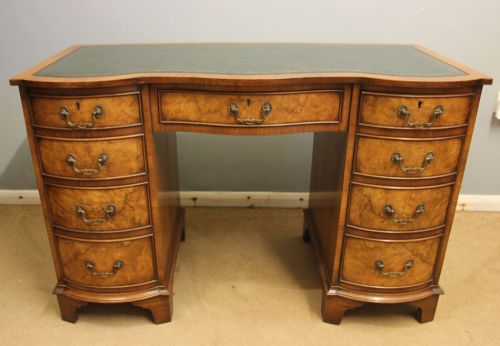
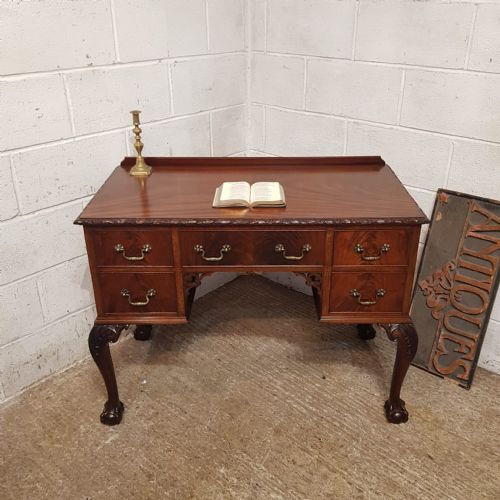
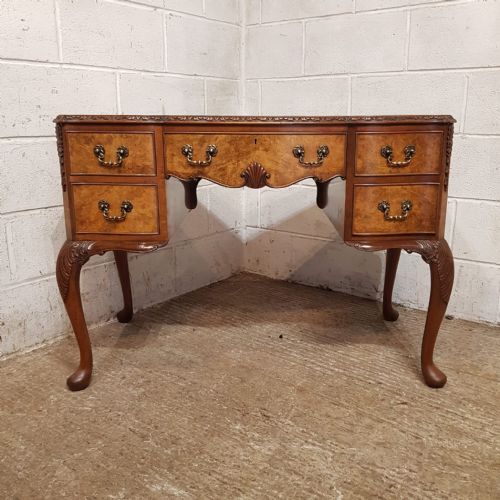
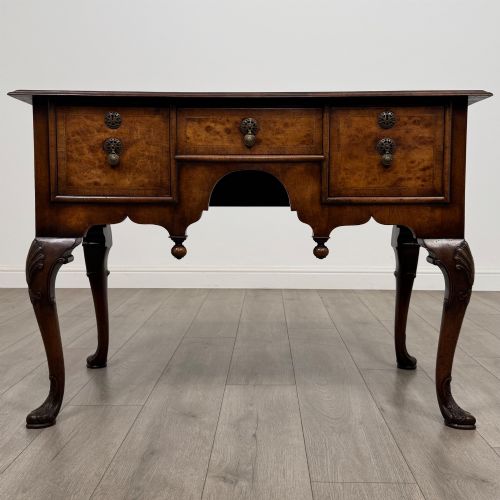
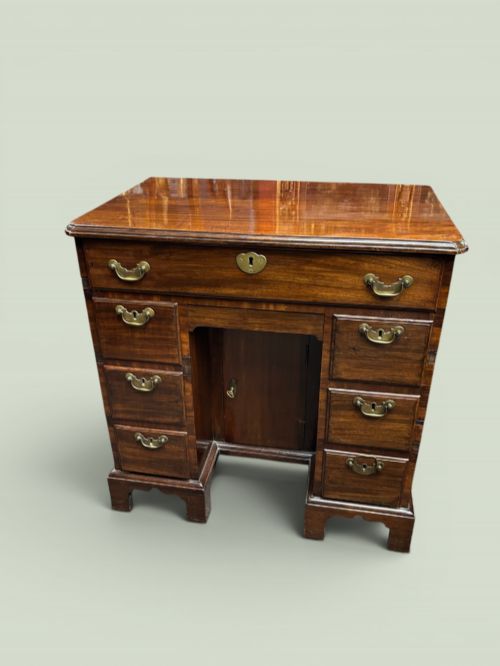
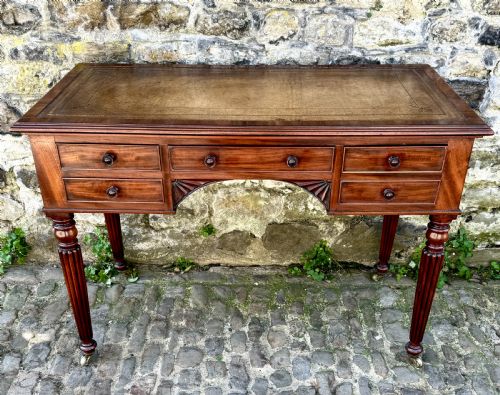
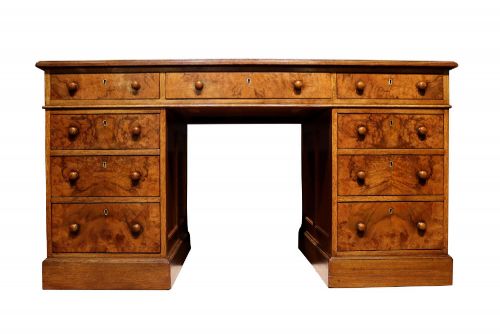
Carved Kneehole Desk
A carved kneehole desk organises your study with multiple pedestals and a central recess, uniting functional storage with historic decorative detail.
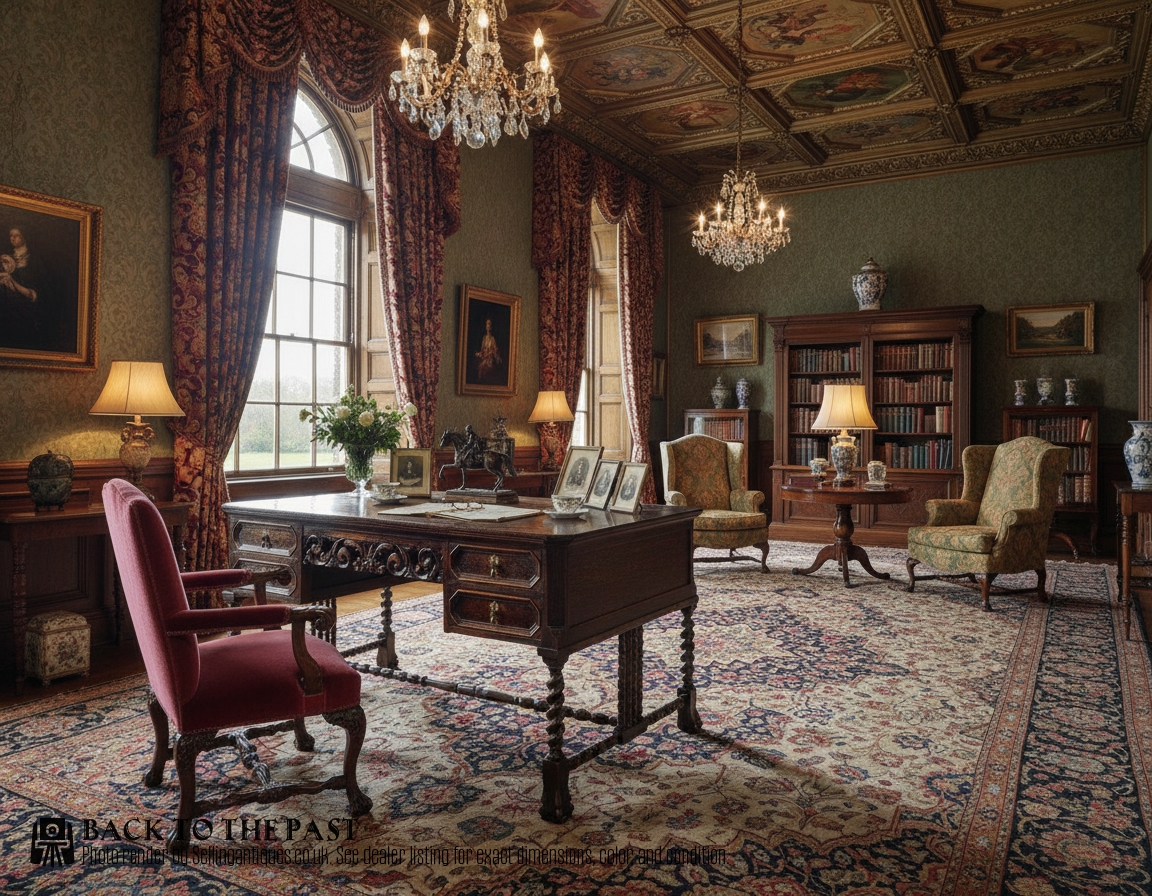
Carved Kneehole Desk
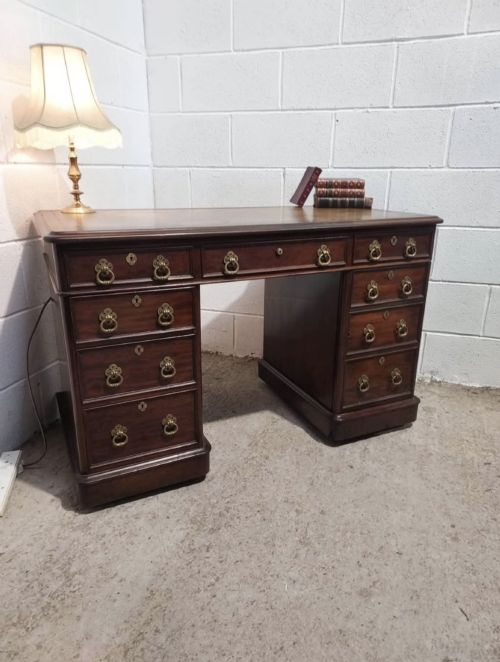
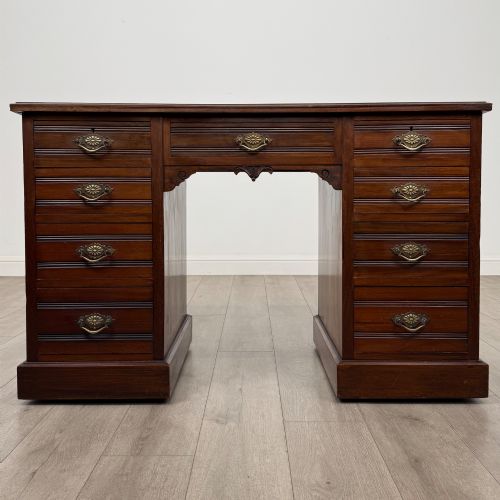
A carved kneehole desk provides a compact working surface atop twin pedestals containing banks of drawers, linked by a central recess that traditionally accommodates the seated writer.
The pieces appearing here span from the Georgian era through Victorian and Edwardian revivals up to the 1930s, utilising mahogany, walnut, and solid oak.
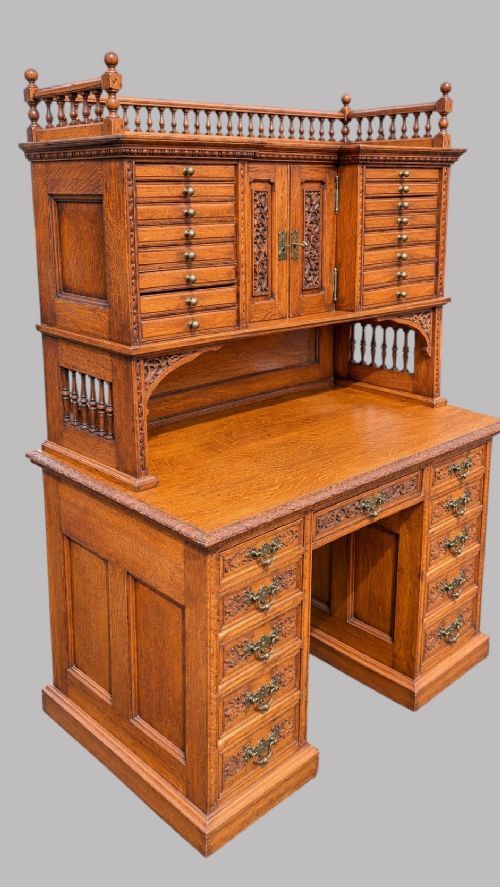
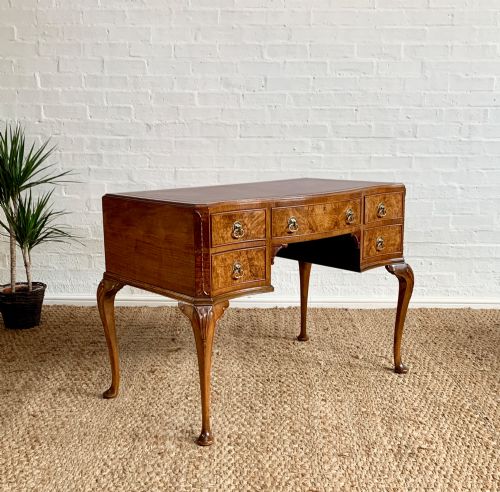
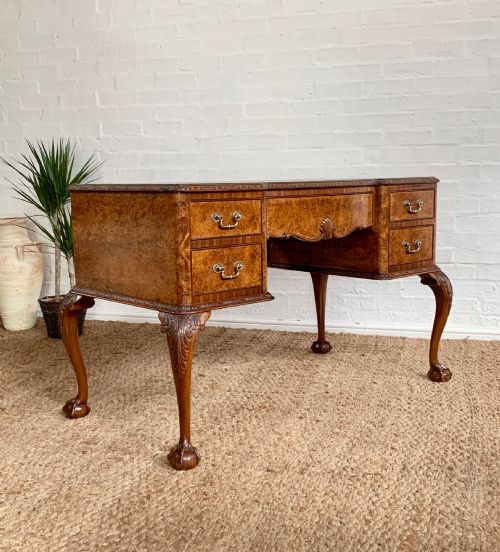
Victorian and late nineteenth-century iterations frequently feature heavy oak carving including lions' heads and Green Man motifs, while later twentieth-century examples favour burr walnut and cleaner revival lines.

Materials and Construction
Cabinetmakers constructed these desks primarily in solid oak, mahogany, or walnut, frequently applying figured veneers like burr walnut or flame mahogany to primary surfaces.
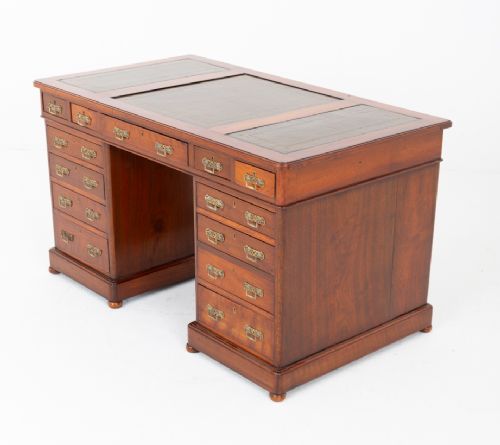
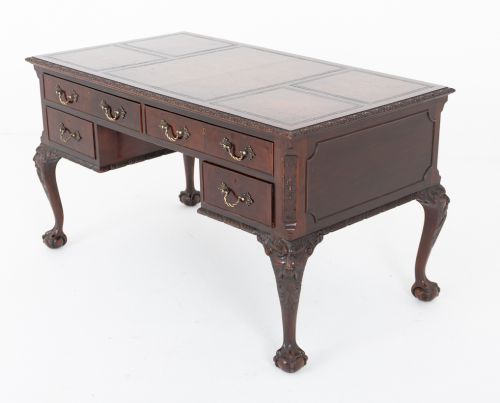
Brass hardware such as drop handles and escutcheons punctuate the facades, while many writing surfaces incorporate inset tooled leather writing pads.
Carved elements including scrolled brackets, gadroon moulding, and figural masks were worked directly into the solid timber framing.
Carved Kneehole Desk Retail Price Guide 2026
Typical asking prices for carved kneehole desk among the pieces listed under this phrase on Sellingantiques today, from the lower quarter to the upper quarter. They describe what is for sale here now, not the wider market.
Listings feature solid oak, mahogany, and burr walnut, spanning Georgian, Victorian, and Edwardian periods.
Judging Quality
Quality rests upon the selection of timber veneers and the crispness of the hand-carved detailing across the drawers and pedestals.
Superior construction shows in secondary timbers used for drawer linings, dovetailed joints, and the retention of original brass hardware and fitted leather surfaces.
Wylie & Lochhead Glasgow·Gill & Reigate·Shapland and Petter·Étienne Kohlmann
The Carved Kneehole Desk Glossary
- Kneehole desk
- A pedestal desk featuring a central recessed space for the legs beneath the main writing surface. This layout creates two distinct banks of side drawers.
- Pedestal desk
- A heavy freestanding writing table supported by two vertical columns of drawers resting on the floor. They offer substantial enclosed storage flanking the central opening.
- Burr walnut
- Timber harvested from walnut tree growths, producing intricate swirling grain patterns. Cabinetmakers sliced this wood into thin veneers for decorative desk surfaces.
- Green Man
- A sculptural architectural motif depicting a human face disgorging foliage or vines. It appears frequently on late nineteenth-century carved oak furniture.
- Dovetailed joint
- An interlocking woodworking joint constructed with wedge-shaped fingers. This method secures drawer corners together with high tensile strength.
Carved Kneehole Desk: Frequently Asked Questions
What is a kneehole desk?
A kneehole desk is a pedestal writing table defined by a recessed central space between two drawer stacks. This design allows the user to sit directly facing the centre of the writing surface.
Such desks evolved during the eighteenth century to provide private storage and a dedicated writing space in domestic studies and libraries.
How do I date a carved desk?
Dating relies on identifying primary timber choices, construction techniques, and stylistic revival periods. Heavy oak carving with figural motifs typically points to late Victorian craftsmanship.
Cleaner lines and burr walnut veneers often indicate Edwardian or early twentieth-century production. Examining drawer dovetails and internal secondary woods clarifies the manufacturing era.
Where should I place it?
These pedestal desks require sufficient floor space to allow unhindered access to the central recess and side drawers. Many examples feature finished backs, permitting freestanding placement in the middle of a room.
Positioning the piece away from direct sunlight preserves the leather writing surface and prevents timber veneers from drying out.
How do I care for the leather?
To maintain tooled leather writing surfaces, clean gently with a slightly damp cloth and apply a neutral leather dressing periodically. Avoid excessive moisture and harsh chemical solvents.
Good maintenance prevents the leather from cracking while preserving the gold tooling applied around the perimeter.