
Vintage French Desk
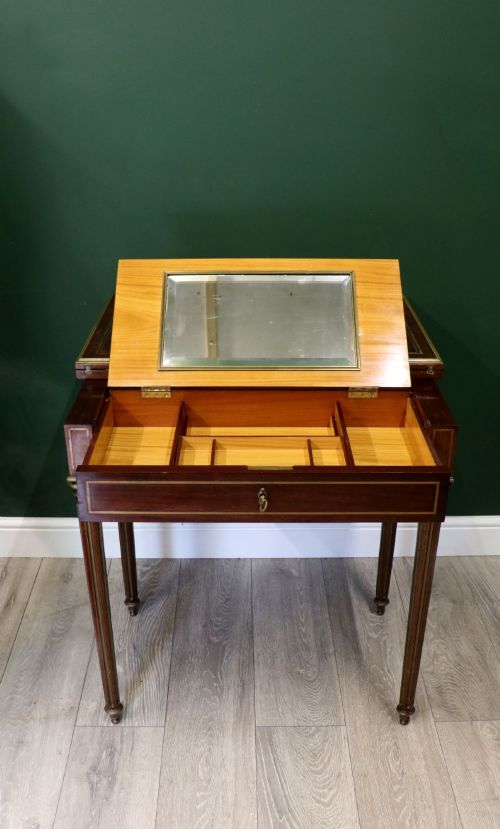
A vintage french desk brings writing-room elegance to modern interiors through classic proportions, rich marquetry and refined brass mounts.
Vintage French Desk
Buyers seeking a vintage french desk encounter pieces spanning the nineteenth century through the art deco era, ranging from compact writing tables to substantial bureaus plats. These tables combine traditional cabinet-making with functional workspaces intended for private correspondence.
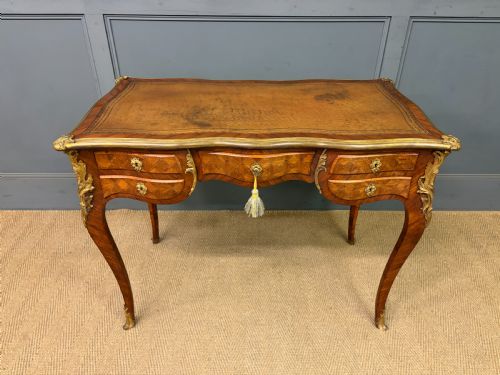
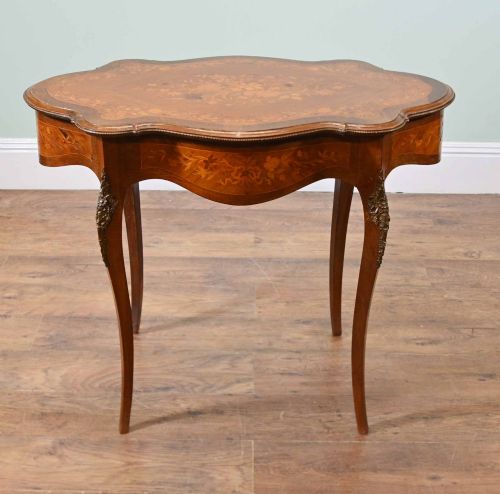
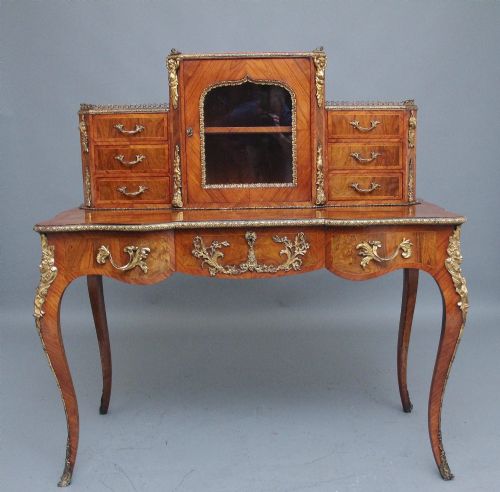
The selections on this page demonstrate distinct regional styles, including Louis XV revival forms with cabriole legs and streamlined art deco writing desks in walnut and rosewood. Many incorporate leather, suede or wood writing surfaces alongside fitted drawers for stationery.
Origins vary from provincial workshops to Parisian makers, utilising timber veneers such as mahogany, satinwood and rosewood. Each example reflects the prevailing taste of its period, from ornate marquetry to geometric modernism.
Materials and construction methods
Construction relies upon solid hardwood frames faced with decorative veneer marquetry or parquetry, often using walnut, rosewood, mahogany and satinwood. Cabinet-makers shaped these timbers over pine or oak carcases using traditional hand-cut dovetail joints for drawer construction.
Metal ornamentation forms a defining element, utilising cast or gilt bronze and ormolu mounts, handles and sabots secured to the furniture legs. Leather and suede inset writing panels provide a durable, tactile surface for daily use.
Several items include miniature globes and brass scissors designed for opening daily post.
Judging quality and execution
Quality rests upon the crispness of the hand-carved or cast ormolu mounts and the precision of the wood veneers. Superior pieces display seamless marquetry patterns where the grain flows naturally across the drawer fronts and writing surfaces.
The integrity of the structural joinery and the survival of original patination dictate a piece's standing. Refined examples retain their fitted interior compartments, original hardware and balanced proportions without modern alterations.
CH Jeanselme and Co·Henri Jacot·Lebegue and Cie·Maples of London and Paris·R Varnier
The Vintage French Desk Glossary
- Bureau plat
- A freestanding writing table fitted with one or more rows of drawers beneath the top. This form emerged during the seventeenth century and remained popular through subsequent revival periods.
- Marquetry
- Decorative patterns formed by fitting together thin veneers of wood, shell or ivory onto a structural carcase. Craftspeople select contrasting timbers to create pictorial or geometric designs.
- Ormolu
- Gilded bronze ornamentation applied to furniture, clocks and lamps. The technique involves creating a mercury and gold amalgam fired onto the bronze surface.
- Cabriole leg
- A furniture leg that curves outward at the knee and tapers inward toward the foot, inspired by animal limbs. This silhouette is characteristic of Louis XV and related revival styles.
- Parquetry
- Geometric mosaic woodwork resembling a grid or checkerboard pattern used on tabletops and desk surfaces. Artisans arrange small blocks of tinted or contrasting timber to achieve precise angles.
Vintage French Desk: Frequently Asked Questions
What is a bureau plat?
A bureau plat is a flat-topped writing table designed to stand away from the wall in the centre of a room. These desks typically feature pull-out extensions and multiple drawers.
They serve as practical writing surfaces while displaying decorative veneers and metal mounts on all four sides.
How do I care for leather desk inserts?
Leather and suede writing surfaces require gentle dusting and occasional conditioning with appropriate leather balms to prevent drying. Avoid placing hot cups or moisture directly onto the hide.
Protecting the surface with blotters preserves the original texture and colour of the material over years of regular use.
How do I distinguish art deco desks from nineteenth-century pieces?
Art deco desks favour clean geometric lines, streamlined silhouettes and exotic veneers like rosewood without excessive ornamentation. Nineteenth-century examples often lean toward revival styles with curved cabriole legs and detailed marquetry.
Examining the hardware and overall architectural form reveals the design ethos of the specific decade.
Where were these desks placed historically?
Historically, writing tables stood within private libraries, grand salons or dedicated home offices for managing correspondence. Their finished backs allowed them to occupy prominent positions in the middle of a room.
Today, they adapt readily to domestic studies or living spaces as functional workspaces.