



Vintage Marquetry Dressing Desk
These vintage marquetry dressing desk examples combine fine timber surfaces with detailed floral inlay, offering practical workspaces with distinct historic character.
Vintage Marquetry Dressing Desk
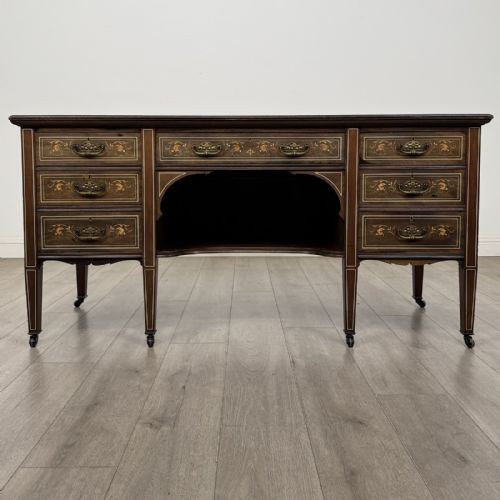
A vintage marquetry dressing desk brings together the functions of a writing table and a vanity surface, decorated with intricate wood veneers. Pieces matching this search span from the nineteenth century into the Edwardian era, showing various regional interpretations of classic cabinetmaking.
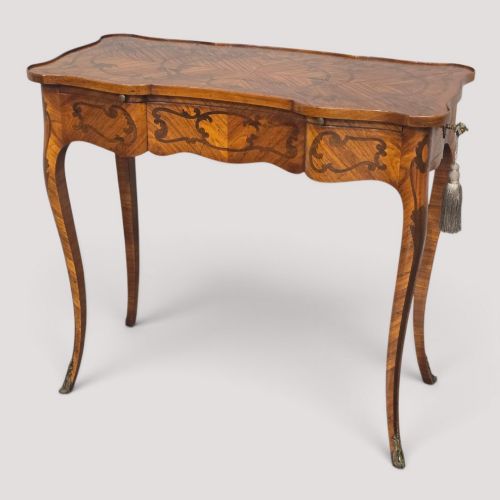
The forms on this page include French revival models alongside English satinwood and mahogany pieces. Makers ranged from prominent London workshops to continental makers, utilising specific regional shapes and mounts.
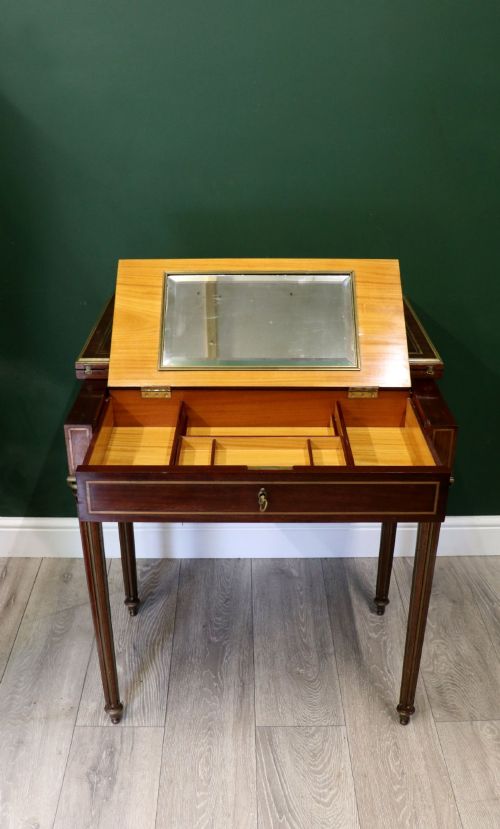
Surviving examples vary between dedicated writing tables fitted with leather inserts and vanity tables featuring tilting mirrors and compartmented drawers. Buyers encounter both elaborate ormolu-mounted continental designs and more restrained British revival pieces.
Materials and construction methods
Cabinetmakers constructed these pieces using dense structural timbers like mahogany, walnut, and oak as a foundation for decorative veneers. Finer woods such as kingwood, tulipwood, and satinwood were cut thinly and applied in geometric or floral patterns across the tops and drawer fronts.
Detailed marquetry involved cutting contrasting veneers by hand and assembling them like puzzles before pressing them onto the carcass. Metal elements such as brass handles, leather writing surfaces, and cast ormolu mounts were added to complete the construction.
Vintage Marquetry Dressing Desk Retail Price Guide 2026
Typical asking prices for vintage marquetry dressing desk among the pieces listed under this phrase on Sellingantiques today, from the lower quarter to the upper quarter. They describe what is for sale here now, not the wider market.
At least one Dutch example from eighteen hundred proves that ancestors spent considerable time writing letters while admiring elaborate inlaid tulips.
Assessing quality and craftsmanship
Quality rests primarily in the precision of the veneer work and the crispness of the floral or geometric motifs. Finer examples display tight, seamless joints in the marquetry where different woods meet without visible filler.
The underlying timber selection and the integrity of the secondary woods inside the drawers indicate the workshop standard. Superior pieces maintain crisp carving, well-fitted drawers, and original mounts or handles that sit flush with the surface.
Edwards & Roberts·James Shoolbred of London·Gillows
The Vintage Marquetry Dressing Desk Glossary
- Marquetry
- The art of applying decorative pieces of veneer to a structural carcass to form picture designs or patterns. This technique defines the visual character of the surfaces.
- Veneer
- A thin slice of figured wood applied over a secondary timber base. This method allows cabinetmakers to display expensive grain patterns economically.
- Ormolu
- Gilded bronze mounts applied to furniture for decorative accent. These metal additions are typical of French revival designs.
- Satinwood
- A pale, lustrous timber native to India and Ceylon. It provides a bright ground for inlay work on late nineteenth-century pieces.
Vintage Marquetry Dressing Desk: Frequently Asked Questions
What is a marquetry dressing desk?
It is a decorative table combining a writing surface or vanity top with detailed wood veneer patterns. These pieces were used for correspondence and personal grooming.
They appear in various revival styles dating from the nineteenth and early twentieth centuries, featuring inlaid surfaces and fitted drawers.
How do I identify French revival pieces?
French revival examples often incorporate kingwood or tulipwood veneers paired with cast ormolu mounts and curved cabriole legs. These details separate them from more rectilinear British designs.
Makers working in this continental taste focused heavily on elaborate floral marquetry across the top and drawer fronts.
Where should I place this desk?
These desks suit studies, bedrooms, or reception rooms where the decorated top surface remains visible. Positioning them away from direct sunlight protects the delicate veneers from fading.
Ensure the room humidity stays moderate to prevent the wood veneers from lifting over time.
How do I care for inlaid wood?
Dust the surface regularly with a soft, dry cloth and avoid using harsh chemical polishes. Applying a traditional microcrystalline wax periodically helps nourish the vintage timber.
Keep the desk away from radiators and extreme temperature changes to maintain the stability of the marquetry.