

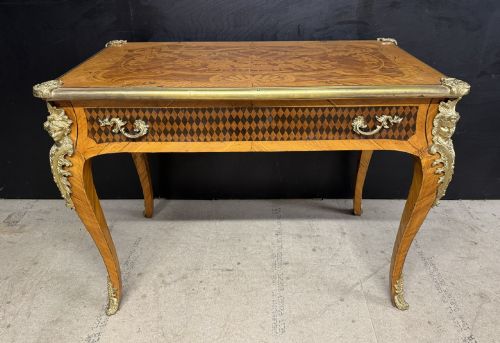
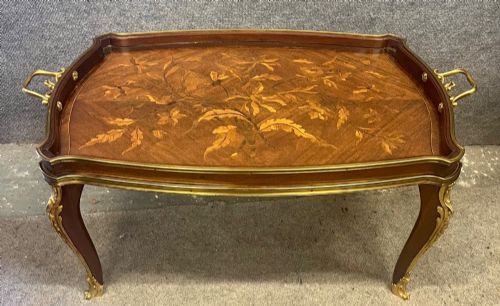
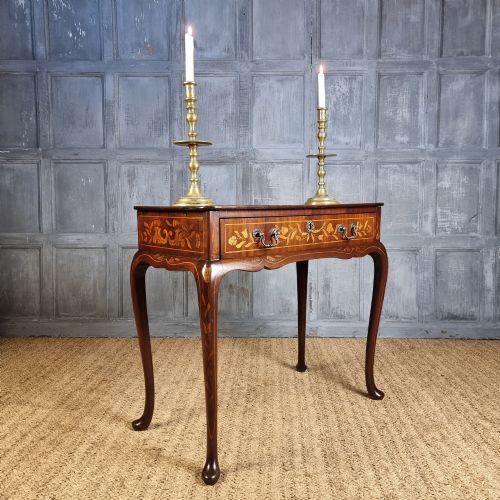
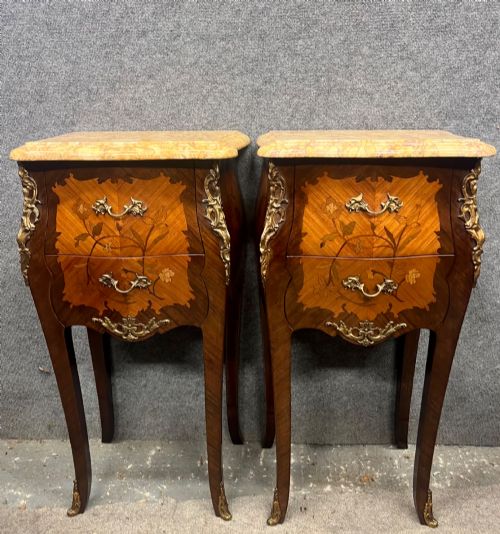
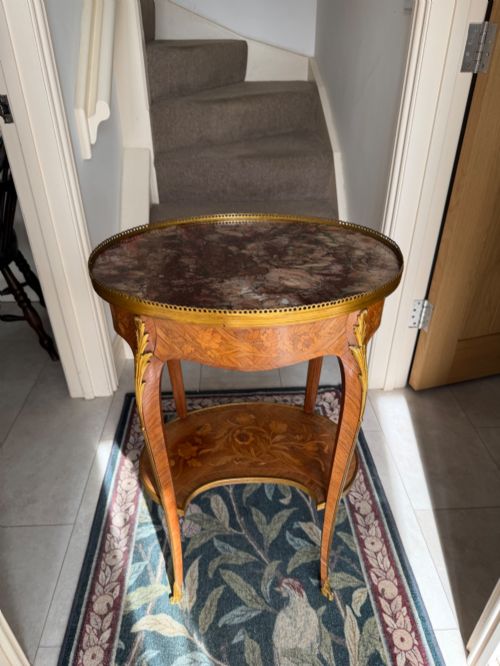
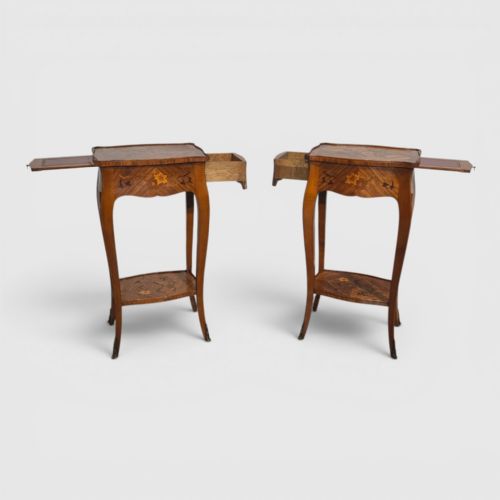
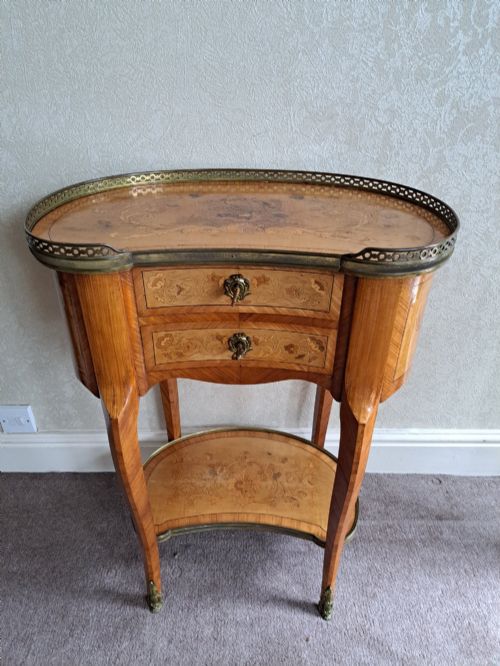
French Floral Marquetry Table
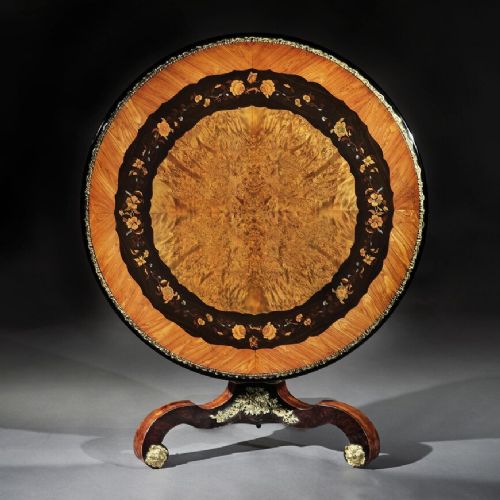
A french floral marquetry table brings organic botanical detail into a room through intricate timber veneers.
Forms and periods
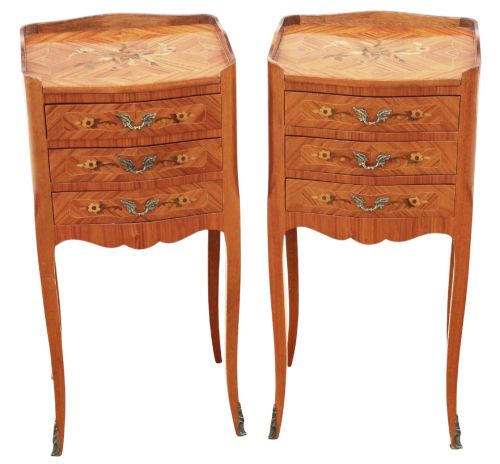
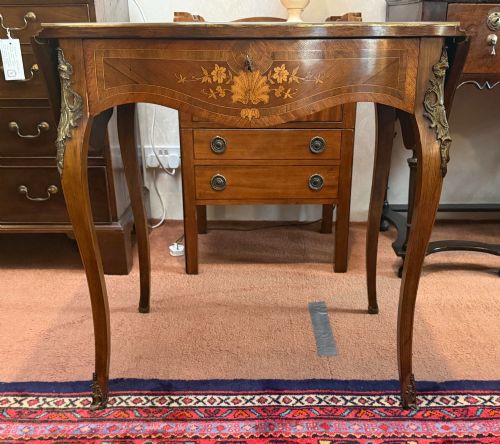
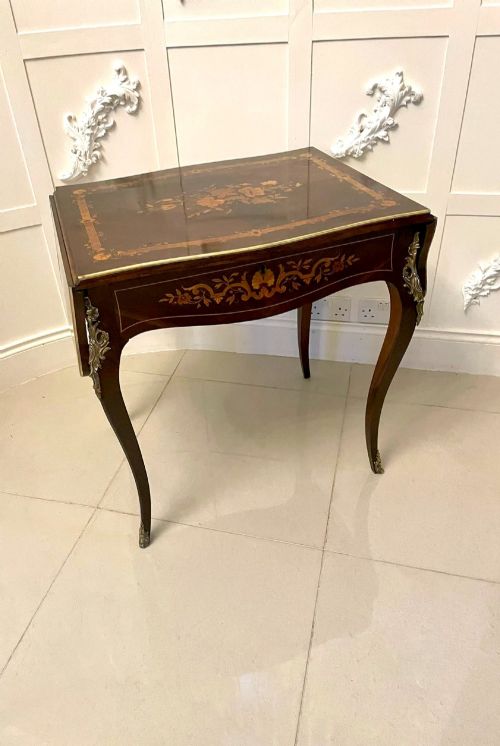
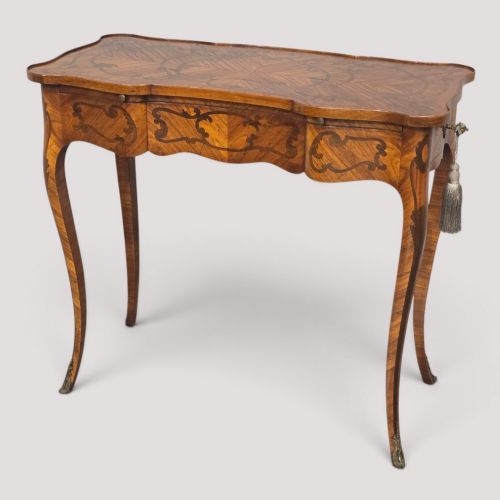
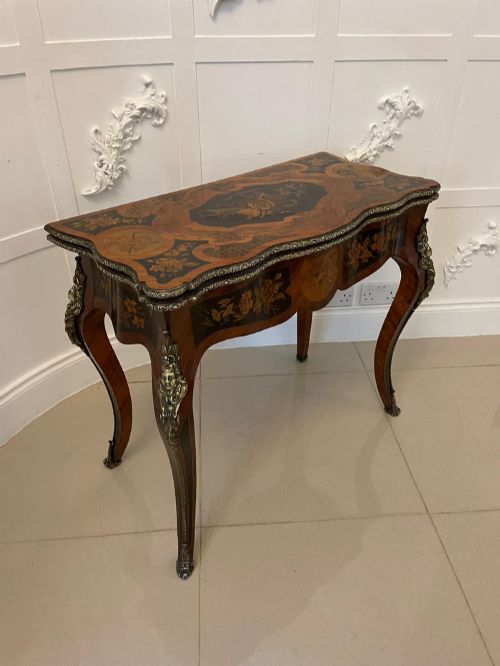
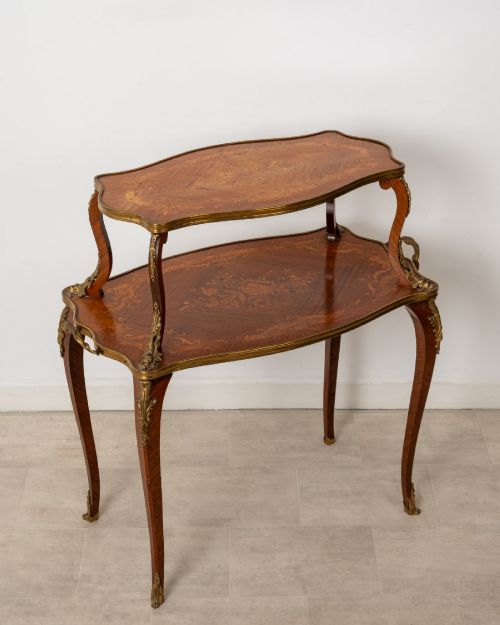
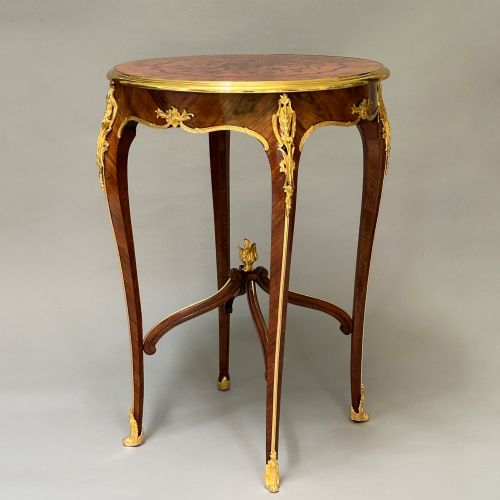
A french floral marquetry table combines functional timber furniture with detailed botanical imagery across several distinct centuries. Buyers searching for a french floral marquetry table encounter occasional tables, writing desks, dressing tables, card tables, and centre tables.
The pieces span from the mid-nineteenth century through to the early twentieth century, taking in Victorian examples alongside 1860, 1880, 1890, 1900, and 1920 dates. Surviving forms frequently adhere to French Rococo Revival, Louis XV Revival, Louis XVI Style, and general French Revival design idioms.
Occasional tables and writing desks appear most frequently among the current and archive listings. These pieces serve practical household functions while displaying detailed marquetry surfaces across their tops.

Materials and construction
Cabinet makers constructed these pieces using a foundation of mixed woods overlaid with fine marquetry veneers. Kingwood, rosewood, walnut, and tulipwood provide the primary ground and contrasting tones for the floral designs.
Metals form an integral part of the construction alongside the timber. Cast or chased ormolu mounts and brass details accent the edges, corners, and legs of the tables.
Retail Price Guide 2026
Typical UK retail prices for french floral marquetry table, calculated from the Sellingantiques database of over a million retail prices indexed since 2003. This retail price guide relies exclusively on Sellingantiques data; no external sources or auction records are used, so the figures do not describe the wider market.
Listings feature pieces spanning the nineteenth century up to 1920, utilising kingwood, rosewood, walnut, and ormolu.
Craftsmanship and design
Quality reveals itself in the precision of the veneer cutting and the variety of timbers utilised within the floral motifs. Finer examples display a wider palette of contrasting woods that give depth and shading to the petals and leaves.
The integration of the cast ormolu mounts with the wooden frame separates standard production from superior work. Well-cast metal elements follow the contours of the timber precisely, complementing the curves of the serpentine and occasional forms.
The French Floral Marquetry Table Glossary
- Marquetry veneer
- Thin slices of decorative wood applied to a furniture structure to create pictorial designs. In these pieces, the technique forms floral arrangements across the tabletop.
- Kingwood
- A dense, richly figured timber imported from South America and frequently used in French cabinet making. Its dark grain provides strong contrast in floral inlay work.
- Ormolu
- Gilt bronze mounts applied to furniture edges and legs. This decorative metalwork is typical of nineteenth-century French revival pieces.
- Serpentine
- A gently undulating curved line found along table edges and tabletops. This shape is characteristic of Louis XV revival furniture designs.
- Table en chiffonnière
- A small French occasional table fitted with drawers for small items. These pieces often feature delicate marquetry tops and slender legs.
Frequently Asked Questions
What is a french floral marquetry table?
These pieces are nineteenth and early twentieth-century decorative tables featuring detailed floral designs formed from wood veneers. They encompass various forms including writing desks, card tables, and occasional furniture.
Cabinet makers used contrasting timbers like kingwood, rosewood, and tulipwood to build up the botanical pictures on the surfaces. Ormolu mounts and brass details frequently accent the frames.
Where were these tables used?
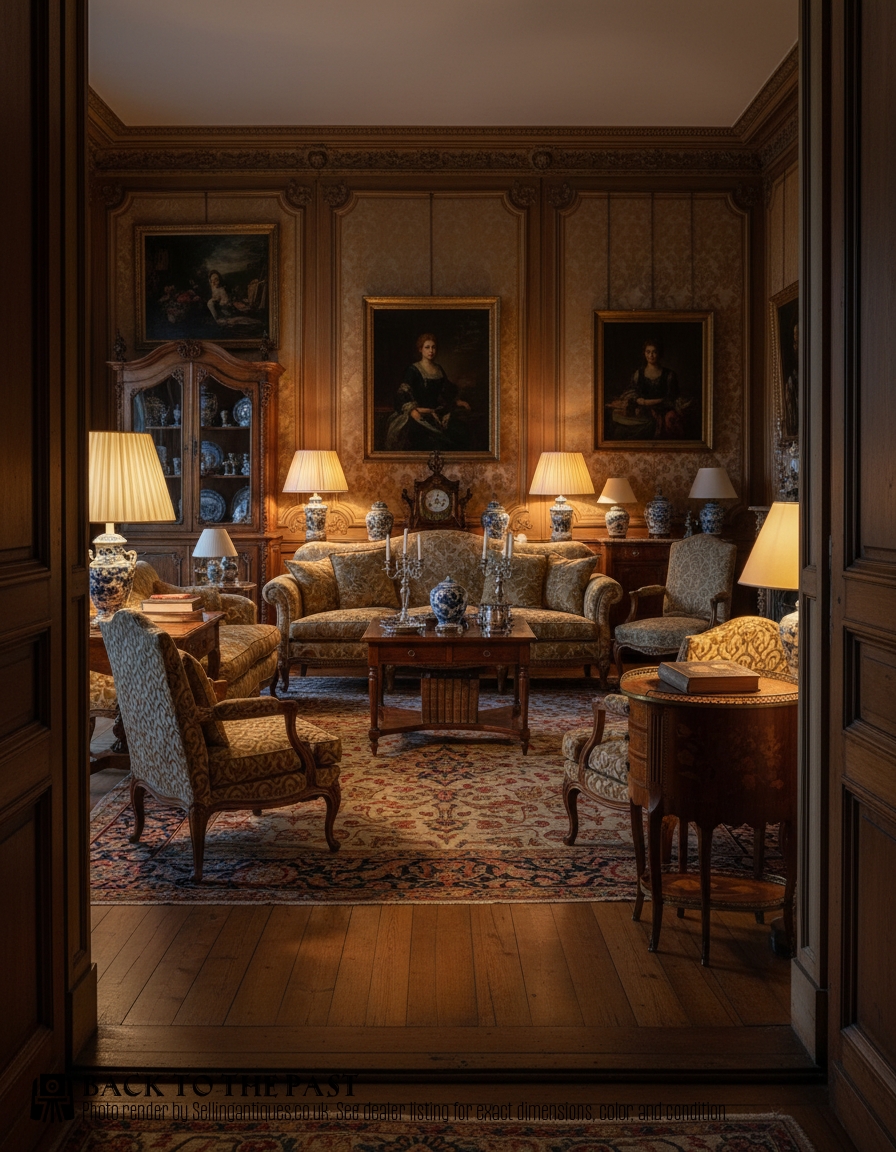
Historically, these tables occupied reception rooms, boudoirs, and drawing rooms as both decorative focal points and practical surfaces. Writing tables and ladies dressing tables provided designated spaces for correspondence and personal grooming.
Card tables offered folding tops for evening entertainment, while occasional and centre tables held decorative objects or lamps. Their finished backs and detailed tops allowed them to sit away from walls in the middle of a room.
How do I date a marquetry table?
Dating relies on stylistic clues, construction methods, and the specific revival periods represented in the piece. Mid-nineteenth-century examples often lean towards robust Rococo revival forms, while later pieces from the 1890s and early 1900s show refined proportions.
Comparing the timber choices and secondary woods underneath the piece helps confirm the era of manufacture. Archive records show similar designs spanning from the 1860s through the Edwardian period.
How do I care for timber marquetry?
Protecting these surfaces requires keeping them away from direct sunlight and maintaining stable room humidity. Excessive heat or dry air can cause the fine veneers to lift or crack over time.
Gentle dusting with a soft, dry cloth maintains the finish without moisture damage. Avoid modern silicone polishes, relying instead on traditional wax finishes where appropriate.