

French Marquetry Writing Desk
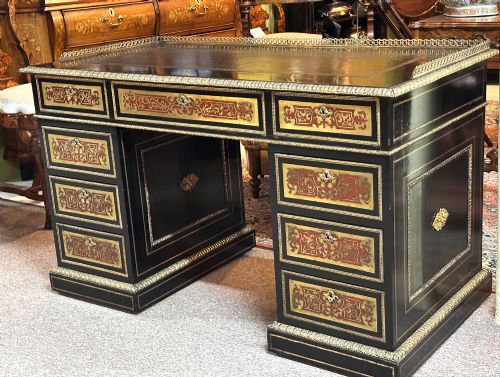
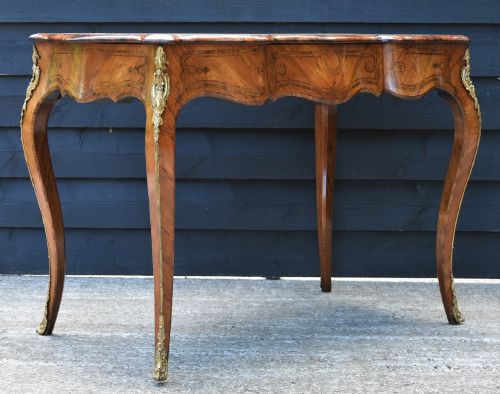
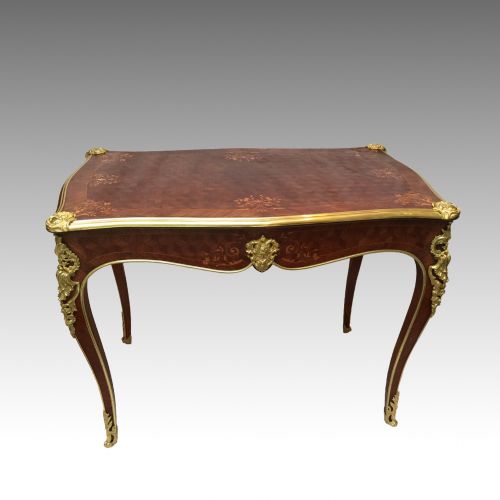
A french marquetry writing desk brings floral wood inlay and gilt bronze mounts straight into a study, offering a proper surface for correspondence.
What these desks are
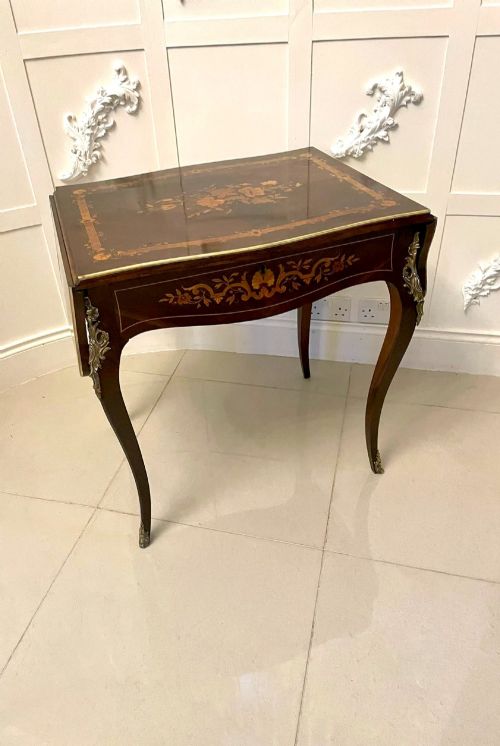
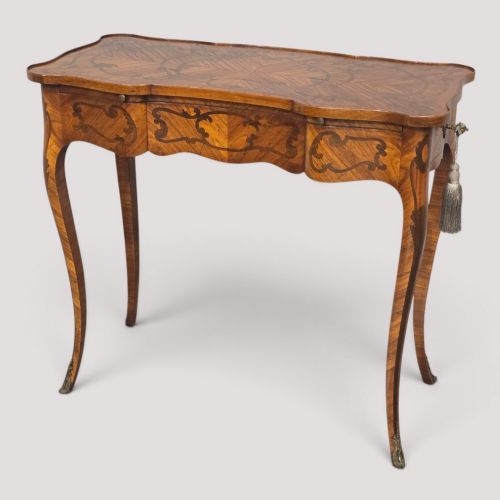
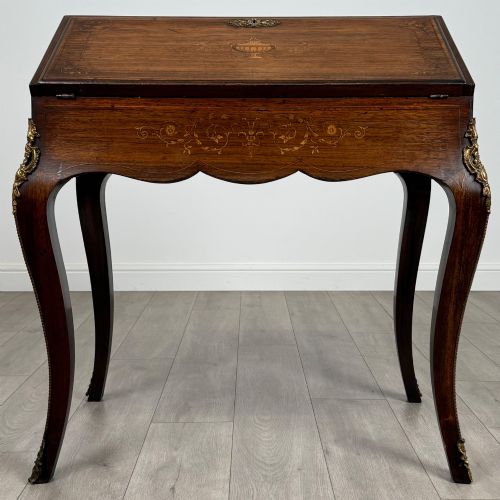
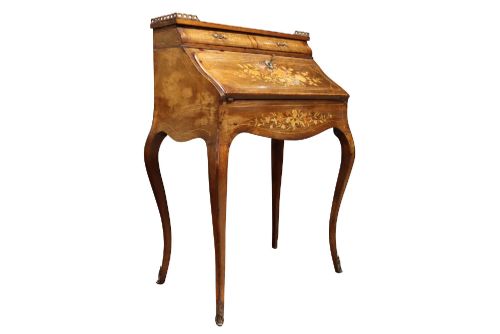
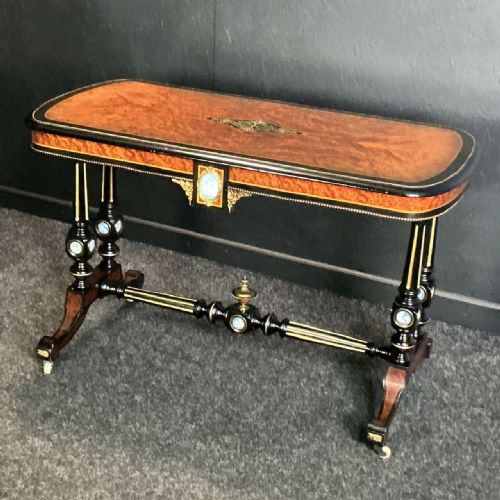
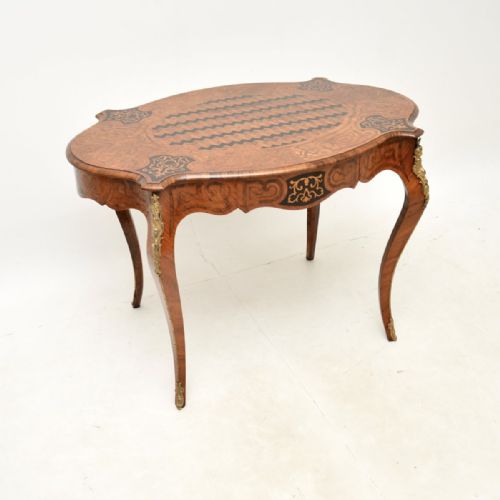
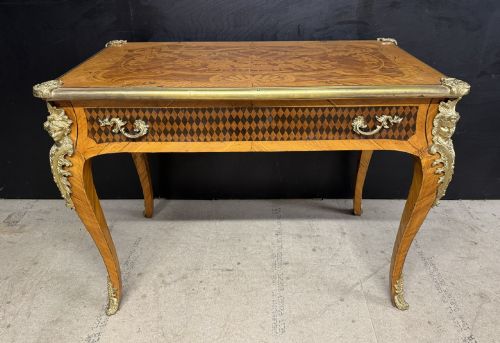
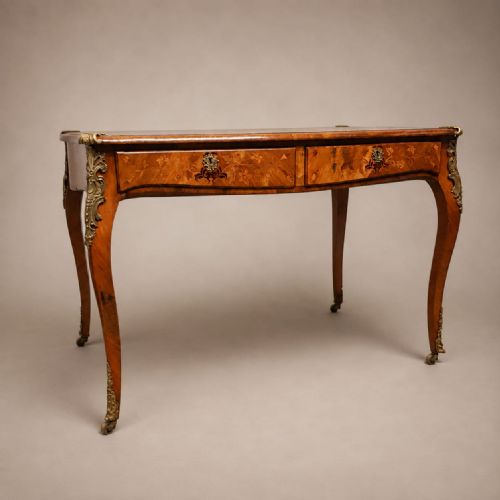
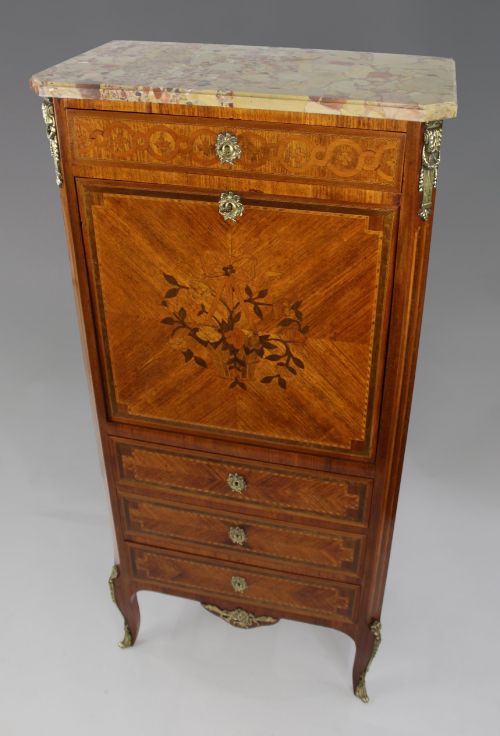
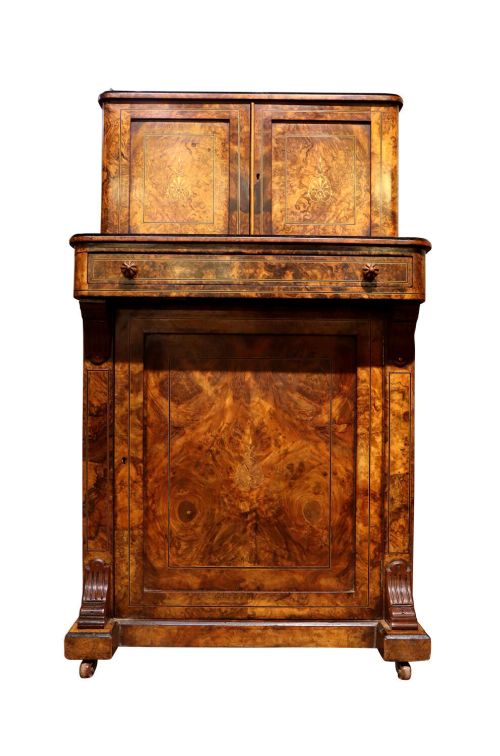
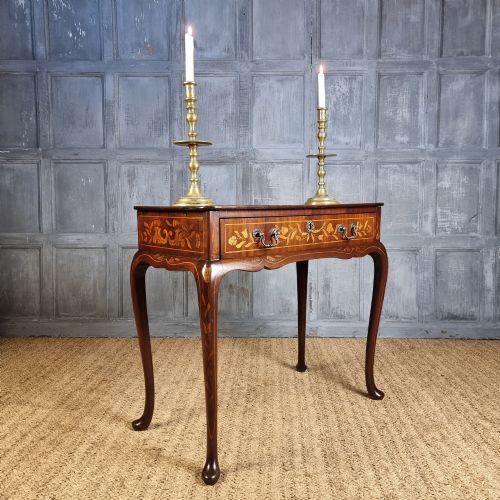
When you search for a french marquetry writing desk, you encounter elaborate writing tables, bureau plat forms, and secretaire cabinets originating across the nineteenth century alongside earlier eighteenth-century examples. The pieces combine patterned wood veneer work with serpentine or straight silhouettes intended for domestic writing rooms and principal chambers.
You are most likely to meet revival pieces from the Victorian and Edwardian eras, particularly items reflecting Louis XV and Louis XVI styles. These later nineteenth-century interpretations capture the earlier French court aesthetic while serving practical domestic functions.
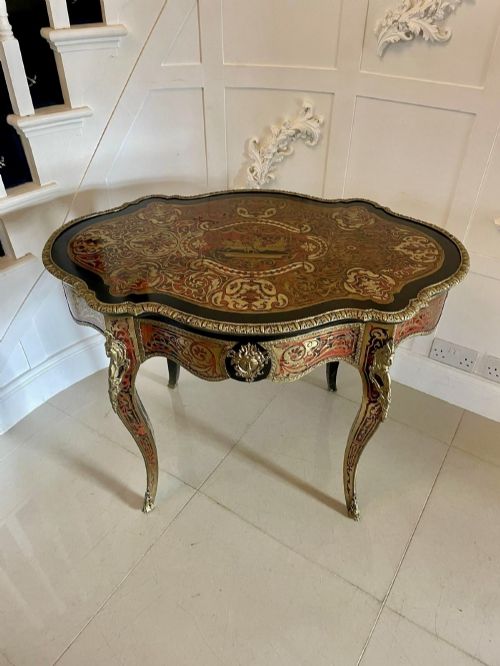
The inventory encompasses freestanding centre tables adapted for writing alongside dedicated desks equipped with drawers and drop-front flaps. Each piece relies on decorative floral and geometric wood patterns to create a distinct visual centrepiece.
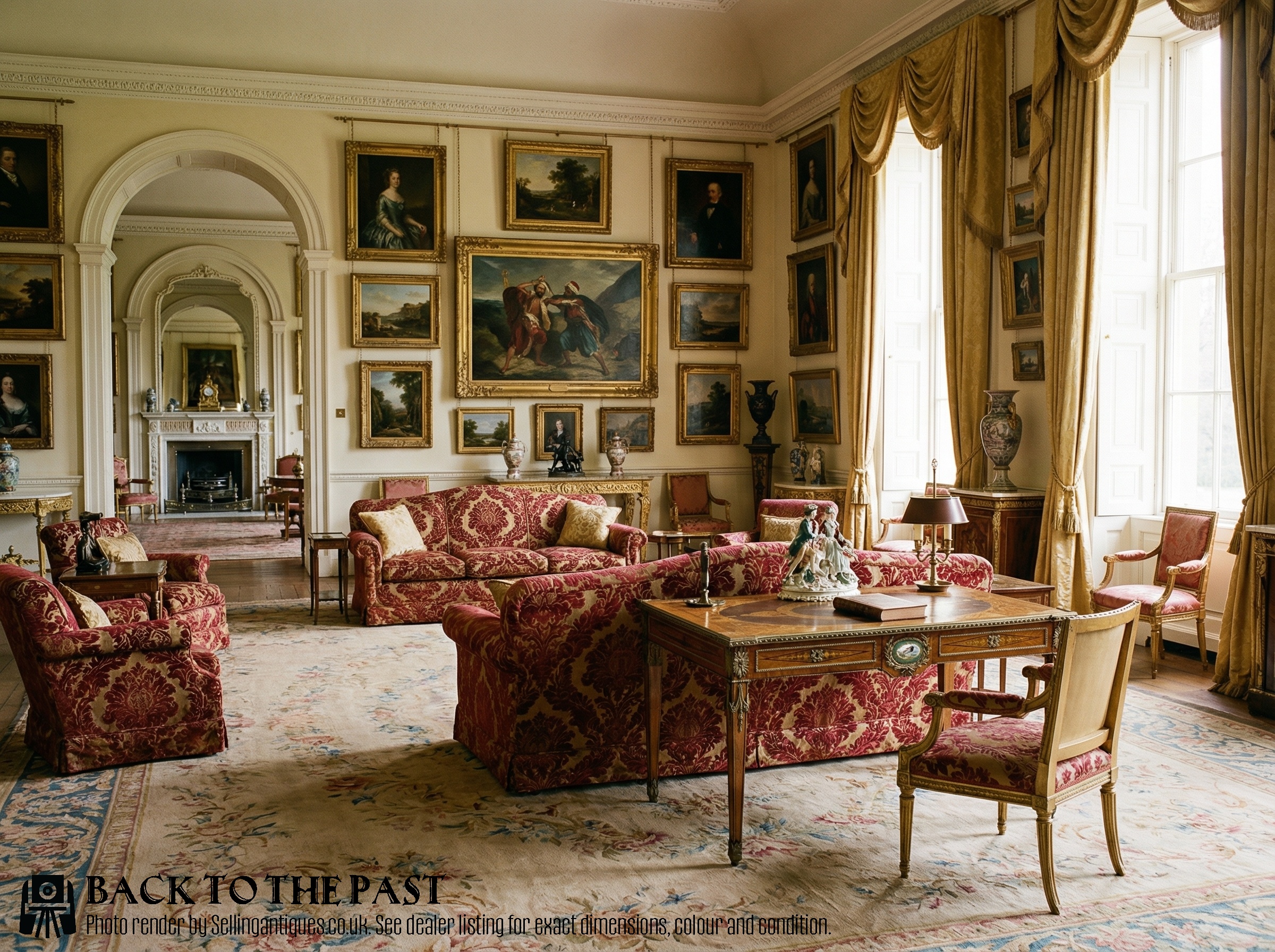
Materials and construction
Maker workshops build these carcasses using foundational woods such as mahogany, walnut, and fruitwood, then apply decorative veneers of kingwood, tulipwood, and rosewood. Craftsmen cut contrasting timber veneers by hand to form intricate floral and geometric marquetry panels across the top and sides.
Gilded bronze or brass mounts, known as ormolu, edge the corners, aprons, and legs to frame the timber inlay and protect vulnerable edges. Porcelains and Vernis Martin finishes occasionally supplement the wood surface, adding contrasting textures to the writing compartments.
Retail Price Guide 2026
Typical UK retail prices for french marquetry writing desk, calculated from the Sellingantiques database of over a million retail prices indexed since 2003. This retail price guide relies exclusively on Sellingantiques data; no external sources or auction records are used, so the figures do not describe the wider market.
The recorded pieces span the Georgian, Victorian, and Edwardian eras, utilising kingwood, tulipwood, and ormolu mounts across various writing table formats.
Qualities of execution
The distinction between ordinary and exceptional examples lies in the precision of the veneer cutting and the depth of the marquetry shading. Superior pieces utilise subtle tonal variations in fruitwoods and exotic timbers to create genuine perspective and detail within floral motifs, rather than relying on simple, flat geometric repetitions.
Mount quality dictates the upper tier of these pieces, where chased ormolu details fit cleanly against the contours of the wood carcass without gaps. The integration of interior fittings, such as fitted leather writing surfaces and precisely dovetailed drawer construction, separates standard production from master workshop output.
The French Marquetry Writing Desk Glossary
- Marquetry
- The art of forming decorative patterns by fitting together thin slices of various coloured woods and veneers. This technique creates pictorial designs across the desk surface.
- Ormolu
- Gilded bronze mounts applied to furniture edges and corners for decoration and reinforcement. The metalwork is typically cast and hand-chased.
- Bureau plat
- A freestanding writing table fitted with one or more drawers in the frieze. These desks lack a superstructure and are designed to stand away from walls.
- Vernis Martin
- A simulated Japanese lacquer technique developed in France, using translucent resin varnishes. It appears on specialised cabinetwork panels.
Frequently Asked Questions
How do I identify a Louis XV style desk?
Louis XV style pieces display characteristic curving lines, cabriole legs, and asymmetrical floral marquetry. The overall silhouette avoids straight edges in favour of organic, flowing contours.
Ormolu mounts on these pieces typically accentuate the shoulders of the legs and the centre of the drawer apron, emphasising the dynamic shape of the carcass.
Where should I place a centre table desk?
Centre tables are finished on all four sides, making them suitable for positioning in the middle of a room rather than against a wall. This allows access from any angle while displaying the marquetry on the back.
Ensure the room humidity remains stable, as central placement exposes the timber and veneer to fluctuating drafts from surrounding windows or doors.
What is the difference between a bureau plat and a secretaire?
A bureau plat functions as an open writing table with a flat top and frieze drawers beneath. It prioritizes surface area for active correspondence.
A secretaire incorporates a vertical cabinet structure, often featuring a drop-down writing flap that conceals smaller pigeonholes and concealed compartments behind it.
How do I care for antique wood veneer?
Maintain stable indoor temperatures and keep the desk away from direct sunlight and heat sources to prevent the marquetry veneers from lifting or splitting. Natural waxes applied sparingly help nourish the timber.
Avoid using modern liquid polishes or silicone sprays, which can penetrate hairline cracks in the polish and damage the underlying veneer adhesives.