
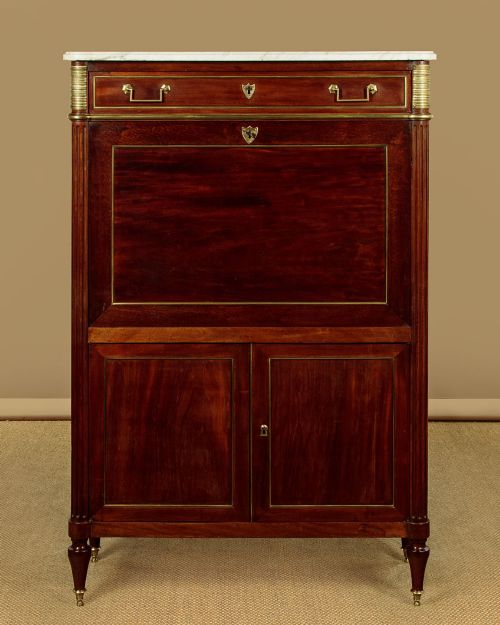
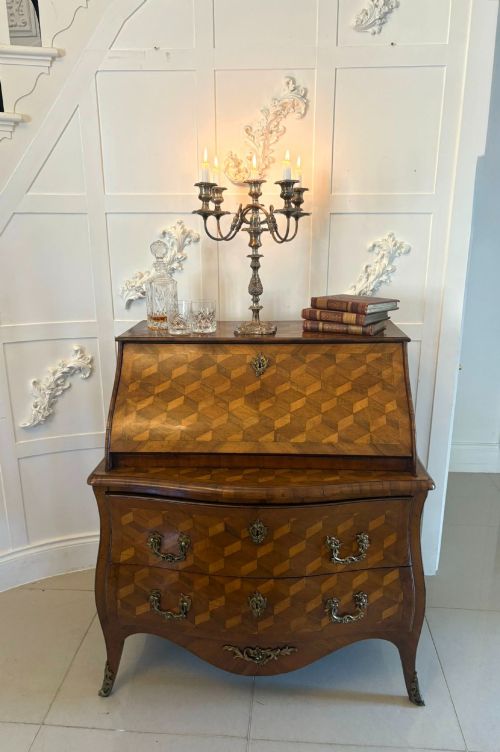
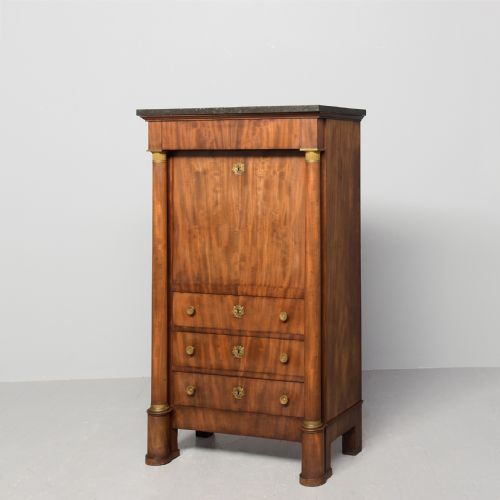
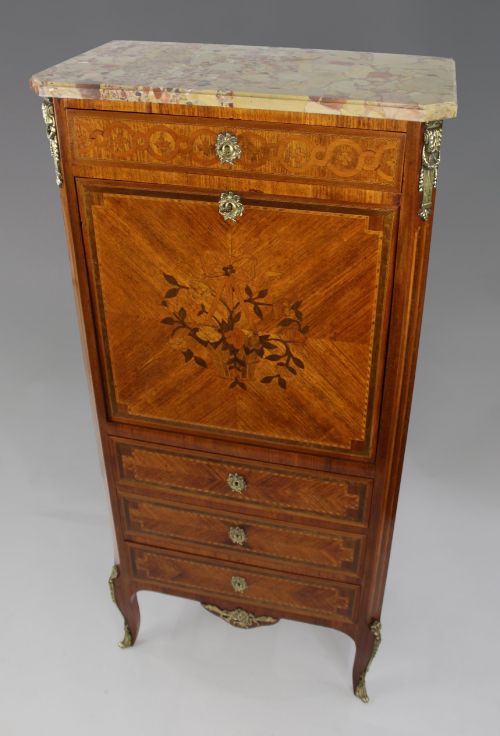
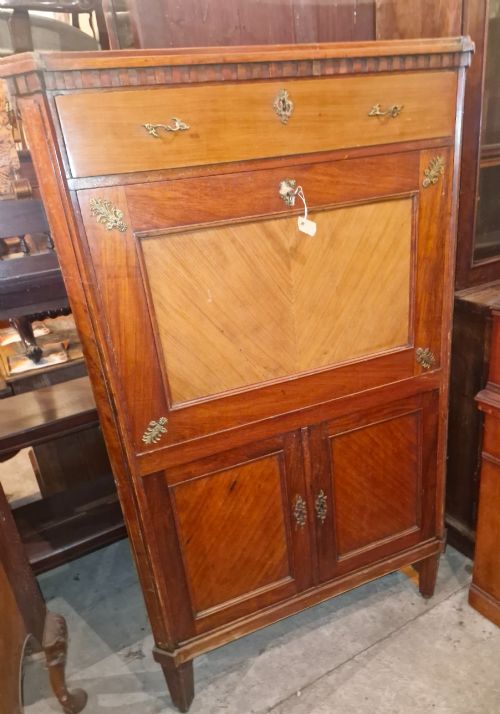
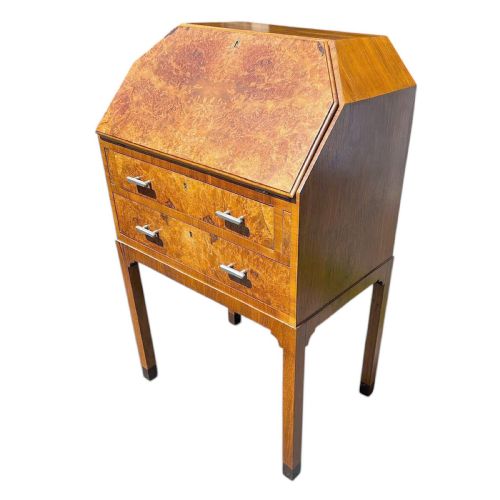
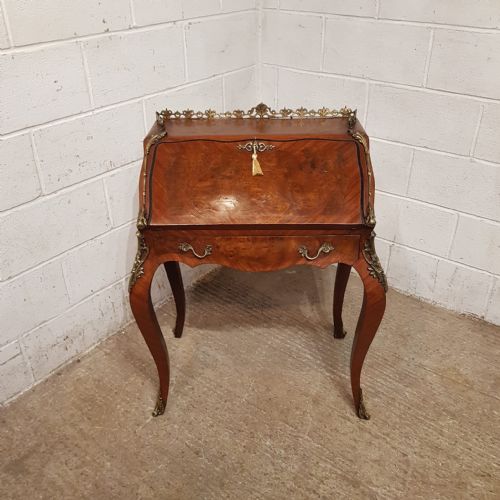
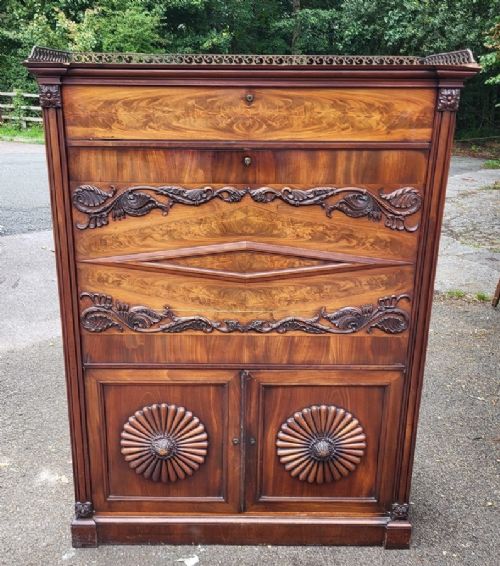

French Fall Front Desk
A french fall front desk combines hidden workspace with fine timber surfaces, offering elegance and practicality for the study.
What these desks are
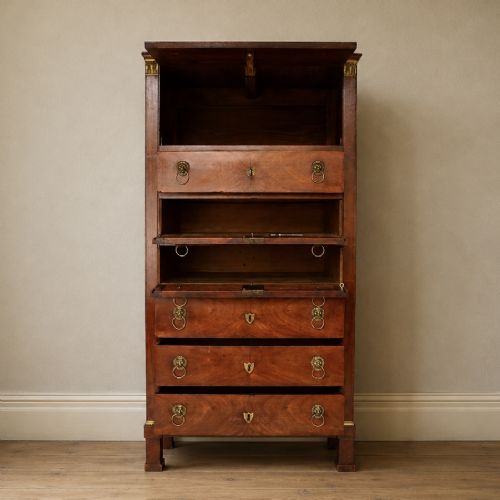
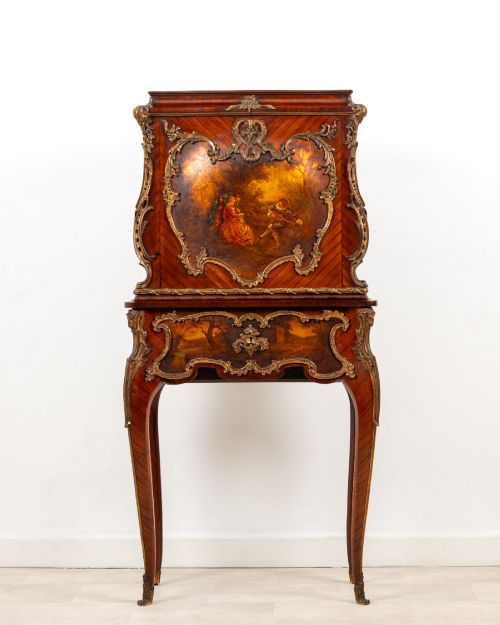
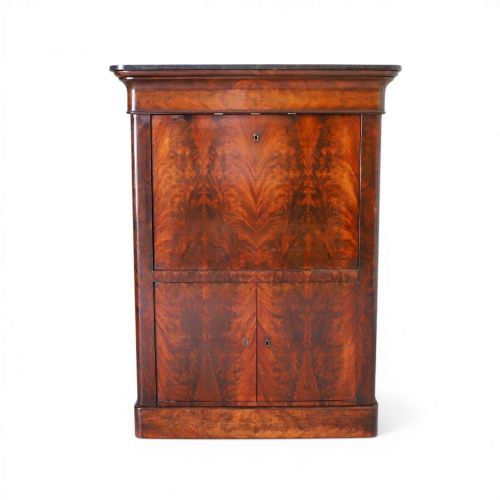
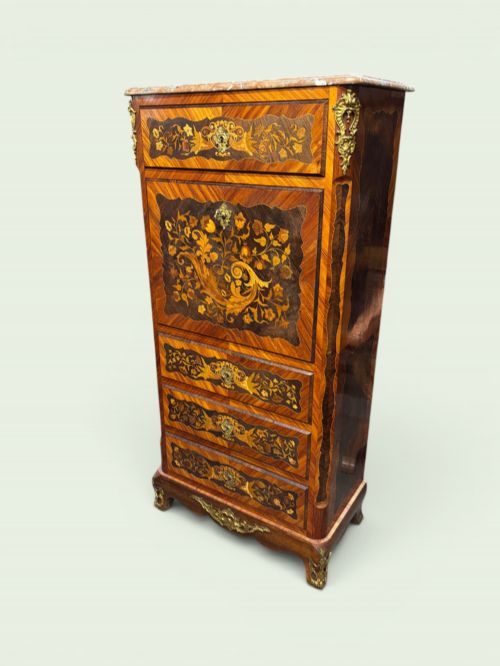
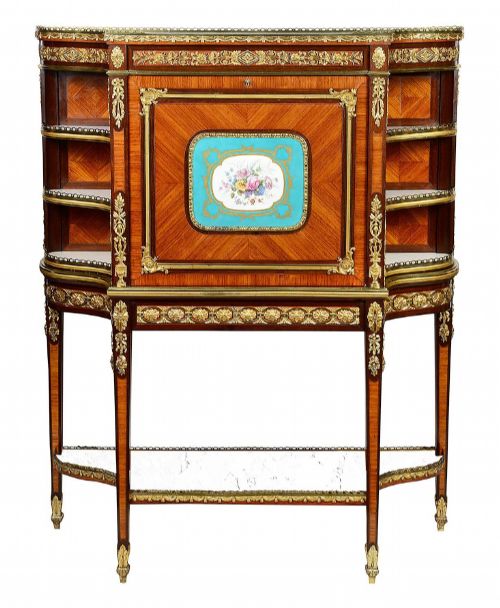
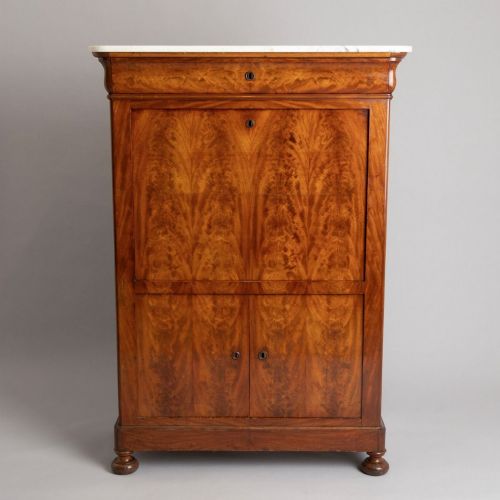
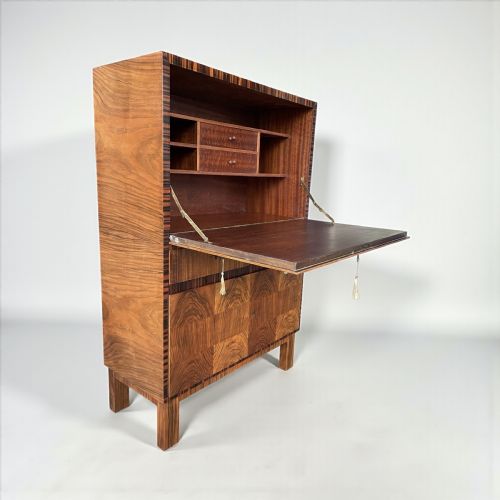
A french fall front desk provides a concealed writing surface that drops down to reveal fitted compartments and small drawers inside. These pieces range from compact bureau de dame examples to taller secretaire abattant cabinets designed for formal rooms.
The versions most commonly met on this page date from the nineteenth century, including pieces made around eighteen eighty and nineteen hundred. Makers styled them using Louis XV revival, Louis XV, French Empire, and French Rococo revival aesthetics.
Forms span across categories listed as desks, secretaire cabinets, and writing furniture. They utilise timber bodies that hide utilitarian compartments behind decorative drop panels.
How they were made
Carpenters constructed these desks using hardwoods such as mahogany, walnut, rosewood, and kingwood as foundations for decorative veneers and marquetry. Workshops then mounted cast or chased ormolu hardware and fitted marble tops to finished case frames.
Specialist decorators applied lacquer work, including Vernis Martin finishes, to create decorative surface panels on the drop fronts and cabinet doors. Brass fittings secure the interior compartments and provide operational hinges for the folding writing surface.
Retail Price Guide 2026
Typical UK retail prices for french fall front desk, calculated from the Sellingantiques database of over a million retail prices indexed since 2003. This retail price guide relies exclusively on Sellingantiques data; no external sources or auction records are used, so the figures do not describe the wider market.
Some drop fronts hide secret compartments that require pressing hidden wooden springs to release the inner drawers.
What varies in quality
The standard of timber selection and veneer matching defines the visual appeal across these pieces. Finer examples display intricate marquetry patterns and well-figured kingwood or walnut grains across every visible surface.
Metalwork execution separates standard production from superior craftsmanship. Crisp, heavy ormolu mounts and substantial marble tops indicate workshops that invested heavily in decorative details.
The French Fall Front Desk Glossary
- Secrétaire abattant
- A tall fall front desk featuring a vertical cabinet with a hinged writing flap that conceals inner drawers. This form keeps correspondence hidden when the room is not in use.
- Bureau de dame
- A lady's writing desk, typically smaller in scale and designed for domestic or boudoir settings. These often feature delicate cabriole legs and fine marquetry.
- Ormolu
- Gilded bronze mounts applied to furniture edges and corners for decorative accent. It adds metallic contrast to dark woods like mahogany and rosewood.
- Vernis Martin
- A simulated Japanese lacquer technique developed in eighteenth-century France and replicated in later revival pieces. It uses layered varnish to achieve a translucent, glossy finish.
- Kingwood
- A dense, richly figured timber with dark brown and violet stripes frequently used in French cabinet making. It creates striking geometric patterns when book-matched on panels.
Frequently Asked Questions
What is a fall front desk?
A fall front desk is a writing cabinet with a hinged panel that drops down to form a horizontal writing surface. When closed, the panel conceals pigeonholes, small drawers, and compartments.
This design allows paperwork to remain out of sight, keeping rooms tidy when writing tasks are finished for the day.
How were these desks used?
These desks served as private writing stations for correspondence, record-keeping, and managing household accounts. The internal compartments held stationery, inkwells, and letters.
In period homes, they were placed in drawing rooms, studies, or private boudoirs where guests might see them.
How do I care for marble tops?
Marble tops require gentle cleaning with a damp cloth and mild soap to protect the stone surface from acidic stains. Avoid placing wet glasses or chemical cleaners directly onto the marble.
Regular dusting keeps the polish intact without needing abrasive polishes that can scratch the finish.
How do I date these desks?
Dating relies on stylistic clues, construction methods, and materials recorded across revival periods. Nineteenth-century pieces often imitate earlier Louis XV or Empire designs using machine-assisted or hand-finished techniques.
Examining internal secondary woods and hardware styles helps confirm the era of manufacture.