

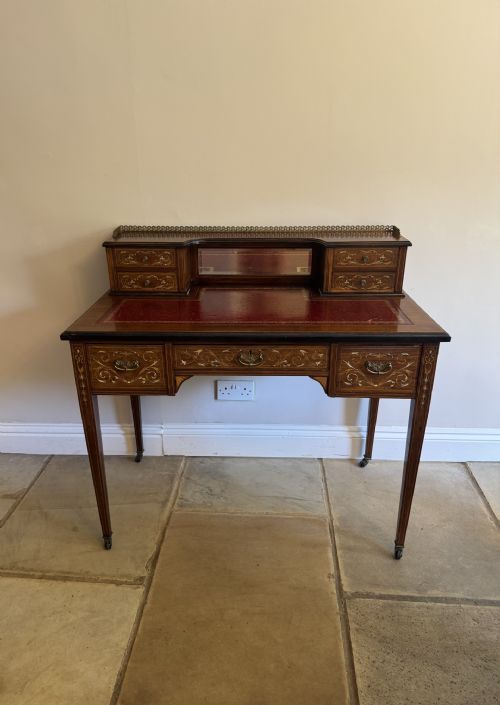
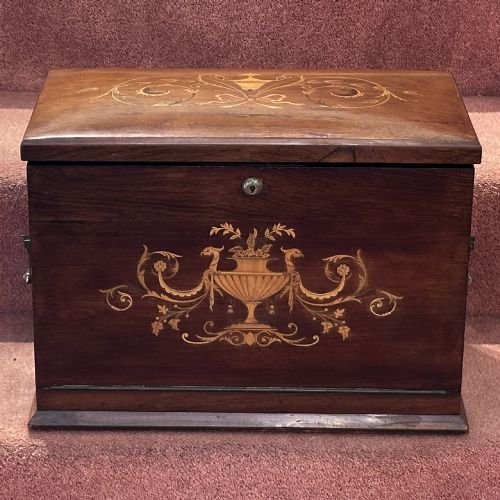
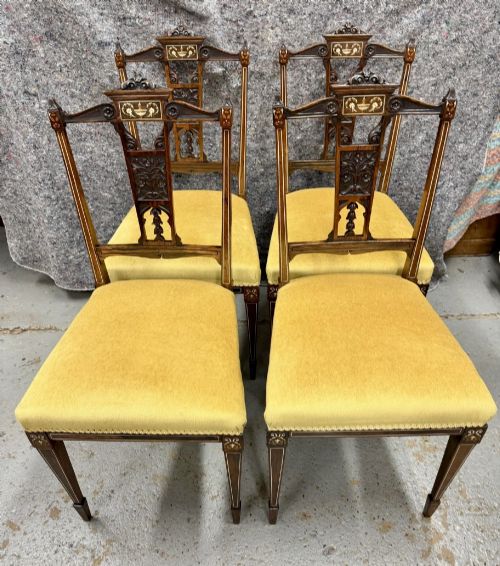


Edwardian Rosewood Desk
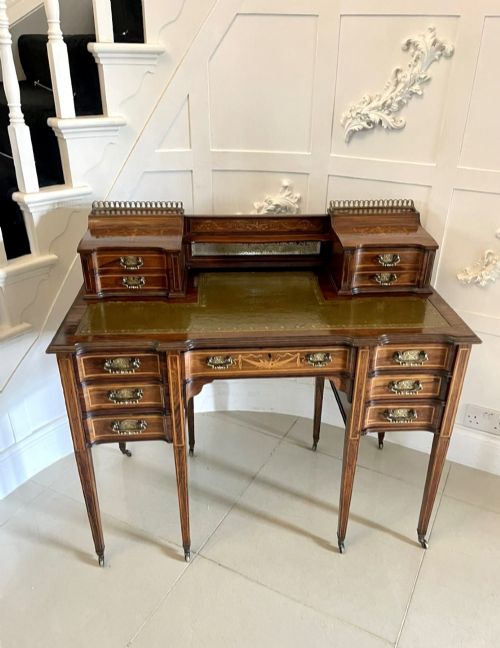
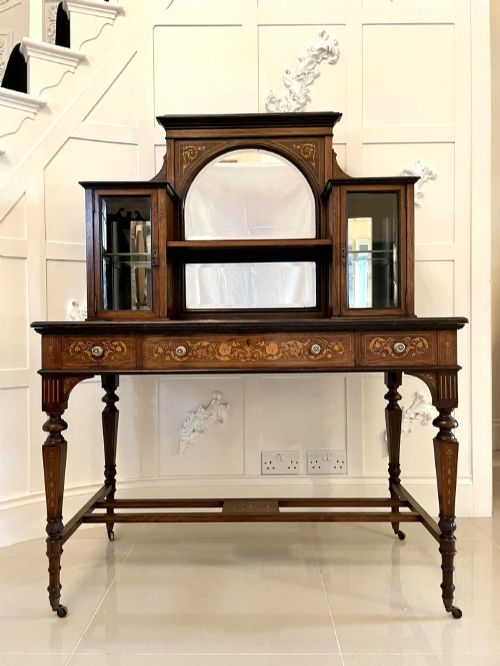
An edwardian rosewood desk brings warmth and refined joinery into a room, offering a compact writing surface framed in rich timber and delicate inlay.
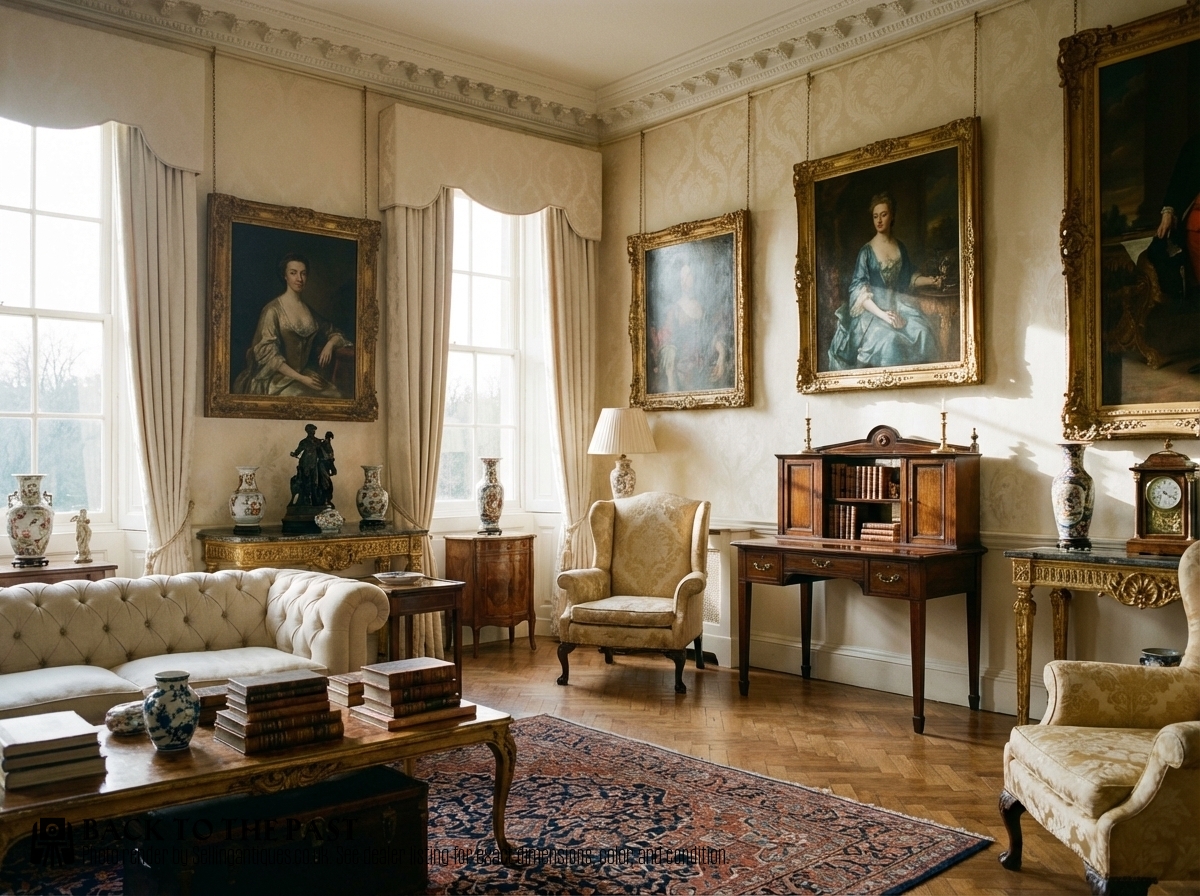
Edwardian Rosewood Desk
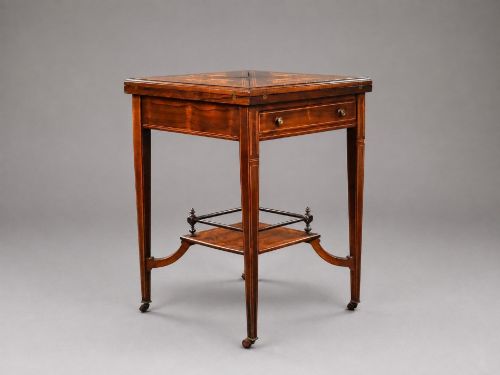
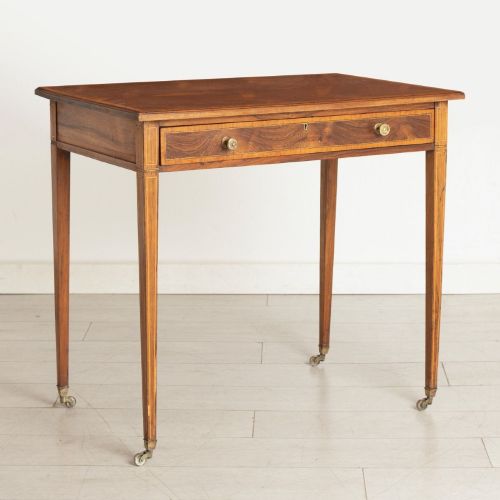
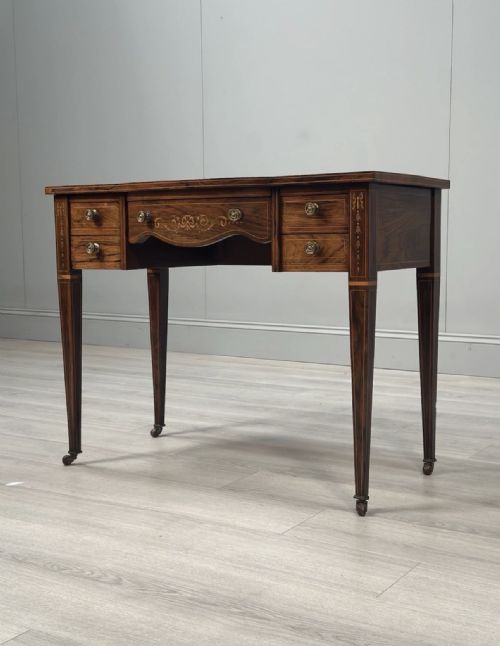
An edwardian rosewood desk combines the rich, dark grain of tropical hardwood with lighter satinwood and boxwood stringing, creating a formal yet graceful piece for domestic writing and correspondence.
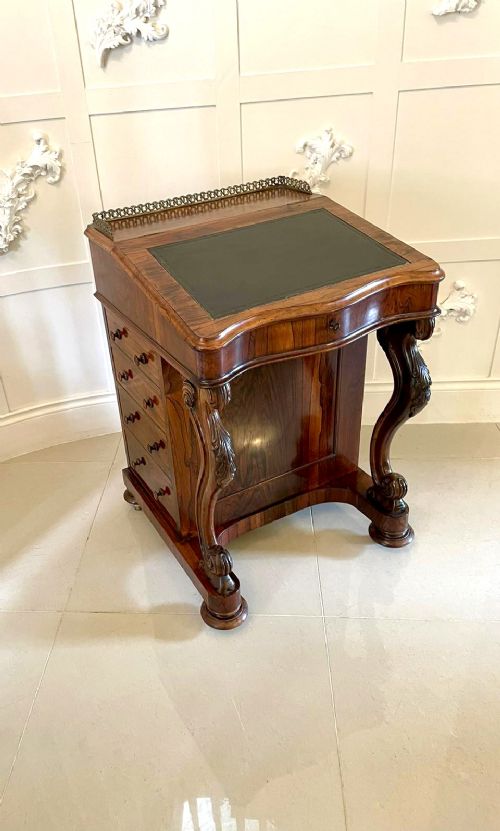
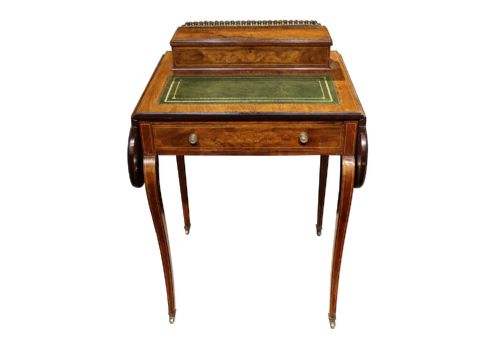
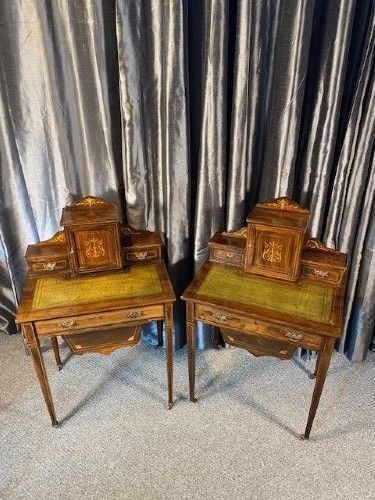
The pieces appearing on this page span writing tables, ladies' desks, and compact bonheur du jour forms designed for domestic interiors around the turn of the twentieth century.
Many examples incorporate Sheraton Revival influences, utilising classical symmetry, urn motifs, and inlaid foliate scrolls to recall earlier eighteenth-century designs.
How they were made
Cabinet makers built these pieces using solid rosewood or rosewood veneers laid over secondary timbers, often framing the writing surface in inset tooled leather.
Decorative detailing relies on marquetry and contrasting stringing in satinwood and boxwood, combined with brass handles, locks, and hinges.
Fitted interiors feature small drawers, pigeonholes, and stationery compartments constructed with fine dovetail joints.
Edwardian Rosewood Desk Retail Price Guide 2026
Typical asking prices for edwardian rosewood desk among the pieces listed under this phrase on Sellingantiques today, from the lower quarter to the upper quarter. They describe what is for sale here now, not the wider market.
A surprise correspondence drawer awaits anyone willing to check beneath the sliding stationery compartments of a fitted desk.
What varies in quality
The distinction between ordinary and exceptional pieces lies in the precision of the marquetry and the crispness of the inlaid stringing.
Richer examples show careful timber selection with symmetrical grain matching across the desktop and polished brass hardware.
The intricacy of internal fittings, such as lockable compartments and secondary writing slopes, elevates the status of the piece.
Maple and Co·Edwards and Roberts·William H Vaughan and Co·James Shoolbred and Co·Ray and Miles of Liverpool
The Edwardian Rosewood Desk Glossary
- Bonheur du jour
- A light lady's writing desk featuring a small tiered superstructure with shelves, drawers, or a cabinet above the writing surface.
- Marquetry
- Decorative veneer patterns formed by fitting together small pieces of different coloured woods to create pictorial or geometric designs.
- Stringing
- Thin lines of contrasting timber inlaid into channels cut into the surface of the wood to outline panels and drawers.
- Satinwood
- A pale, lustrous timber from tropical trees used extensively for contrasting inlay and banding on darker woods.
- Sheraton Revival
- A late nineteenth-century design style drawing on the classical proportions and decorative motifs associated with George Sheraton.
Edwardian Rosewood Desk: Frequently Asked Questions
Where were these desks placed?
These pieces were typically kept in private bedrooms, boudoirs, or drawing rooms for personal correspondence and letter writing.
Because they were finished on all sides in many cases, they could stand away from the wall in the middle of a room.
How do I care for rosewood?
Protect the timber from direct sunlight and excessive temperature changes to prevent the rosewood veneer from drying and cracking.
Apply a light microcrystalline wax occasionally to nourish the polished surface without building up residue.
What is a bonheur du jour?
This form is a small, elegant writing desk topped with a set of stationary compartments or a small cabinet with doors.
It was designed primarily for women to write letters and manage household accounts in the morning.
How do I distinguish Edwardian from Victorian desks?
Edwardian versions tend to display lighter proportions, finer stringing, and a distinct Sheraton Revival influence compared to heavier Victorian forms.
The inlay work on Edwardian pieces often utilises satinwood and boxwood more sparingly and symmetrically.