
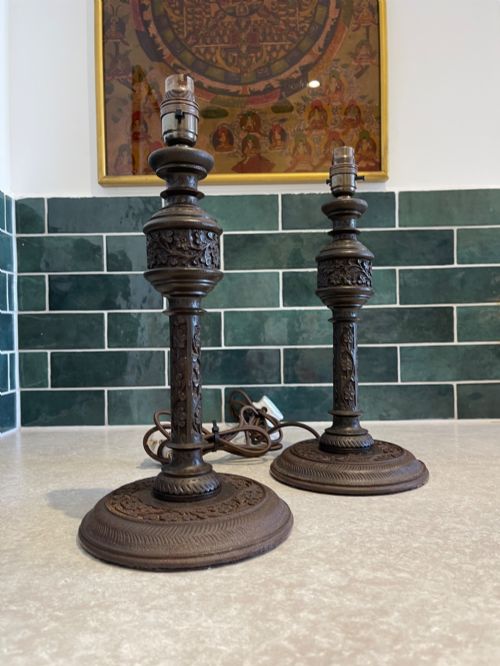
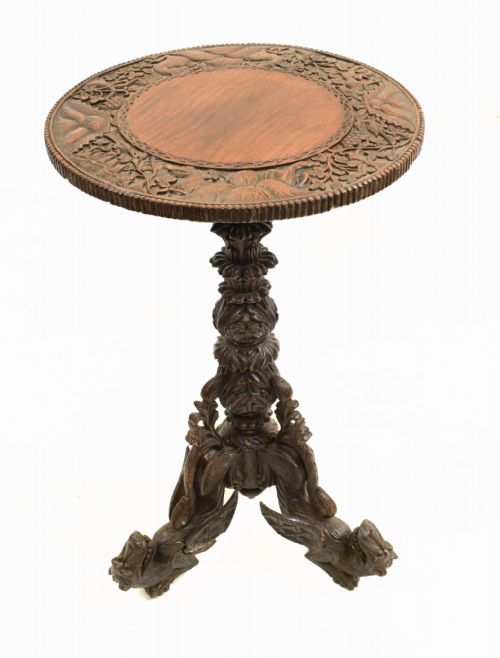
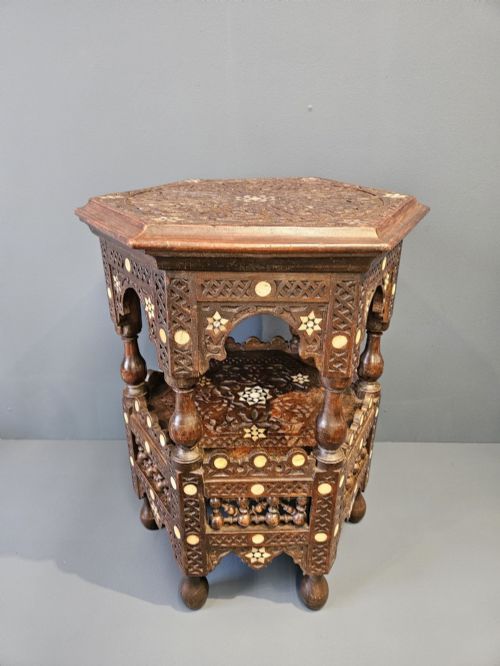
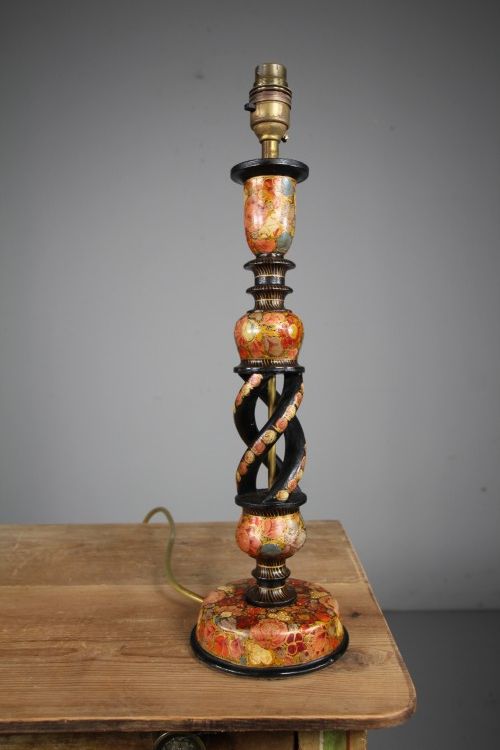
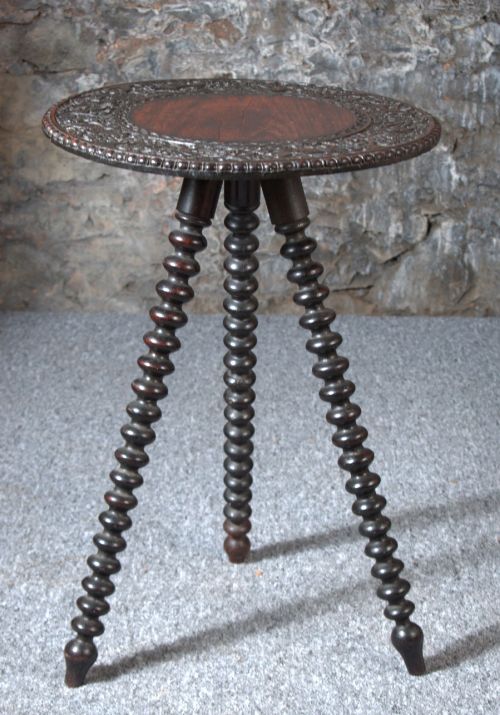


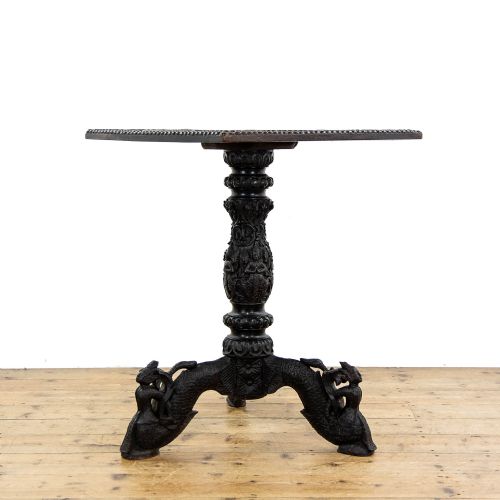

Indian Carved Lamp Table
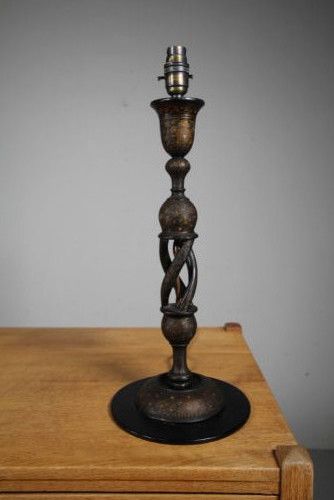
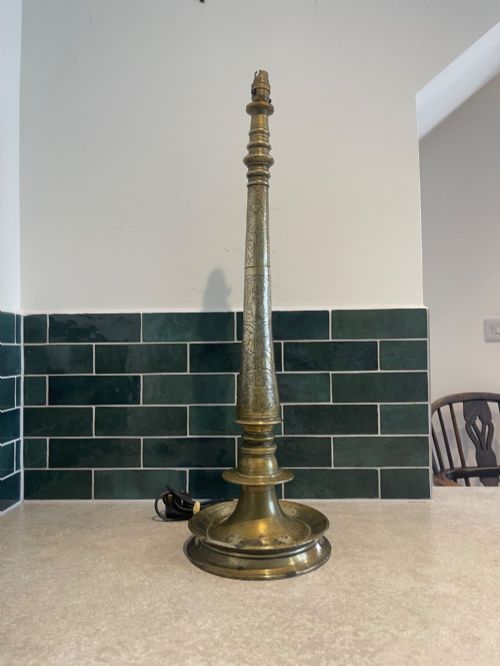
These Indian carved lamp table examples bring tactile depth and rich timber grain to a corner, offering a grounded surface for lighting.
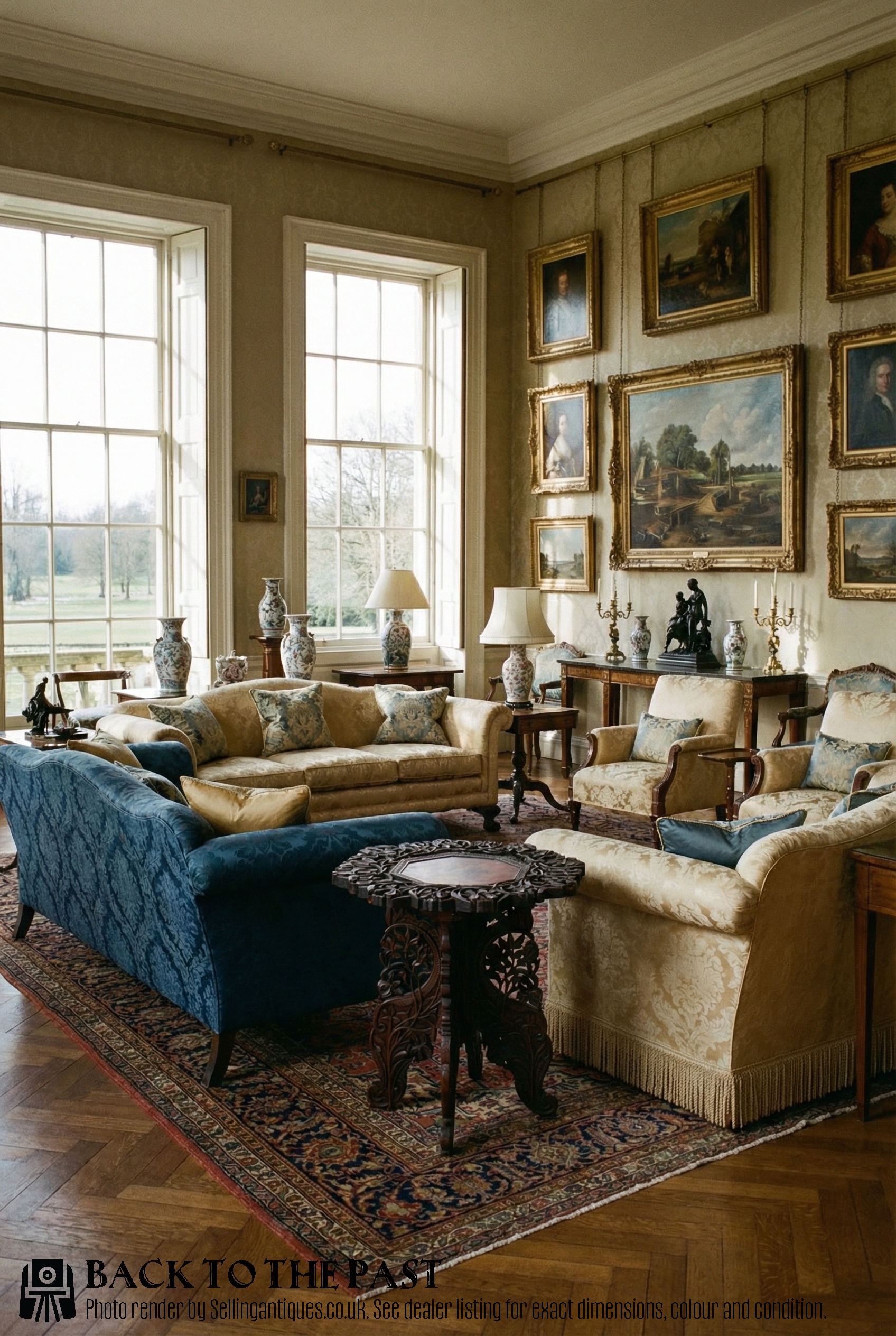
Indian Carved Lamp Table
When you search for an Indian carved lamp table, you encounter a range of occasional and side furniture spanning the Victorian era through the early twentieth century. These pieces often originate from regional workshops associated with British colonial trade and indigenous craftsmanship.
Most items you meet on this page embrace styles like Anglo-Indian, Anglo-Burmese, and Moorish Revival. These aesthetic traditions combine local carving motifs with forms suited to Western domestic interiors.
How they were made
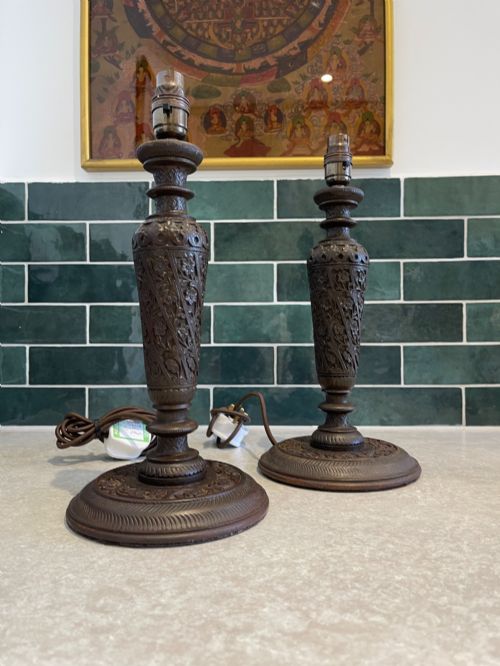
Construction relies heavily on dense timbers such as teak, padouk, rosewood, and walnut, chosen for their stability under intricate chisel work. Artisans carved deep, continuous relief patterns directly into the wood surfaces of tables and lamp bases.
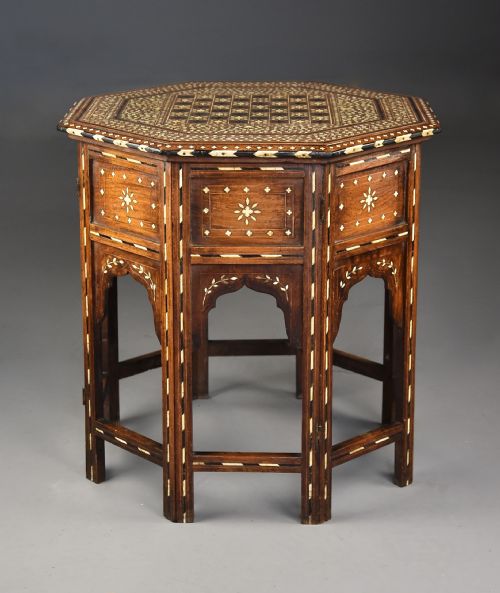
Detailing often incorporates contrasting materials, including bone inlay and brass elements, alongside red lacquer finishes. Folding mechanisms and detachable legs appear on specific campaign pieces to allow for portability.
What varies in quality
Quality rests in the crispness and depth of the carved foliage and geometric motifs across the timber. Superior examples maintain sharp relief without chipping along the delicate edges of the pattern.
The choice of dense wood species and the structural integrity of folding frames or tilt-top mechanisms distinguish finer pieces from simpler utility items.
The Indian Carved Lamp Table Glossary
- Anglo-Indian
- Furniture made in India during the British colonial period, combining traditional local craftsmanship with European forms. These pieces often utilise dense native hardwoods.
- Padouk
- A heavy, durable tropical timber with a warm reddish hue commonly utilised in nineteenth-century regional tables. It takes fine detail well under the carver's chisel.
- Tilt-top
- A table construction featuring a hinged surface that folds vertically when not in use. This mechanism allowed for easier storage in domestic spaces.
- Inlay
- A technique where contrasting materials such as bone are set into recesses flush with the timber surface. It creates geometric or floral patterns across the tabletop.
Indian Carved Lamp Table: Frequently Asked Questions
How were these tables used originally?
These tables served primarily as occasional surfaces for tea, reading materials, or portable lighting within colonial homes.
Folding campaign versions allowed British officers and officials to pack and transport furniture easily during postings.
What woods should I expect to find?
Makers utilised dense regional hardwoods such as teak, padouk, rosewood, and walnut to withstand deep carving.
These timbers provide the weight and structural stability necessary for intricate pierced and relief patterns.
How do I date an Indian carved table?
Dating relies on combining the timber type, construction methods like folding hinges, and stylistic markers recorded in nineteenth and early twentieth-century examples.
Victorian and Edwardian cataloguing often links specific carving density to regional workshops in places like Hoshiarpur or Bombay.
Are these tables sturdy enough for lamps?
The solid hardwoods used in their construction provide a stable and robust platform for table lamps and heavy objects.
Checking the rigidity of the joints and folding leg assemblies ensures the surface remains level and secure.