




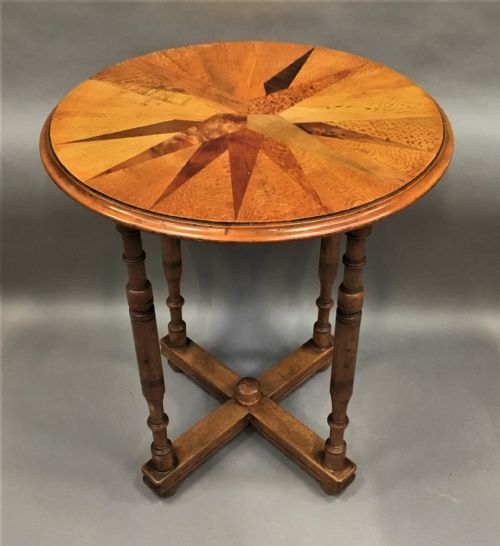


Colonial Style Side Table
A colonial style side table brings global craftsmanship and centuries of trade history directly into a modern room.
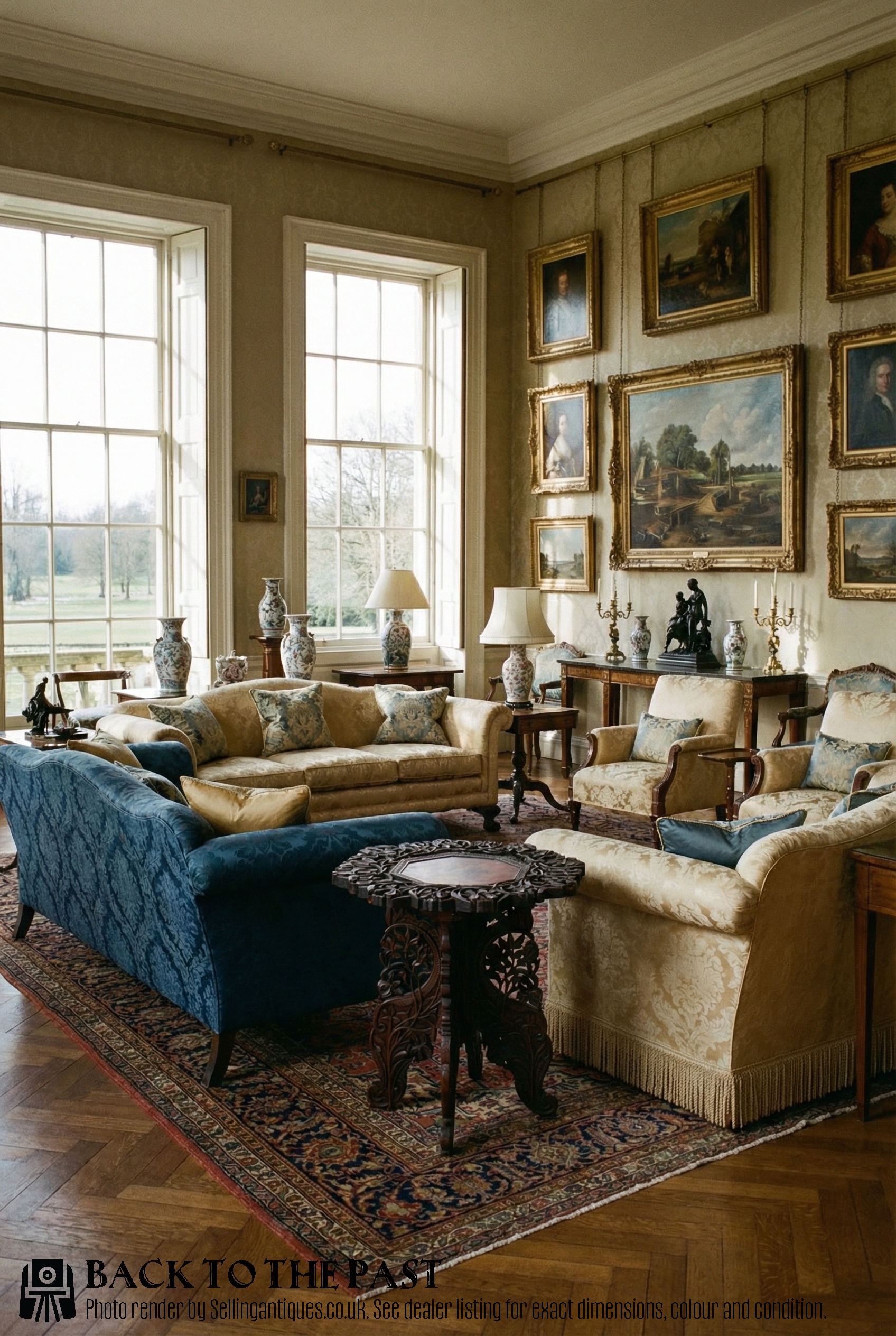
Colonial Style Side Table
A colonial style side table encompasses a diverse group of occasional, console, and centre tables originating from British, Spanish, and Portuguese colonial influences across the nineteenth and early twentieth centuries. These pieces reflect the blending of European furniture forms with local timbers and indigenous carving traditions from regions such as India, Ceylon, Spain, and New Zealand.
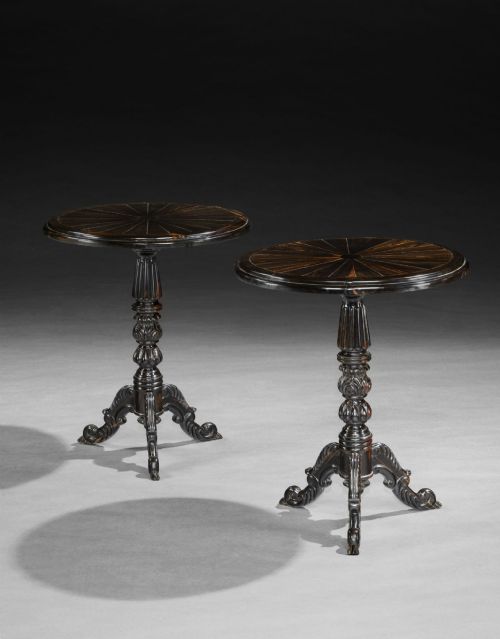
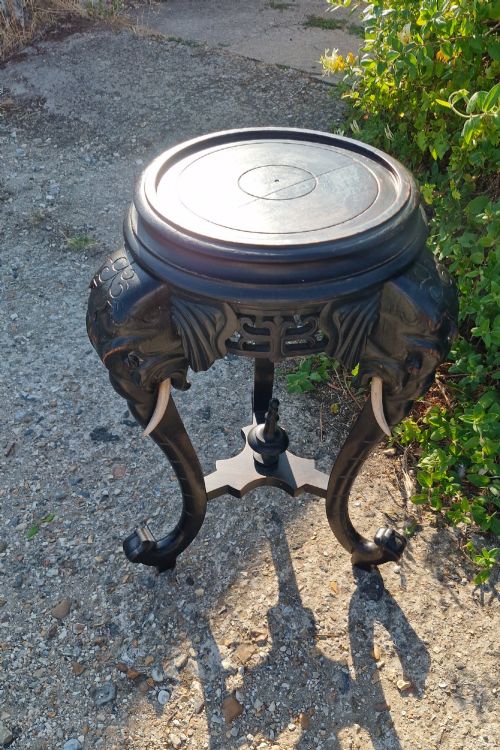
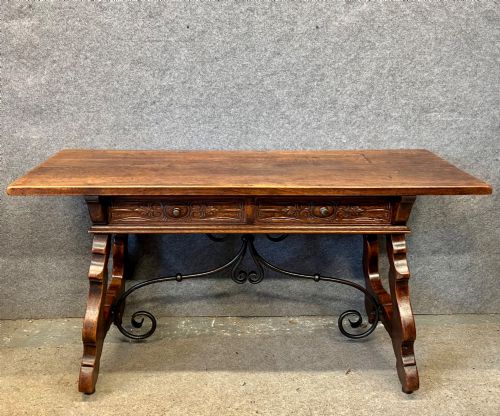
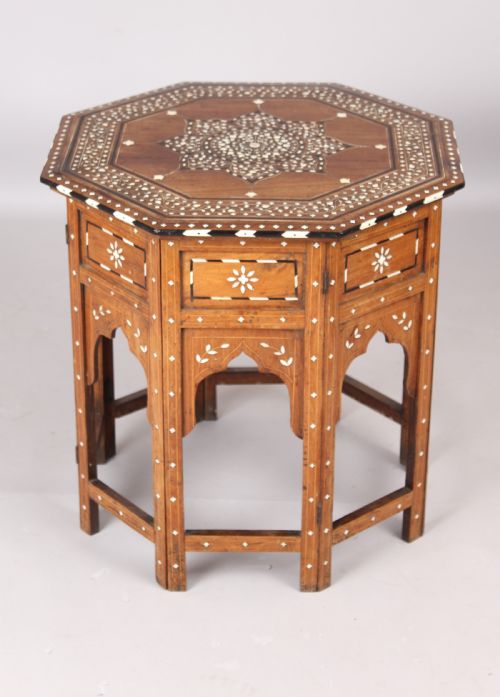
The pieces on this page range from folding teak lamp tables and brass inlaid designs to heavy Spanish walnut and oak examples. Buyers frequently encounter Anglo-Indian folding tables, elaborately carved elephant tables, and specimen wood constructions reflecting distinct regional histories.
Forms vary from compact tripod tables and miniature centre pieces to larger console and dining tables adapted for domestic use. The common thread linking them is their historical origin within colonial administrative or trading networks, resulting in distinctive cross-cultural aesthetics.
Materials and construction methods
Construction relies heavily on dense tropical hardwoods and European timbers, with teak, rosewood, ebony, walnut, oak, and padauk appearing across the listings. Makers utilised these durable woods to withstand varied climates while providing a stable canvas for intricate surface decoration.
Decorative techniques involve detailed hand carving, turned elements, and contrasting inlay work utilising materials such as brass, bone, and painted wood. Folding mechanisms and collapsible designs demonstrate practical engineering tailored for transport during the colonial era.
Periods represented range from the early nineteenth century through the Victorian era up to the 1930s.
Quality factors in period tables
Quality rests primarily on the crispness and depth of the hand carving, the selection of timber, and the structural integrity of joints and folding mechanisms. Superior pieces display precise joinery and well-integrated inlay that remains secure within the surrounding wood.
The sophistication of regional ornamentation also distinguishes the range, where individual artisan skill elevates standard utilitarian forms into notable decorative objects. Condition, original patination, and the survival of delicate inlaid elements further influence the standing of an individual piece.
Anton Seuffert·William Norrie
The Colonial Style Side Table Glossary
- Anglo-Indian
- Furniture made in India during the British colonial period, often combining British room forms with traditional local carving and dense timbers. These items frequently utilise teak or rosewood.
- Bone Inlay
- A decorative technique where small pieces of bone are set into recesses within a wooden surface to create geometric or floral patterns. This method appears on tables from northern India.
- Specimen Wood
- Furniture constructed from a multitude of different native timbers arranged to showcase natural variations in colour and grain. This technique is prominent in nineteenth-century New Zealand pieces.
- Tripod Table
- A small table supported by a central pillar resting on three feet. This form allows for compact placement and frequent mobility around domestic spaces.
Colonial Style Side Table: Frequently Asked Questions
What defines a colonial style side table?
These tables combine European furniture forms with the timber and decorative traditions of regions influenced by colonial trade and administration.
They span the nineteenth and early twentieth centuries, reflecting diverse aesthetics from British India, Spain, and New Zealand.
How were folding tables used historically?
Collapsible and folding tables served practical needs for administrators and travellers who required easily transportable furnishings during long journeys.
Over time, these functional items transitioned into decorative domestic furniture valued for their clever engineering and portability.
How do I identify an Anglo-Indian piece?
Anglo-Indian tables typically feature dense tropical hardwoods such as teak or rosewood paired with deep, intricate hand carving or metal inlay.
They often incorporate folding structures or specific regional motifs like elephant imagery or geometric patterns.
Where should I place these tables at home?
Their compact proportions make them suitable as lamp tables beside seating, small accent pieces in hallways, or occasional tables in living areas.
Pairing them with neutral surroundings allows the detailed carving and contrasting timbers to stand out.