

Folding Carved Occasional Table
A folding carved occasional table brings versatile surface space and intricate woodwork into a room with minimal fuss.
Folding Carved Occasional Table
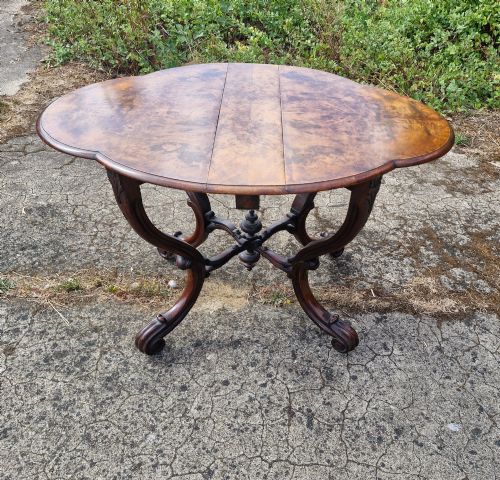
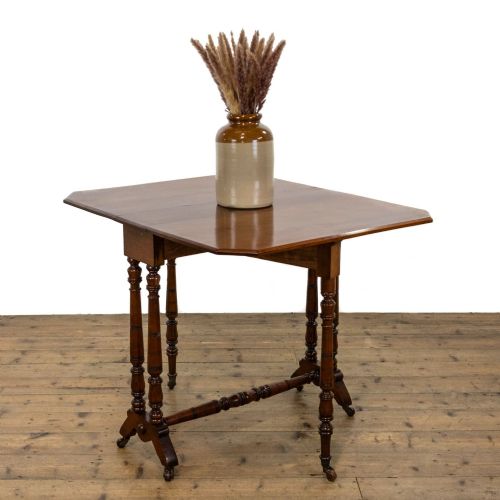
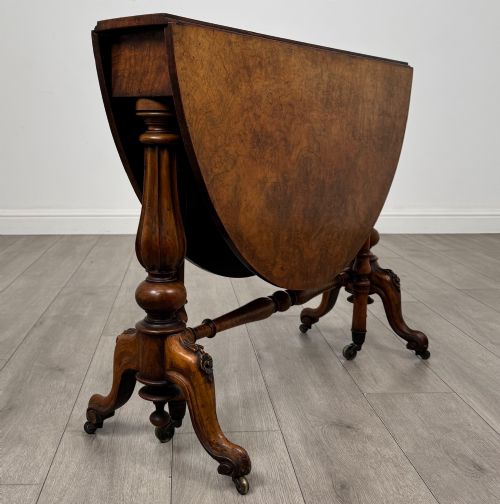
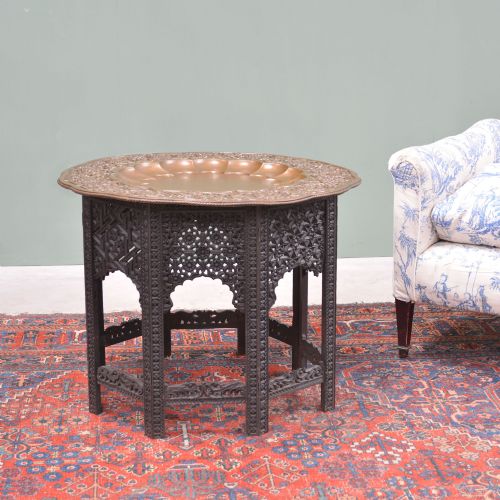
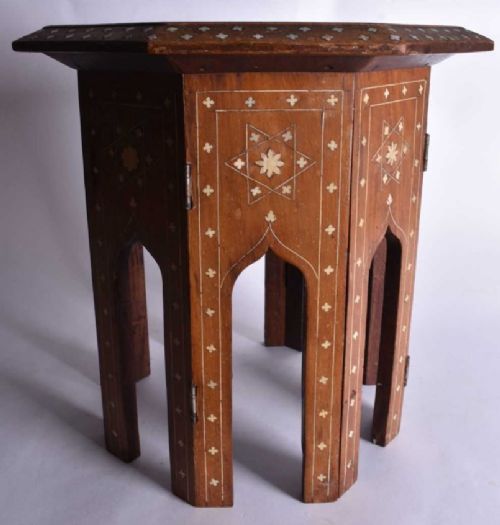
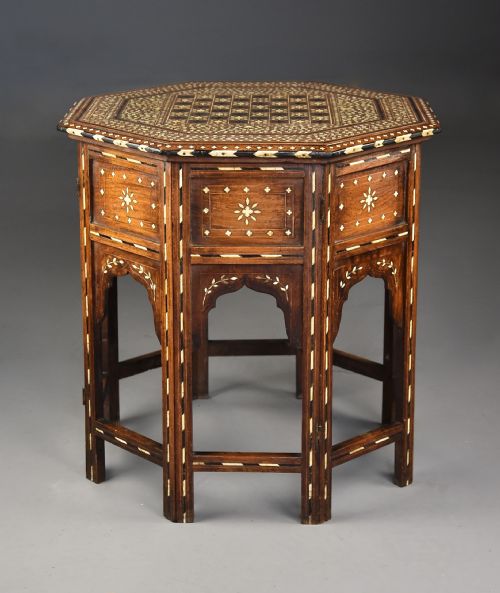
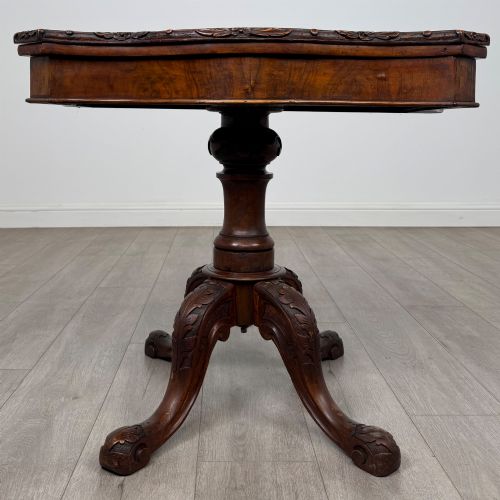
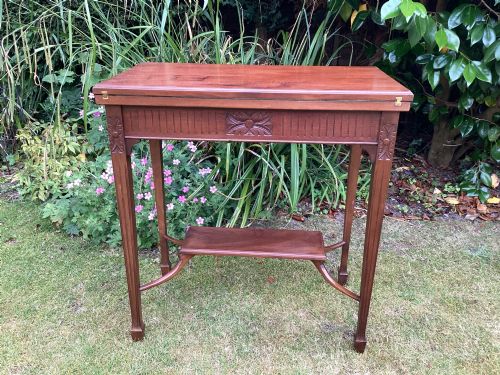
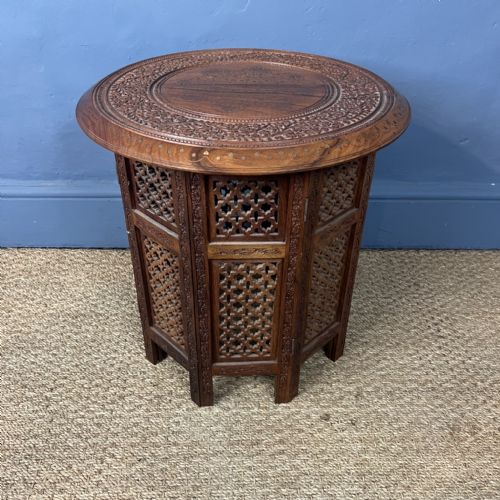
A folding carved occasional table is a portable surface designed for flexible use in domestic spaces, often featuring collapsible or scissor-action bases alongside detailed surface ornamentation. When searching for this phrase, buyers encounter a diverse selection ranging from British walnut and mahogany drop-leaf designs to heavily carved Anglo-Indian and Syrian imports.
The most common examples on this page date from the Victorian and Edwardian eras, alongside pieces from around nineteen hundred to the nineteen thirties. Forms vary widely from octagonal tray tops and Sutherland tables to games tables, but all share the practical capacity to fold away when not in use.
How they were made
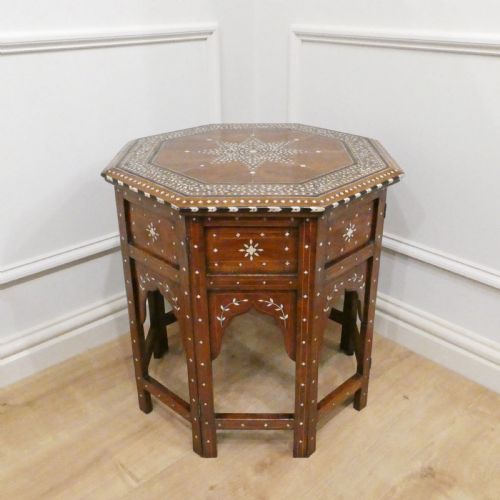
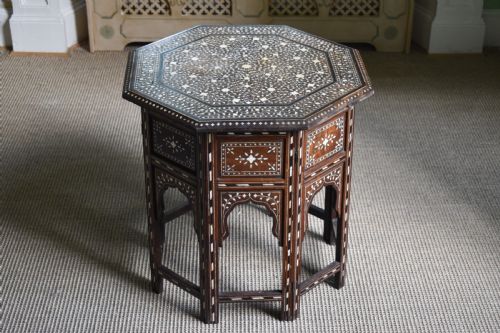
Maker's workshops utilised dense timbers such as walnut, teak, mahogany, padauk, and rosewood, which provided a stable base for deep relief carving and structural stability. These woods were frequently combined with contrasting materials, incorporating bone, mother-of-pearl, copper, or brass inlay into geometric and botanical patterns.
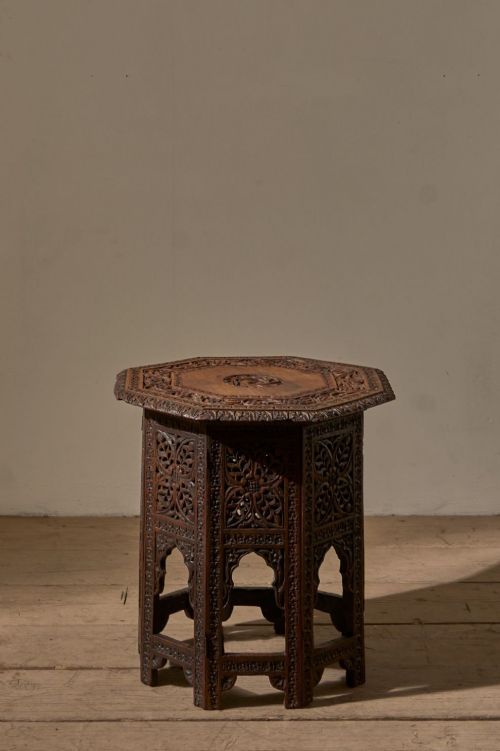
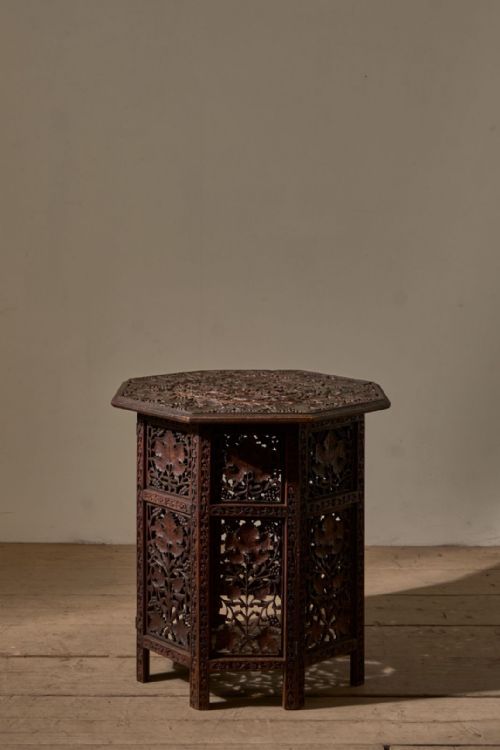
Construction methods relied on clever folding mechanisms, including scissor actions, removable tray tops paired with folding stands, and hinged gatelegs or drop flaps. Surfaces were hand-carved, polished, or lacquered depending on the regional tradition, from British cabinetmaking to Anglo-Indian and Chinese workshops.
Surface decoration spans brass, bone, copper, and mother-of-pearl inlay applied to octagonal, circular, and rectangular folding forms.
What varies in quality
Quality rests in the crispness and depth of the hand carving, alongside the precision of the inlay work where bone, brass, or mother-of-pearl meets the surrounding timber. Pieces boasting dense figuring in walnut or superior selection of heavy teak and padauk command attention for their visual weight.
The mechanical integrity of the folding action separates standard items from superior examples. Well-engineered hinges, tight scissor joints, and stable frames that lock securely into position without wobble indicate higher standards of original construction.
The Folding Carved Occasional Table Glossary
- Sutherland table
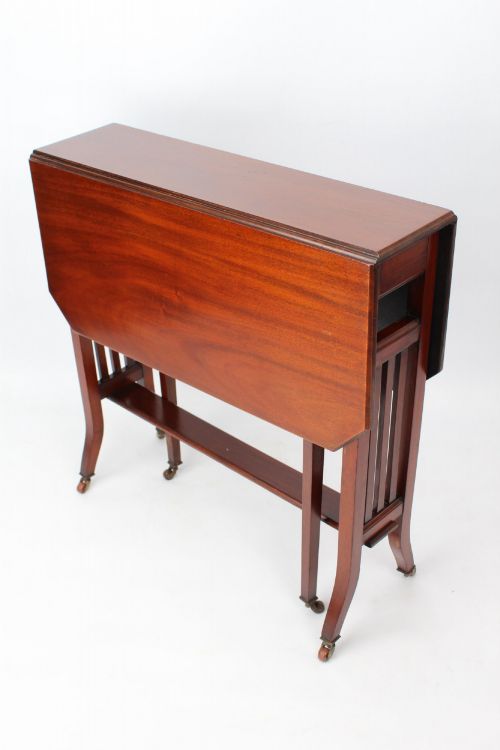
- A narrow drop-leaf table with exceptionally small flaps and deep folding leaves supported by swing legs. It was designed to occupy minimal floor space when closed.
- Octagonal table
- A table featuring an eight-sided top, frequently seen in Anglo-Indian productions with folding bases and intricate surface inlay. This shape allows for compact placement.
- Scissor action
- A cross-frame mechanism operating like scissors to allow the table base to collapse flat. It provides reliable portability for occasional use.
- Butlers tray
- A removable wooden tray with raised sides, often fitted to a separate folding stand. Originally used for serving, it functions as a portable surface.
- Gateleg table
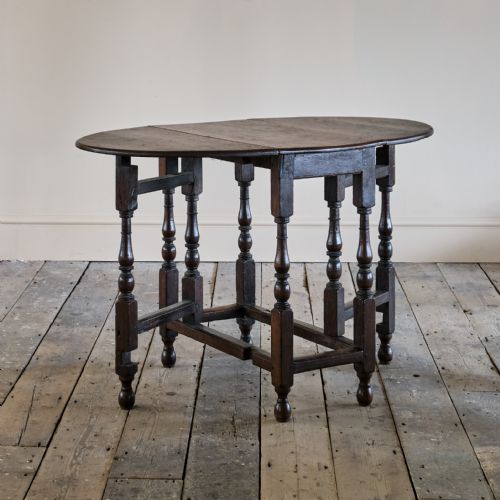
- A table with hinged legs that swing out to support drop-down flaps on either side. This allows the surface area to expand or contract easily.
Folding Carved Occasional Table: Frequently Asked Questions
How do I fold these tables?
Most examples rely on simple hinges, swing legs, or scissor actions that allow the frame to collapse flat for storage. Lifting the top or releasing the supporting struts enables the legs to fold inward smoothly.
Take care to support the leaves or removable tray tops while operating the mechanism to avoid straining the original joints.
Where were these tables made?
The pieces originate from British cabinet makers as well as international workshops, particularly in India, China, and Syria. British examples often utilise walnut and mahogany, while imported items feature teak, padauk, and exotic hardwoods.
Trade and colonial connections during the nineteenth and early twentieth centuries brought these diverse regional styles into British homes.
Are these tables sturdy?
Despite their collapsible designs, period folding tables were built from dense timbers like teak, oak, and walnut to ensure domestic durability. The stability depends on the tightness of the original hinges and the precision of the folding frame.
Well-maintained examples handle everyday placement of lamps and tea sets comfortably when fully locked into position.
How do I date my table?
Dating relies on identifying the timber species, style conventions, and construction techniques characteristic of periods like the Victorian era or the early twentieth century. Details such as brass inlay, specific carved motifs, and hardware types offer clear clues to the decade of manufacture.
Comparing the style against documented regional output helps narrow down the origin and age of the piece.