

Gilt Bronze Pedestal
When you search for a gilt bronze pedestal, you are looking at substantial display pieces that bring classical presence to a room.
Gilt Bronze Pedestal
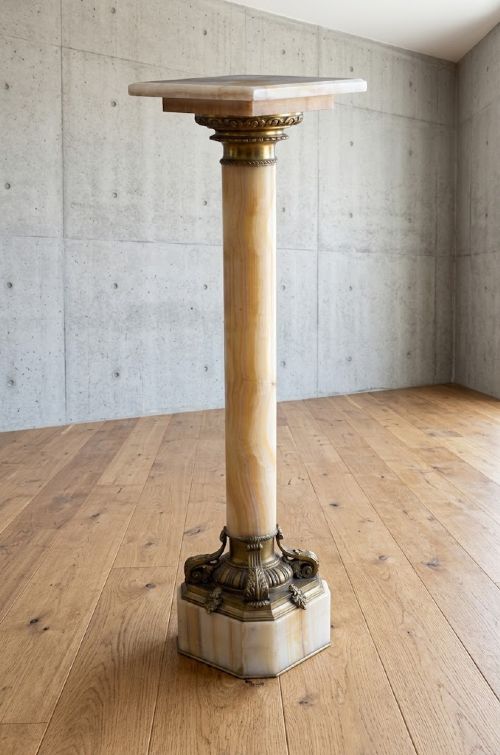
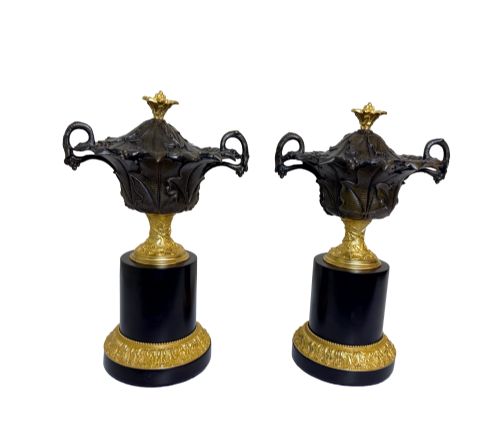
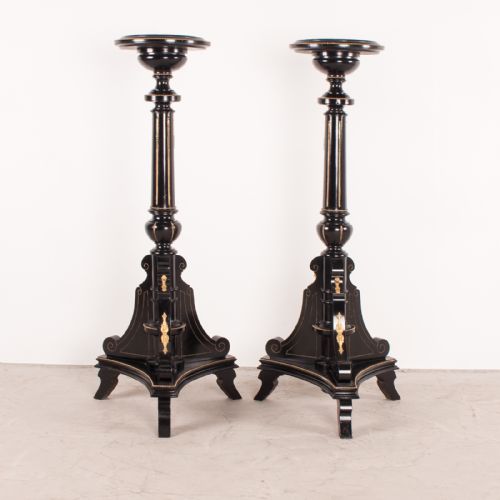
A gilt bronze pedestal is a decorative support or display stand, often featuring mountings in ormolu and bronze alongside structural elements of stone and timber.
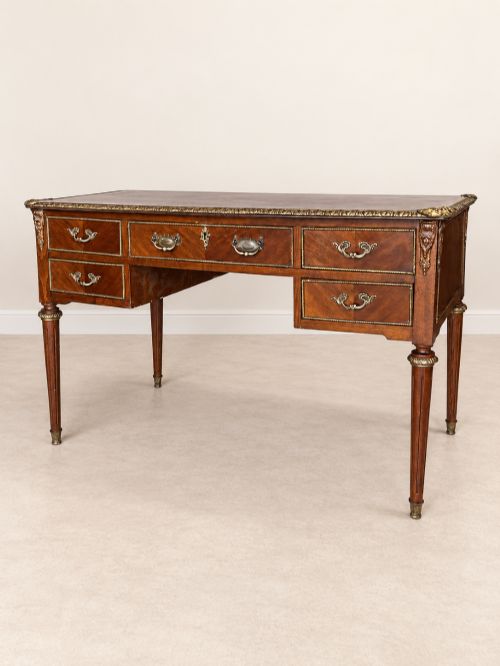
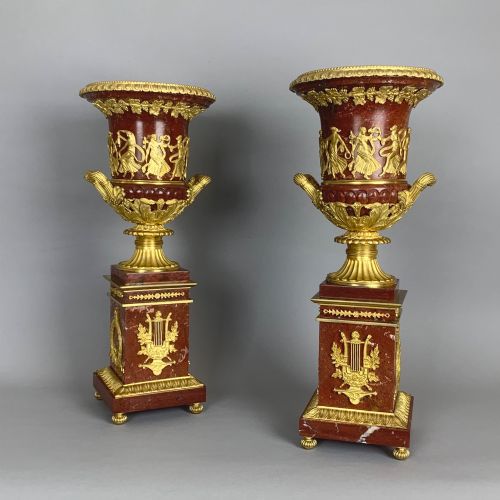
The pieces appearing under this search phrase span the nineteenth century, including Victorian, Regency, and French Empire styles, alongside neoclassical and rococo revival forms.
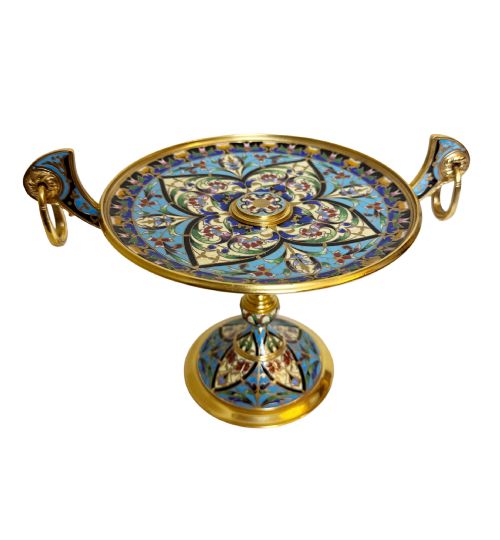
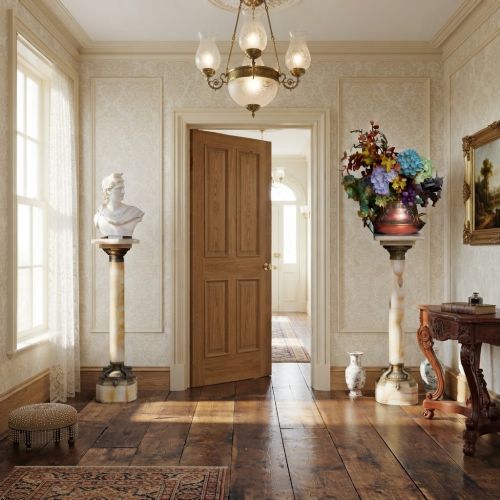
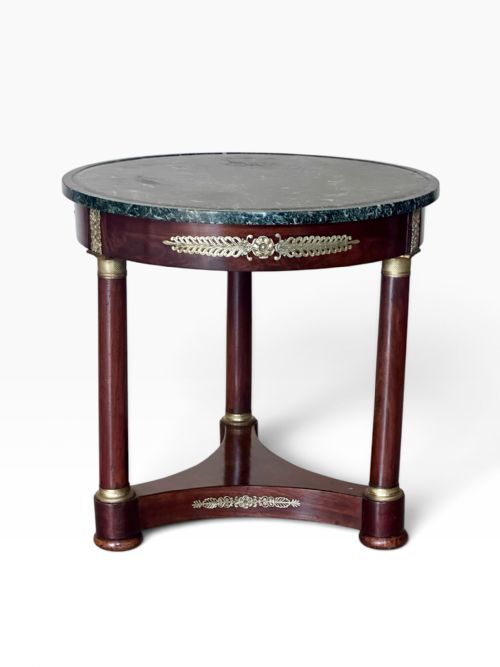
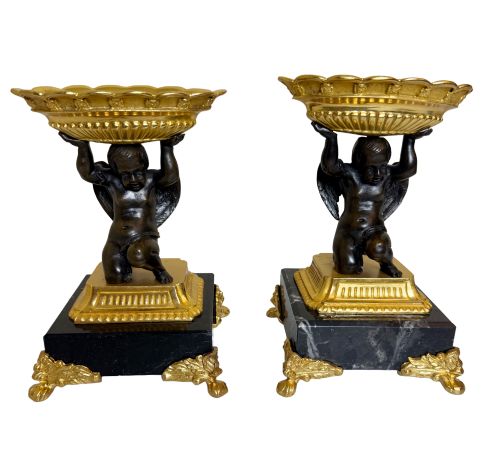
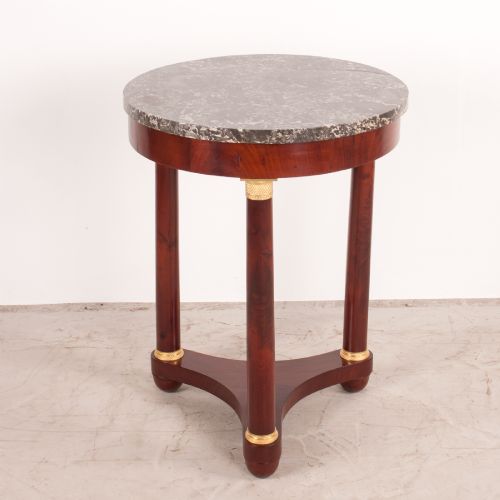
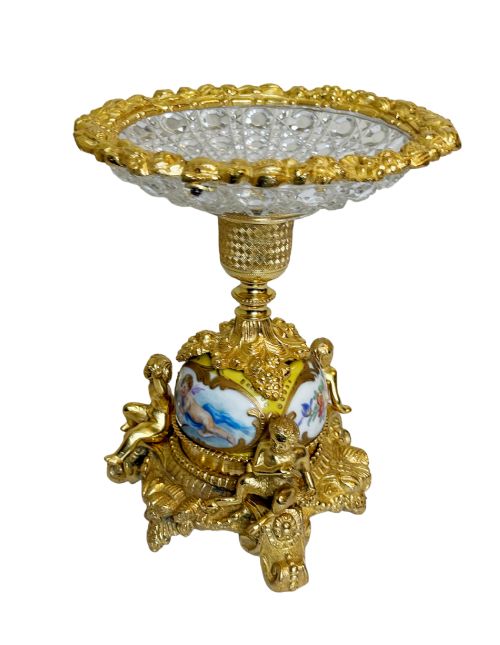
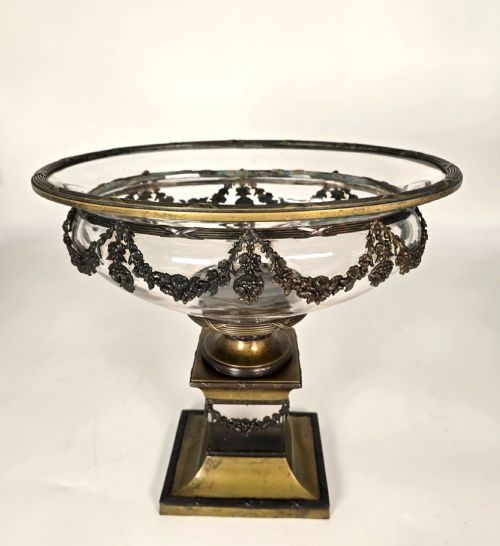
You will encounter columns, torchères, and plinths designed to elevate sculpture, urns, and lamps, as well as related display forms such as tazzas and gueridon tables.
How they were made
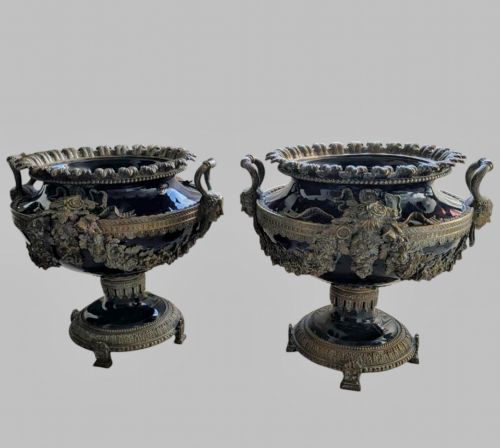
Maker construction combines cast ormolu and gilt bronze mounts with natural materials including marble, onyx, malachite, and agate.
Timber elements utilise mahogany, kingwood, walnut, and ebonised wood, often paired with cast bronze collars and bases.
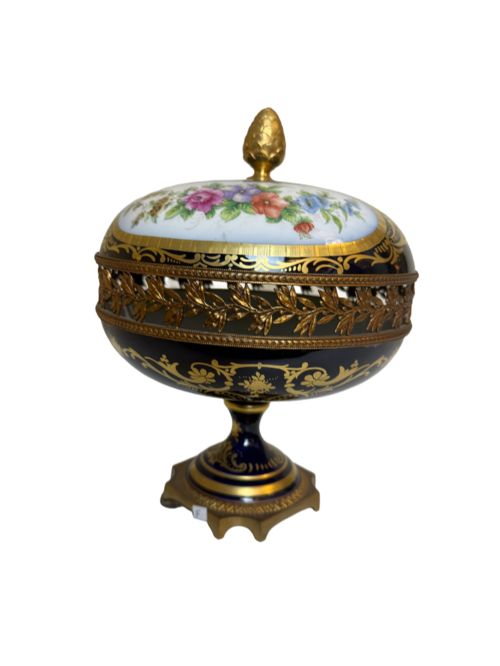
Surface ornamentation incorporates champlevé enamel, porcelain plaques, cut crystal, and ceramic inserts to enrich the metallic structures.
Several columns include concealed rotating mechanisms, allowing owners to slowly spin their heavy marble busts without touching the stone.
What varies in quality
The distinction between standard and exceptional pieces lies in the crispness of the bronze chasing and the depth of the fire gilding.
Material selection divides the range, with solid exotic marbles, rich onyx columns, and detailed stone cabochons indicating superior workshop production.
Proportion and architectural balance determine the success of a design, where classical restraint or elaborate rococo casting is executed with total confidence.
The Gilt Bronze Pedestal Glossary
- Ormolu
- Gilded bronze, where finely ground gold is amalgamated with mercury and applied to a bronze base before firing. This technique produces a durable, rich golden surface characteristic of fine nineteenth-century French decorative arts.
- Gueridon
- A small circular table on a single central column or tripod base. Originating in seventeenth-century France, these pieces frequently feature marble tops and gilt bronze mounts.
- Torchère
- A tall, slender stand designed specifically to support a lamp or candleholder. They are constructed in wood, onyx, or bronze to elevate light sources within a room.
- Tazza
- A wide, shallow cup or vessel mounted on a stem and foot, used historically for display. Nineteenth-century examples often combine bronze bowls with malachite or marble bases.
- Champlevé
- An enamelling technique where troughs or cells are hollowed out of a metal surface and filled with vitreous enamel. The piece is then fired and polished smooth.
Gilt Bronze Pedestal: Frequently Asked Questions
What is a gilt bronze pedestal used for?
These supports serve to elevate decorative objects such as marble busts, bronze sculptures, and large urns. By raising the display height, they draw attention to fine focal points within an interior.
Historically, they occupied prominent positions in drawing rooms and galleries to showcase imported stones and classical art. Today, they continue to function as display furniture for lamps and sculptural works.
How do I identify French Empire style?
French Empire pieces rely on strict symmetry, classical proportions, and military or mythological motifs inspired by antiquity. You will notice strong architectural lines combined with distinctive gilt bronze mounts.
Materials in this style often pair dark mahogany or patinated bronze with bright ormolu collars. The overall effect is monumental, austere, and heavily influenced by Greco-Roman design.
What is the difference between ormolu and gilt bronze?
Strictly speaking, ormolu refers specifically to the historic French process of mercury gilding bronze, known as bronze doré. Gilt bronze is a broader term that can include various methods of applying gold to a bronze substrate.
In marketplace terminology, the two terms are frequently used interchangeably to describe nineteenth-century decorative metalwork. Both denote a metallic base enriched with a layer of gold.
Where should I place a pedestal in a room?
Columns and torchères work best in corners, flanking doorways, or standing against plain walls where their vertical silhouette is clearly visible. They require sufficient floor space to remain stable while supporting a heavy object.
Pairing a pedestal with a complementary bust, urn, or lamp creates a balanced display. Ensure the weight of the object placed on top is appropriate for the base.