


Georgian Walnut Writing Table
A georgian walnut writing table brings rich timber figure and practical surface area into a study, satisfying both utility and decorative taste.
Georgian Walnut Writing Table
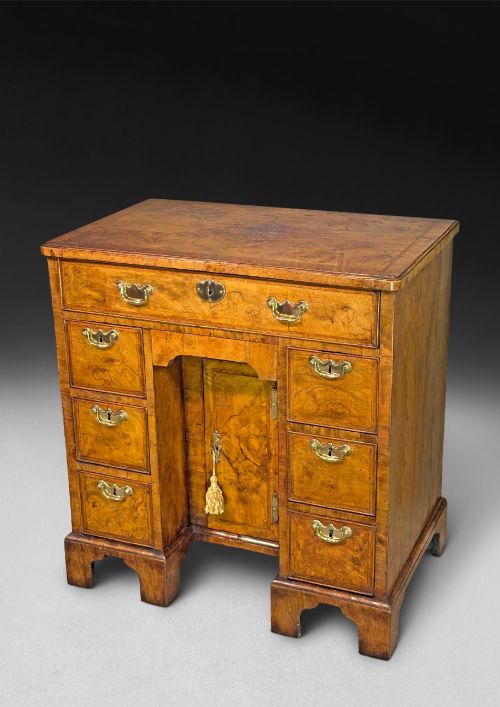
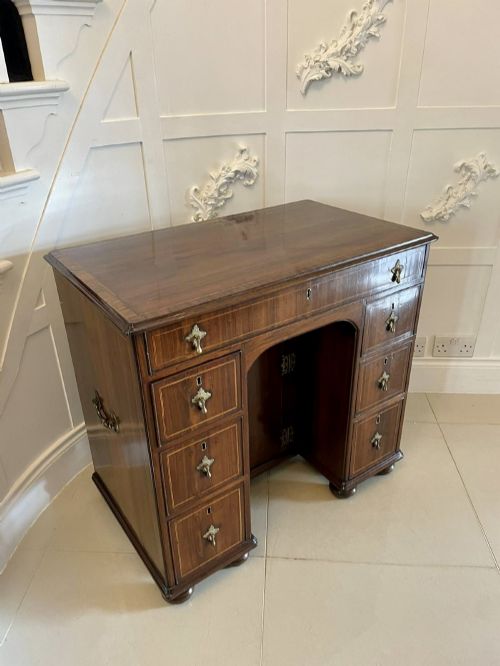
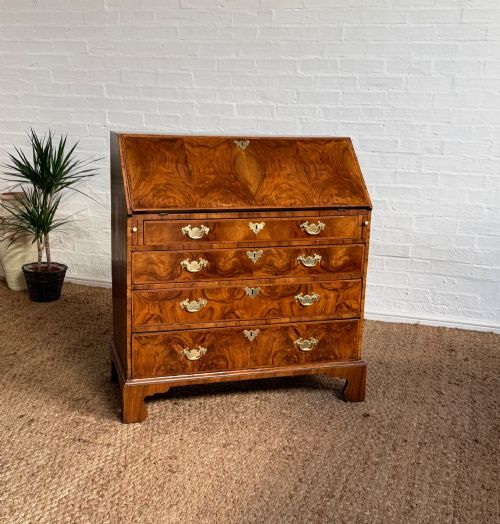
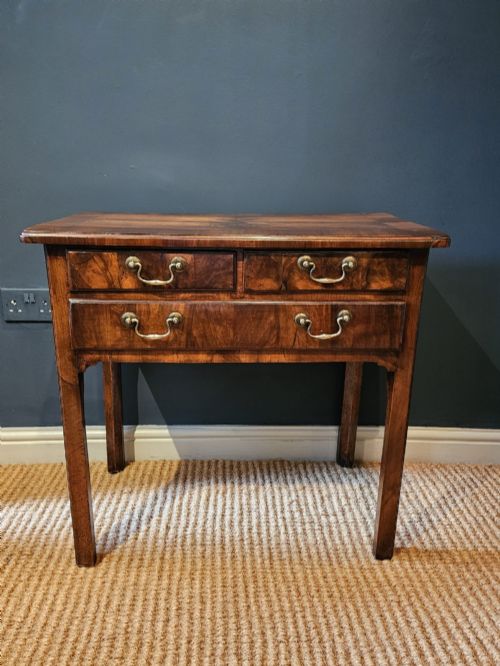
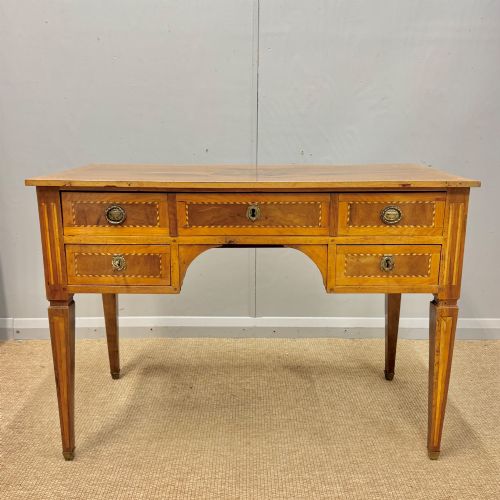
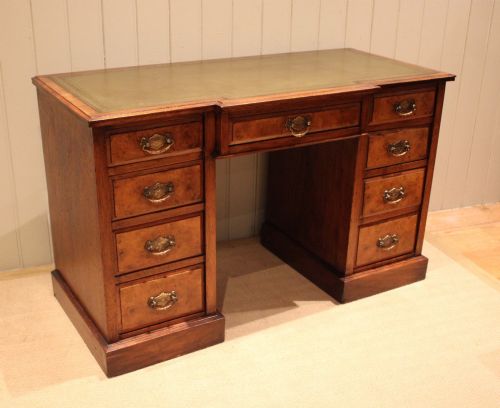
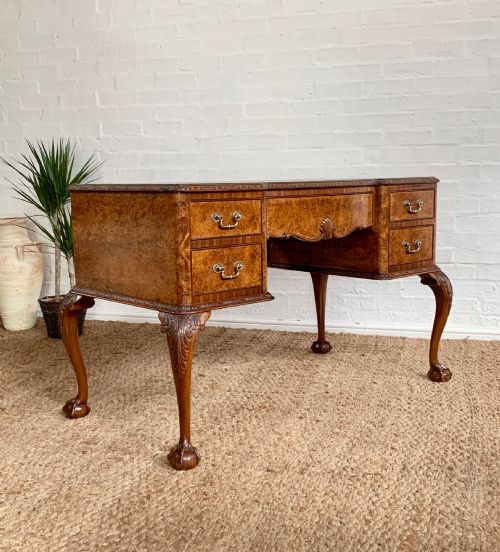
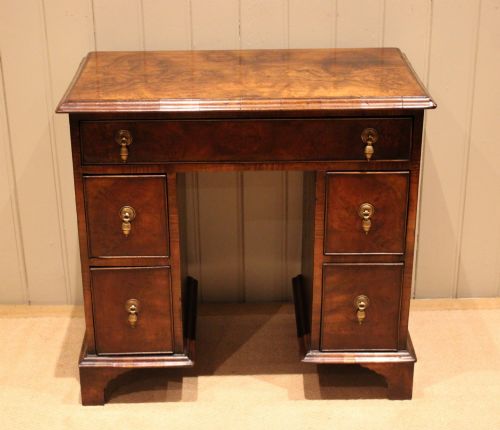
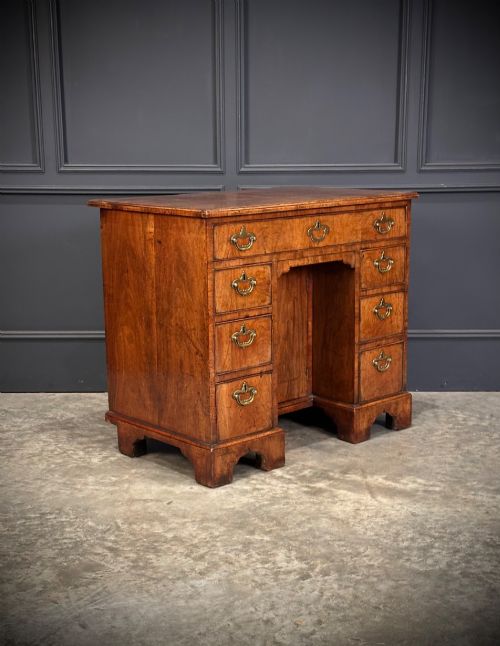
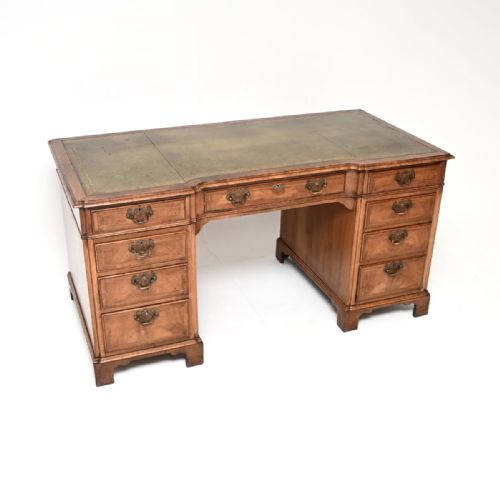
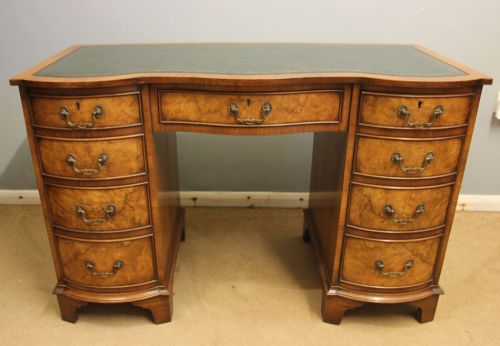
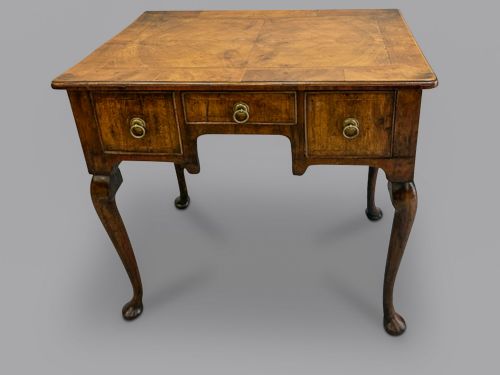
A georgian walnut writing table encompasses a variety of forms designed for correspondence and study, including kneehole desks, lowboys, and bureau styles. Pieces span the eighteenth century as well as revival periods reaching into the twentieth century, reflecting enduring design tastes.
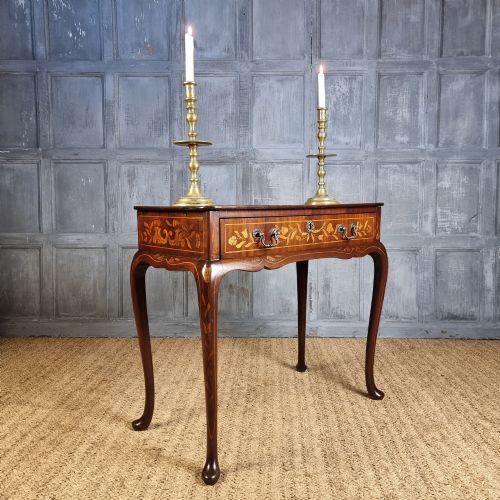
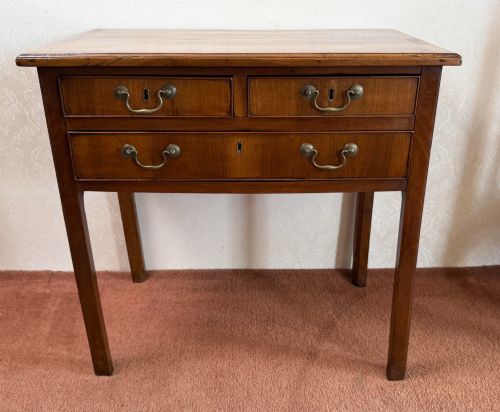
Kneehole desks and lowboys form a large portion of the available selection, often resting on cabriole legs or bracket feet. Side tables and console tables also appear, providing compact surfaces suited to smaller spaces.
Origins range from eighteenth-century examples to later twentieth-century interpretations in the Queen Anne and Georgian styles, utilising similar proportions and timber selections.
Materials and Construction
Construction relies heavily on walnut, burr walnut veneer, and figured timber supported by secondary woods such as oak and fruitwood. Makers applied decorative veneers over stable base woods to create rich grain patterns across the primary surfaces.
Writing surfaces frequently incorporate inset leather panels, sometimes tooled in gold, providing a durable plane for writing. Brass handles, escutcheons, and drawer pulls furnish functional detail against the dark wood.
Several lowboys were apparently moonlighting as dressing tables and scholar's writing desks before settling down in modern hallways.
Assessing Quality
The choice of veneer significantly influences the character of a georgian walnut writing table, with densely figured burr walnut and fiddleback grain commanding greater visual interest. The subtlety of the timber pattern and the skill of the matching across drawer fronts define the success of the surface.
Proportion and execution of detail, such as the shaping of cabriole legs on lowboys or the neatness of drawer dovetailing, separate standard pieces from finer examples. Original brass hardware and well-preserved leather inserts also contribute to the integrity of the piece.
Maples of London
The Georgian Walnut Writing Table Glossary
- Lowboy
- A small table with drawers, typically standing on tall legs and functioning as a dressing table or writing surface.
- Kneehole desk
- A compact desk featuring a central recessed space for the legs, flanked by pedestals of small drawers.
- Burr walnut
- Timber taken from a tree growth or burl, yielding swirling, highly decorative grain patterns used for veneering.
- Fiddleback
- A type of wood figure displaying fine, parallel ripples reminiscent of the back of a violin.
- Marquetry
- Decorative inlay work using various woods to create pictorial designs on furniture surfaces.
Georgian Walnut Writing Table: Frequently Asked Questions
How are these tables used today?
These tables function well as compact desks for laptop work or traditional correspondence in a study or bedroom. Their modest proportions allow them to fit into hallways and living rooms as side tables.
The finished backs on freestanding examples also permit placement in the middle of a room rather than strictly against a wall.
What is the difference between a lowboy and a kneehole desk?
A lowboy stands on open legs with a single row of drawers beneath the top, offering an airy profile. A kneehole desk includes banks of drawers on both sides with a recessed central space.
Both forms utilise walnut timbers, but the kneehole provides more enclosed storage space for writing materials.
How do I identify the wood used?
Walnut presents a rich brown tone with darker grain variations, while burr walnut exhibits circular knot patterns and intense swirling figures. Secondary timbers like oak or fruitwood appear inside the drawers and structural framing.
Veneers are applied over solid bases, visible along drawer edges and corners where the grain layers meet.
Are all listed pieces from the eighteenth century?
The selection includes authentic eighteenth-century examples alongside revival pieces made during the nineteenth and early twentieth centuries. Construction methods and secondary woods help distinguish the period of manufacture.
Craftsmen in later decades deliberately copied Georgian and Queen Anne styles, utilising figured walnut veneers to echo the earlier aesthetic.