

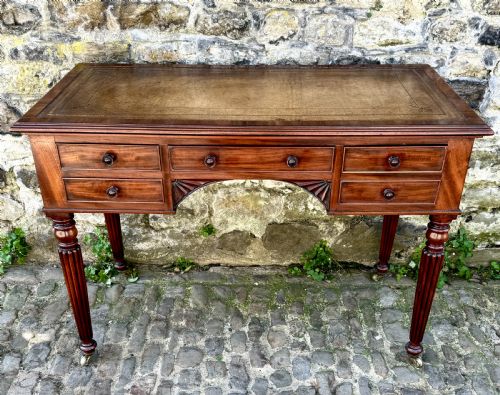
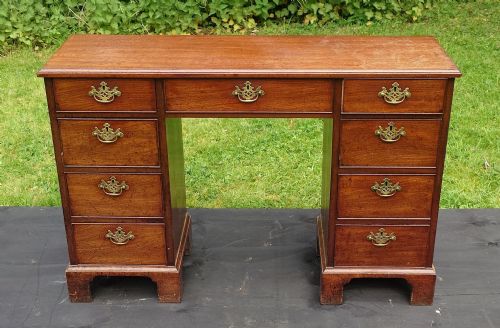

George I Kneehole Desk
A george i kneehole desk combines compact writing utility with refined cabinetry from the early eighteenth century.
George I Kneehole Desk
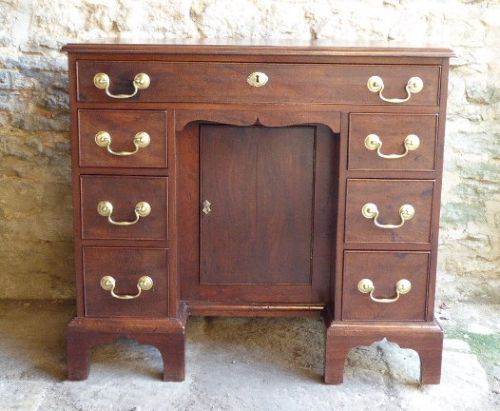
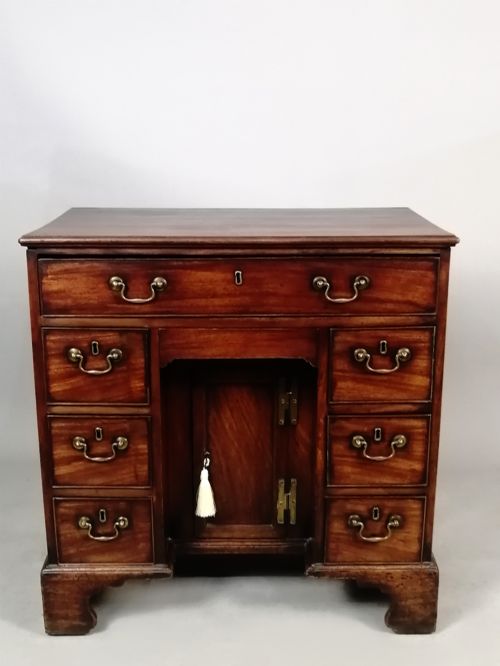
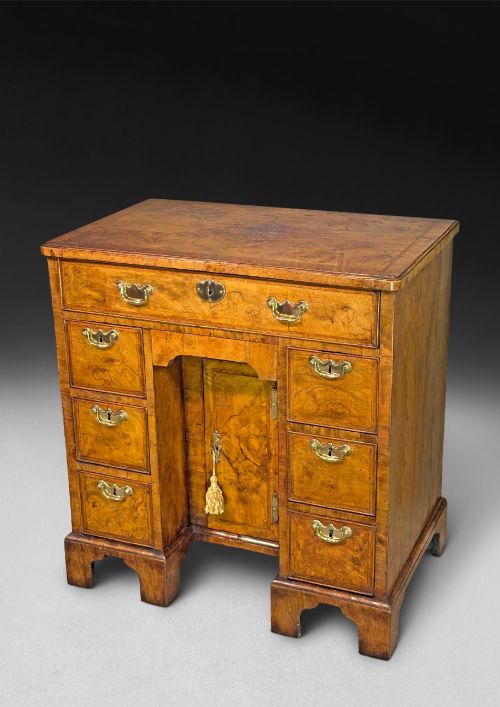
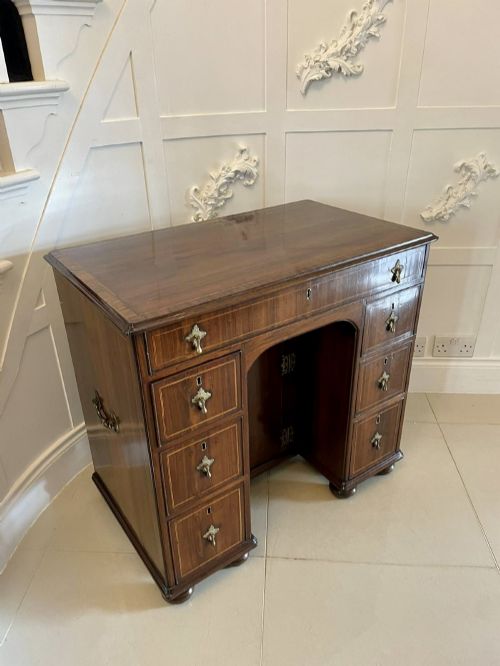
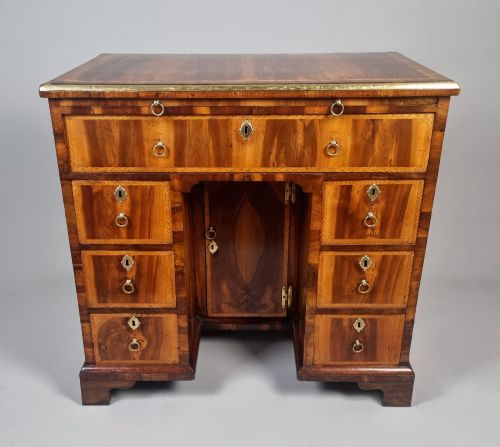
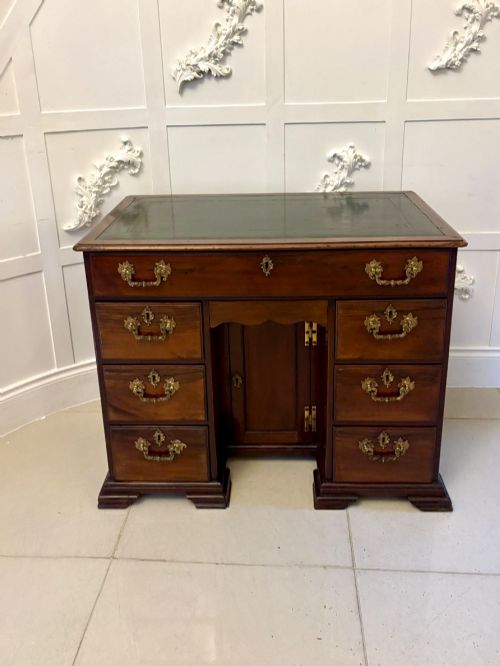
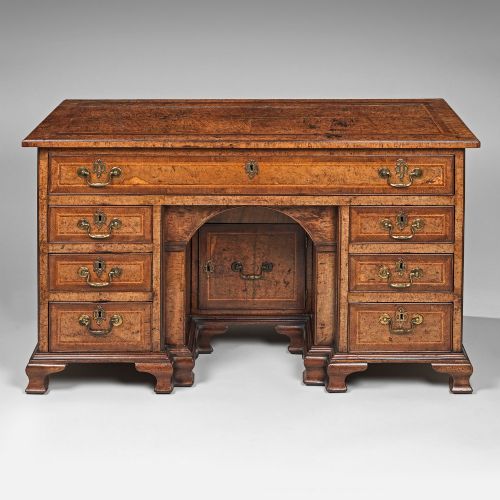
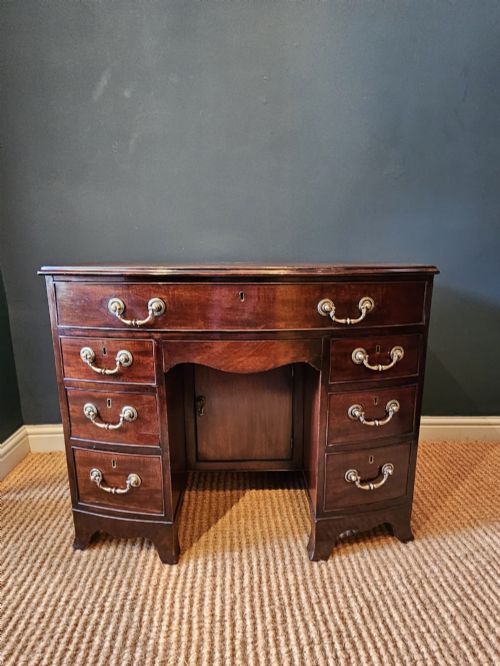
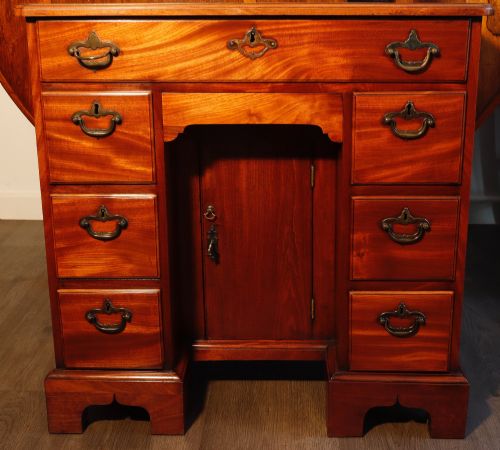
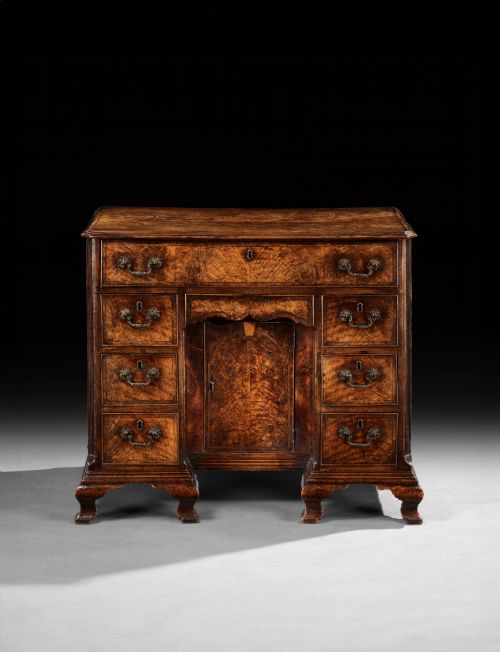
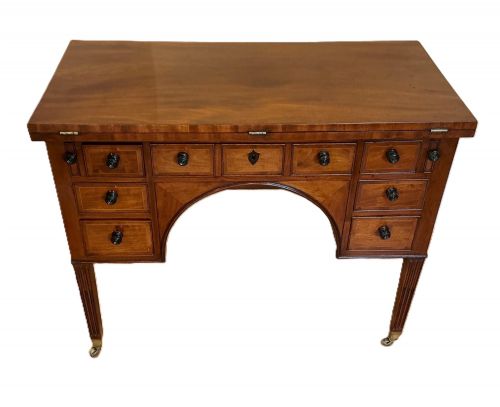
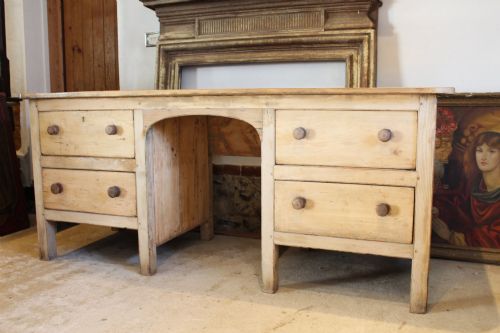
A george i kneehole desk is a compact writing and dressing piece featuring a central recessed kneehole flanked by pedestals of small drawers. The form emerged strongly in the early eighteenth century, with walnut being the predominant timber of the period.
Buyers browsing this selection will frequently encounter examples stretching from the George I era through the subsequent reigns of George II and George III. While walnut defines the earliest pieces, later versions transition into rich figured mahogany and oak.
The layout typically incorporates a central cupboard door within the kneehole recess, concealing a hidden space or shelf, alongside numerous smaller drawers suitable for papers and personal items.
Materials and Construction
Cabinetmakers utilised dense hardwoods such as walnut, mahogany, and oak for the primary carcases, often applying burr, fiddleback, or curl veneers to the drawer fronts to create striking grain patterns.
Secondary construction relied upon pine and oak for drawer linings and internal framing, assembled with traditional dovetail joints that ensure structural stability over centuries of use.
Original brass hardware, including batwing or plate handles and escutcheons, completes the exterior, accompanied on select pieces by sliding boards designed for auxiliary writing space.
Listings feature primary carcases in walnut, mahogany, and oak, complemented by brass hardware and secondary timbers such as pine.
Judging Quality
The grade of a piece rests heavily on the choice of timber and the preservation of its original surface figuring, particularly on walnut and curl mahogany examples where grain patterns dictate visual impact.
Surviving original brasses and undisturbed internal drawer construction elevate a piece significantly above examples that have undergone heavy restoration or replacement of key hardware components.
Proportions also play a decisive role, with diminutive or exceptionally narrow dimensions commanding distinct attention from collectors seeking refined scale.
The George I Kneehole Desk Glossary
- Kneehole desk
- A small pedestal desk featuring a central recessed space for the legs beneath a long frieze drawer. This configuration became highly fashionable during the Georgian period.
- Fiddleback walnut
- A figured veneer exhibiting a wavy, rippled grain resembling the back of a violin. It was prized by eighteenth-century cabinetmakers for high-status furniture.
- Featherbanding
- A decorative inlay technique utilising small strips of veneer arranged in a herringbone pattern around the perimeter of drawer fronts. This detail enhances the visual border of the surface.
- Slide
- A pull-out wooden board integrated above the drawers to provide extra surface area for writing. It slides flush into the carcase when not in use.
- Bracket foot
- A simple architectural foot shaped like an L-bracket, supporting the corners of case furniture. It is characteristic of mid-eighteenth-century case pieces.
George I Kneehole Desk: Frequently Asked Questions
What is a kneehole desk?
A kneehole desk is a freestanding pedestal writing table with drawers on either side of a central recess. They were designed for private correspondence and personal grooming.
The form dates back to the late seventeenth century and reached a peak of refinement during the reigns of George I and George II.
Were these desks used for writing?
These pieces served multiple domestic functions, operating equally as writing tables and dressing chests. The central cupboard often concealed a small well or hidden compartment.
Many examples feature a pull-out slide above the kneehole to accommodate ink and paper without cluttering the main top surface.
Where should I place it?
Because these desks are traditionally finished on all sides or feature panelled backs, they can stand freely within a room rather than pressed against a wall. Their compact footprint suits smaller studies or drawing rooms.
Keep the timber away from direct heat sources and strong sunlight to protect the aged veneer and natural wax finish.