

Burr Walnut Accent Table
A burr walnut accent table brings warmth and rich grain to a room through centuries of cabinet-making skill.
Burr Walnut Accent Table
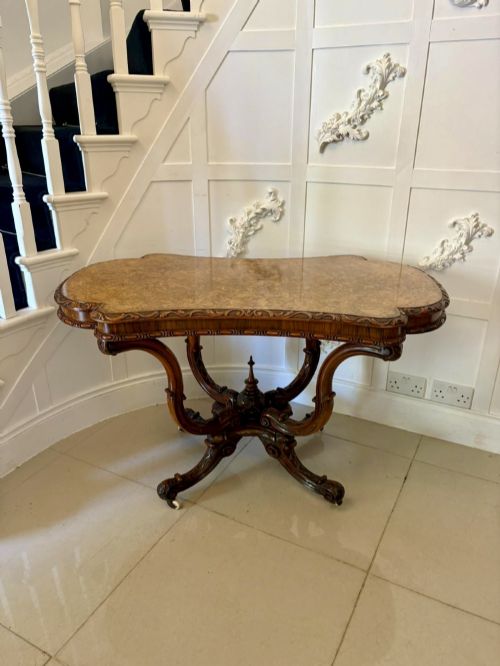
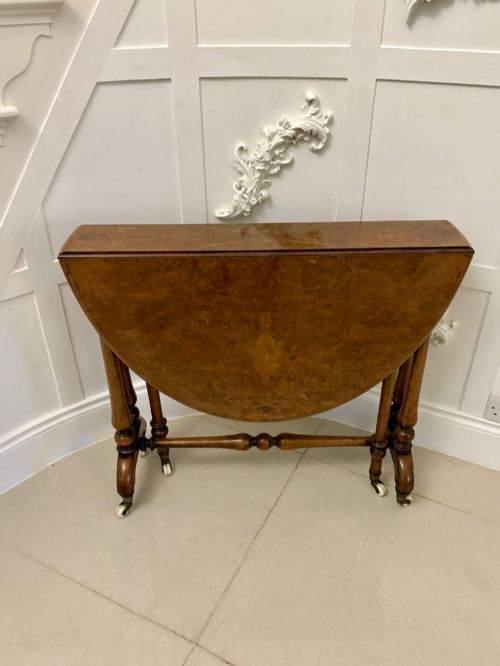
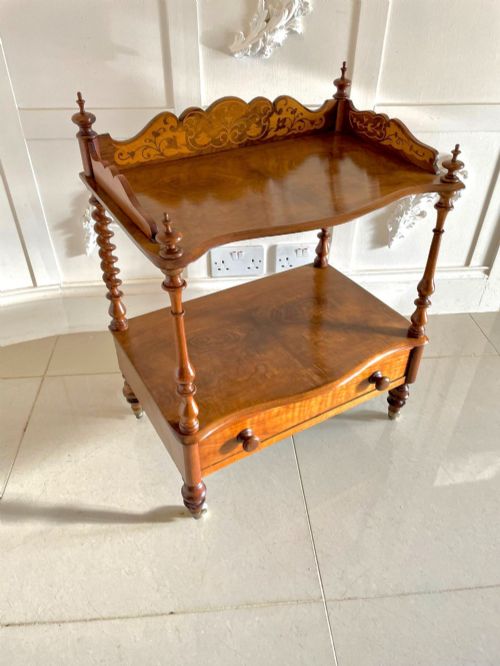
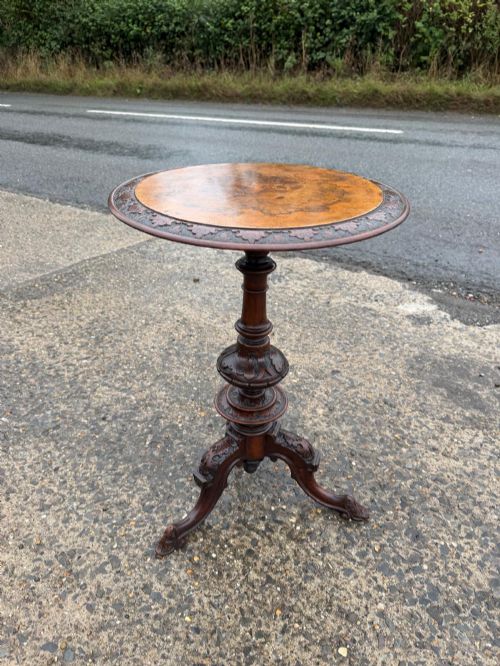
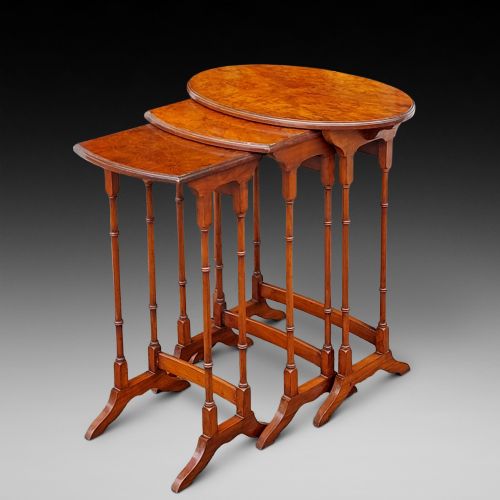
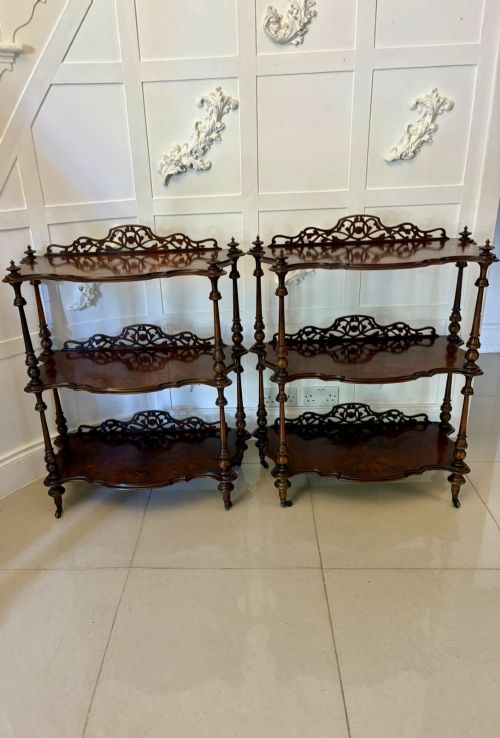
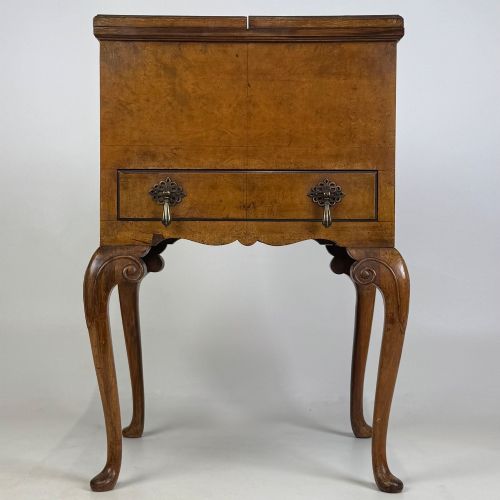
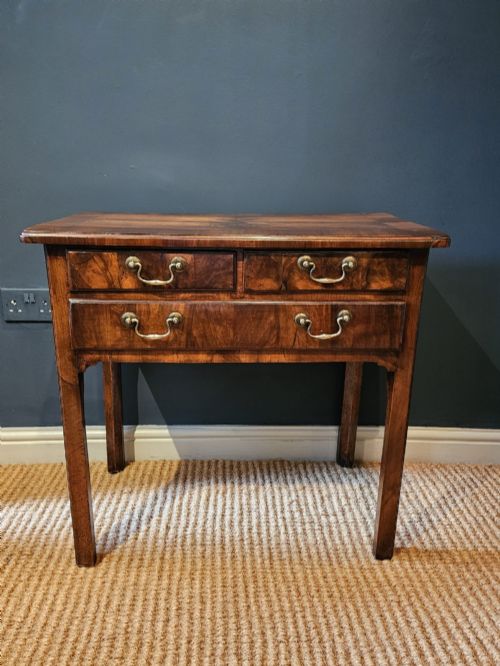
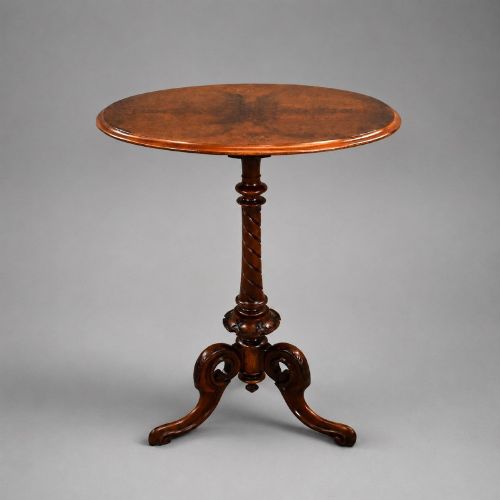
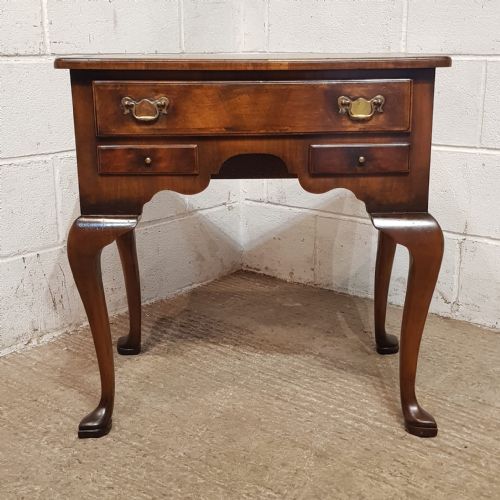
When you search for a burr walnut accent table, you encounter a variety of compact surfaces designed to sit beside seating or against walls. The listings show forms ranging from occasional and side tables to Sutherland tables, lowboys, and nests of tables.
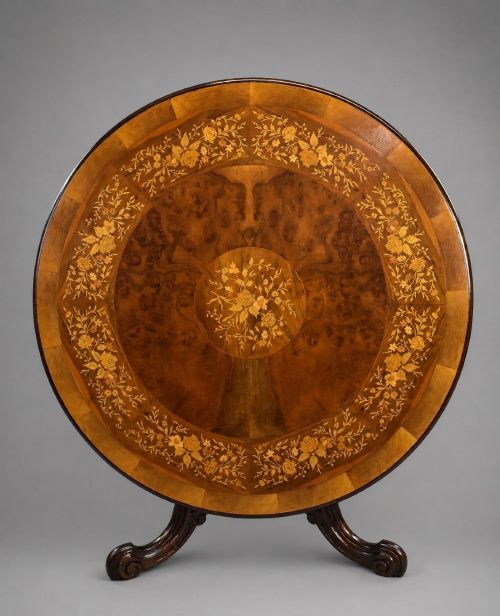
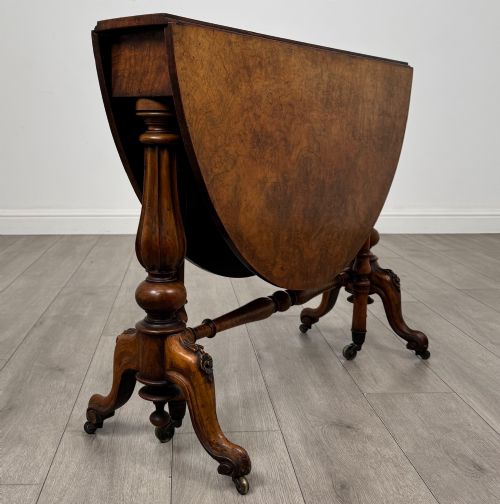
Victorian examples dominate the selection, often dated around eighteen-sixty, alongside Edwardian and nineteen-twenties pieces. These tables frequently feature inlaid marquetry, scalloped edges, or drop flaps suited for smaller domestic spaces.
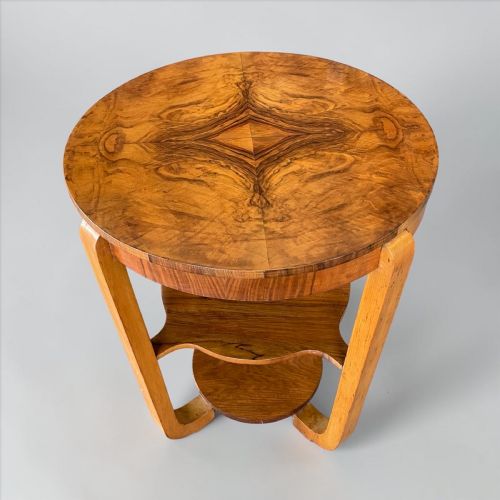
Makers adapted the figured grain across different styles including Art Deco and Queen Anne revivals. The core function remains practical, offering a portable surface with a decorative top.
Evaluating craftsmanship and condition
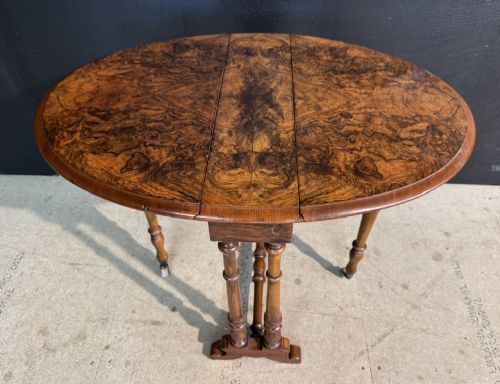
Quality rests in the intensity and symmetry of the burr walnut veneer chosen for the top. Master craftsmen matched the grain patterns carefully across the surface, whereas simpler pieces used plain timber or less dramatic cuts.
The crispness of carved details, the stability of drop-flap actions, and the delicacy of inlaid marquetry separate standard production from exceptional pieces. Construction integrity in the legs and underframes dictates how well the table survives daily use.
Burr Walnut Accent Table Retail Price Guide 2026
Typical asking prices for burr walnut accent table among the pieces listed under this phrase on Sellingantiques today, from the lower quarter to the upper quarter. They describe what is for sale here now, not the wider market.
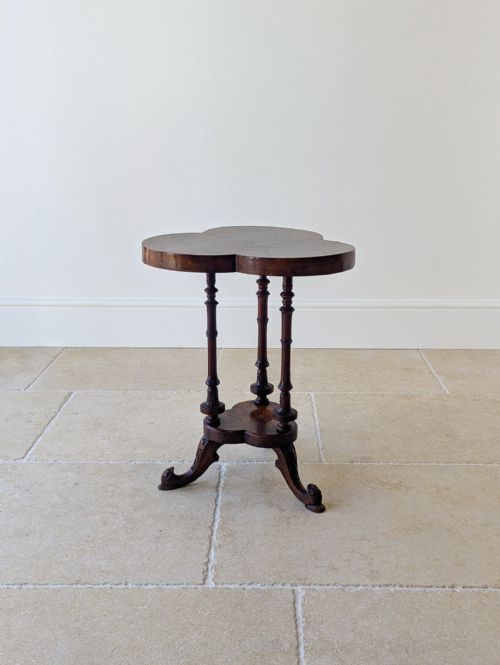
Some tables hide their secrets in tiny trefoil tops and drop flaps, built for houses where space was at a premium.
Shoolbred and Co
The Burr Walnut Accent Table Glossary
- Burr walnut
- A veneer sliced from the woody growths on walnut trees. It yields a highly decorative, mottled grain pattern full of small swirls and eyes.
- Sutherland table
- A narrow drop-leaf table with hinged flaps that fold down almost vertically. It was designed to save space in nineteenth-century parlours.
- Marquetry
- The art of applying pieces of veneer to a structure to form decorative patterns and pictures. It often incorporates floral motifs in these pieces.
- Lowboy
- A small oak, walnut, or mahogany table with drawers, resembling the lower section of a tallboy. Examples appear from the eighteenth and nineteenth centuries.
- Tripod table
- A small table supported by a pillar resting on three legs. This form provides a stable base for lamp and occasional tables.
Burr Walnut Accent Table: Frequently Asked Questions
Where should I place a burr walnut accent table?
These compact tables suit living rooms as lamp stands, coffee tables, or beside armchairs where the figured grain is visible. Their modest scale allows them to fit into hallways and tight corners.
Avoid placing them in direct sunlight to protect the sensitive walnut veneer from fading over time.
Are these tables sturdy enough for daily use?
Most occasional and side tables are built to hold lamps, books, and small decorative items securely. Tripod and nest configurations require sensible placement to prevent tipping.
Heavier items should be kept to larger centre tables or lowboys designed to bear more weight.
How can I tell a Victorian table from a later one?
Victorian examples often showcase heavy carved pedestal bases, elaborate marquetry, and rich dark patination developed over more than a century. Edwardian and nineteen-twenties pieces lean towards simpler lines and lighter proportions.
Art Deco versions introduce geometric styling and occasional chrome elements while retaining the signature walnut timber.