

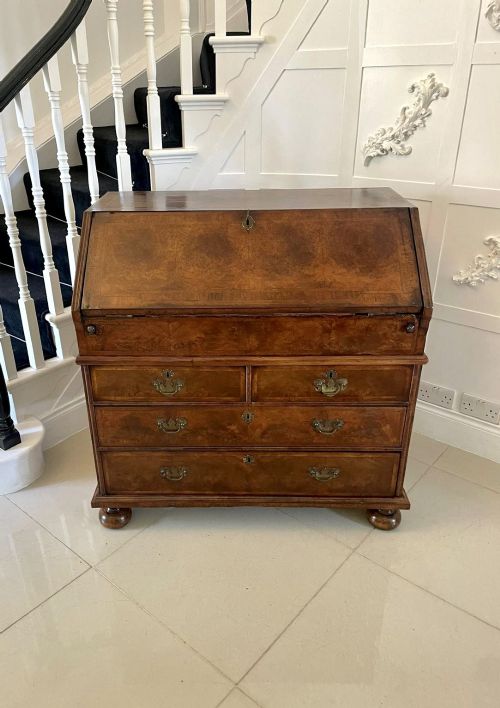
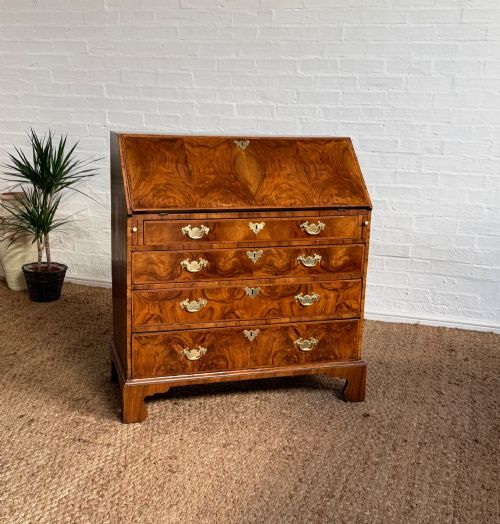
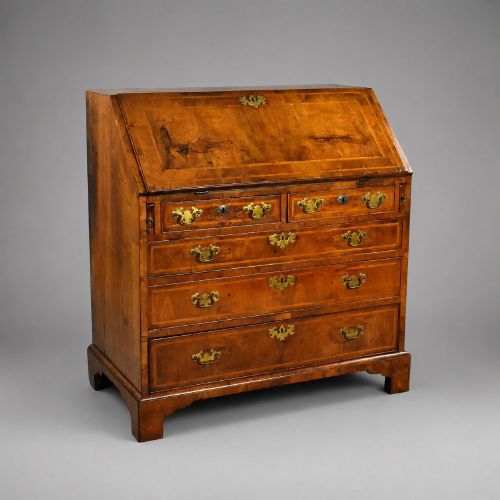
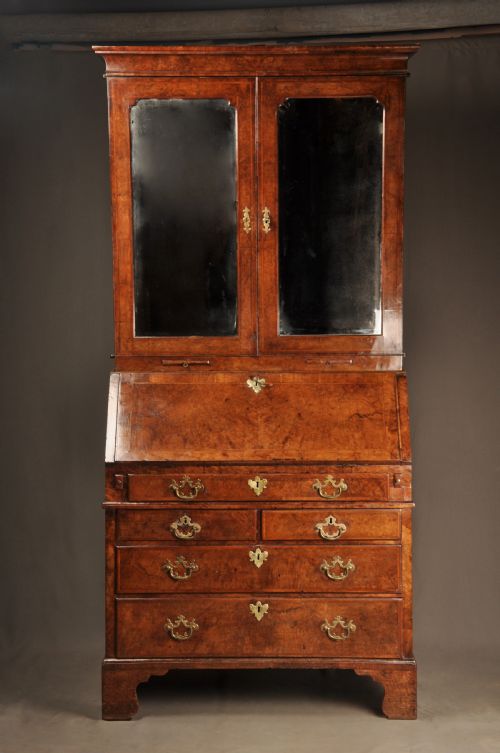
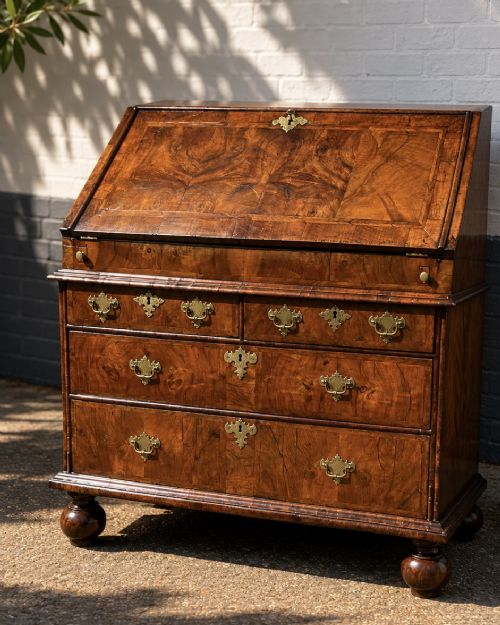
Georgian Walnut Slant Desk
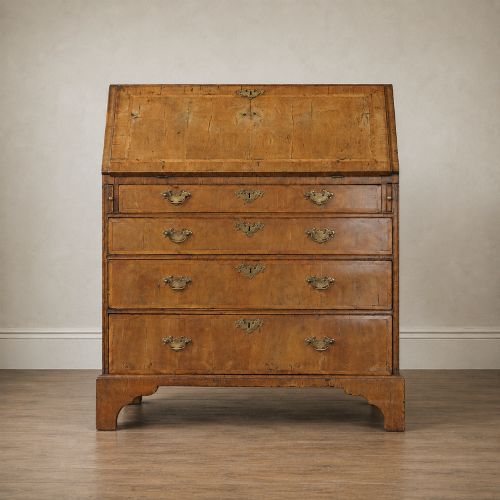
A georgian walnut slant desk offers a fall-front writing surface concealing fitted compartments, prized for rich timber and domestic utility.
Georgian Walnut Slant Desk
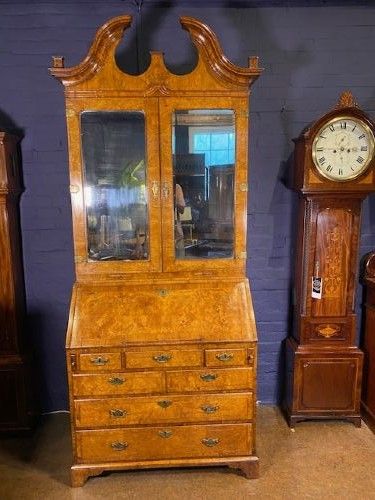
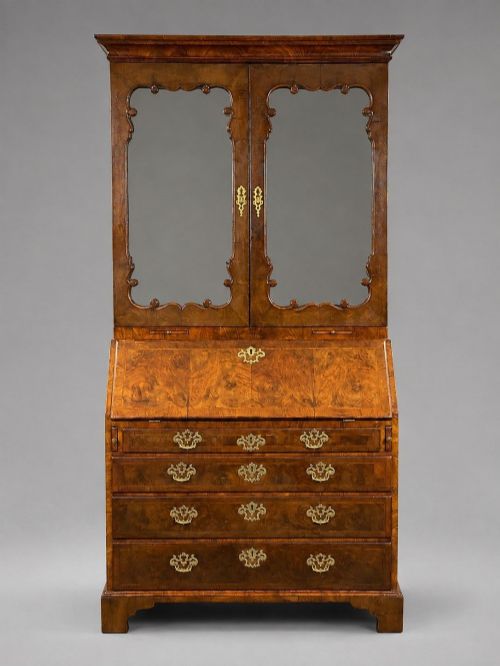
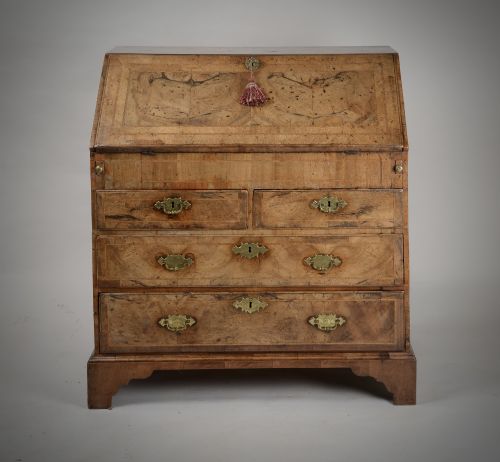
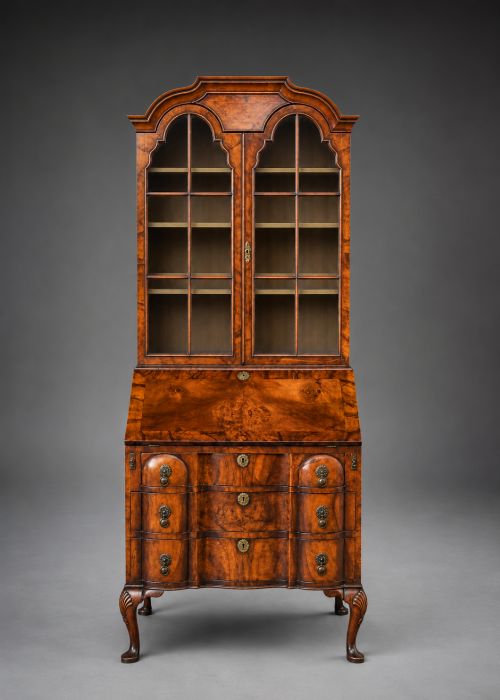
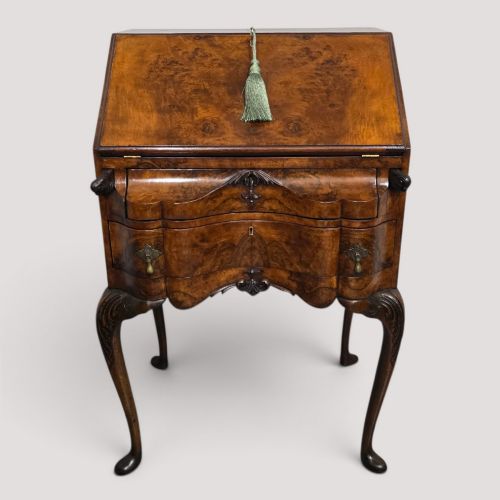
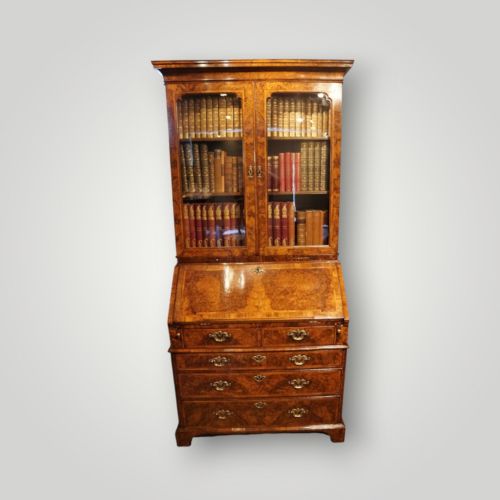
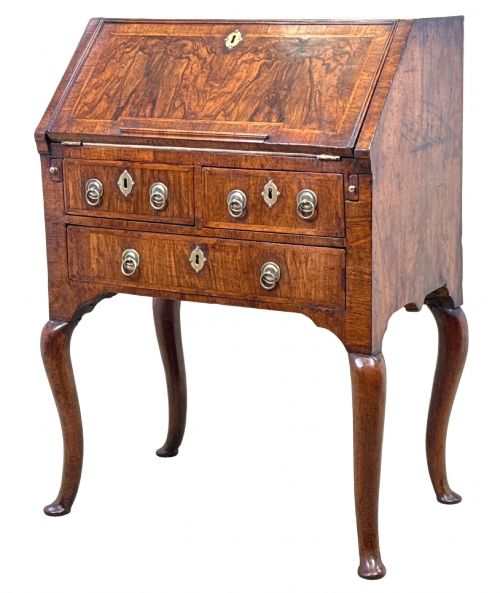
A georgian walnut slant desk brings together several forms of writing furniture, including compact fall-front bureaux and grander bureau bookcases featuring glazed upper sections.
The pieces on this page span the late seventeenth century through the Georgian era, with later revivals appearing from Edwardian workshops and the early twentieth century.
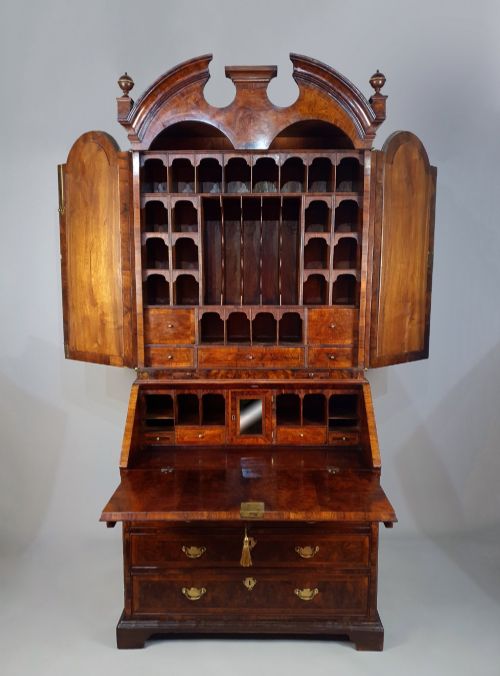
Makers of these slant desks utilised local and imported timbers, structuring the interiors with pigeonholes, small drawers and occasionally sliding candle boards.
Quality and Character
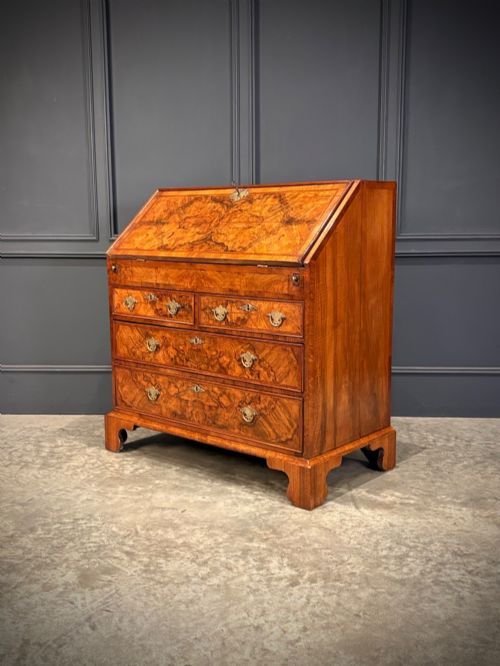
The standard of a georgian walnut slant desk rests upon the selection of timber, where tightly swirled burr walnut and symmetrical figuring elevate the visual depth of the fall front.
Internal arrangement complexity and the retention of original brass hardware, patination and fitted prospect doors distinguish the finest examples from standard production.
Secret compartments hidden behind sliding pigeonhole panels kept private love letters safe from prying family members.
The Georgian Walnut Slant Desk Glossary
- Burr walnut
- A type of wood taken from the wart or excrescence on a walnut tree, producing intricate, swirling grain patterns highly valued by cabinetmakers.
- Fall front
- The hinged sloping panel on a bureau that drops down to form the writing surface.
- Bureau bookcase
- A two-part piece combining a lower slant desk with an upper shelving or cabinet section enclosed by doors.
- Herringbone inlay
- A decorative banding made of small veneer pieces laid in a V-shaped pattern resembling fish bones.
- Patina
- The surface sheen and mellowing developed by wood and metal over centuries of handling and exposure.
Georgian Walnut Slant Desk: Frequently Asked Questions
What is a slant desk?
A slant desk is a piece of furniture featuring an angled hinged lid that opens into a writing surface.
Inside, small drawers and pigeonholes organise correspondence and writing materials.
How do I date a walnut bureau?
Dating relies on construction methods, drawer linings, handle types and the character of the timber veneers.
Early pieces often feature oak linings and herringbone stringing, whereas later revivals show machine-cut elements.
Where were these desks used?
These desks served in private parlours, libraries and bedchambers for managing household accounts and personal letters.
The fall front closed securely to hide private correspondence when not in use.
What is burr walnut?
Burr walnut comes from a growth on the tree, yielding dense, turbulent grain patterns used for decorative veneer.
Cabinetmakers reserved this prized timber for primary display surfaces like fall fronts and drawer fronts.