




Queen Anne Slope Desk
A queen anne slope desk brings the restrained elegance of early walnut furniture and drop-lid writing into a room with quiet authority.
Queen Anne Slope Desk
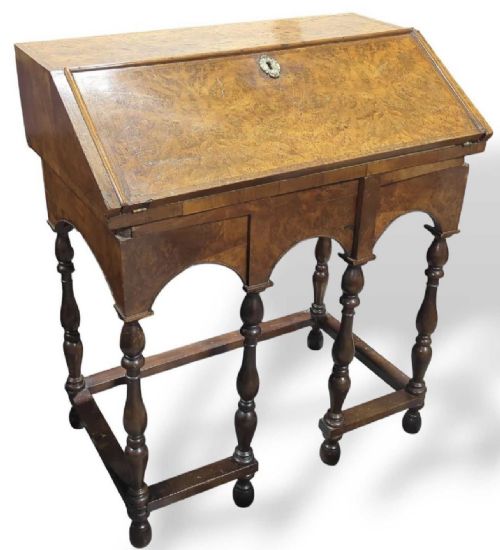
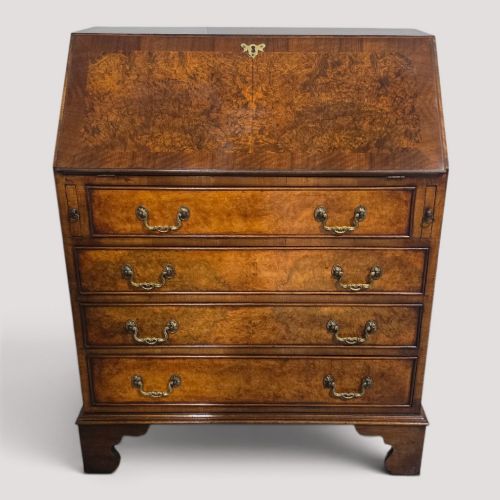
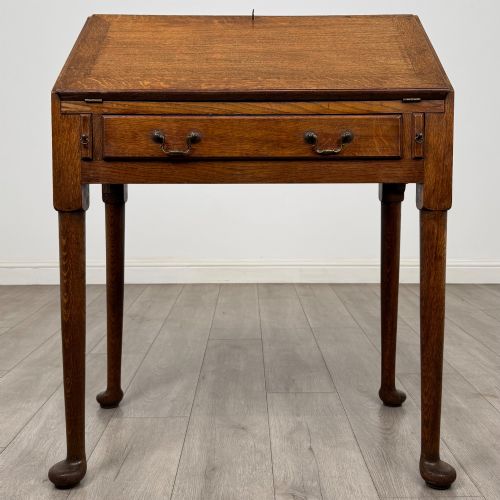
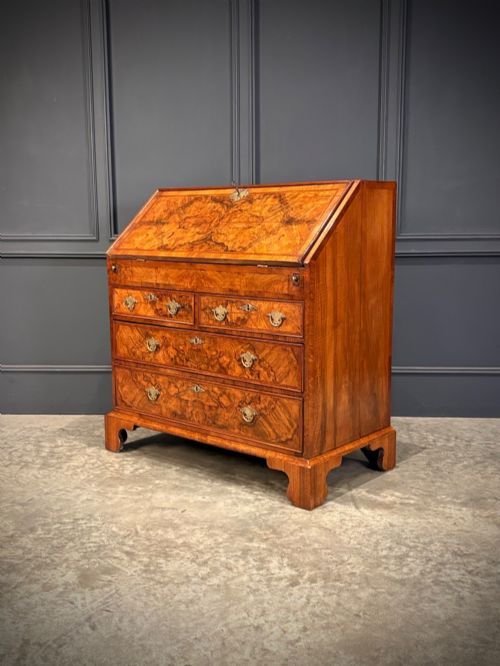
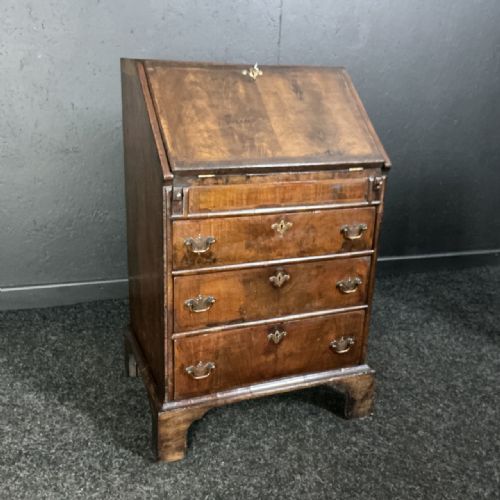
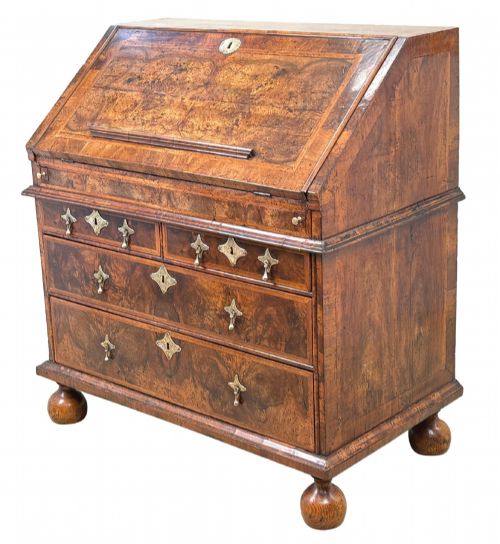
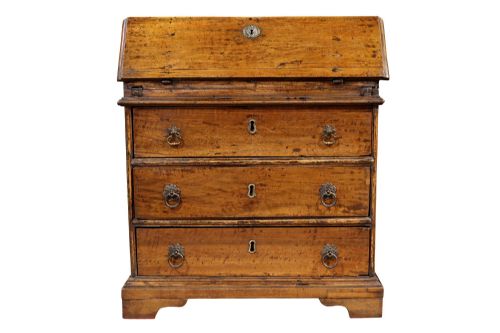
When searching for a queen anne slope desk, you encounter form variations including standard bureaux, writing desks, and pieces raised on stands or bun feet. The core design centres on a sloping fall front that opens to reveal a fitted interior of small drawers and pigeonholes.
The pieces appearing on this page span genuine 18th-century examples from the 1700 period and Georgian era alongside later revivals from the Edwardian years and the 1920s. Walnut and burr walnut predominate, accompanied by oak, elm, mahogany, and yew wood.
Original pieces from the early 18th century share space with revival furniture built in the Edwardian period and the early 20th century. Smaller proportions and fitted writing compartments remain common across both original periods and later interpretations.
Materials and construction methods
Cabinet makers utilised choice timbers such as walnut, burr walnut, elm, and burr elm, frequently applying veneers over secondary woods to display intricate grain patterns. Marquetry inlay occasionally decorates the fall front and drawer fronts.
Metal hardware such as brass handles and original ironwork secure the drawers and drop fronts, while bun feet frequently support the base of early examples. Interior compartments are constructed with dovetailed joints and small timber pigeonholes.
Secret compartments hidden within the pigeonholes allowed owners to stow private letters away from prying eyes.
Distinctions in quality
Quality rests in the choice of timber figurations, where dense burr walnut and carefully matched veneers distinguish the finest pieces from plainer oak or mahogany versions. The subtlety of the marquetry inlay and the preservation of original ironwork and brasses also indicate superior craftsmanship.
Proportion and scale dictate the desirability of a piece, with smaller bureau formats commanding attention for their neat domestic presence. The retention of original feet, interior configuration, and surface patination separates untouched early examples from heavily restored or later revival items.
Coxed and Woster
The Queen Anne Slope Desk Glossary
- Bureau
- A writing desk featuring a sloping hinged lid that drops down to form a writing surface over a set of drawers. This term applies interchangeably with slope desk in many historical listings.
- Fall front
- The hinged writing flap on a desk that drops down to reveal the interior compartments. It conceals the pigeonholes and small drawers when closed.
- Burr walnut
- Timber taken from a walnut tree growth showing intricate swirling grain patterns. Cabinet makers prized this wood for veneering the primary surfaces of high-status furniture.
- Bun feet
- Rounded, flattened spherical wooden feet supporting the base of a cabinet or desk. They typify furniture styles from the late 17th and early 18th centuries.
- Marquetry
- Decorative inlay work using various tinted woods arranged in patterns across a surface. It adds visual complexity to the fall front of selected desks.
Queen Anne Slope Desk: Frequently Asked Questions
How do I spot a genuine early 18th-century desk?
Examine the construction methods visible within the drawer linings and secondary timbers, where hand-cut dovetails and older tool marks indicate age. The patination of the walnut and the presence of original ironwork or brasses also support an earlier date.
Compare the proportions and timber choice against known examples from the 1700 period. Revivals from the Edwardian era or the 1920s often use different internal framing and lack the deep surface wear of genuine antique pieces.
What is the difference between a bureau and a slope desk?
Both terms describe furniture featuring an angled writing flap that conceals an internal arrangement of small drawers and pigeonholes. Historical terminology frequently uses them interchangeably.
On this page, listings for slope desks and bureaux refer to the same fundamental form of drop-front writing furniture. The variations lie primarily in whether the piece stands on bracket feet, bun feet, or an elevated stand.
How were these desks used historically?
Owners sat at the closed desk to write correspondence, manage household accounts, and store private papers within the internal compartments. The drop lid provided a stable leather-lined or wood writing surface when opened.
When not in use, the fall front locked shut to secure sensitive documents and keep the interior tidy. The drawers below held stationery, account books, and personal items.
How do I care for walnut veneer?
Keep the timber away from direct sunlight and steady heat sources to prevent the walnut veneer from drying out and lifting. Maintain a stable room humidity to protect the old wood and its polished finish.
Apply high-quality beeswax occasionally and buff gently with a soft cloth to nourish the grain. Avoid modern liquid polishes that can damage antique surfaces.