


Feather Banded Walnut Bureau
These feather banded walnut bureau examples are timber writing furniture defined by distinct decorative borders, prized for warmth and formal restraint.
Feather Banded Walnut Bureau
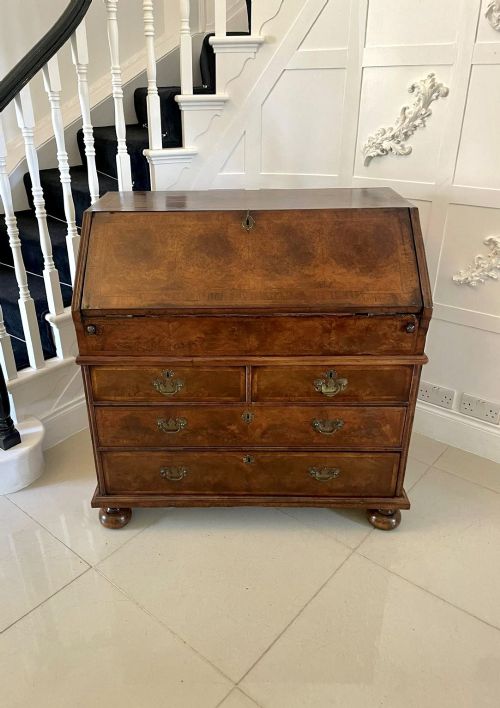
A feather banded walnut bureau provides a dedicated writing surface combined with domestic storage, typically taking the form of a sloping fall-front desk that opens to reveal internal compartments and pigeonholes. When exploring this selection, buyers most frequently encounter pieces originating from the eighteenth century, spanning the Queen Anne, George I and George II periods.
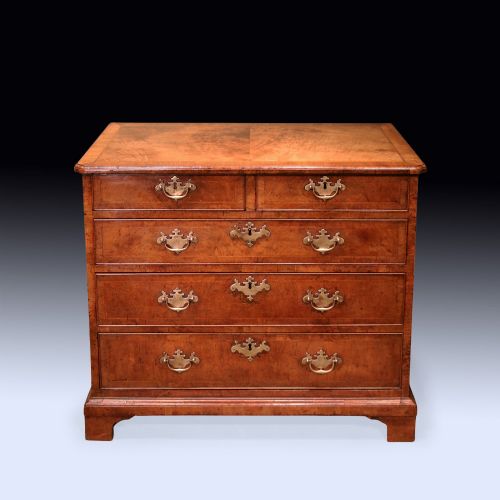
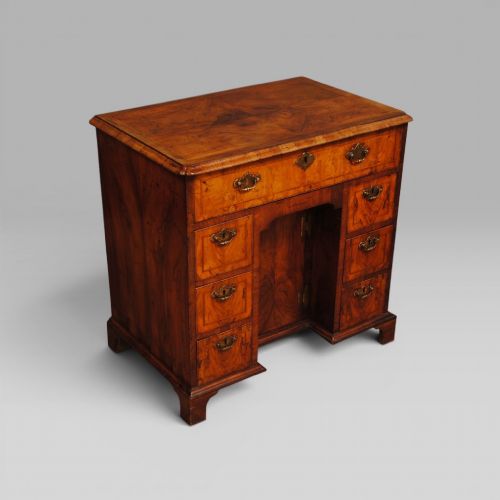
The primary form sits upon bracket feet or a compact base, with graduating drawers positioned beneath the writing flap. Alongside standard slope-front desks, the selection includes related writing furniture such as escritoires, kneehole desks, and bureau bookcases rooted in the same early Georgian cabinet-making traditions.
How they were made
Cabinet-makers constructed these pieces using solid oak for carcases and internal drawer linings, applying figured walnut and burr walnut veneers to the visible exterior surfaces. The characteristic decorative borders involve cutting thin slices of timber across the grain and setting them at alternating angles to create a continuous herringbone pattern.
Brass hardware, including escutcheons and drop handles, secures the drawer fronts and fall flaps, often fixed with original pins or screws. The timber surfaces receive a polished finish that emphasises the natural grain variations and the precise geometry of the inlay work.
Secret compartments hidden behind pigeonholes allowed owners to conceal private letters and coins from prying household staff.
What varies in quality
The visual success of a piece depends on the choice of veneers, with highly figured burr walnut and book-matched panels commanding greater visual depth than plain timber boards. The precision of the inlay work also dictates standard, where tightly aligned herringbone borders display superior craftsmanship.
Proportion and scale influence the overall character, as smaller examples and those retaining untouched surface patination demonstrate superior cabinet-making ambition. The presence of original brasses and undisturbed interior fittings further separates standard examples from heavily restored pieces.
The Feather Banded Walnut Bureau Glossary
- Feather banding
- A decorative inlay technique using two strips of veneer cut diagonally across the grain and laid side by side to form a continuous V-shape resembling a feather.
- Cross banding
- A border treatment where strips of veneer are laid perpendicular to the main grain of the furniture panel, framing the central surface.
- Escritoire
- A tall cabinet featuring a drop-down writing flap that conceals an arrangement of small drawers and pigeonholes.
- Burr walnut
- Timber taken from a tree growth or burl, yielding highly figured, swirling grain patterns used for decorative veneer panels.
- Kneehole desk
- A compact desk featuring a central recessed space for the user's legs, flanked by pedestals of small drawers.
Feather Banded Walnut Bureau: Frequently Asked Questions
What is a feather banded walnut bureau?
It is an eighteenth-century writing desk featuring a sloping fall-front lid and decorative inlaid timber borders around the drawers and flap.
Cabinet-makers of the period utilised walnut veneers laid over solid oak structures to create these functional domestic items.
How do I date an antique bureau?
Dating relies on examining construction methods, timber choices, and hardware styles associated with the Queen Anne and Georgian eras.
Drawer linings made of solid oak and the presence of hand-cut dovetails typically indicate early eighteenth-century origins.
Where were these desks placed?
They functioned as private writing and storage furniture in reception rooms, parlours, and bedchambers of large houses.
The fall-front allowed owners to lock away correspondence and account books when not in use.
How do I care for walnut furniture?
Maintaining walnut furniture involves keeping pieces away from direct heat sources and sudden changes in relative humidity to protect the delicate veneers.
Applying a traditional wax polish occasionally helps preserve the dry lustre of the historic timber surface.