



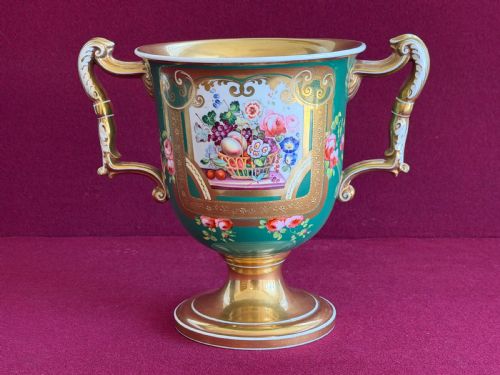


Georgian Porcelain Urn
A georgian porcelain urn brings cabinet neoclassical form to a mantelpiece, shaped by Worcester, Derby and Spode hands.
Georgian Porcelain Urn
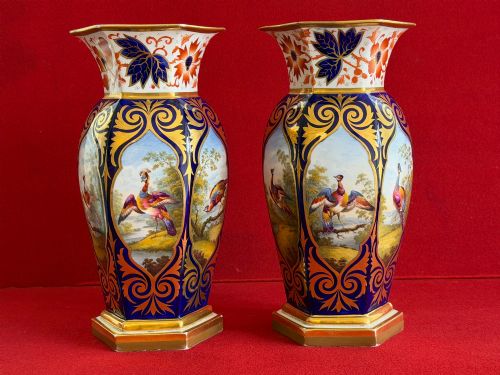
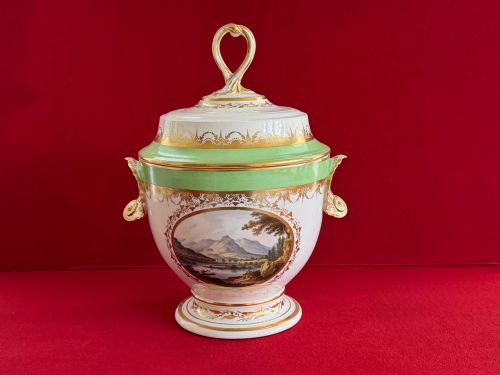
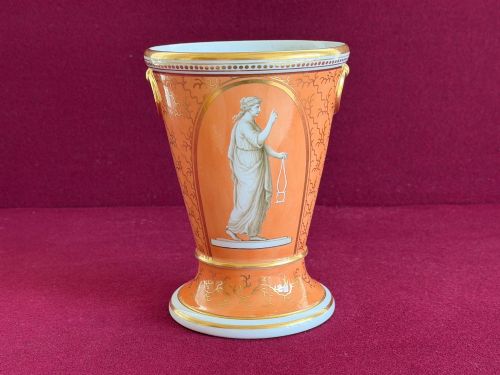
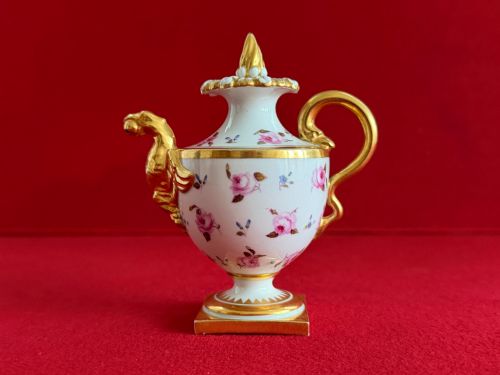
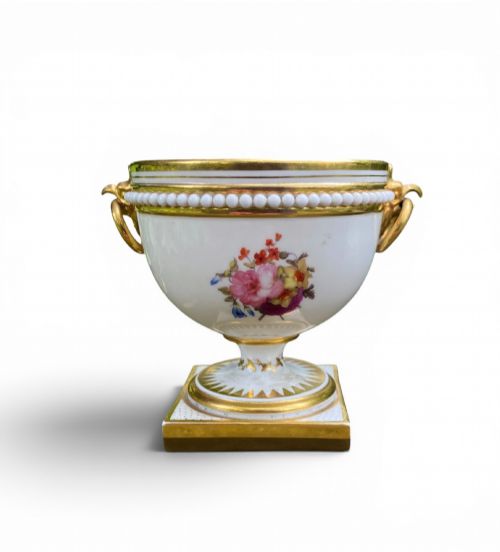
A georgian porcelain urn takes the classical vessel and translates it into soft-paste porcelain, hard-paste porcelain, and ironstone for the display tables of the period. These pieces appear primarily as vases, ice pails, jardinières, and lidded vessels spanning the eighteenth and nineteenth centuries.
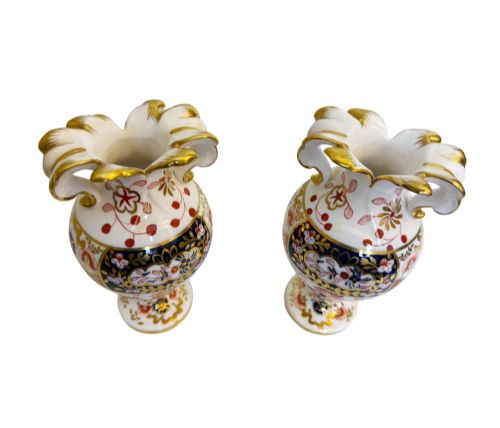
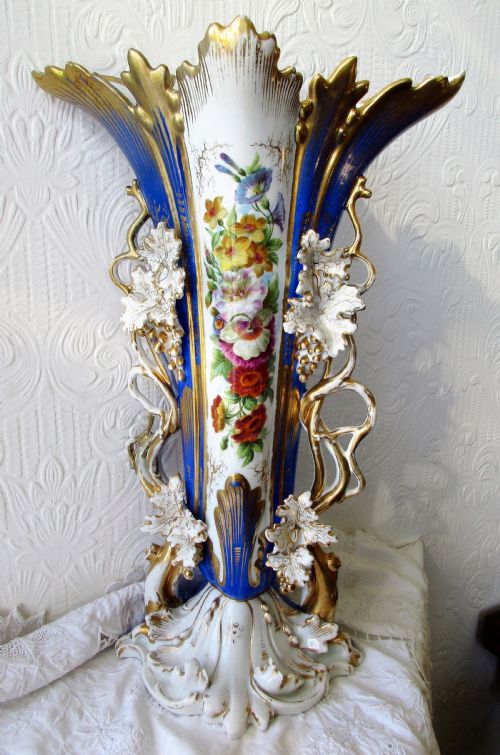
The Regency and Georgian eras dominate the forms, covering styles from severe neoclassical profiles to exuberant rococo revival and imari patterns. Buyers meet everything from topographical twin-handled vases to specialised rose water sprinklers and bough pots.
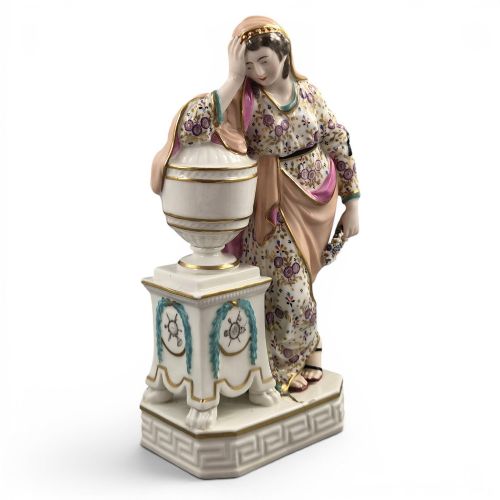
Makers such as Worcester, Derby, and Spode establish the standard for these ceramic vessels, employing painters like George Robertson and Zachariah Boreman. The resulting objects function as centrepieces, decorative garnitures, and cabinet ceramics.
What varies in quality
The refinement of the ceramic body and the ambition of the form dictate the standing of a piece, distinguishing standard utility wares from exhibition pieces. Hand-painted detail by named artists or specialised decorators elevates the ceramic surface significantly.
The crispness of moulded classical details, the weight of the porcelain or ironstone, and the preservation of original gilding and enamel paint determine the success of the vessel. Pairs and garnitures matching in body and decoration carry distinct visual and collector weight.
Georgian Porcelain Urn Retail Price Guide 2026
Typical asking prices for georgian porcelain urn among the pieces listed under this phrase on Sellingantiques today, from the lower quarter to the upper quarter. They describe what is for sale here now, not the wider market.
Listings feature porcelain, ironstone, and gold leaf across Georgian and Regency periods.
Flight Barr and Barr·Chamberlain Worcester·H and R Daniel·George Robertson·Zachariah Boreman·Mason's Ironstone
The Georgian Porcelain Urn Glossary
- Soft-paste porcelain
- An artificial ceramic composition fired at lower temperatures than true porcelain, common in eighteenth-century English factories. It produces a warm, slightly translucent body that interacts distinctively with glazes.
- Gilding
- The application of gold leaf or gold paint to ceramic surfaces, particularly handles, rims, and borders. It provides a luminous contrast to painted scenes and monochrome grounds.
- Imari
- A decorative style inspired by Japanese export wares, utilising a palette of underglaze blue, iron red, and gilt. English factories adopted this scheme enthusiastically during the Regency period.
- Garniture
- A set of matching vases or vessels designed to be displayed together on a mantelpiece or sideboard. They typically comprise a central piece flanked by matching side vases.
- Bough pot
- A ceramic container designed to hold cut flowers or flowering branches for interior decoration. These vessels frequently feature pierced or removable covers.
Georgian Porcelain Urn: Frequently Asked Questions
What is a porcelain urn used for?
These vessels served primarily as decorative objects for mantelpieces, dining tables, and cabinets during the Georgian and Regency periods. Certain forms, such as ice pails and bough pots, held practical functions for dining or floral arrangement.
Over time, their role shifted entirely to ornamental display. Collectors prize them today for their sculptural neoclassical forms and detailed hand-painted decoration.
How do I date a porcelain urn?
Dating relies on factory marks, paste composition, and stylistic shifts between the eighteenth and nineteenth centuries. Earlier pieces often display soft-paste bodies and neoclassical restraint, while later Regency examples lean towards ironstone and vibrant imari palettes.
Details such as specific painter attribution or pattern numbers help narrow the production window. Comparison with documented factory outputs provides the most reliable chronological framework.
What is the difference between porcelain and ironstone?
Porcelain is a vitrified ceramic body known for its translucency and fine grain, encompassing both soft-paste and hard-paste varieties. Ironstone is a denser, highly durable earthenware perfected in the nineteenth century to imitate porcelain.
While porcelain allowed for delicate cabinet pieces and intricate painting, ironstone provided robust bodies suited to larger vessels and transfer-printed designs.
How should I display a porcelain urn?
These pieces require stable surfaces away from direct sunlight and high foot traffic to protect fragile gilt and enamel decoration. Pairing single vessels with matching garniture pieces creates a balanced period display on mantels or sideboards.
Due to their historical nature, they are best kept free from water or direct planting unless fitted with modern protective liners.