
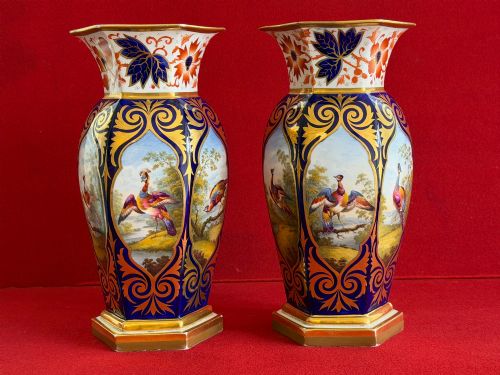
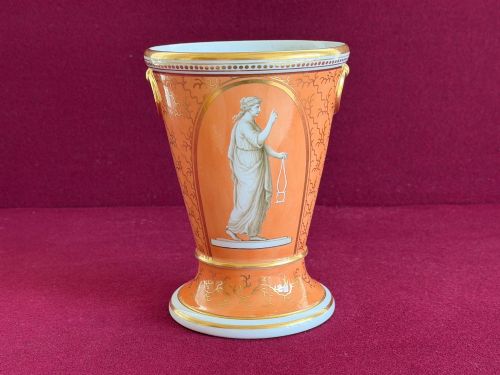
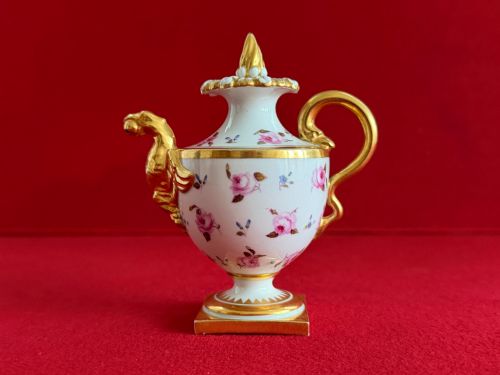
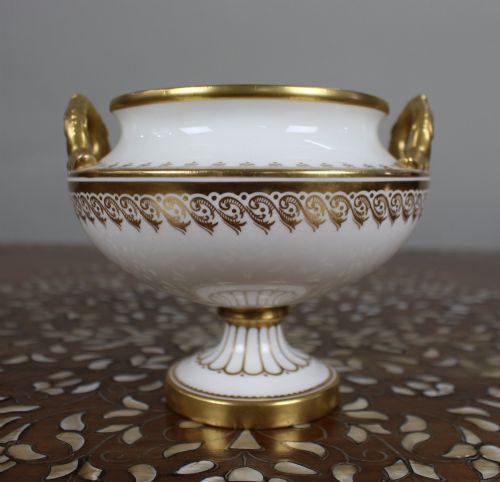





Regency Porcelain Urn
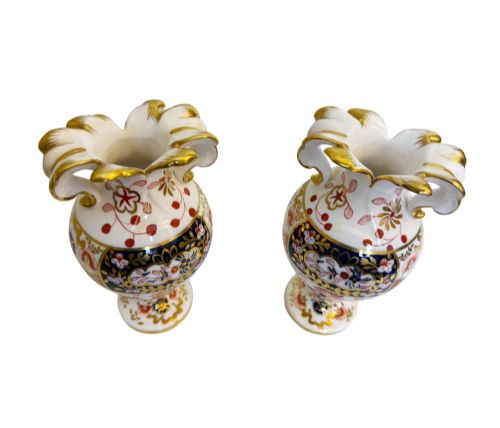
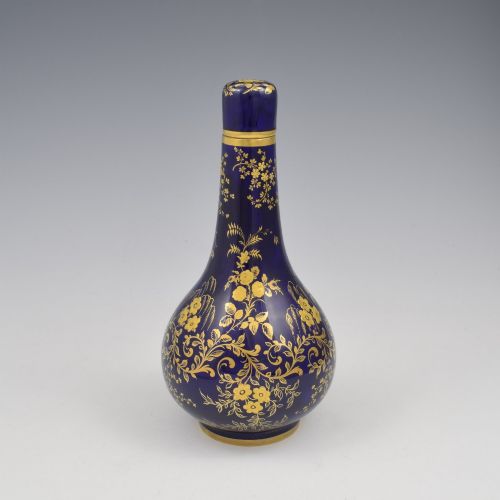
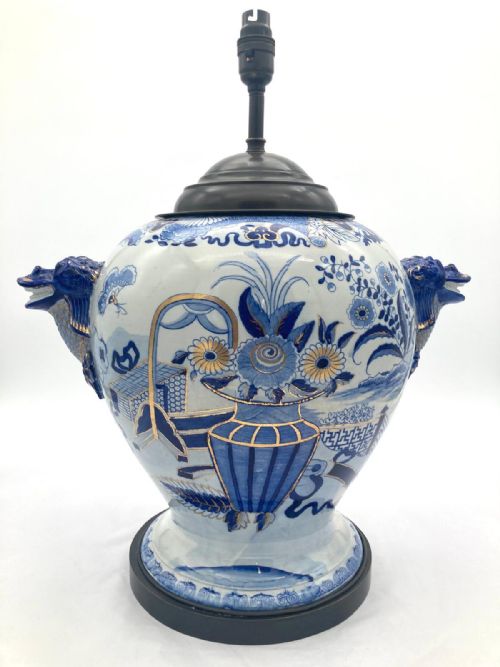
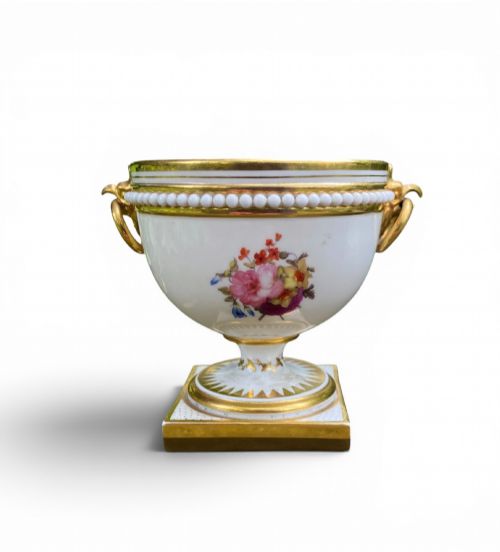
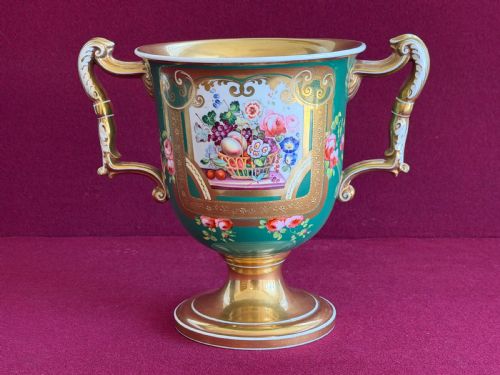
These regency porcelain urn items are decorative vessels created to bring classical proportion and refined artistry into domestic interiors.
Defining regency porcelain urn pieces
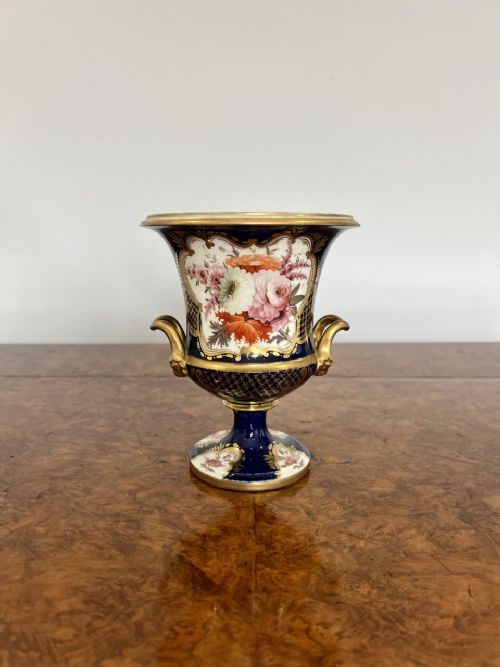
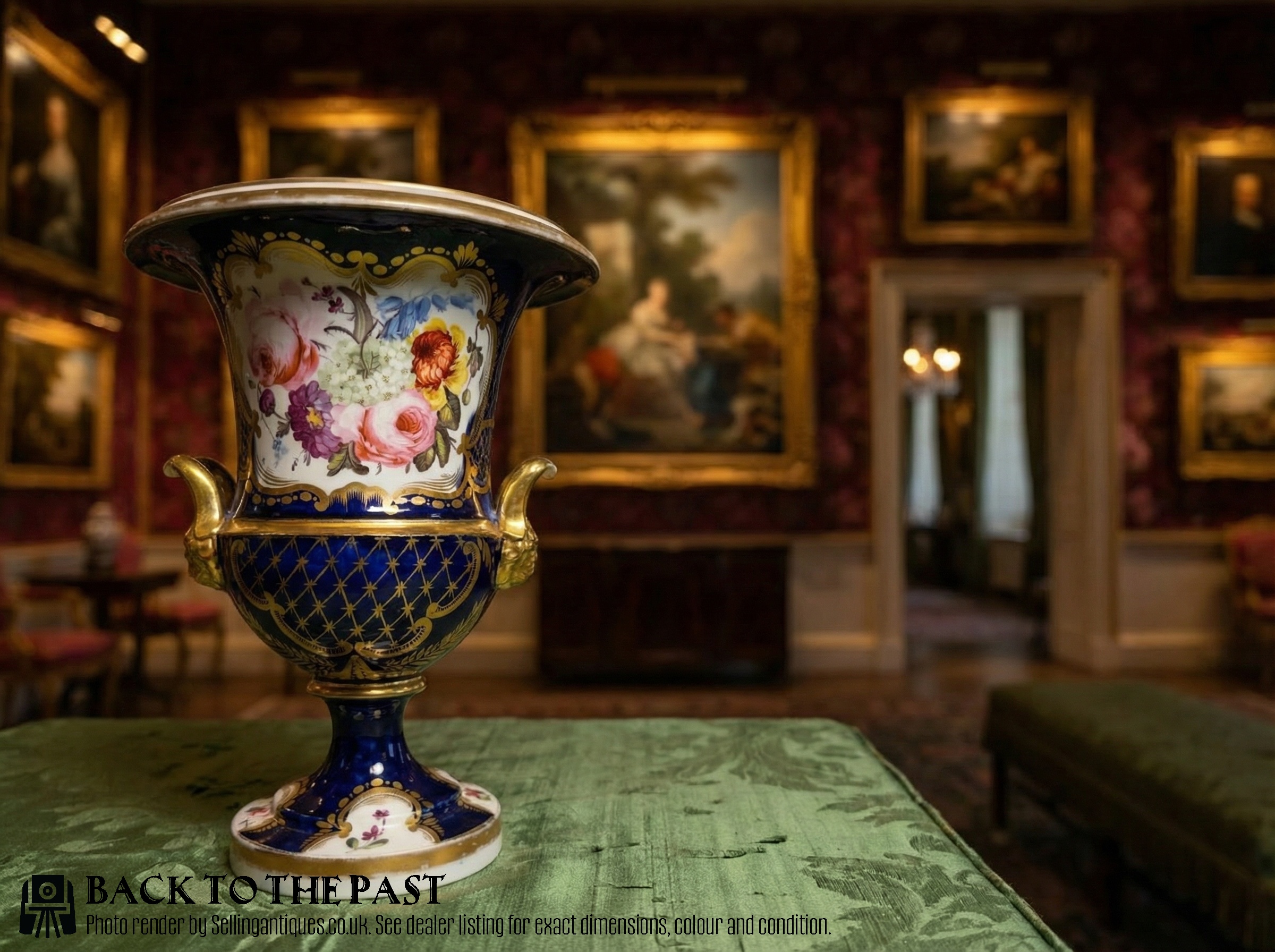
A regency porcelain urn brings classical form into the interior through classical shapes like the Campagna and Warwick styles. These pieces arrive from the Regency period, the broader nineteenth century, and specific years such as eighteen hundred and eighteen sixty.
Makers represented on this page include Chamberlain Worcester, Spode, Flight Barr and Barr Worcester, and Coalport. These vessels often feature covers and specific classical silhouettes that define the aesthetic of the era.
Materials and construction
These items utilise porcelain as the primary body material, shaped into vases and urns with integrated handles and covers. Artisans applied gold leaf, enamel, and gold gilt to enrich the surface decoration of the porcelain body.
The decorative schemes rely on meticulous hand-painting and gilding applied over the fired porcelain ground. Workshops utilised specialised ceramic bodies to achieve the specific weight and resonance required for classical vase forms.
Retail Price Guide 2026
Typical UK retail prices for regency porcelain urn, calculated from the Sellingantiques database of over a million retail prices indexed since 2003. This retail price guide relies exclusively on Sellingantiques data; no external sources or auction records are used, so the figures do not describe the wider market.
Certain urns arrive with their original covers intact, surviving centuries of mantelpiece rearrangements without losing their lids.
Assessing quality and execution
Quality rests upon the precision of the gilding and the delicacy of the enamel work applied across the porcelain surface. Superior examples demonstrate crisp modeling in forms like the Warwick vase and the Campagna shape.
The prestige of the manufactory also governs distinction, with established names like Chamberlain Worcester and Spode commanding attention for their refined body composition and artistic execution.
Chamberlain Worcester·Spode·Flight Barr and Barr·Coalport
The Regency Porcelain Urn Glossary
- Campagna urn
- A bell-shaped vessel with a flared rim and pedestal foot, widely produced during the nineteenth century. This classic shape derives from Roman antiquity.
- Warwick vase
- A krater-shaped vessel modeled on a famous antique marble excavation, featuring mask handles and classical friezes. Porcelain versions adapt this monumental form for cabinet display.
- Porcelain
- A ceramic material fired at high temperatures to achieve a vitrified, translucent body. It serves as the essential canvas for enamelling and gilding.
- Gold gilt
- A thin layer of gold applied to the porcelain surface to highlight handles, rims, and decorative motifs. This finish adds rich contrast to the painted enamel details.
Frequently Asked Questions
How were these urns used originally?
They served primarily as ornamental centrepieces and decorative objects within formal rooms of nineteenth century homes.
Their classical designs reflected an ongoing fascination with antiquity, displayed on mantelpieces or tables rather than used for holding flowers.
How do I identify a Regency period piece?
Identification relies on noting the specific classical forms, such as Campagna urns and Warwick vase shapes, alongside the porcelain body.
Reference to maker names like Flight Barr and Barr and dates around eighteen hundred to eighteen twenty helps anchor the piece to the Regency style.
How should I care for porcelain urns?
Dust the porcelain and gilt surfaces gently with a soft, dry brush to prevent the accumulation of dirt.
Keep the items away from direct sunlight and moisture to protect the delicate enamel colours and gold leaf details over time.