
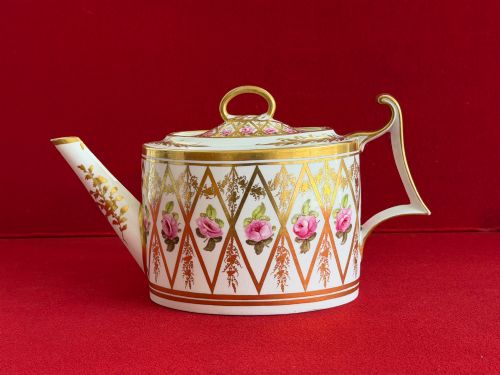
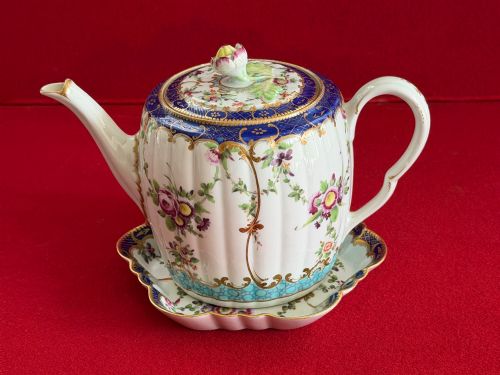
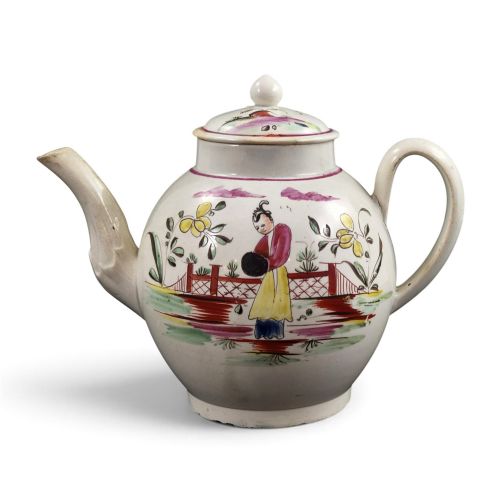
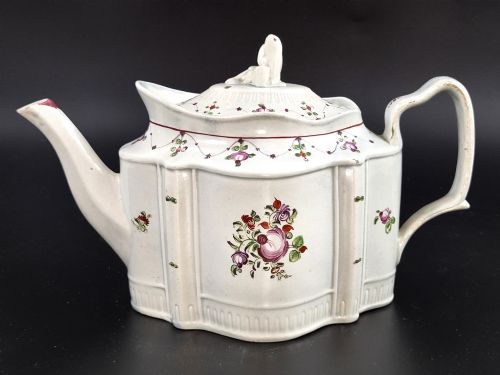


Georgian Ceramic Teapot
A georgian ceramic teapot brings the warmth of eighteenth and nineteenth-century tea tables straight into a modern home.
Georgian Ceramic Teapot
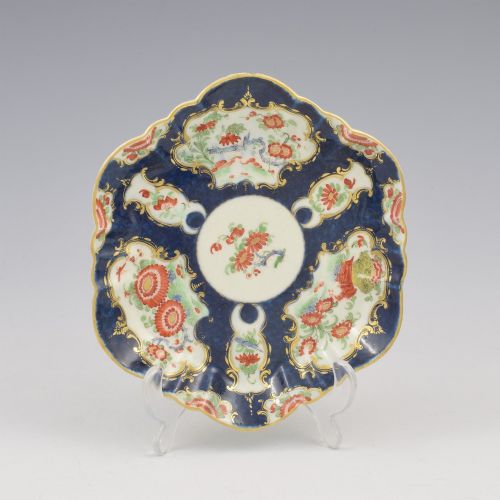
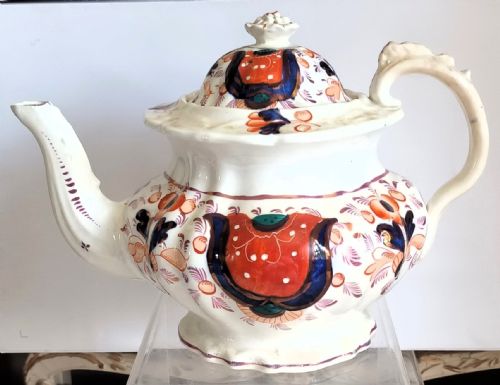
When you search for a georgian ceramic teapot, you encounter pieces shaped across the eighteenth and nineteenth centuries, including items from the Georgian period itself, the Regency era, and early Victorian times.
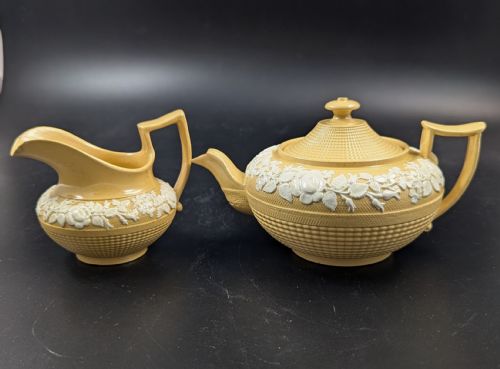
The selections on this page span several ceramic forms, ranging from standard teapots and barrel-shaped vessels to commode-shaped teapots, miniature tea sets, milk jugs, and matching teapot stands.
Most examples originate from English kilns, featuring prominent factories and potteries that defined the period's domestic tea service.
Materials and manufacture
Potters of the era utilised earthenware, creamware, pearlware, soft-paste porcelain, and stoneware, shaping bodies by hand or mould before applying lead glaze.
Decoration relies on enamel painting, transfer printing, blue and white underglaze pigments, and touches of gilding or gold leaf.
Finishing touches often include distinct elements like flower head knops, widow finials, and painted Chinoiserie panels.
Georgian Ceramic Teapot Retail Price Guide 2026
Typical asking prices for georgian ceramic teapot among the pieces listed under this phrase on Sellingantiques today, from the lower quarter to the upper quarter. They describe what is for sale here now, not the wider market.
A waiting chinaman painted on porcelain kept watch over countless eighteenth-century tea parties.
Distinguishing quality
The distinction between standard domestic wares and superior examples rests in the precision of the modelling and the crispness of the transfer printing or hand-painted enamels.
Finer pieces display sophisticated glaze control and well-preserved gilding, whereas simpler earthenwares show the robust utility of everyday farmhouse or cottage vessels.
Derby Porcelain·Thomas Wolfe Staffordshire·Philip Christian Liverpool·Wedgwood·Enoch Wood and Sons·Thomas Harley Staffordshire
The Georgian Ceramic Teapot Glossary
- Soft-paste porcelain
- A ceramic composition made from glass paste and white clay fired at lower temperatures than hard-paste. It creates a warm, slightly creamy body frequently found in eighteenth-century tea wares.
- Creamware
- A refined earthenware developed in Staffordshire featuring a pale yellowish cream glaze. It gained immense popularity for its clean surface and adaptability to delicate painting.
- Pearlware
- An improved earthenware developed in the late eighteenth century with a bluish tint in the glaze to mimic Chinese porcelain. It served as a popular base for blue transfer printing.
- Black Basalt
- A fine-grained, unglazed black stoneware perfected by Wedgwood and other potteries. It imitates antique bronze and absorbs heat efficiently.
- Transfer printing
- A decoration technique using a copperplate to transfer an inked design onto paper and then onto the ceramic surface before firing. It allowed for intricate, repeatable patterns like Chinoiserie scenes.
Georgian Ceramic Teapot: Frequently Asked Questions
How do I date a ceramic teapot?
Dating relies on examining the ceramic body, glaze characteristics, and decorative patterns such as blue and white transfer prints or hand-painted enamels. Makers' marks and shape styles also provide clear chronological markers.
Comparing handles, spouts, and finials against documented production eras helps narrow down the decade of manufacture.
Were these teapots used daily?
Many pots served practical roles in middle and upper-class households during breakfast and afternoon tea rituals. Their materials were chosen to withstand hot water despite the delicate appearance of porcelain.
Over decades of use, pieces often accumulated minor wear that reflects their active history in the home.
How should I clean my teapot?
Gentle washing with warm water and mild soap preserves the fragile glazes, hand-applied enamels, and delicate gilding. Dishwashers and harsh scrubbers must be strictly avoided.
Careful handling protects vulnerable spouts and handles from accidental chips.
What is a widow finial?
A widow finial is a small, upright knob on top of a teapot lid, shaped like a seated mourning figure. It earned its colloquial name from associations with grief during maritime eras.
This decorative detail frequently appears on early nineteenth-century earthenware and stoneware vessels.