6,078  PAGES BROWSED TODAY PAGES TODAY 0  ANTIQUES UPLOADED TODAY NEW ARRIVALS
ID #SA1088927
FOR SALE
£500
Email
Save
Antique Wedgwood Black Basalt Teapot, C. 1790
Gillers Antiques Ltd
for sale €585     $635
£500
Gillers Antiques Ltd

Gillers Antiques Ltd

Sellingantiques Verified Since Mar 2023
View Dealers Stock Page
Id #SA1088927
PDF SHARE
SAVE

Antique Wedgwood Black Basalt Teapot, C. 1790

18th century
Description

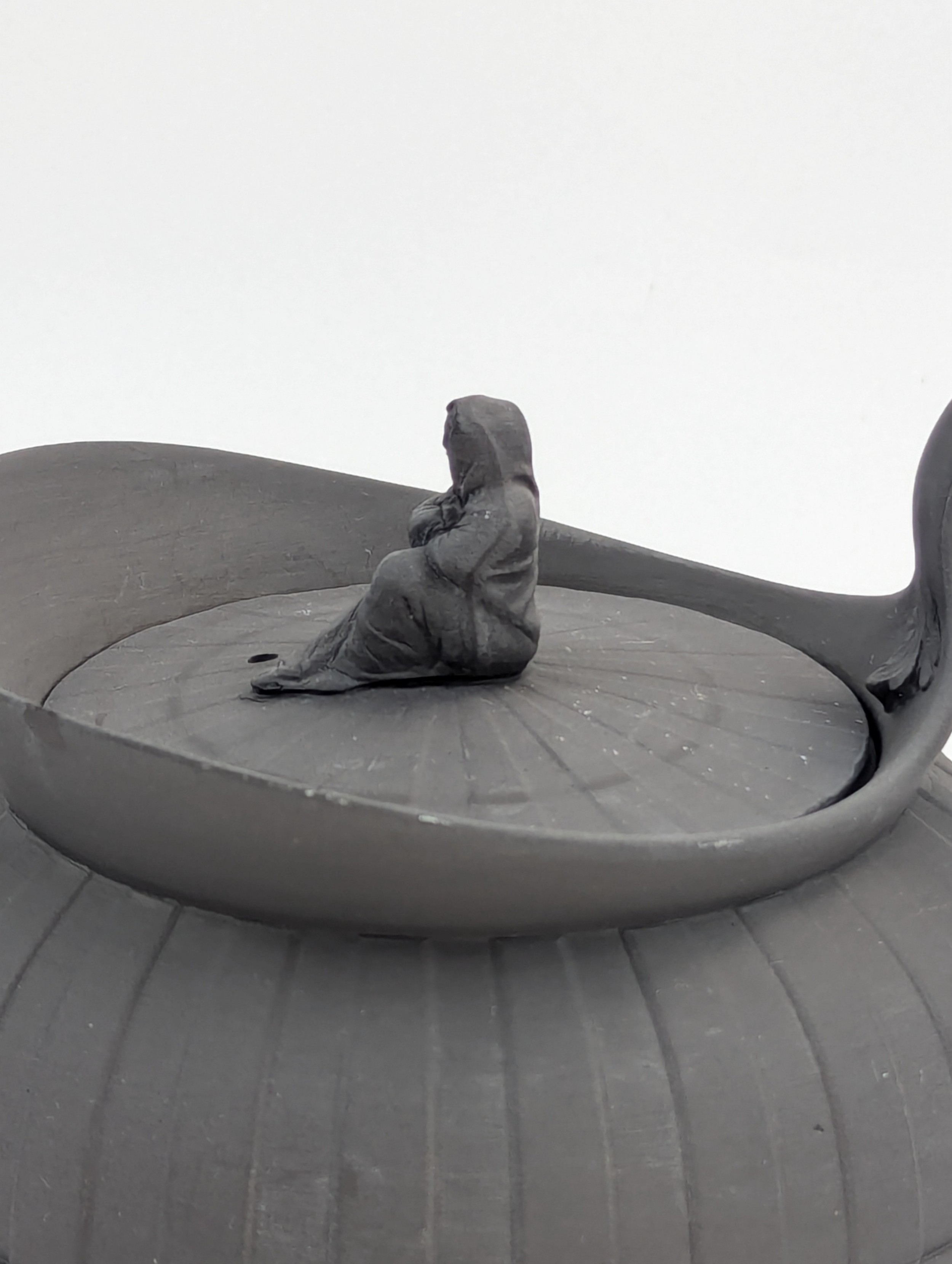
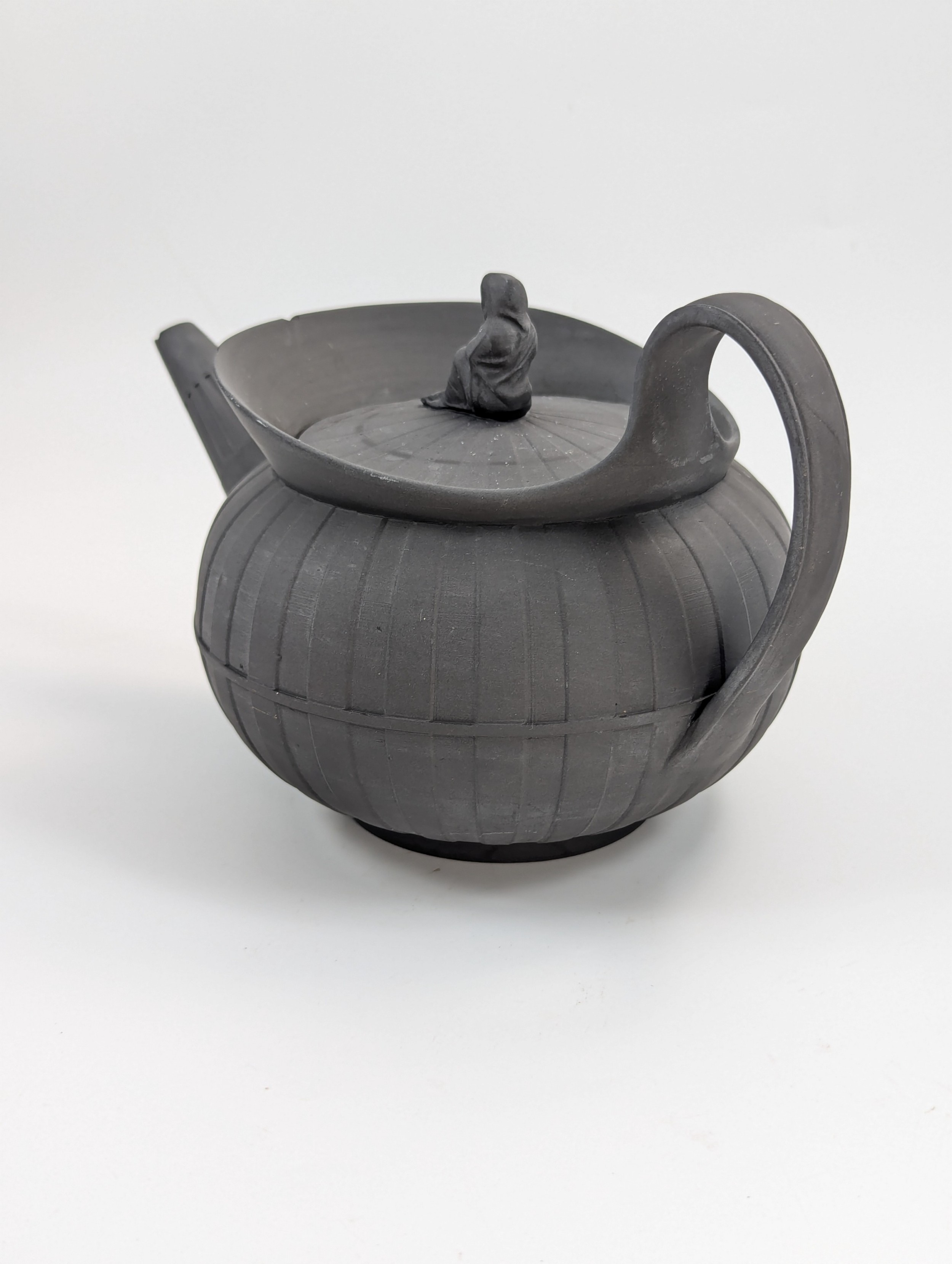
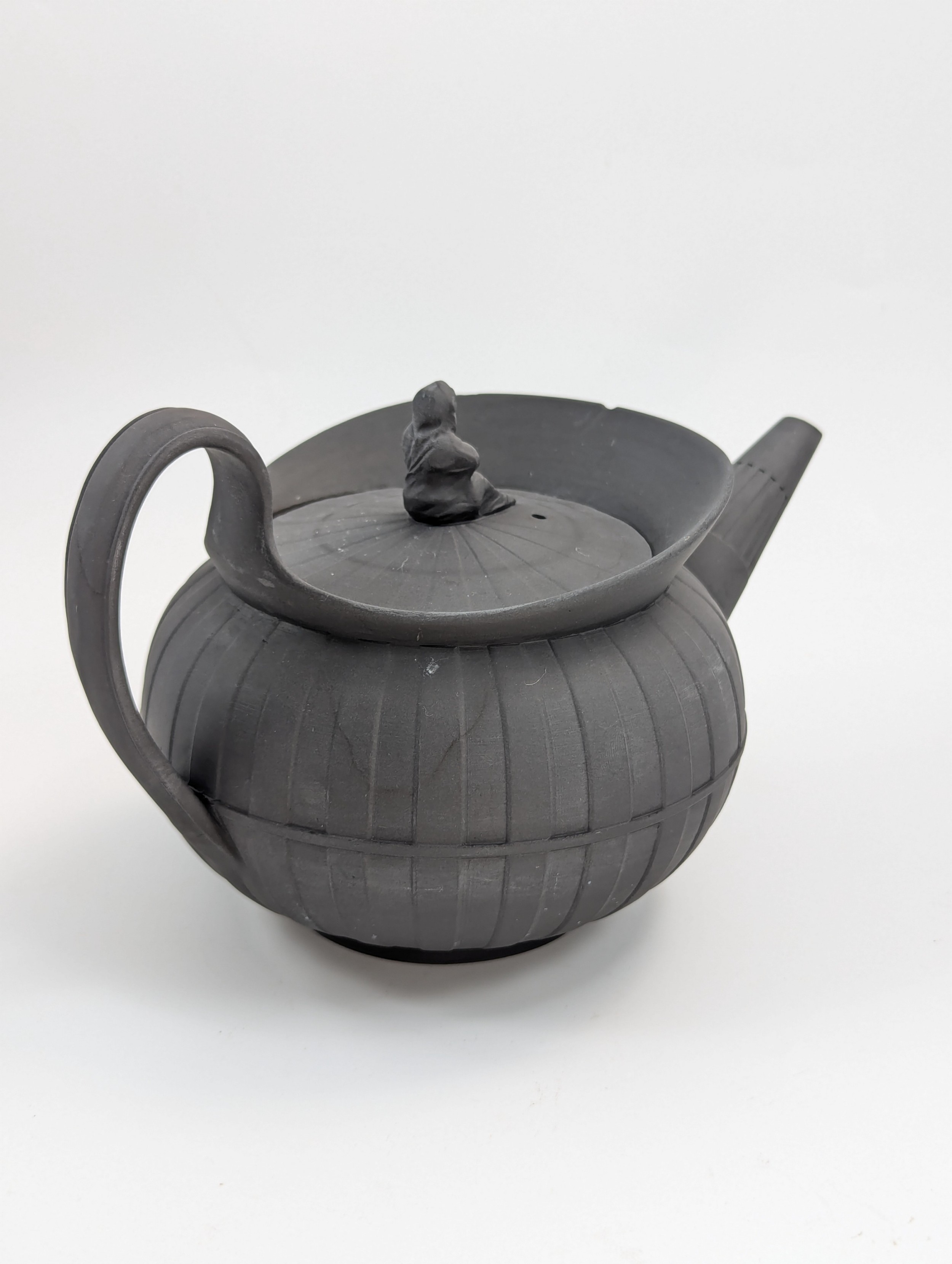
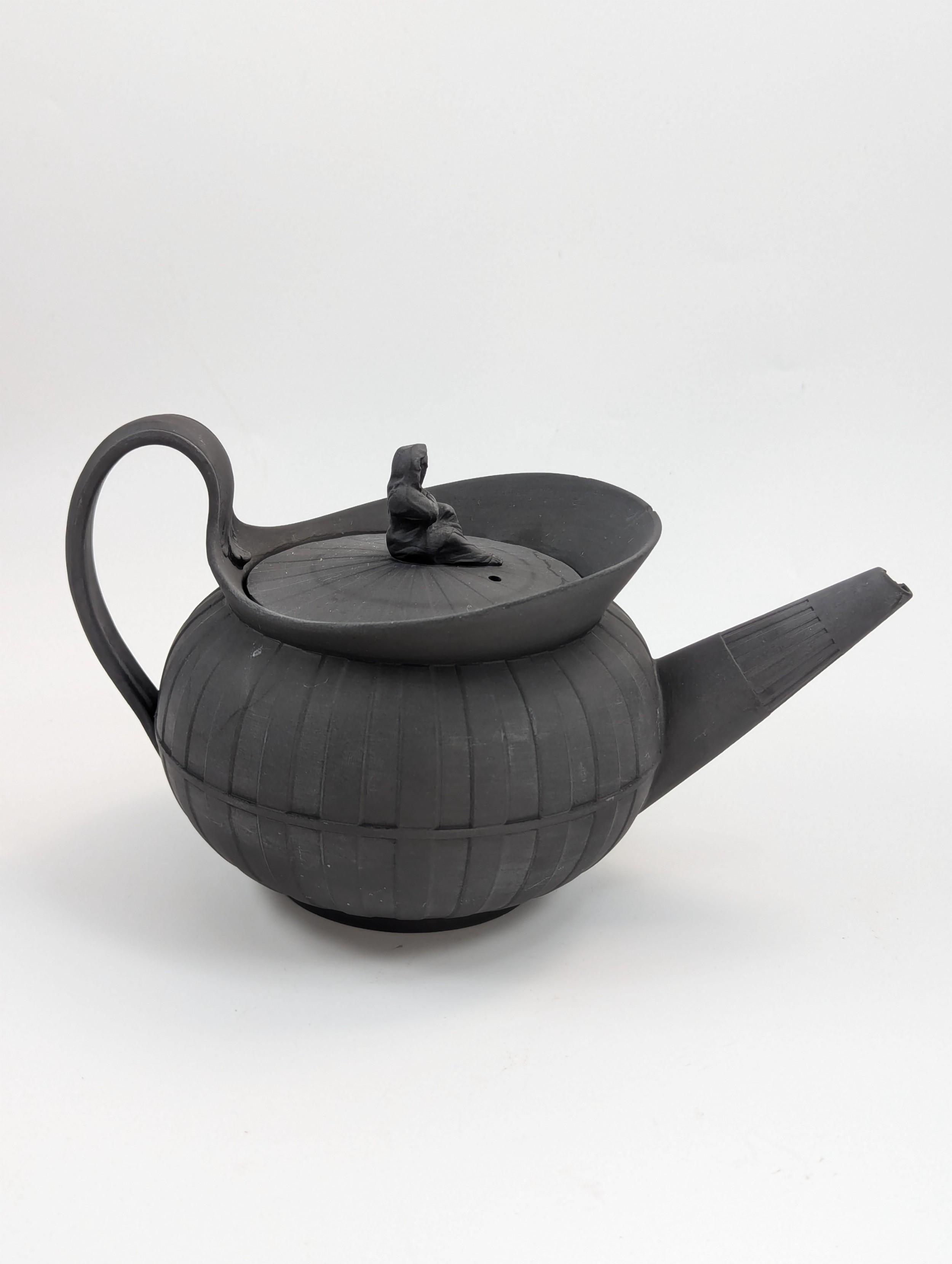
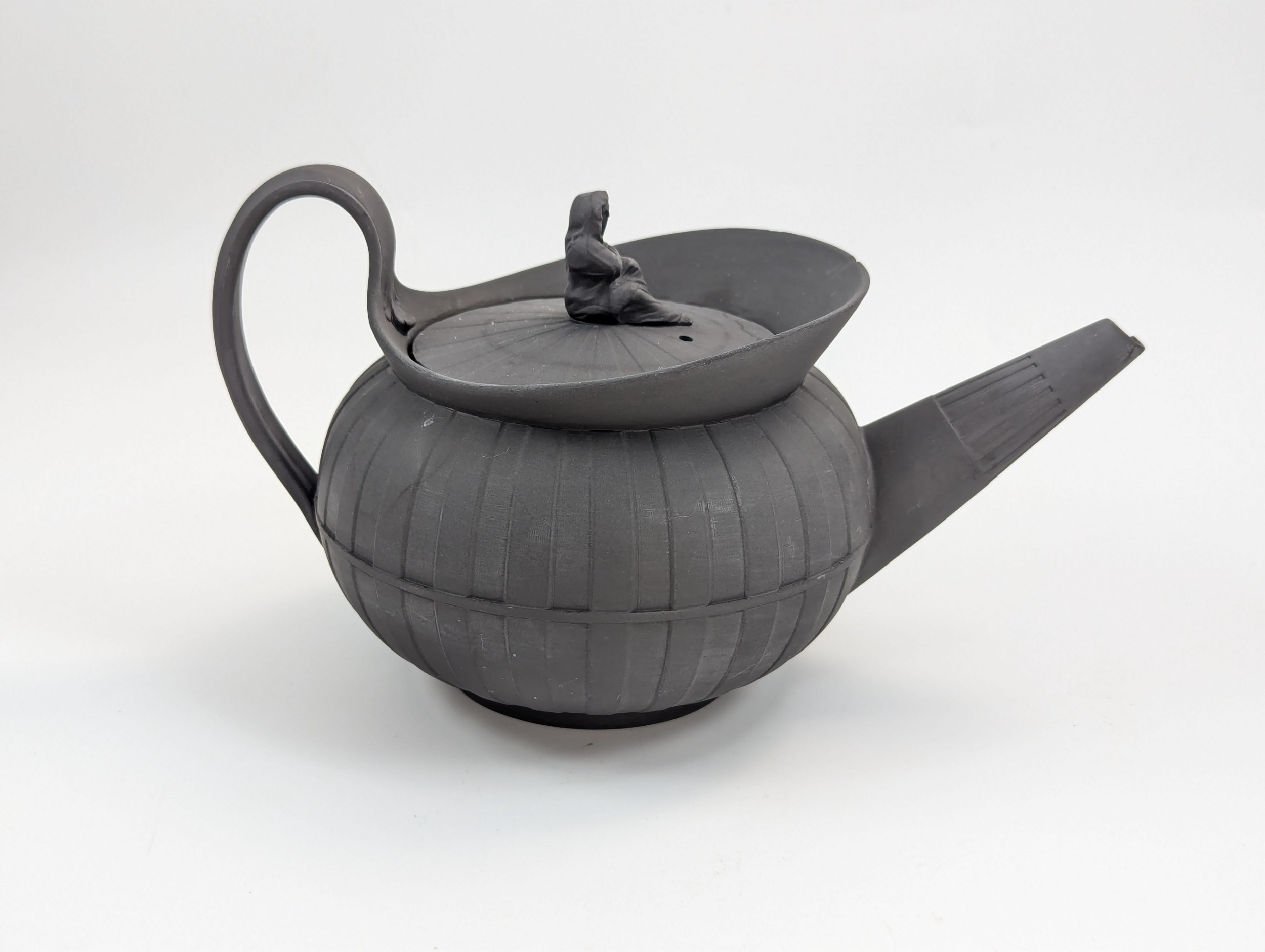
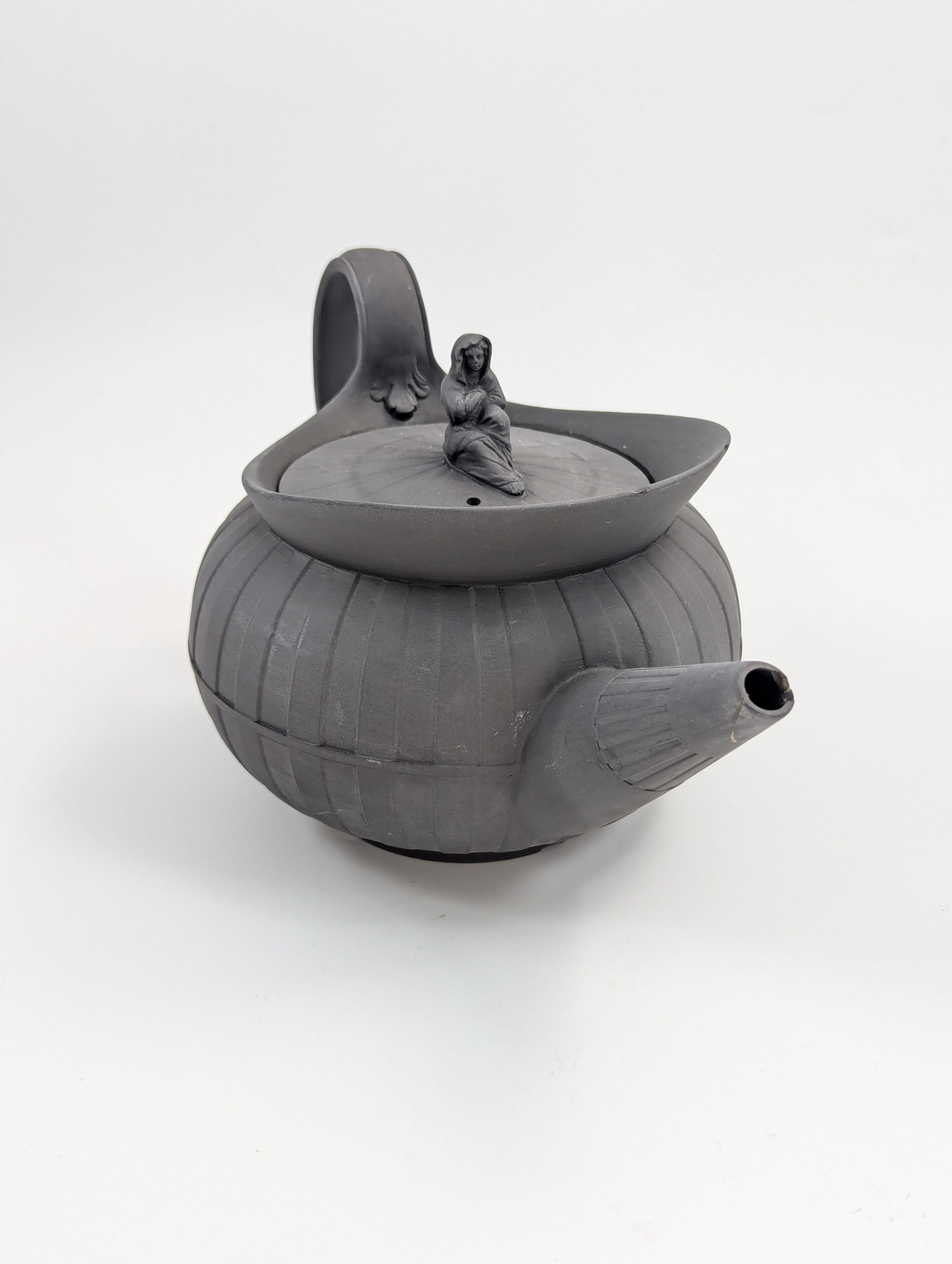
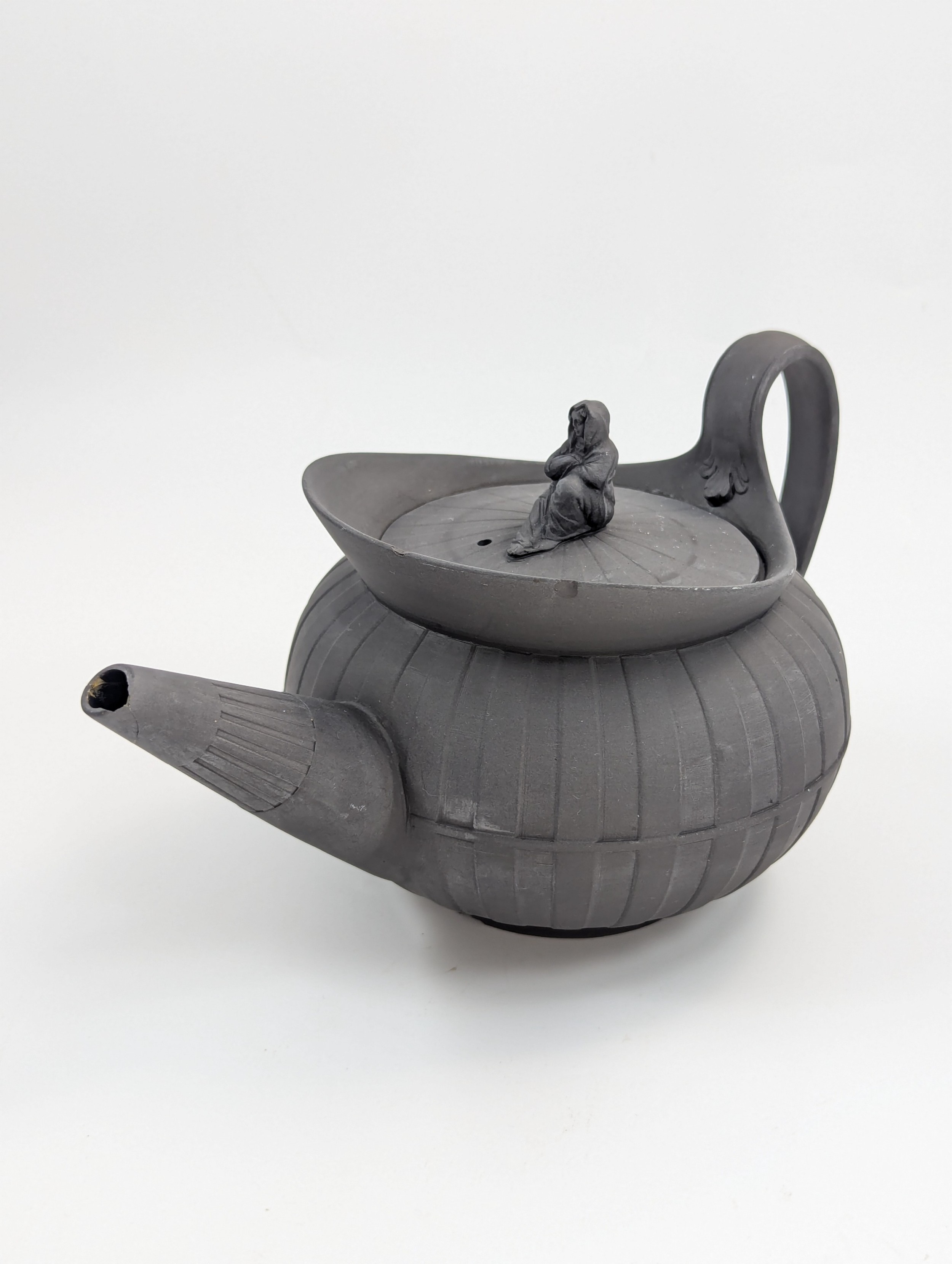
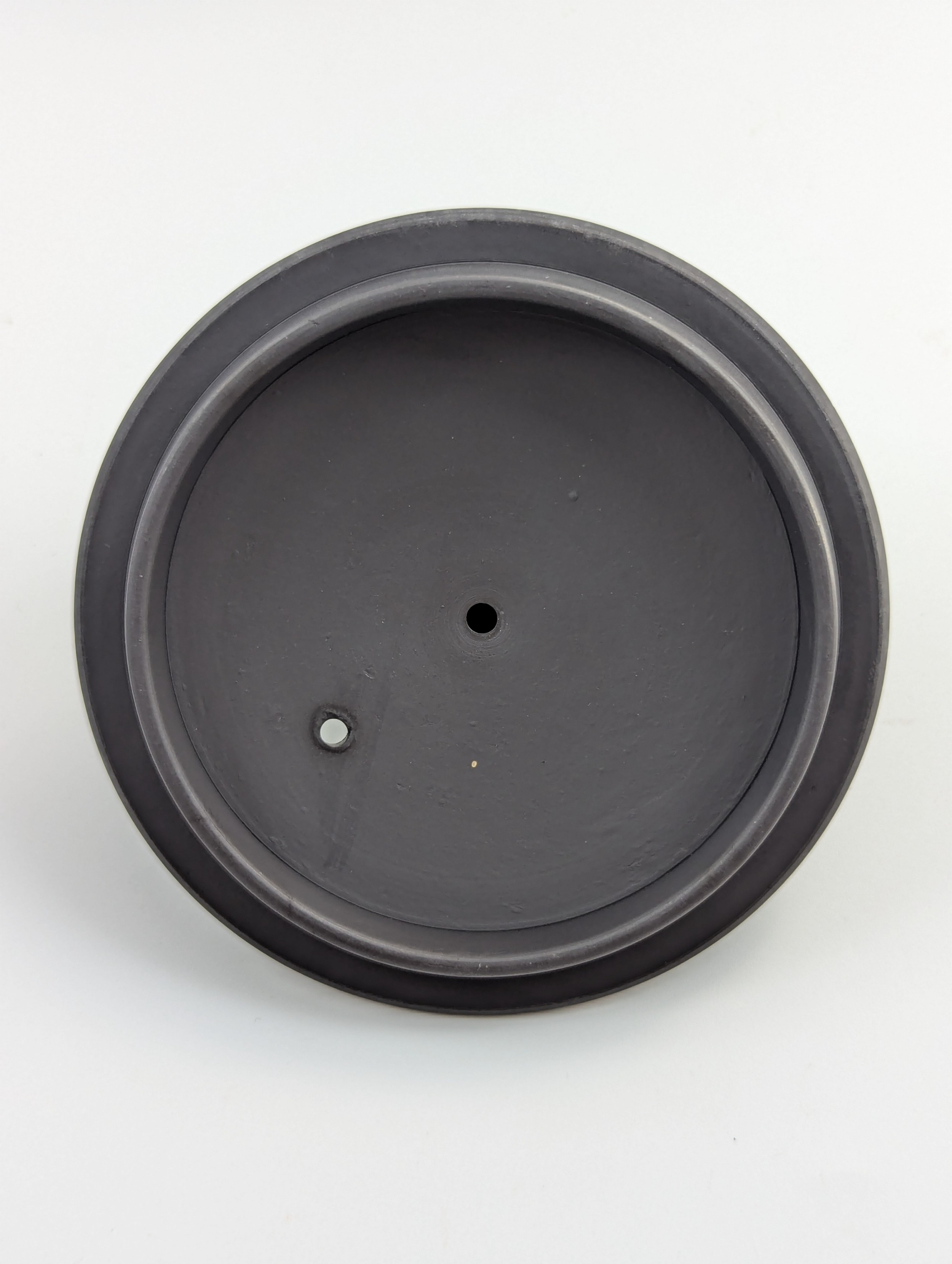
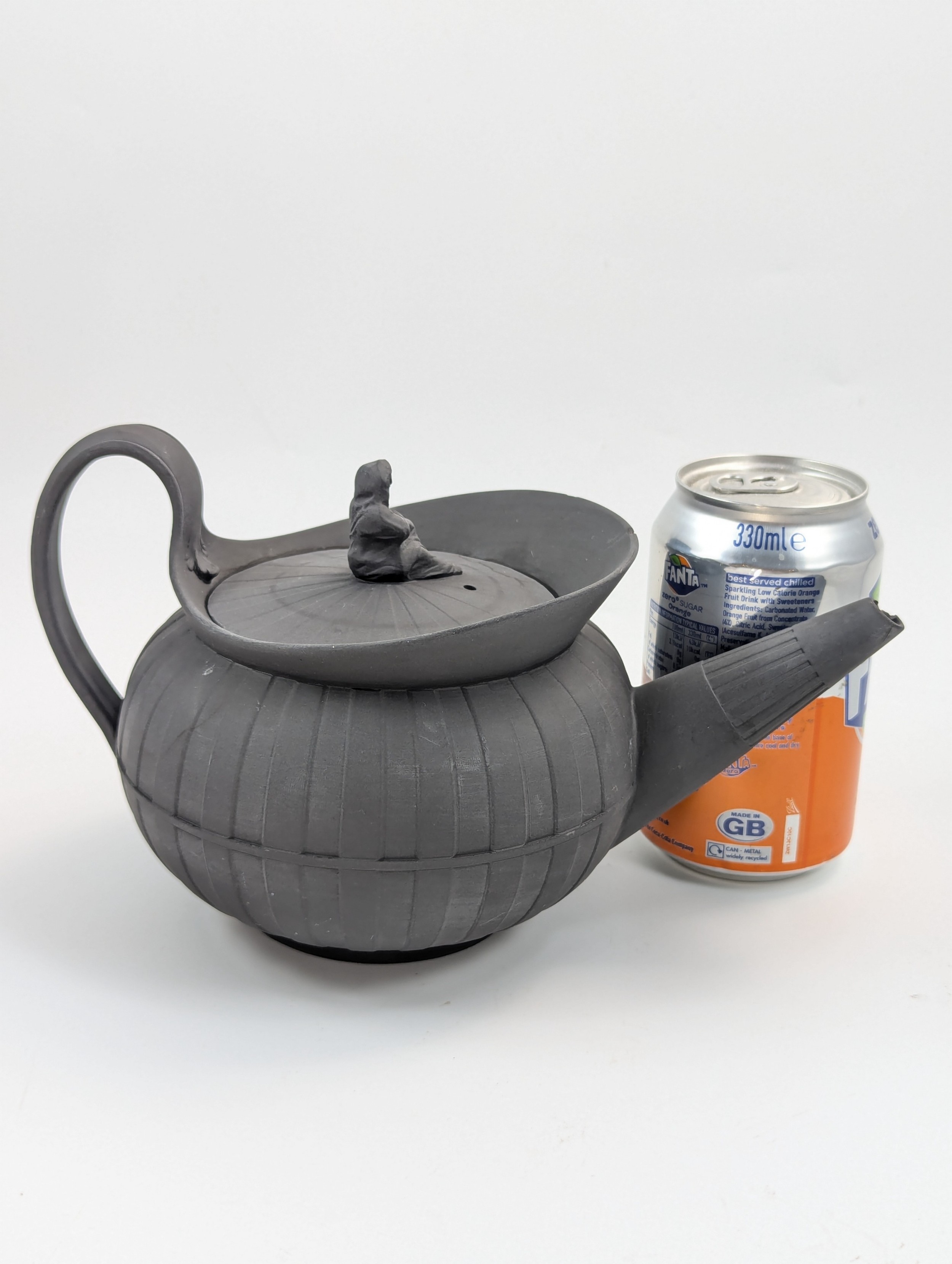
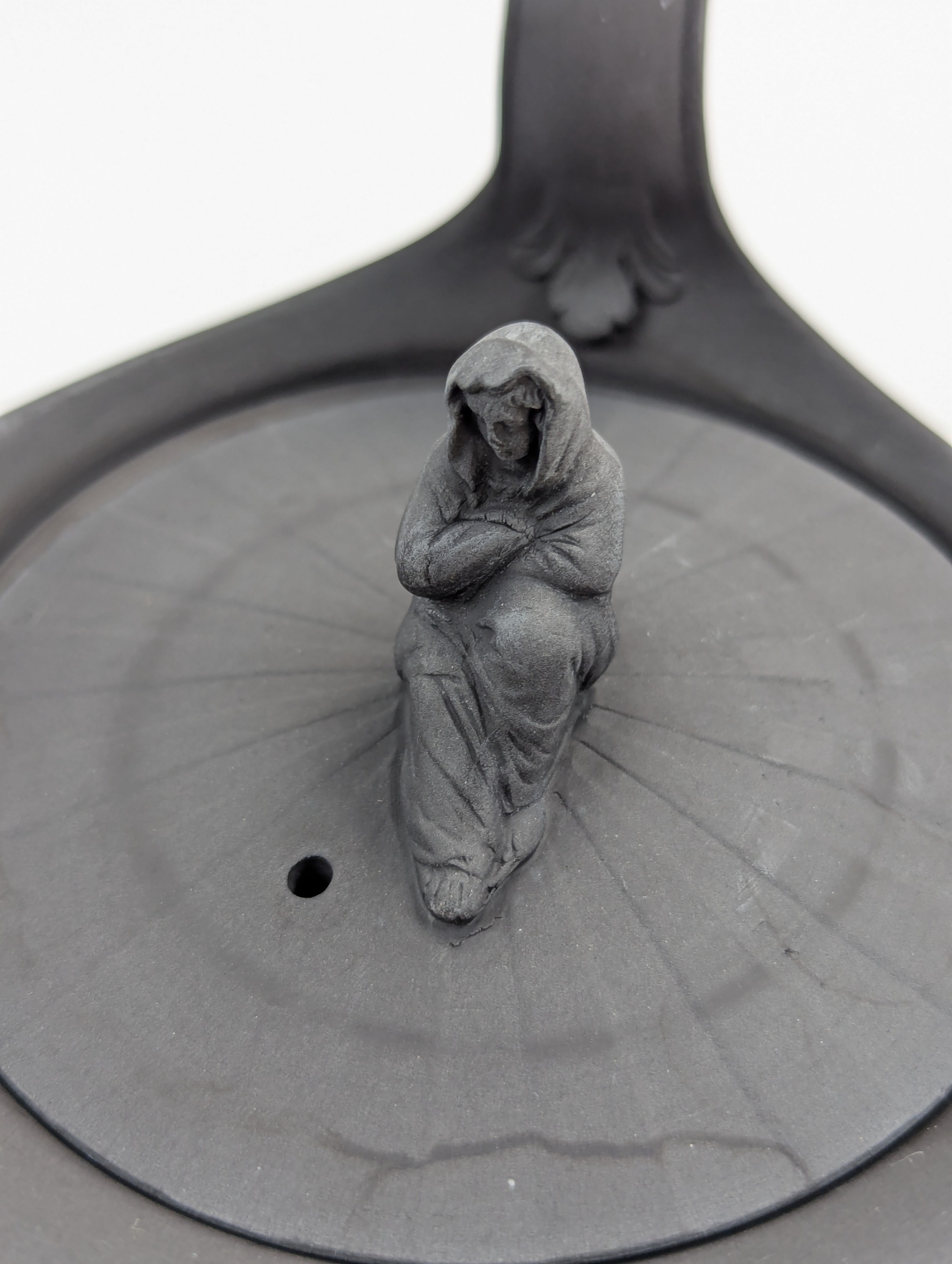
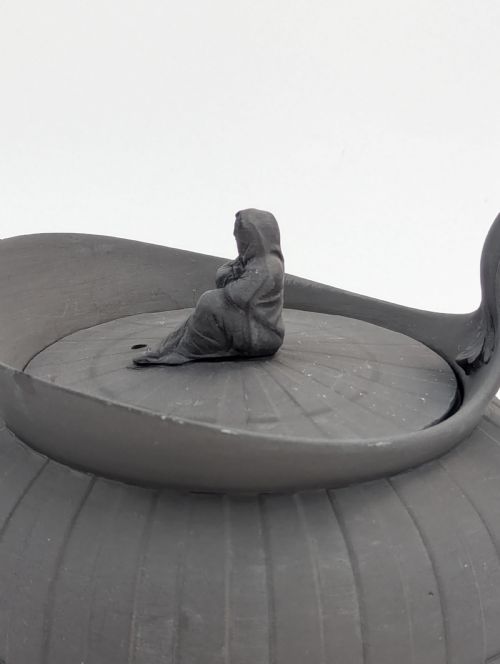
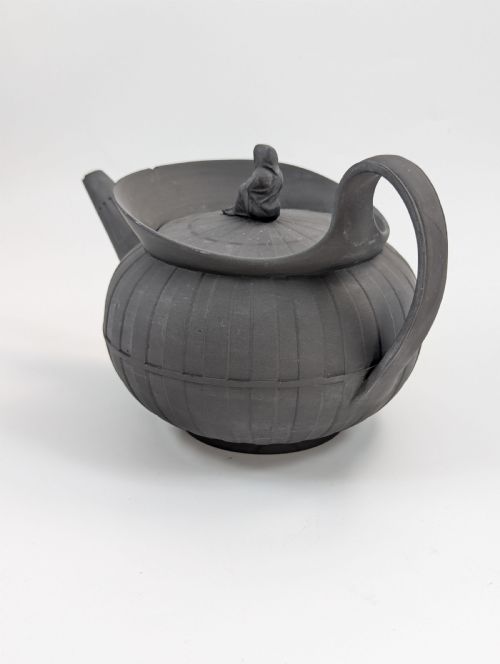
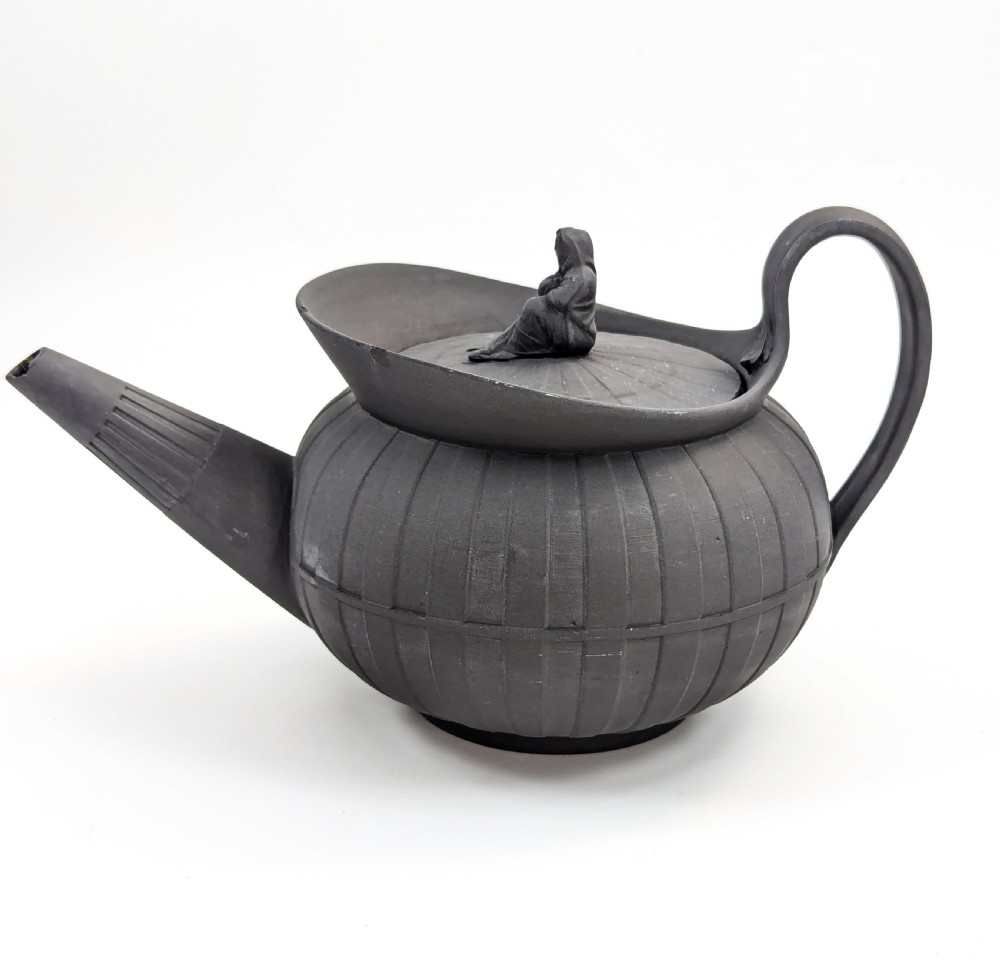
This exquisite antique Wedgwood teapot, crafted in the late 18th century, is made of black basalt, a material long recognized as one of the firm's finest creations. The teapot features an engine-turned body with a rare basket weave design that adorns the body, spout, and handle. It has a C-shaped ear handle, a straight spout, and a raised rim. The body of the pot is divided into two halves by horizontal bands, with both halves and the spout decorated with cannelures. The cover is topped with a knob in the form of a seated, draped female figure, often referred to as the "widow."
Teapots of this pattern are highly coveted and are exhibited in the most prestigious museums. For example, a similar teapot can be seen in the Victoria and Albert Museum:

https://collections.vam.ac.uk/item/O149003/teapot-josiah-wedgwood-and/
Black basalt is a type of pottery made from a mixture of clay and other materials that produce a black body when fired in a kiln. It is turned or press-moulded similarly to other types of pottery. The history of basalt dates back to the Iron Age, when certain clays that naturally fired black were used. In the 18th century, the process was refined, with the best formula being developed by Josiah Wedgwood around 1767. This formula was soon copied, and many companies produced basalt wares during the late 18th and early 19th centuries. Wedgwood continued its production until the late 20th century.
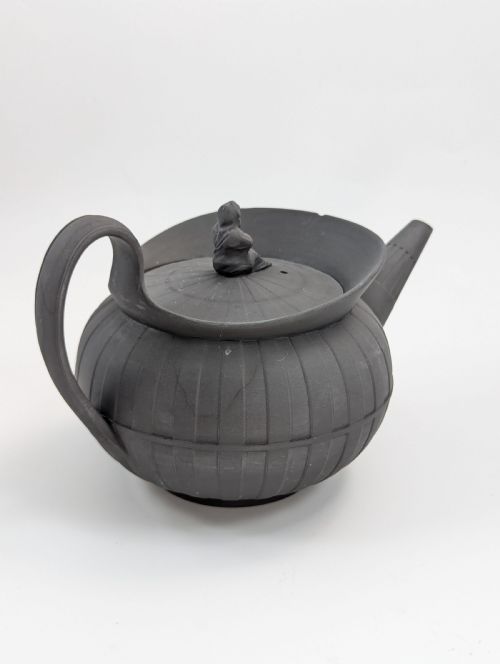
Black basalt was popular for several reasons. It resembles ancient bronze, making it suitable for busts; it also resembles ancient Greek vases, which Wedgwood replicated with 'encaustic' painting techniques. Additionally, the dark material highlighted the whiteness of ladies' hands, making it a popular choice for tea wares. The finest basalt is a very refined and beautiful material, highly prized by collectors, especially those with a preference for neoclassical styles. Its ability to take sharp, detailed decoration makes it particularly suited to this style of shape and ornamentation.
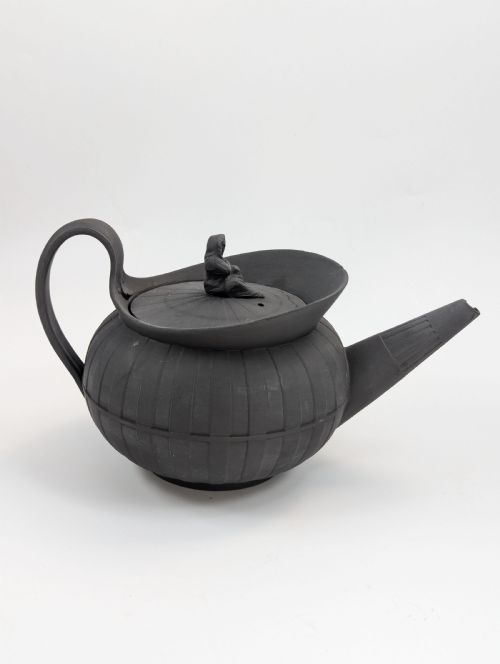
The Wedgwood Pottery Company has been in operation for over 250 years. Founded in 1759 in England by Josiah Wedgwood, the company quickly gained a reputation for its high-quality pottery and innovative designs. In its early years, Josiah Wedgwood focused on creating new types of pottery to meet the evolving demands of the market. He introduced a variety of new techniques, including transfer printing, which allowed intricate designs to be applied quickly and easily. One of Wedgwood's most famous innovations was the Jasperware line, introduced in the 1770s. Over the years, Wedgwood has continued to innovate and introduce new designs. The company is renowned worldwide for its exceptional pottery and remains a favorite among collectors and enthusiasts.
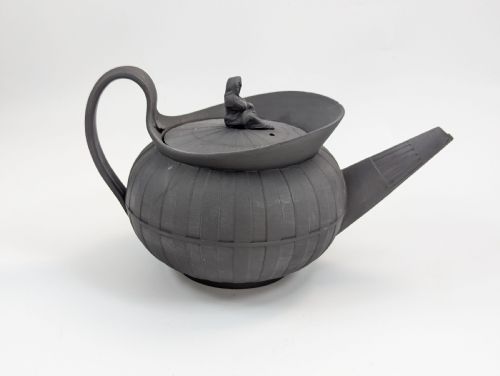
Dimensions: Length from the handle to the tip of the spout: 23.5 cm, Height: 13.5 cm, Depth: 13.5 cm

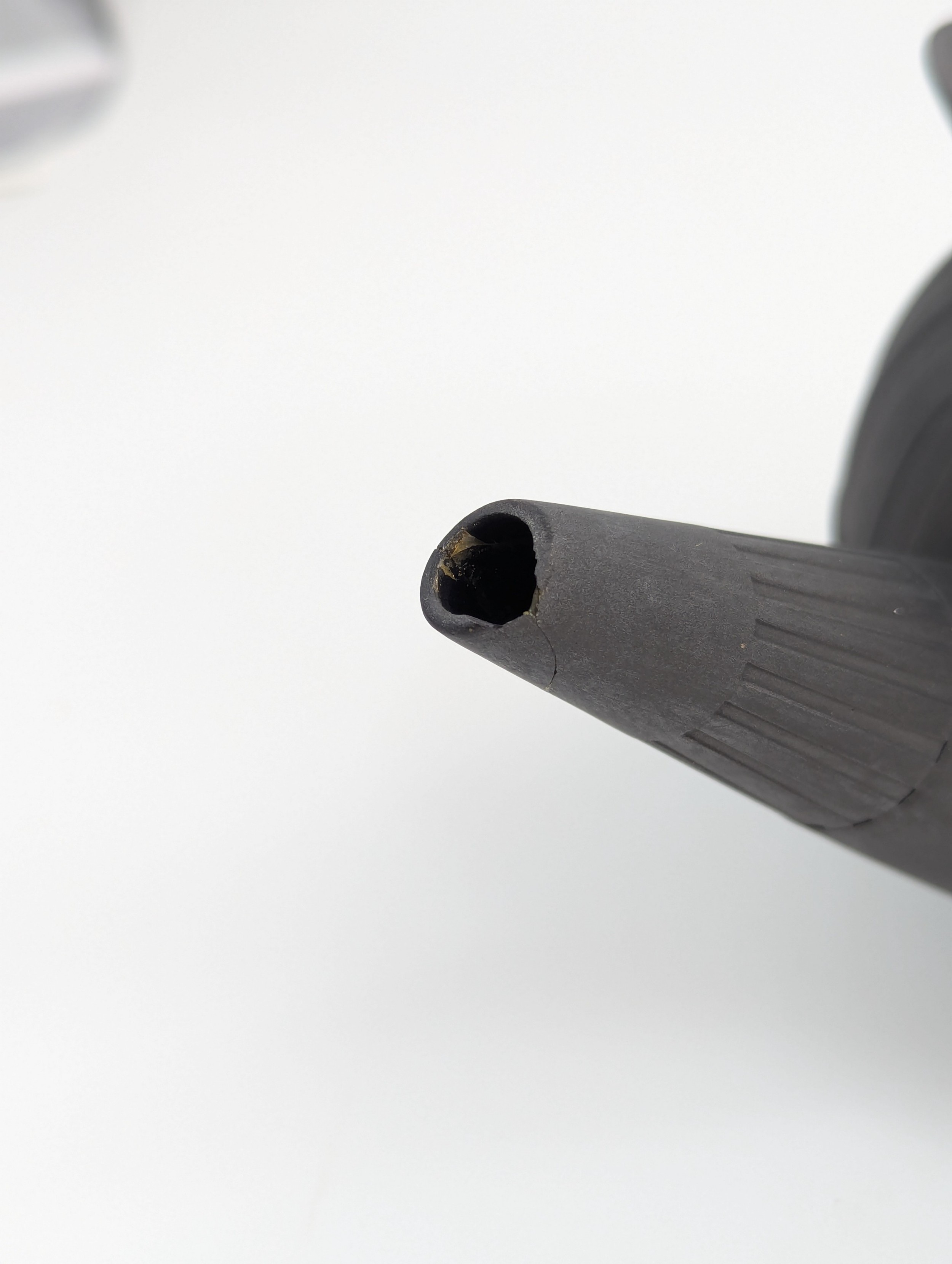
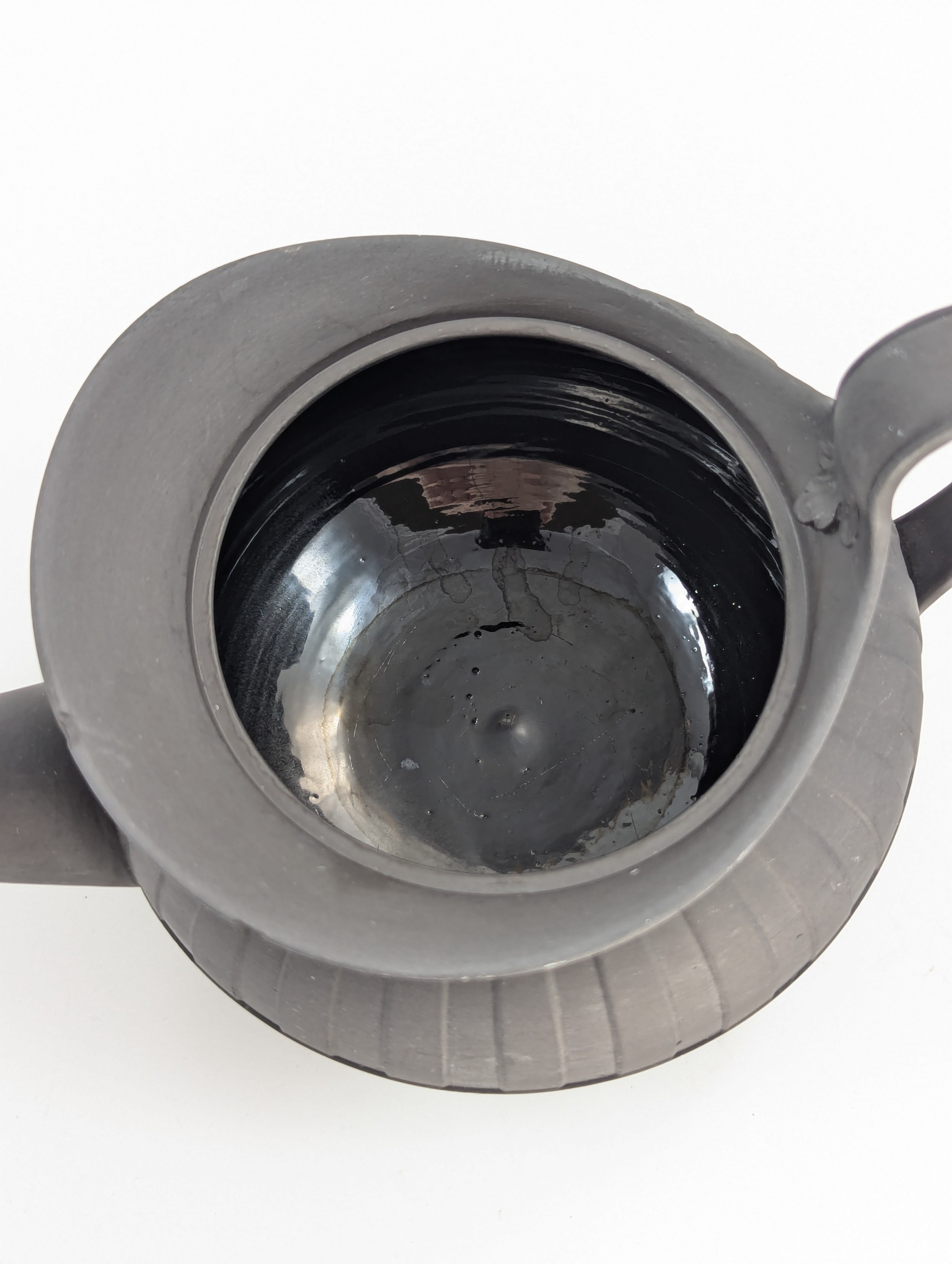
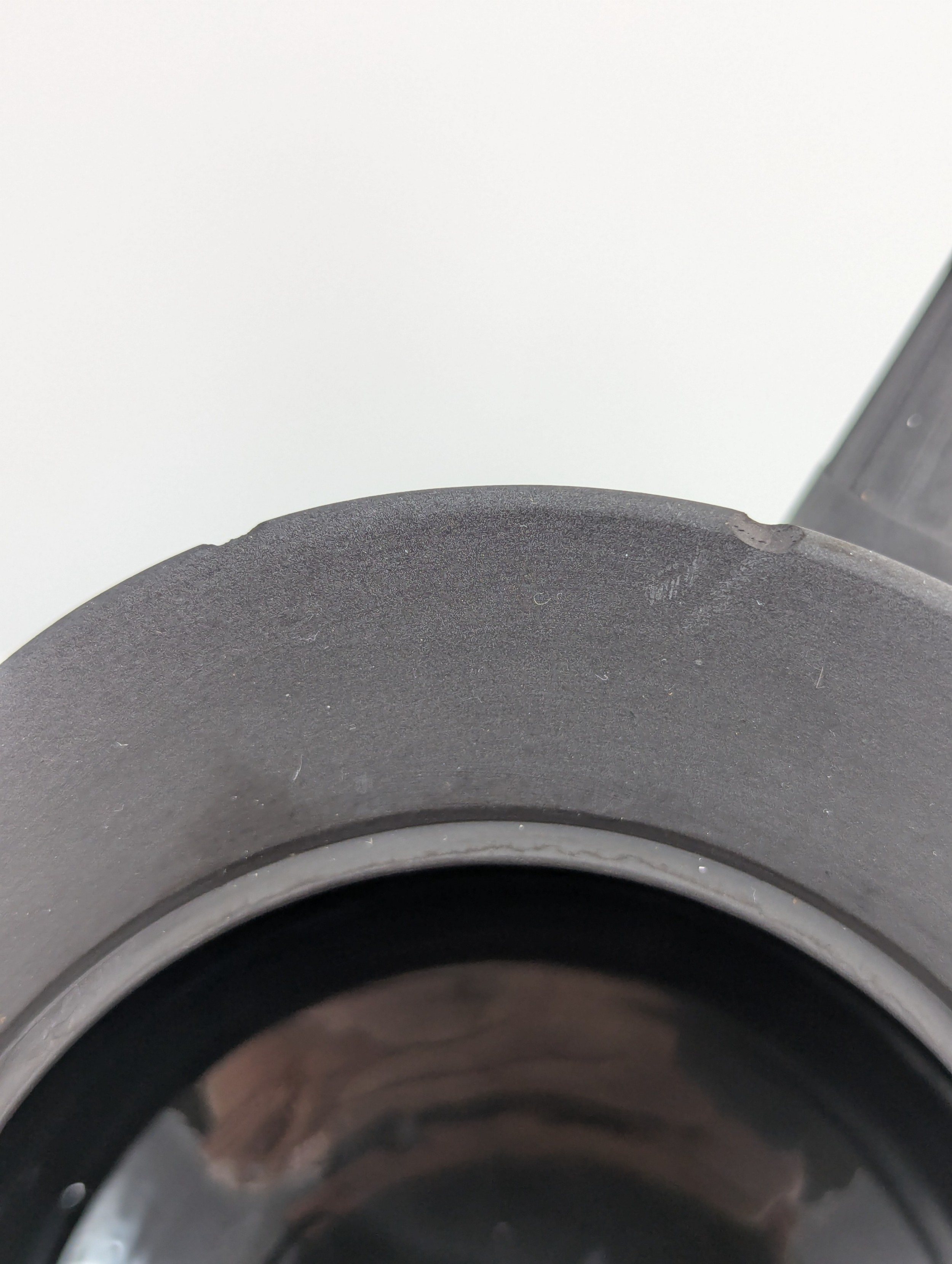
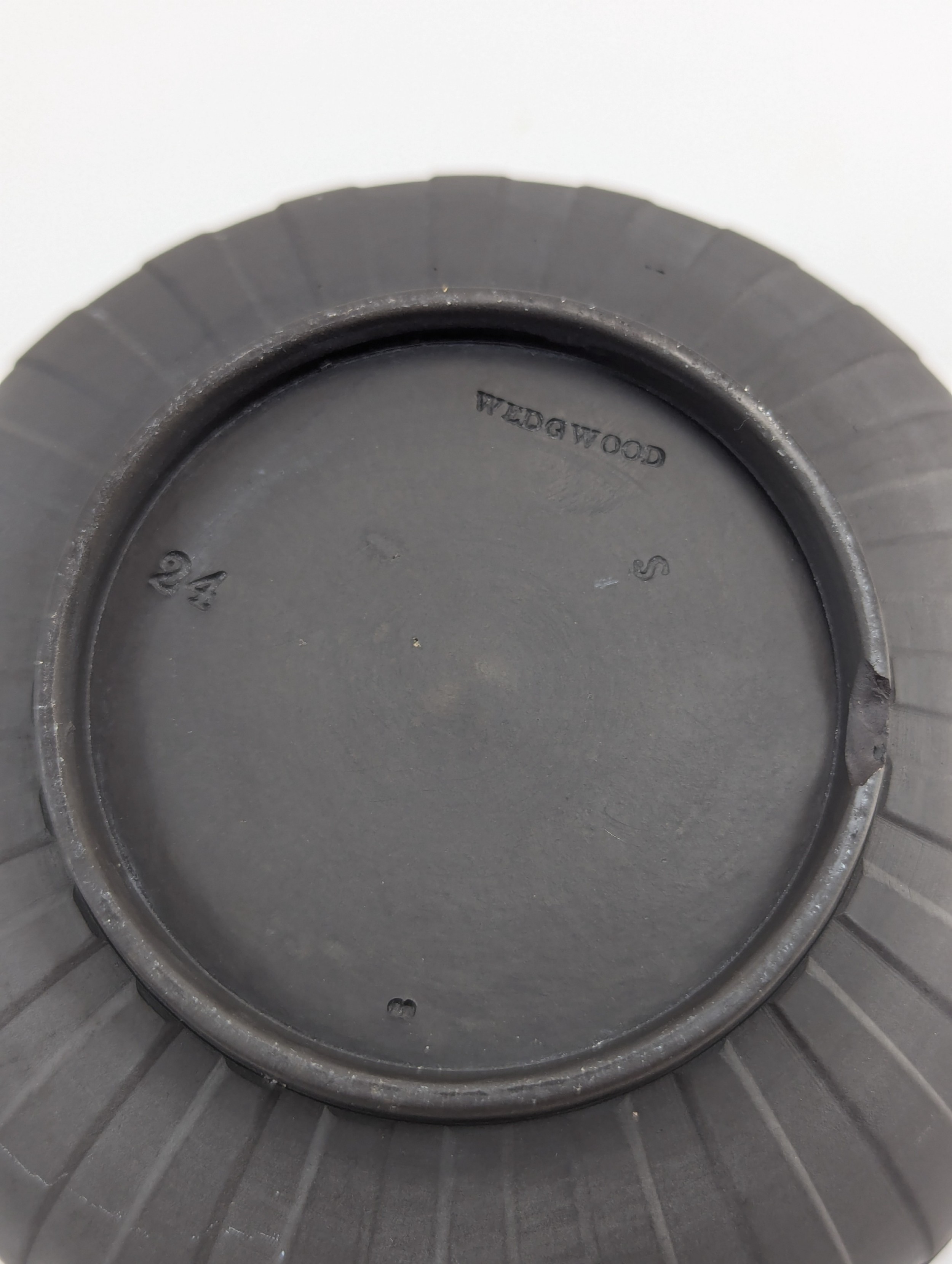
Condition: Two small chips on the top rim, one chip on the bottom rim, and a chip on the tip of the spout. The end of the spout has been restored. Otherwise, the teapot is in good antique condition.
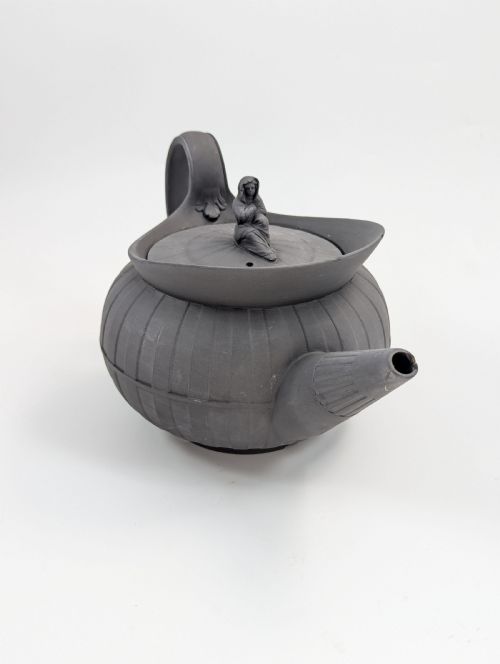
Please examine the accompanying photographs carefully, as they form an integral part of this description. The item will be shipped with full tracking and insurance. Please note that shipping costs include labor, packaging, and postage.

Declaration

Gillers Antiques Ltd has dated this Wedgwood Black Basalt Teapot to the 18th Century.

Reference Numbers
Sellingantiques Reference
SA1088927
Description
This exquisite antique Wedgwood teapot, crafted in the late 18th century, is made of black basalt, a material long recognized as one of the firm's finest creations.
The teapot features an engine-turned body with a rare basket weave design that adorns the body, spout, and handle.
Gillers Antiques Ltd

It has a C-shaped ear handle, a straight spout, and a raised rim. The body of the pot is divided into two halves by horizontal bands, with both halves and the spout decorated with cannelures. The cover is topped with a knob in the form of a seated, draped female figure, often referred to as the "widow."

fig 1. An eighteenth-century Wedgwood black basalt teapot featuring a ribbed stoneware body, high loop handle, and a seated female figure finial on the lid.
fig 1. Antique Wedgwood Black Basalt Teapot, C. 1790

Teapots of this pattern are highly coveted and are exhibited in the most prestigious museums. For example, a similar teapot can be seen in the Victoria and Albert Museum:

https://collections.vam.ac.uk/item/O149003/teapot-josiah-wedgwood-and/

fig 2. An eighteenth-century Wedgwood black basalt teapot featuring a ribbed stoneware body, high loop handle, and a seated female figure finial on the lid.
fig 2. Antique Wedgwood Black Basalt Teapot, C. 1790

Black basalt is a type of pottery made from a mixture of clay and other materials that produce a black body when fired in a kiln. It is turned or press-moulded similarly to other types of pottery. The history of basalt dates back to the Iron Age, when certain clays that naturally fired black were used. In the 18th century, the process was refined, with the best formula being developed by Josiah Wedgwood around 1767. This formula was soon copied, and many companies produced basalt wares during the late 18th and early 19th centuries. Wedgwood continued its production until the late 20th century.

fig 3. An eighteenth-century Wedgwood black basalt teapot featuring a ribbed stoneware body, high loop handle, and a seated female figure finial on the lid.
fig 3. Antique Wedgwood Black Basalt Teapot, C. 1790

Black basalt was popular for several reasons. It resembles ancient bronze, making it suitable for busts; it also resembles ancient Greek vases, which Wedgwood replicated with 'encaustic' painting techniques. Additionally, the dark material highlighted the whiteness of ladies' hands, making it a popular choice for tea wares. The finest basalt is a very refined and beautiful material, highly prized by collectors, especially those with a preference for neoclassical styles. Its ability to take sharp, detailed decoration makes it particularly suited to this style of shape and ornamentation.

fig 4. An eighteenth-century Wedgwood black basalt teapot featuring a ribbed stoneware body, high loop handle, and a seated female figure finial on the lid.
fig 4. Antique Wedgwood Black Basalt Teapot, C. 1790

The Wedgwood Pottery Company has been in operation for over 250 years. Founded in 1759 in England by Josiah Wedgwood, the company quickly gained a reputation for its high-quality pottery and innovative designs. In its early years, Josiah Wedgwood focused on creating new types of pottery to meet the evolving demands of the market. He introduced a variety of new techniques, including transfer printing, which allowed intricate designs to be applied quickly and easily. One of Wedgwood's most famous innovations was the Jasperware line, introduced in the 1770s. Over the years, Wedgwood has continued to innovate and introduce new designs. The company is renowned worldwide for its exceptional pottery and remains a favorite among collectors and enthusiasts.

fig 5. An eighteenth-century Wedgwood black basalt teapot featuring a ribbed stoneware body, high loop handle, and a seated female figure finial on the lid.
fig 5. Antique Wedgwood Black Basalt Teapot, C. 1790

Dimensions: Length from the handle to the tip of the spout: 23.5 cm, Height: 13.5 cm, Depth: 13.5 cm

Condition: Two small chips on the top rim, one chip on the bottom rim, and a chip on the tip of the spout. The end of the spout has been restored. Otherwise, the teapot is in good antique condition.

fig 6. An eighteenth-century Wedgwood black basalt teapot featuring a ribbed stoneware body, high loop handle, and a seated female figure finial on the lid.
fig 6. Antique Wedgwood Black Basalt Teapot, C. 1790

Please examine the accompanying photographs carefully, as they form an integral part of this description. The item will be shipped with full tracking and insurance. Please note that shipping costs include labor, packaging, and postage.

Date of Manufacture

Gillers Antiques Ltd has dated this Wedgwood Black Basalt Teapot to the 18th Century.

Reference Numbers
Sellingantiques Ref
SA1088927
Gillers Antiques Ltd
Sellingantiques verified Since Mar 2023
Dealer Profile

You can view the stock and full dealer information on the Gillers Antiques Ltd Profile Page
PDF SHARE
SAVE
An eighteenth-century Wedgwood black basalt teapot featuring a ribbed stoneware body, high loop handle, and a seated female figure finial on the lid.
1 / 15
Archive I An eighteenth-century Wedgwood black basalt teapot featuring a ribbed stoneware body, high loop handle, and a seated female figure finial on the lid.

Antique Wedgwood Black Basalt Teapot, c. 1790

Archive II An eighteenth-century Wedgwood black basalt teapot featuring a ribbed stoneware body, high loop handle, and a seated female figure finial on the lid. View II
Archive III An eighteenth-century Wedgwood black basalt teapot featuring a ribbed stoneware body, high loop handle, and a seated female figure finial on the lid. View III
Archive IV An eighteenth-century Wedgwood black basalt teapot featuring a ribbed stoneware body, high loop handle, and a seated female figure finial on the lid. View IV
Archive V An eighteenth-century Wedgwood black basalt teapot featuring a ribbed stoneware body, high loop handle, and a seated female figure finial on the lid. View V
Archive VI An eighteenth-century Wedgwood black basalt teapot featuring a ribbed stoneware body, high loop handle, and a seated female figure finial on the lid. View VI
Archive VII An eighteenth-century Wedgwood black basalt teapot featuring a ribbed stoneware body, high loop handle, and a seated female figure finial on the lid. View VII
Archive VIII An eighteenth-century Wedgwood black basalt teapot featuring a ribbed stoneware body, high loop handle, and a seated female figure finial on the lid. View VIII
Archive IX An eighteenth-century Wedgwood black basalt teapot featuring a ribbed stoneware body, high loop handle, and a seated female figure finial on the lid. View IX
Archive X An eighteenth-century Wedgwood black basalt teapot featuring a ribbed stoneware body, high loop handle, and a seated female figure finial on the lid. View X
Archive XI An eighteenth-century Wedgwood black basalt teapot featuring a ribbed stoneware body, high loop handle, and a seated female figure finial on the lid. View XI
Archive XII An eighteenth-century Wedgwood black basalt teapot featuring a ribbed stoneware body, high loop handle, and a seated female figure finial on the lid. View XII
Archive XIII An eighteenth-century Wedgwood black basalt teapot featuring a ribbed stoneware body, high loop handle, and a seated female figure finial on the lid. View XIII
Archive XIV An eighteenth-century Wedgwood black basalt teapot featuring a ribbed stoneware body, high loop handle, and a seated female figure finial on the lid. View XIV
Archive XV An eighteenth-century Wedgwood black basalt teapot featuring a ribbed stoneware body, high loop handle, and a seated female figure finial on the lid. View XV
Enlarged Archival View
Telephone 07738 009924
Location
Buckland House
Buntingford
Hertfordshire
SG9 0PY
United Kingdom
Verified Since Mar 2023
Items For Sale 401
Items Sold 564
Gillers Antiques Ltd
Verified Since Mar 2023
View Dealer Info
Location: Buckland House, Buntingford, Hertfordshire, SG9 0PY, United Kingdom
Verified
Mar 2023
For Sale
401
Sold
564
An eighteenth-century Wedgwood black basalt teapot featuring a ribbed stoneware body, high loop handle, and a seated female figure finial on the lid.
Antique Wedgwood Black Basalt Teapot, c. 1790
Ref: SA1088927
An eighteenth-century Wedgwood black basalt teapot featuring a ribbed stoneware body, high loop handle, and a seated female figure finial on the lid.
Detail View 1
Detail View 2
Detail View 3
Detail View 4
Detail View 5
Detail View 6
Detail View 7
Detail View 8
Detail View 9
Detail View 10
Detail View 11
Detail View 12
Detail View 13
Detail View 14
Archival Detail
Every single antique dealer on our platform is individually approved by our internal team. We verify their professional trade history, ethical standards, and photographic quality to ensure a secure, high-standard buying environment. Upon joining, every dealer agrees to a strict 9-point code of conduct. While issues can occasionally arise, our dealers typically resolve them swiftly and directly with the buyer. In fact, since our founding in 2002, Sellingantiques has only had to step in to help resolve an issue on roughly five occasions—a true testament to the quality of our dealers and their dedication to your happiness.
Our dealers are highly experienced in packing and shipping fragile, high-value antiques. Because you are in direct contact with the dealer, you will be able to easily go through all available shipping and insurance options together to ensure your item arrives safely.
Antiques are the ultimate green purchase. By choosing historical pieces over newly manufactured goods, you completely eliminate the carbon footprint of modern mass production while preserving exceptional, timeless craftsmanship.

Black basalt is a dense, unglazed stoneware developed by Josiah Wedgwood in the late eighteenth century, inspired by ancient Etruscan and Roman pottery traditions.

These vessels were crafted using iron-rich clay combined with manganese oxide, often shaped on a lathe or moulded, with decorative engine-turned fluting added prior to high-temperature firing.

Authentic pieces feature crisp lathe-turned ribbing, a smooth matte surface texture, and impressed maker marks such as WEDGWOOD in upper-case serif lettering.

The dark sculptural form of basaltware creates strong visual contrast against light-coloured backdrops, making it suitable for display on floating shelving, sideboards, or inside glass cabinets.

Clean gently with warm water and a soft microfibre cloth, avoiding harsh chemicals or prolonged immersion, and preserve the original matte surface without harsh abrasives.
items
Add keywords to the filter
Price
£100
£250000
Era
Movements
Material
Origin
Stock Location
Freshness
Online Payments
Categories