


English Porcelain Tea Pot
An english porcelain tea pot brings the warmth of eighteenth and nineteenth century domestic rituals straight to the table.
English Porcelain Tea Pot
An english porcelain tea pot represents centuries of domestic ceramic history, spanning Georgian, Victorian, and Regency periods. When searching for an english porcelain tea pot, buyers encounter diverse forms ranging from soft-paste bodies to later felspar porcelain and ceramic tea vessels.
The objects on this page include eighteenth century Worcester pieces alongside nineteenth century Derby, Spode, and Coalport items. Alongside traditional teapots, related forms such as sucriers and coffee services frequently appear in the listings.
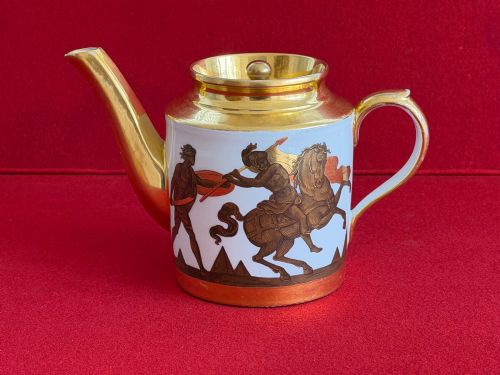
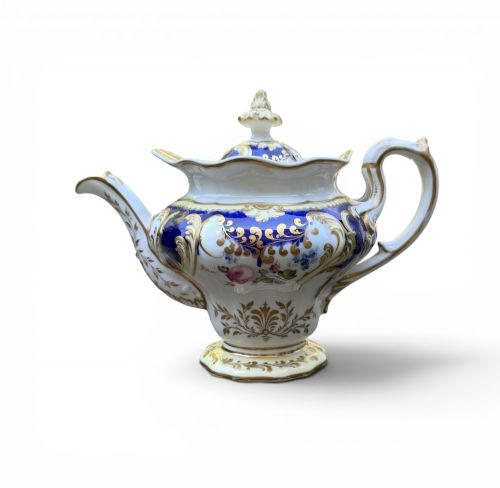
Early examples showcase intricate hand-painted motifs like the fence pattern or chinoiserie designs under cobalt glaze. Later nineteenth century pieces introduce bolder gilding and rococo revival styling that shifted aesthetic preferences in British homes.
Materials and construction
Makers utilised soft-paste porcelain and standard ceramic bodies, shaping vessels by hand or mould before applying delicate cobalt underglaze decoration. Skilled artisans then incorporated gold leaf and meticulous gilding to highlight handles, spouts, and rims.
Firing techniques evolved significantly across the Georgian and Victorian eras, moving from early Worcester compositions to the robust felspar porcelain seen in later Spode and Coalport productions. Enamel pigments were fixed through precise kiln work to achieve lasting brilliance on the surface.
Listings feature porcelain pieces spanning from the eighteenth century through the Victorian era, including works from Worcester, Spode, and Coalport.
Assessing quality
Quality reveals itself in the crispness of the underglaze cobalt painting and the precision of the gilding applied to the porcelain body. Early pieces with well-documented factory marks demonstrate superior artistic execution compared to unmarked or later mass-produced alternatives.
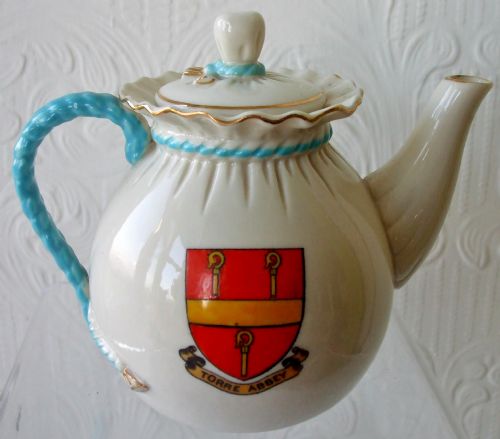
Thomas Wolfe Staffordshire·W.H. Goss·Coalport·Spode·Derby Porcelain·New Hall Porcelain
The English Porcelain Tea Pot Glossary
- Soft-paste porcelain
- An early artificial ceramic composition made from glass frit and white clay, fired at lower temperatures than hard-paste porcelain. It often displays a warm, slightly creamy body and distinctive glaze pooling.
- Cobalt underglaze
- A blue pigment applied to ceramic vessels before the final glaze and high-temperature firing, ensuring the colour sinks permanently into the material. This technique prevents the design from wearing away with daily use.
- Felspar porcelain
- A refined ceramic body introduced in the nineteenth century containing substantial amounts of feldspar. This innovation increased durability and created a brilliant white ground ideal for rich gilding.
- Sucrier
- A dedicated lidded vessel designed specifically for holding sugar during tea service. These match the aesthetic and material of the accompanying teapot.
- Blue Crescent
- An early factory mark hand-painted underneath Worcester porcelain pieces. It serves as a primary indicator of eighteenth century production.
- Gilding
- The application of gold leaf or powdered gold to ceramic surfaces for decorative enhancement. On better pieces, this metal layer is burnished to a bright finish.
English Porcelain Tea Pot: Frequently Asked Questions
How do I date an old teapot?
Dating relies on identifying factory marks, stylistic traits, and the specific ceramic body used in construction. Eighteenth century items often feature hand-painted underglaze blue, while Victorian examples lean towards heavier gilding and moulded rococo forms.
Examining the base and interior crazing provides additional clues regarding the manufacturing decade and workshop origin.
Can I use these teapots daily?
Most antique porcelain teapots are fragile museum pieces or display items rather than robust vessels for everyday tea preparation. Thermal shock from boiling water can crack delicate historical bodies, particularly on soft-paste pieces from the seventeen-hundreds.
Gentle handling and careful display preserve the enamel decorations and delicate spouts from accidental damage.
What is a sucrier?
A sucrier is a small lidded pot created to hold lump or granulated sugar during formal tea service. They mirror the patterns and materials of the main teapot to maintain a unified table setting.
Collectors prize matching sucriers as vital completions of historical tea services.
How do I clean antique porcelain?
Cleaning should be restricted to very gentle dusting with a soft, dry cloth to protect fragile surface gilding. Harsh detergents, scrubbing brushes, and immersion in water risk removing centuries-old enamel and gold leaf.
Professional conservation advice is recommended if deeper cleaning becomes necessary.