



Regency Ceramic Teapot
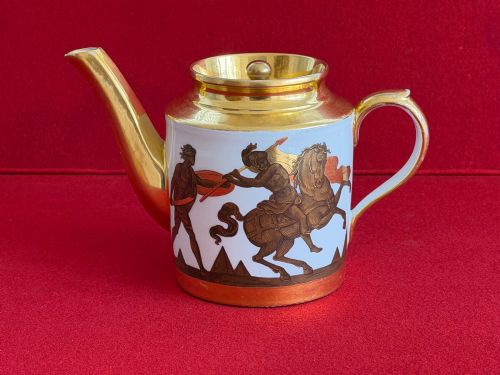
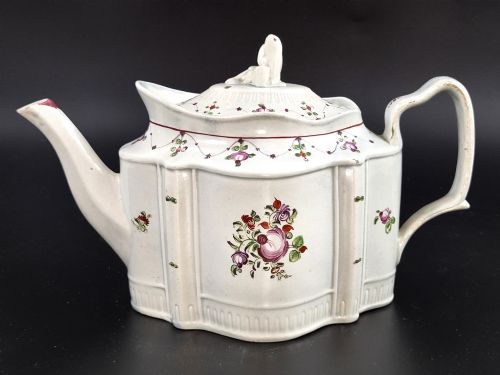
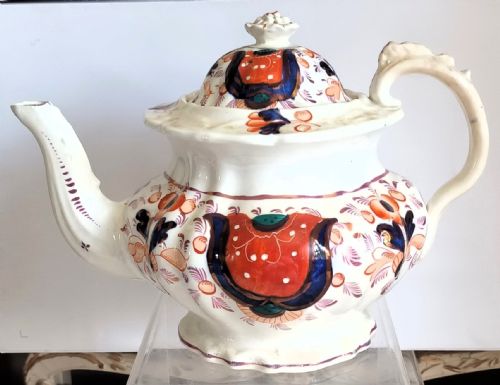
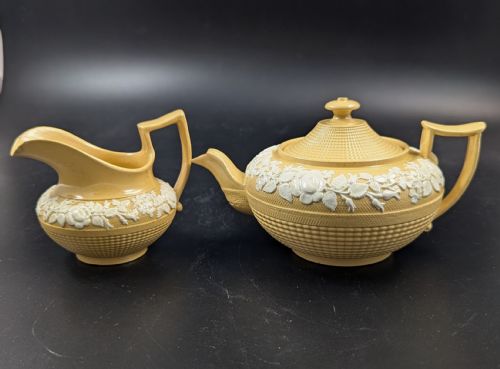
These regency ceramic teapot examples offer a glimpse into early nineteenth century tea service design, prized for their distinctive earthenware and porcelain forms.
Regency Ceramic Teapot
A regency ceramic teapot brings together functional tea service items from the nineteenth century, Georgian, and Regency periods. The forms range from standard teapots to commode shapes, octagonal silhouettes, and miniature toy versions.
Most items you encounter on this page span the early decades of the 1800s, constructed in earthenware, pearlware, and porcelain. These vessels reflect the domestic habits and decorative tastes of the Georgian era.
How they were made
Potters utilised materials such as earthenware, porcelain, and white stoneware to form the body of each vessel. Decoration relied on enamel paints, transfer printing, and lustre glaze techniques.
Finishing touches often included gilding and applied details like the widow finial. Individual pieces demonstrate specific factory methods from Staffordshire makers and English potteries.
A mourning figure perched on top of an earthenware pot serves as the widow finial.
What varies in quality
Quality rests upon the crispness of the moulding, particularly on octagonal or commode-shaped bodies where sharp lines define the silhouette. Finer examples display precise transfer printing and hand-painted enamel patterns.
The refinement of the ceramic body itself, whether translucent porcelain or dense ironstone, distinguishes standard utilitarian output from decorative cabinet pieces like miniature toy teapots.
Derby Porcelain·Thomas Wolfe·Wedgwood·Spode·Thomas Harley
The Regency Ceramic Teapot Glossary
- Pearlware
- A fine earthenware developed by Josiah Wedgwood that featured a subtle blueish glaze pooling in crevices to mimic Chinese export porcelain. It gained widespread popularity during the Georgian period.
- Lustre Glaze
- A metallic film applied to ceramics to impart a reflective, copper or silver sheen upon firing. This technique decorated many early nineteenth century tea wares.
- Transfer Printing
- A method of applying detailed designs to ceramic surfaces by pressing paper engravings coated in metallic oxides onto the biscuit or glazed ware. It allowed for intricate multi-coloured scenes.
- Widow Finial
- A small knob on the lid of a teapot, shaped like a mourning figure. These details frequently appeared on English earthenware tea vessels.
Regency Ceramic Teapot: Frequently Asked Questions
What periods do these teapots date from?
The pieces span the early nineteenth century, primarily covering the Regency and Georgian eras around eighteen hundred to eighteen thirty. This timeframe captures distinct shifts in British ceramic production.
Potters during this window experimented heavily with new bodies like ironstone and pearlware alongside traditional porcelain and earthenware.
How were toy teapots used?
Toy teapots and miniature tea sets served as children's playthings or as cabinet display pieces for collectors. Their smaller scale mirrored full-sized tea service items of the period.
Despite their diminutive size, these pieces received the same decorative attention, including transfer printing and enamel painting, as larger vessels.
What materials make up these teapots?
Makers employed earthenware, porcelain, white stoneware, and pearlware to construct the bodies of these vessels. Surfaces were frequently enhanced with enamel, lustre glaze, and gilding.
Transfer printing also provided complex patterns across both utilitarian teapots and decorative toy sets.
How do I identify a Regency teapot?
Regency teapots often feature specific regional silhouettes such as commode shapes, octagonal forms, or conversation designs. Examining the glaze and decorative transfer prints helps align them with early nineteenth century production.
Maker attribution relies on factory styles, patterns, and occasional recorded factory names from the era.