


Antique Ceramic Tea Pot
An antique ceramic tea pot brings the warmth of eighteenth- and nineteenth-century parlours to a modern table.
Antique Ceramic Tea Pot
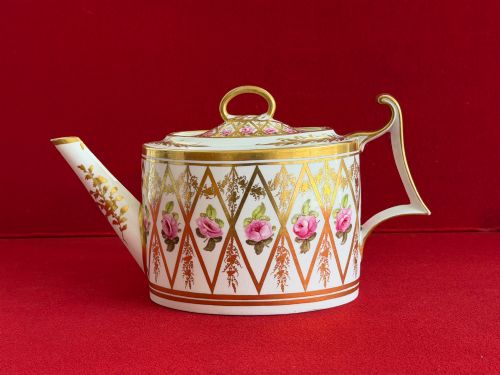
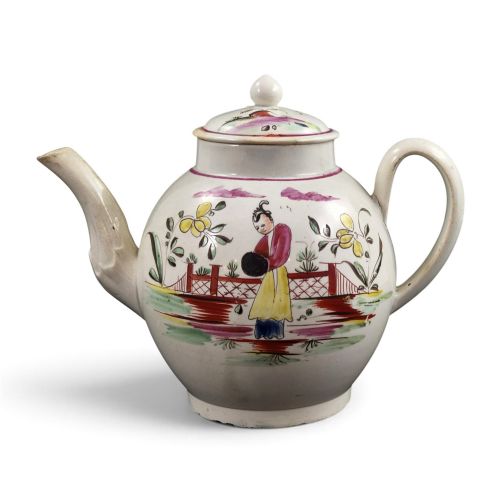
An antique ceramic tea pot embodies centuries of social ritual, evolving from small porcelain vessels imported from the East to robust earthenware and ironstone pots produced across English and European kilns. When searching for an antique ceramic tea pot, buyers encounter everything from delicate eighteenth-century porcelain painted with chinoiserie motifs to heavy nineteenth-century creamware, bargeware, and transfer-printed ironstone.
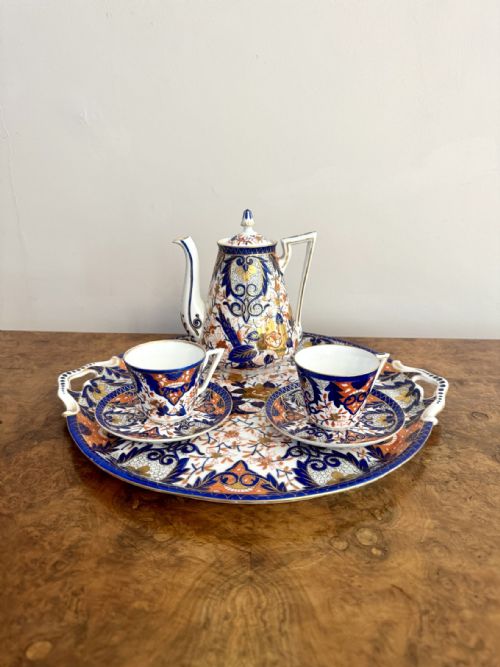
The pieces on this page span the Georgian, Victorian, and Edwardian periods, alongside earlier eighteenth-century examples and items stretching into the early twentieth century. Forms range from standard domestic tea pots to double-spouted agateware, posset pots, and complete tea and coffee sets accompanied by matching sucriers.
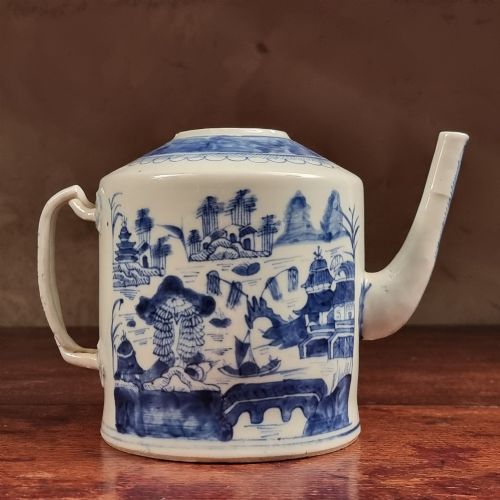
English factories such as Worcester, Spode, Wedgwood, and Masons dominate the selection, sitting alongside Chinese export pieces and continental European porcelain. Buyers are most likely to meet nineteenth-century transfer-printed designs and robust ironstone or porcelain bodies intended for daily use in period households.
How they were made
Potters shaped these vessels using a combination of throwing on the wheel, pressing into moulds, and hand-modelling intricate spouts and handles. Materials varied widely depending on the desired durability and refinement, utilising soft-paste porcelain, hard-paste porcelain, creamware, stoneware, earthenware, and heavy ironstone.
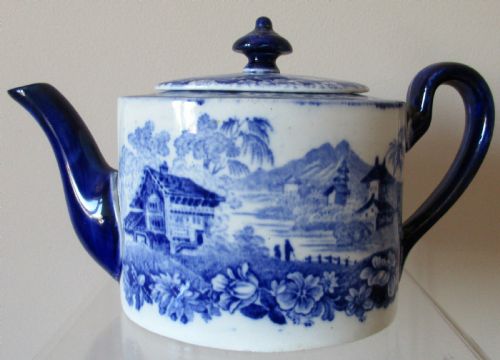
Decoration required skilled hand-painting, transfer printing in blue and white, or the application of enamel colours and gold leaf gilding. Many eighteenth- and nineteenth-century pots received clear lead glazes or tin glazes, while later Victorian pieces incorporated majolica glazes and applied decorative reliefs.
Listings span the eighteenth, nineteenth, and early twentieth centuries, featuring earthenware, stoneware, porcelain, and soft-paste porcelain.
What varies in quality
Quality rests upon the crispness of the moulding, the fineness of the ceramic body, and the precision of the hand-painted or transfer-printed decoration. Early porcelain bodies show a distinct translucency and careful potting, whereas utilitarian earthenware and ironstone focus on robust construction and bold decorative impact.
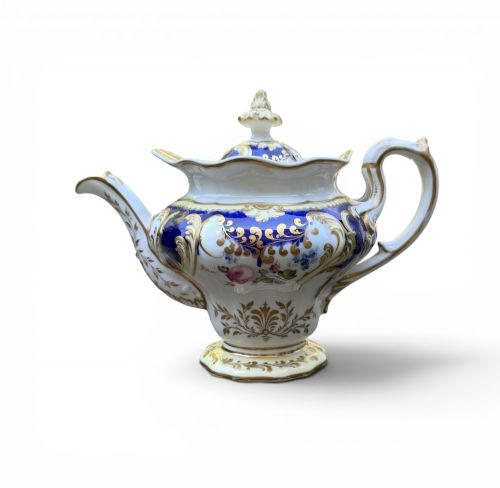
The artistic merit of the hand-painted enamels, the preservation of original gold leaf gilding, and the survival of matching lids determine the standing of an individual piece. Finer examples display meticulous attention to detail in chinoiserie scenes, floral patterns, and moulded relief work.
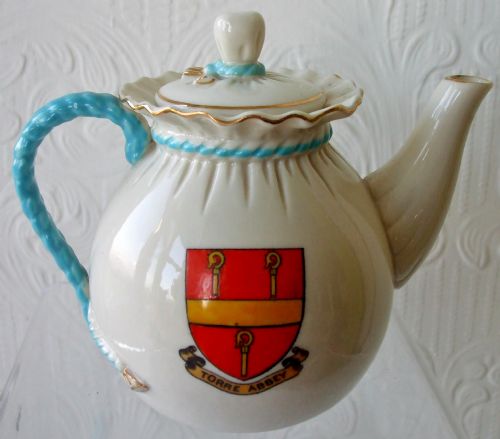
Derby Porcelain·W.H. Goss·Mintons·Spode·Mason·Coalport·Wedgwood·Enoch Wood and Sons·Russian Imperial Porcelain Manufactory·Joseph Holdcroft
The Antique Ceramic Tea Pot Glossary
- Creamware
- A fine light-coloured earthenware developed in the eighteenth century, glazed with a transparent lead glaze that yields a warm cream hue. It replaced heavier salt-glazed stonewares on many dining tables.
- Transfer printing
- A decoration technique where an engraved copper plate transfers a design onto tissue paper, which is then stamped onto the ceramic biscuit before glazing. This method allowed intricate blue and white patterns to be produced consistently.
- Soft-paste porcelain
- An artificial porcelain compound composed of white clay and powdered glass, fired at lower temperatures than hard-paste porcelain. It produces a warm, slightly creamy body favoured by eighteenth-century English factories.
- Sucrier
- A small covered pot or bowl designed specifically for holding lump or granulated sugar during tea service. These matching pieces frequently accompany tea pots in ceramic and porcelain sets.
- Ironstone
- A dense, durable type of earthenware patented in the nineteenth century to imitate Chinese porcelain. It resists chipping and forms the sturdy body of many large family tea pots.
Antique Ceramic Tea Pot: Frequently Asked Questions
How do I date an old tea pot?
Dating relies on identifying the factory mark stamped or painted on the base, alongside the stylistic characteristics of the handle, spout, and body shape. Material composition, such as the difference between soft-paste porcelain and ironstone, also narrows the production window.
Comparing the decorative motifs, such as transfer-printed scenes versus hand-painted enamel florals, helps place the vessel within specific Georgian or Victorian periods.
Can I still brew tea in these pots?
Using antique ceramic tea pots for daily brewing is generally discouraged due to the fragile nature of historic glazes and aged ceramic bodies. Thermal shock from boiling water can easily crack eighteenth- or nineteenth-century material.
hairline fractures or old restorations may also weaken under heat and moisture, making these pieces better suited for display than active kitchen use.
What is the difference between porcelain and earthenware pots?
Porcelain is fired at extremely high temperatures, producing a dense, vitrified body that is often translucent and rings when tapped. Earthenware is fired at lower temperatures, resulting in a porous, opaque structure that requires a complete glaze to remain watertight.
Earthenware pots, such as creamware and ironstone, tend to be heavier and thicker than their delicate porcelain counterparts.
Why do some tea pots have matching sugar bowls?
Matching sugar bowls, often called sucriers, formed part of coordinated tea and coffee services designed for formal entertaining in wealthy households. These sets ensured uniform decoration across every vessel displayed on the parlour table.
Surviving complete sets with their original sucriers and tea pots remain particularly valued by collectors today.