
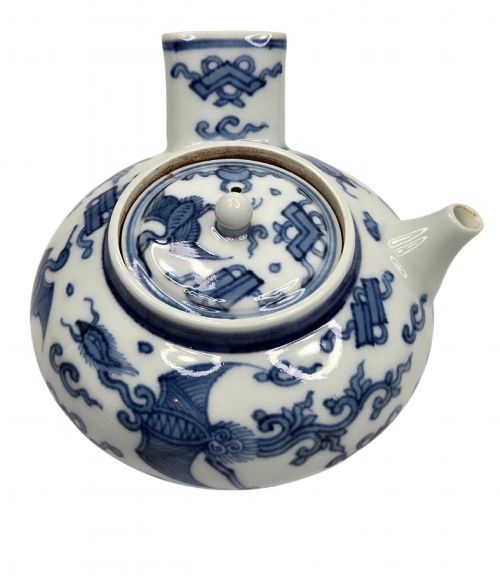


Blue White Ceramic Teapot
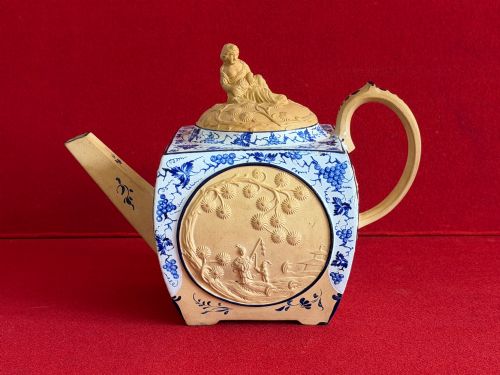
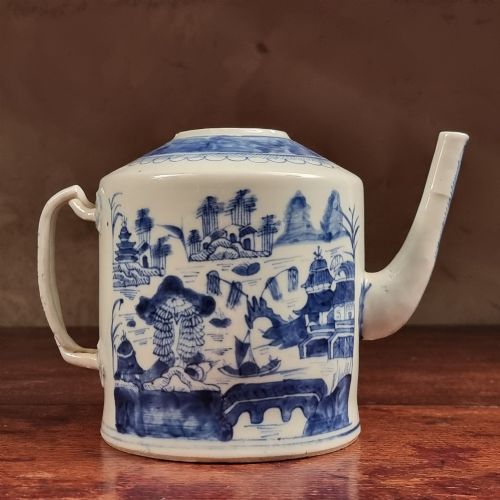
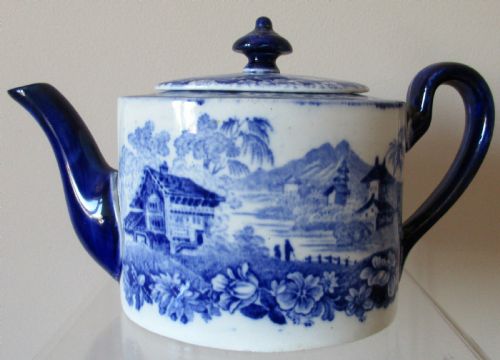
These blue white ceramic teapot examples bring together centuries of cobalt decoration from English potteries and Asian export kilns.

Blue White Ceramic Teapot
A blue white ceramic teapot covers utilitarian vessels produced across the eighteenth and nineteenth centuries in both European and Asian traditions. The pieces appearing here range from early English transfer-printed earthenware to delicate Chinese export porcelain and Japanese side-handled forms.
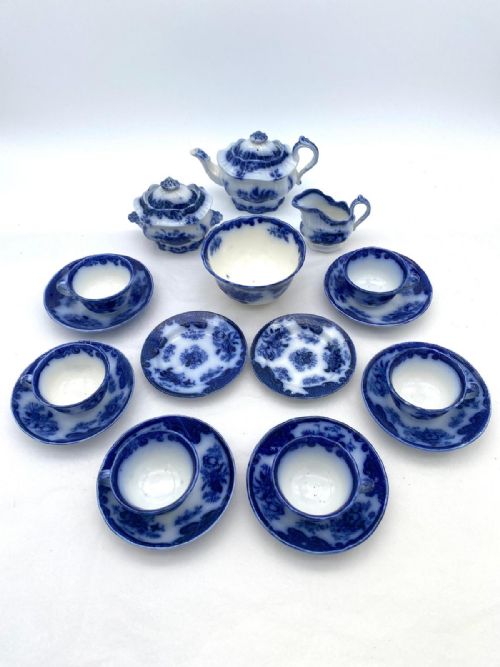
The dominant varieties on this page cross Georgian and Victorian eras, alongside Qing Dynasty styles and Meiji period Japanese pieces. Collectors encounter everything from miniature childs tea services to octagonal shapes decorated with traditional cobalt underglaze motifs.
Materials and production methods
Potters relied on ceramic bodies spanning earthenware, soft-paste porcelain, and hard-paste porcelain, finished with lead glaze or standard transparent glaze. Cobalt pigment and cobalt glaze provided the intense blue ornamentation applied beneath the surface before firing.
Transfer printing and hand painting dominated the decoration, allowing makers to apply intricate patterns like the Fence design or the Genevese pattern directly onto the clay body. Some English examples incorporate silver collars or gilt highlights to enhance the finished form.
Blue White Ceramic Teapot Retail Price Guide 2026
Typical asking prices for blue white ceramic teapot among the pieces listed under this phrase on Sellingantiques today, from the lower quarter to the upper quarter. They describe what is for sale here now, not the wider market.
Materials documented across the inventory include earthenware, soft-paste porcelain, and specialised cobalt pigments.
Assessing quality in blue white ceramics
The precision of the cobalt underglaze painting distinguishes standard production from exceptional work, particularly where fine brushwork defines traditional Chinese export or early Worcester pieces. Clarity in transfer-printed scenes such as Flow Blue indicates careful control during the kiln firing.
The finesse of the ceramic body itself sets the range, moving from heavier earthenware vessels to translucent porcelain. Surviving covers and handles intact alongside balanced proportions elevate the standing of any individual pot.
Copeland·Mintons·Enoch Wood and Sons·Wedgwood
The Blue White Ceramic Teapot Glossary
- Cobalt Underglaze
- A blue pigment applied to the unfired ceramic body before glazing and high-temperature firing. This technique ensures the decoration remains permanent and protected beneath the glassy surface.
- Flow Blue
- A nineteenth-century transfer-printed earthenware style where the blue pigment intentionally blurred slightly during firing. This created a soft, misty halo effect around the printed pattern.
- Soft-paste Porcelain
- An artificial porcelain composition fired at lower temperatures than hard-paste porcelain. It was widely used by eighteenth-century English factories such as Worcester.
- Sometsuke Yokode Kyuusu
- A Japanese ceramic teapot featuring a side handle and blue and white underglaze decoration. This form allows for a distinct pouring action compared to traditional loop-handled vessels.
- Transfer Printing
- A method of applying detailed designs to ceramics by engraving a copper plate, pulling the image on tissue paper, and pressing it onto the clay. It revolutionised pottery production in Georgian and Victorian England.
Blue White Ceramic Teapot: Frequently Asked Questions
How do I date a blue white teapot?
Dating relies on combining the stylistic period, the ceramic body type, and any factory marks found on the base.
Changes in glaze thickness and transfer printing clarity also help distinguish eighteenth-century pieces from later Victorian production.
Are these teapots safe for daily use?
Most antique pots function adequately, but older glazes can be fragile and thermal shock may cause hairline cracks.
Collectors generally treat antique ceramic teapots as display pieces rather than everyday kitchenware.
What is the difference between porcelain and earthenware?
Porcelain is dense, vitreous, and often slightly translucent, whereas earthenware is more porous and opaque.
English factories used earthenware for sturdy transfer-printed domestic wares while porcelain suited finer, more delicate tea services.
Why is the blue sometimes blurred?
Blurring in styles like Flow Blue was an intentional aesthetic choice achieved by introducing lime or ammonia vapour into the kiln.
In older underglaze painting, slight bleeding simply reflects the natural behaviour of cobalt pigment under high heat.