


Antique Blue White Teaware
These antique blue white teaware pieces bring cobalt and white porcelain into your home with centuries of history behind them.
Antique Blue White Teaware
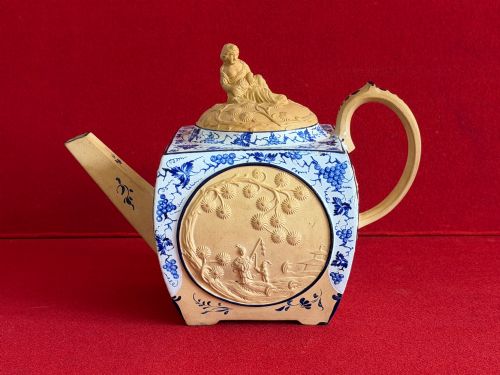
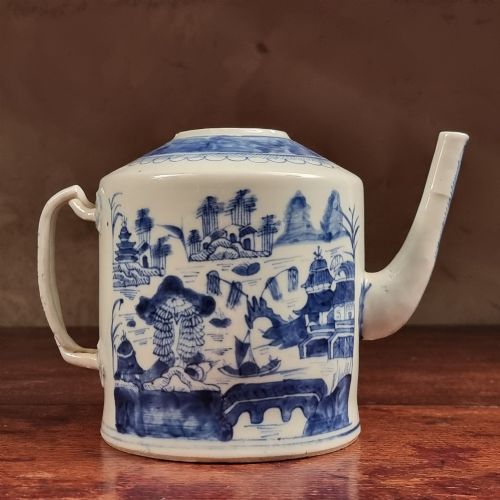
When you search for antique blue white teaware, you are looking at ceramic vessels designed for serving and drinking tea across the eighteenth and nineteenth centuries. The pieces on this page span Georgian and Victorian periods, including Chinese export wares and English factory productions.
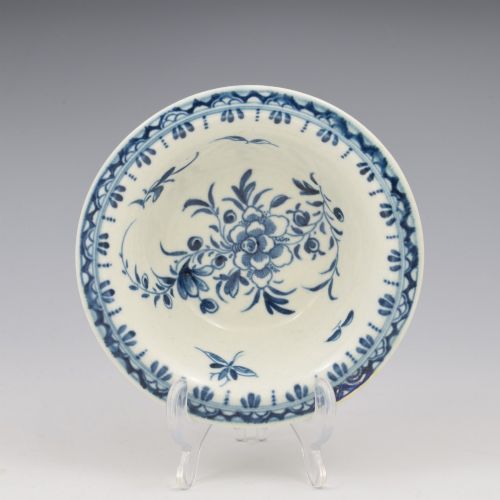
You will most commonly encounter eighteenth-century Worcester porcelain alongside nineteenth-century earthenware and transfer-printed sets. Forms range from tea bowls and saucers to teapots and coffee cups, often decorated with Chinoiserie scenes or cobalt underglaze patterns.
The category covers both delicate soft-paste porcelain tea bowls meant for quiet drawing rooms and robust earthenware pots intended for daily service. Each piece reflects the enduring appeal of cobalt decoration on white ceramic backgrounds across successive eras.
How they were made
Potters applied cobalt glaze directly beneath a clear ceramic coating before firing the pieces at high temperatures to achieve the signature deep blue colour. This cobalt underglaze technique ensured the pigment remained permanent and protected beneath the glassy surface.
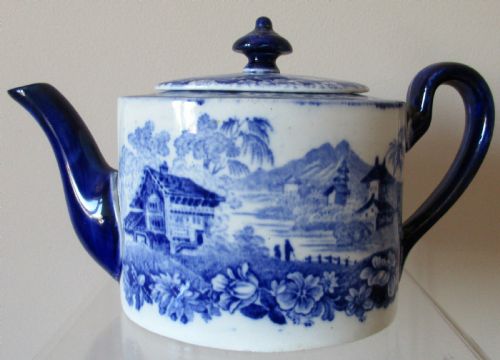
English factories like Worcester utilised soft-paste porcelain or ceramic bodies shaped by hand or moulded, while transfer printing later allowed intricate designs such as the Genevese pattern to be mechanically applied to earthenware.
Listings feature eighteenth-century and nineteenth-century pieces, spanning Georgian and Victorian periods with materials including soft-paste porcelain, earthenware, and cobalt glaze.
What varies in quality
The distinction between ordinary and exceptional pieces lies in the crispness of the cobalt painting and the delicacy of the ceramic body. Early Worcester porcelain displays fine potting and carefully hand-drawn motifs, whereas later transfer-printed wares achieve precision through mechanical transfer.
A high-quality piece retains clear underglaze cobalt tones without running or blurring into the white background. The finesse of the moulding and the translucency of the porcelain further distinguish superior examples from standard table ceramics.
Dr Wall Worcester·Mintons
The Antique Blue White Teaware Glossary
- Soft-paste porcelain
- An early ceramic composition fired at lower temperatures than true hard-paste porcelain, creating a warm, slightly creamy body. It was widely used by eighteenth-century English factories.
- Cobalt underglaze
- A blue metallic oxide pigment applied to the unfired ceramic body before glazing and firing. This method locks the colour permanently beneath the clear protective coating.
- Chinoiserie
- A European artistic style reflecting Chinese motifs and imaginary landscapes, popular on eighteenth-century porcelain. Painters adapted these whimsical scenes for tea bowls and teapots.
- Transfer printing
- A mechanical method of applying complex patterns to ceramics by transferring engraved paper designs onto the biscuit ware. It revolutionised production during the nineteenth century.
- Tea bowl
- A small, handleless cup used for drinking tea during the eighteenth century before teacups with handles became standard. They are frequently found paired with matching saucers.
Antique Blue White Teaware: Frequently Asked Questions
How do I use antique teaware?
Most collectors display these pieces rather than use them for daily brewing, particularly fragile eighteenth-century soft-paste porcelain and early tea bowls. If you do use them, wash them gently by hand in lukewarm water without harsh detergents.
Sudden temperature changes can crack aged ceramics, so avoid pouring boiling water directly into freezing cold vessels. Treating them with care preserves both the glaze and any delicate cobalt painted details.
Are tea bowls different from teacups?
Tea bowls are small, handleless vessels designed to be held in the hands to sip hot tea. They date primarily to the eighteenth century when tea was poured from large teapots into these compact bowls.
Later Victorian developments introduced handles, transforming the form into the standard teacup. Finding a tea bowl with its original saucer remains a treat for collectors.
How do I date blue and white ceramics?
Dating relies on identifying the material, manufacturing technique, and factory marks such as the blue crescent found on early Worcester pieces. Soft-paste porcelain and hand-painted Chinoiserie typically point to the eighteenth century.
Nineteenth-century pieces often utilise transfer printing on earthenware or refined porcelain, accompanied by named patterns like Genevese or Bengal Tiger. Comparing the style of the decoration to documented factory periods helps narrow down the decade.
What is transfer printing?
Transfer printing is a technique where an engraved copper plate prints a design onto tissue paper, which is then pressed onto the ceramic body. This allowed factories to produce intricate pictorial scenes rapidly.
Popularised in the nineteenth century, this method created the detailed repeating patterns seen on many Victorian blue and white teapots and dishes.