
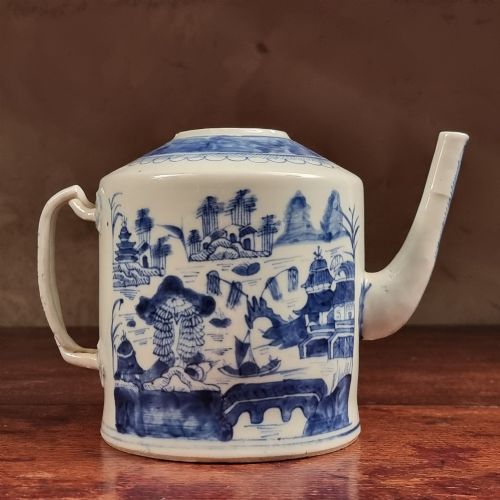


18th Century Porcelain Teapot
An 18th century porcelain teapot brings the height of Georgian table culture into a modern interior.
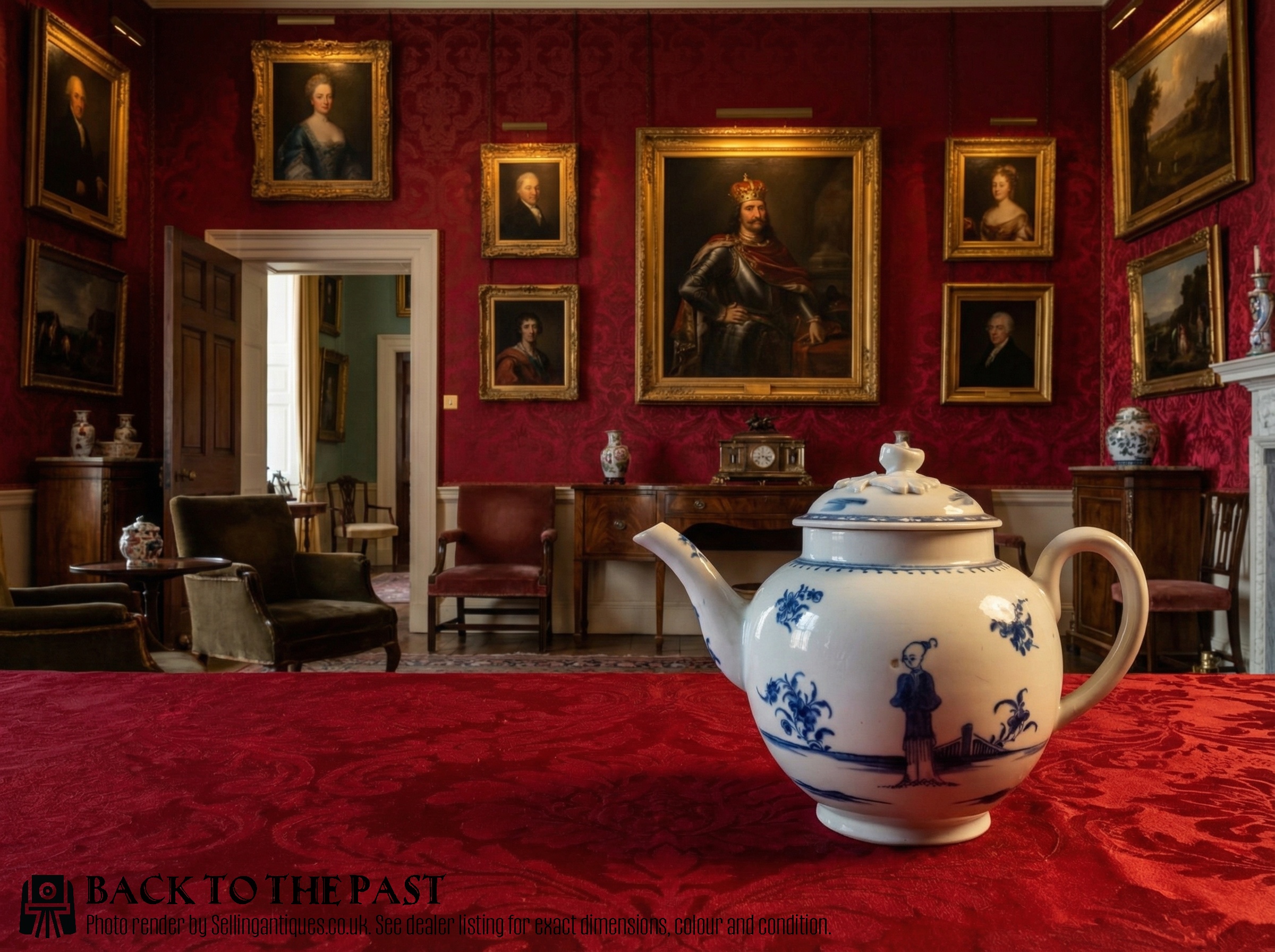
What 18th century porcelain teapot pieces are
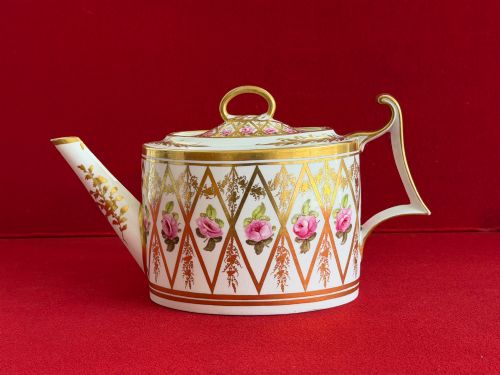
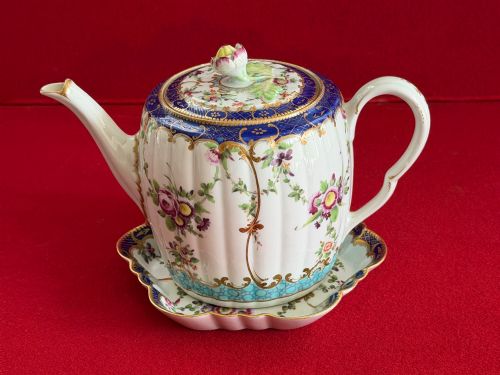
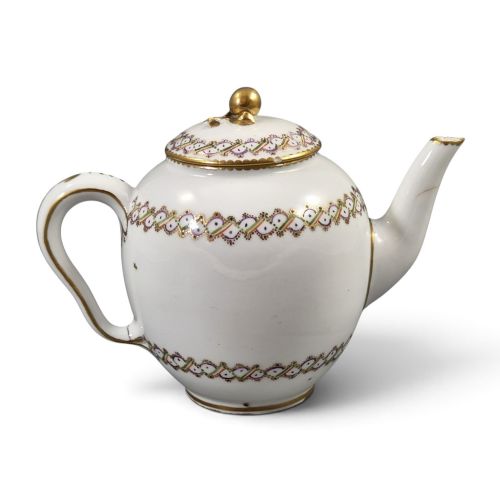
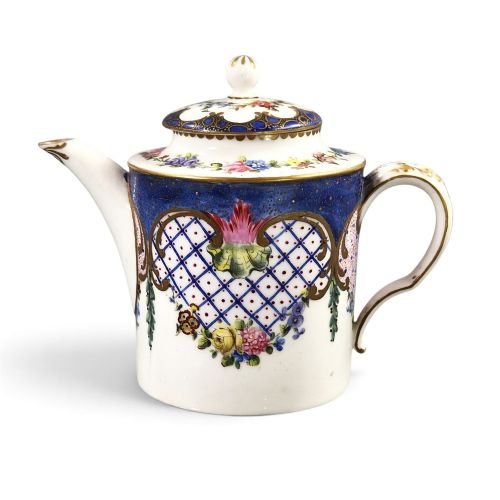
An 18th century porcelain teapot represents the pinnacle of Georgian ceramic production, designed to serve the era's fashionable hot beverage. The selection encompasses English soft-paste factories alongside Chinese export wares created for the British market.
Most examples take classic globular or oval forms fitted with fitted lids, often featuring floral knops or traditional loop handles. Collectors encounter iconic domestic patterns such as the fence design alongside vibrant enamel florals and blue and white foliate motifs.
These vessels bridge the gap between utilitarian kitchenware and cabinet display pieces. Their survival across three centuries demonstrates the enduring appeal of Georgian porcelain manufacture.
How they were made
Makers utilised soft-paste porcelain clay bodies, shaped either by throwing on a wheel or moulding in sections before firing. Glaze was then applied to create a smooth, vitreous surface ready for decoration.
Decoration relied on cobalt underglaze painting before the initial firing, or detailed overglaze enamels applied by hand and fixed in a muffle kiln. Gilding and gold leaf added final touches of luxury to select vessels.
Retail Price Guide 2026
Typical UK retail prices for 18th century porcelain teapot, calculated from the Sellingantiques database of over a million retail prices indexed since 2003. This retail price guide relies exclusively on Sellingantiques data; no external sources or auction records are used, so the figures do not describe the wider market.
The listings feature both English soft-paste factories and Chinese export wares, spanning the Georgian era with cobalt underglaze and enamel decoration.
What varies in quality
The sophistication of the painted decoration dictates the distinction between standard production and superior artistry. Freehand enamel flowers executed with precision display a higher standard of craftsmanship than repetitive factory patterns.
The condition of the glaze and the crispness of the porcelain body define the preservation of the piece. Subtle variations in the translucency of the soft-paste material and the exact alignment of matched covers reveal much about original studio standards.
Derby Porcelain·Lowestoft Porcelain
The 18th Century Porcelain Teapot Glossary
- Soft-paste porcelain
- A ceramic composition made from white clay mixed with ground glass and other materials, fired at lower temperatures than hard-paste. This body type yields a warm texture and subtle translucency.
- Cobalt underglaze
- Pigment applied to the unfired ceramic body before glazing and firing. The intense blue colour sinks into the glaze, producing a durable finish.
- Enamel
- Coloured glass powder suspended in a medium, painted onto fired glaze and fixed in a kiln. This technique allows for bright, polychrome floral decoration.
- Gilding
- The application of gold leaf or gold paint to ceramic surfaces. It highlights rims, handles, and decorative borders.
- Knop
- The small decorative knob situated on top of the teapot lid. It allows the user to lift the lid safely.
Frequently Asked Questions
Were these teapots used daily?
These vessels held a central place in Georgian domestic life for serving tea during social gatherings. Their survival suggests many were treated as prized possessions rather than everyday kitchenware.
Owners often stored them safely in tea chests or displayed them on sideboards when not in use.
What is Chinese export porcelain?
Chinese export porcelain refers to ceramics made in China specifically for European markets during the 18th century. These pieces often combined traditional Asian forms with decorative schemes tailored to British tastes.
They circulated alongside domestic English wares on Georgian tea tables.
How should I display an antique teapot?
Place the vessel in a stable cabinet away from direct sunlight and heavy foot traffic. Ensure the shelf supports the weight securely without putting pressure on the spout or handle.
Keep the environment at a consistent temperature to protect the antique glaze and enamel decorations.