
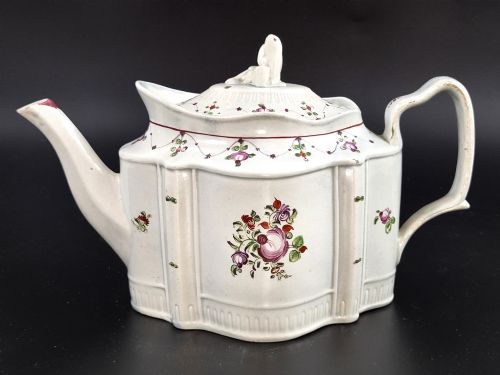
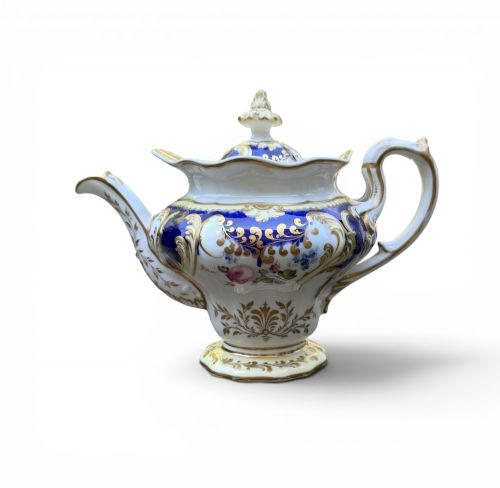
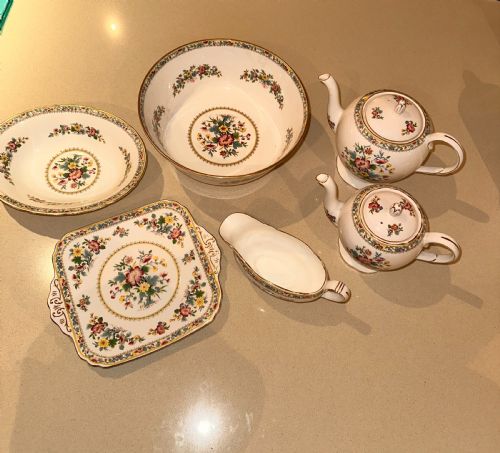


Hand Painted Floral Teapot
A hand painted floral teapot brings botanical colour straight to the table, uniting practical tea service with delicate hand-applied blooms.
Hand Painted Floral Teapot
A hand painted floral teapot sits at the heart of the table wares recorded across Georgian, Victorian, and later twentieth-century periods. These ceramic and porcelain vessels range from intimate tea-for-two sets to substantial breakfast pieces, often accompanied by matching cups, saucers, or broader dinner services.
Makers shaped these pots in distinct silhouettes including commode-shaped bodies, octagonal profiles, and rococo curves. Alongside traditional English pottery and porcelain, the selection includes Chinese export porcelain and pieces drawing on Japanese Meiji period or French design vocabulary.
The hand painted floral teapot tradition spans centuries of domestic use, remaining a central form for collectors of antique ceramics. Each piece displays individual brushwork depicting floral sprays, enamel highlights, and botanical motifs.
How they were made
Potters formed these teapots using earthenware, bone china, and porcelain bodies, shaping them on the wheel or moulding them in specialised Staffordshire and factory workshops. Artisans then applied enamel colours and gold leaf by hand before firing the pieces to fix the pigments beneath a clear glaze.
Detailing often included applied elements such as flower head knops, widow finials, and delicate gilding applied to rims and handles. Some vessels incorporated specialised surfaces like the blush ivory ground or intricate hand-painted polychrome decoration.
Listings feature porcelain, earthenware, and ceramic bodies decorated with enamel, gold leaf, and hand-painted floral motifs across multiple historical periods.
What varies in quality
The sophistication of the hand painting sets individual teapots apart, ranging from brisk, spontaneous brushwork to meticulously detailed botanical studies enriched with raised enamel and heavy gilding. Superior examples display precise control over the ceramic body and clean kiln work without heavy firing blemishes.
Factory origin and provenance influence the standing of a piece, with documented works from established porcelain manufactories commanding greater recognition. The crispness of moulded details, such as rococo scrolls or faceted octagonal edges, further distinguishes finer productions from standard domestic wares.
Derby Porcelain·Royal Worcester·Clarice Cliff·Thomas Wolfe Staffordshire·Spode porcelain·Thomas Harley
The Hand Painted Floral Teapot Glossary
- Enamel
- Opaque glass-like paint applied over the fired glaze and fixed in a muffle kiln. This technique allowed makers to achieve vibrant floral palettes on porcelain and earthenware.
- Gilding
- The application of gold leaf or gold paint to highlights, rims, and handles. It elevates the decorative scheme of a tea vessel.
- Knop
- The decorative knob positioned on the teapot lid. These often take the form of modelled flower heads or traditional geometric shapes.
- Commode-shaped
- A rounded, bulbous body profile popular in early nineteenth-century pottery. It provides generous volume for loose tea leaves.
- Famille rose
- A palette of opaque Chinese ceramic colours dominated by pink enamel. This style influenced export porcelain traded globally during the eighteenth century.
Hand Painted Floral Teapot: Frequently Asked Questions
Can I use an antique teapot for serving tea?
Many of these antique teapots remain structurally sound for holding hot water and serving tea during gatherings.
Thermal shock can crack older ceramic bodies, so warming the pot gently with warm water before adding boiling water helps protect the glaze and structure.
How do I clean a hand painted floral teapot safely?
Hand washing in warm water with a mild detergent is essential to preserve fragile enamel pigments and delicate gold leaf highlights. Dishwashers subject antique ceramics to harsh chemicals and high heat that will permanently damage the hand-painted decoration.
How do I date an antique teapot without a mark?
Dating relies on observing the ceramic body composition, handle shape, footrim finish, and the style of the floral painting. Comparing the potting technique and silhouette to dated pieces in historical records provides a reliable timeframe.
Why do some teapots include a wicker case?
Wicker cases provided insulation and protection for fragile ceramic or porcelain vessels during travel or storage. They were common additions for portable or oriental tea wares intended for safe handling.