
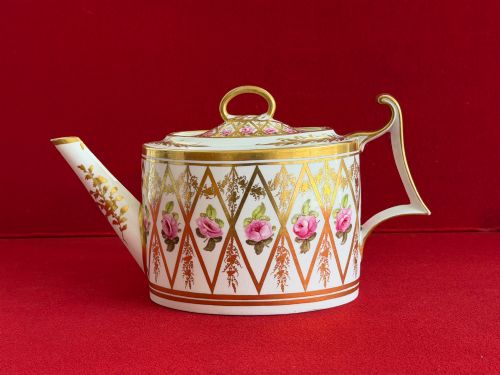
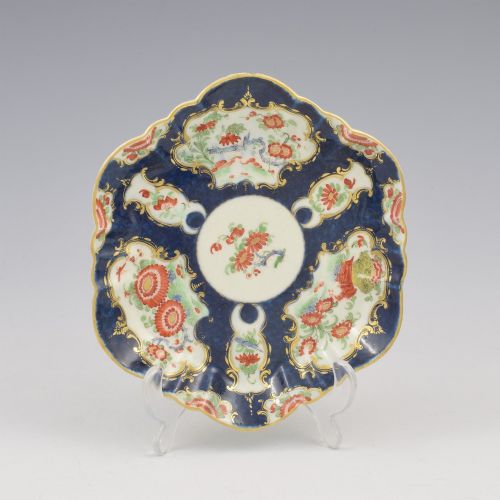
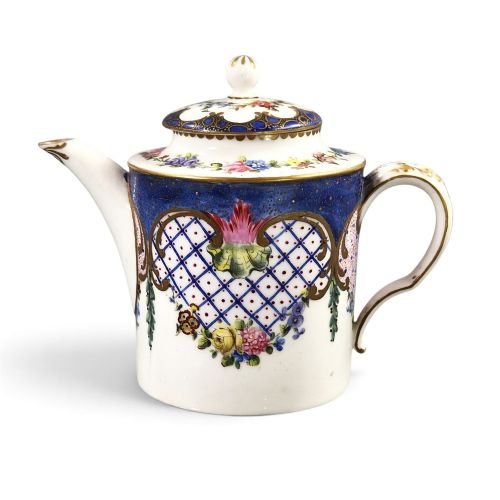
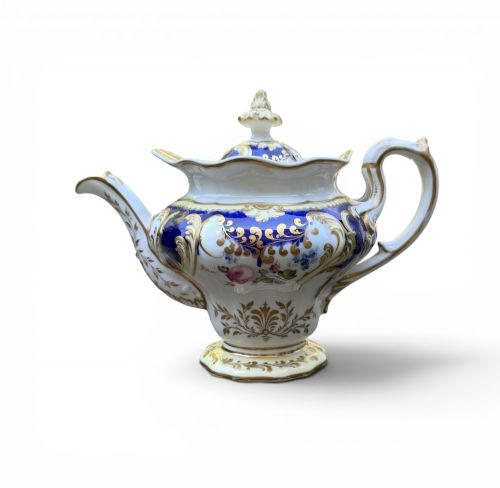
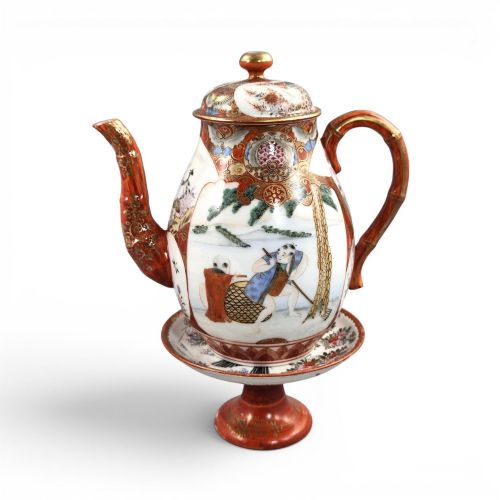
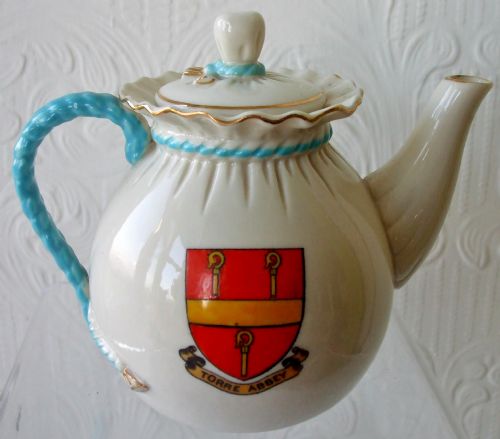
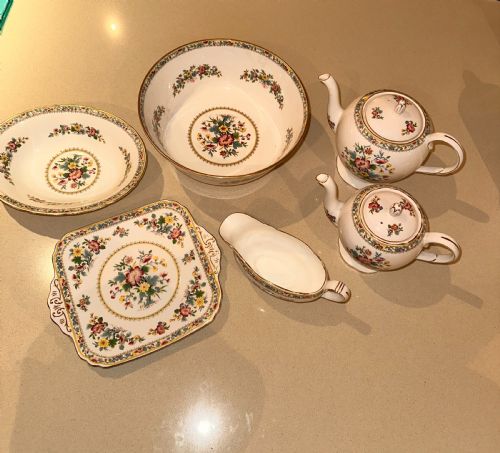

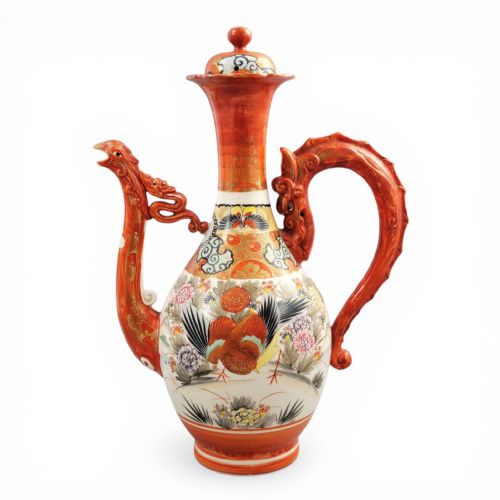


Gilded Porcelain Teapot
These gilded porcelain teapots bring gilt-enriched ceramic artistry from Georgian, eighteenth-century, and nineteenth-century workshops straight to the tea table.
What they are
A gilded porcelain teapot represents a fusion of fine ceramic body and applied gold decoration, designed for functional service or display. When searching for a gilded porcelain teapot, buyers encounter examples originating from English, French, and Chinese kilns spanning the late seventeenth to the mid-nineteenth century.
Makers and factories represented across the records include Derby and Royal Sèvres alongside broader English and Chinese traditions. Each piece reflects the specific decorative vocabulary of its period, from cobalt underglaze details to intricate gold leaf work.
How they were made
Potters shaped these vessels using hard-paste and soft-paste porcelain bodies, sometimes incorporating cobalt underglaze painting before the final glaze firing. Enamel colours and metallic gold leaf or liquid gilding were then applied over the glaze and fixed in a second, lower-temperature muffle kiln.
Hand-painting and meticulous brushwork dictated the precision of the decorative schemes, whether following rococo curves or geometric panel designs. Gilding was layered carefully onto the fired surface, often burnished to achieve a contrasting matte and bright finish.
Retail Price Guide 2026
Typical UK retail prices for gilded porcelain teapot, calculated from the Sellingantiques database of over a million retail prices indexed since 2003. This retail price guide relies exclusively on Sellingantiques data; no external sources or auction records are used, so the figures do not describe the wider market.
The listings span the Georgian, 18th Century, 19th Century, and 1700 periods, featuring porcelain, enamel, gilding, gold leaf, soft-paste porcelain, and cobalt underglaze.
What varies in quality
Quality in these teapots rests upon the purity of the porcelain paste, the delicacy of the potting, and the crispness of the hand-painted and gilded details. Superior examples exhibit precise symmetry in moulded forms and meticulous execution of gold leaf work that remains integrated with the underlying glaze.
The sophistication of the design composition separates standard production pieces from finer factory output, such as those from Sèvres or Derby. Well-preserved gilding with minimal rubbing demonstrates careful historical use and elevates the visual presence of the vessel.
The Gilded Porcelain Teapot Glossary
- Soft-paste porcelain
- A vitreous ceramic composition fired at lower temperatures than hard-paste porcelain, common in eighteenth-century European factories. It produces a warm, slightly softer glaze surface.
- Cobalt underglaze
- A blue pigment applied to the unfired ceramic body before glazing and firing at high temperatures. This technique ensures the colour remains permanently sealed beneath the clear glaze.
- Litron
- A straight-sided cylindrical cup or vessel form popular in neoclassical French porcelain production. The profile offers a clean canvas for elaborate enamel and gilt decoration.
- Rococo revival
- A nineteenth-century design movement resurrecting the asymmetric scrolls, C-curves, and naturalistic motifs of the mid-eighteenth century. It manifests in swelling body shapes and ornate handle designs.
- Gilding
- The application of gold leaf or powdered gold to ceramic surfaces for decorative enhancement. This finishing touch was standard on high-status teapots across multiple periods.
Frequently Asked Questions
What is a soft-paste porcelain teapot?
A soft-paste porcelain teapot is made from an artificial glass-and-clay composite fired at lower heat than true porcelain. This material creates a distinct tactile warmth and allows rich interaction with enamel colours.
Potters in eighteenth-century European factories utilised soft-paste bodies before hard-paste formulas became widespread. These pieces require gentle handling due to their specific material composition.
How do I date a gilded teapot?
Dating relies on identifying stylistic markers, factory marks, and the specific character of the ceramic body. Georgian and eighteenth-century pieces often display hand-potted irregularities and specific paste characteristics.
Later nineteenth-century examples reflect revival styles and more standardised manufacturing techniques. Comparing the gilding style and form provides further chronological context.
Were these teapots used daily?
Many gilded teapots served actual tea-drinking functions in period households, while others functioned primarily as display pieces in parlours. The presence of interior staining or wear often points to historical use.
Fine gilding meant owners frequently reserved them for formal entertaining. Today, collectors balance their historical utility with careful preservation.
How do I care for antique porcelain?
Antique porcelain requires hand washing in tepid water with mild soap, avoiding abrasive sponges or modern dishwashers. Secure storage away from direct sunlight protects the enamel and gold leaf.
Sudden temperature changes can stress old ceramic bodies and fragile glazes. Treating each vessel with physical care ensures the longevity of the surface decoration.