


Cobalt Blue Teapot
A cobalt blue teapot brings rich saturation and enduring ceramic craft to the tea table, uniting bold glaze with classic form.
Identifying a cobalt blue teapot
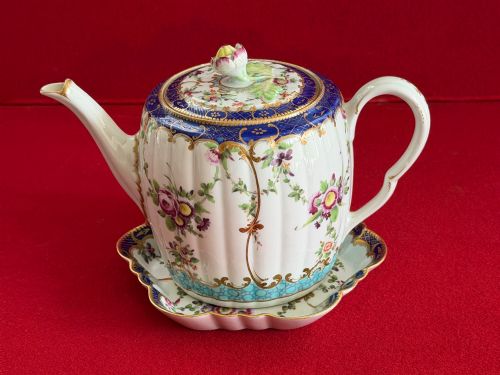
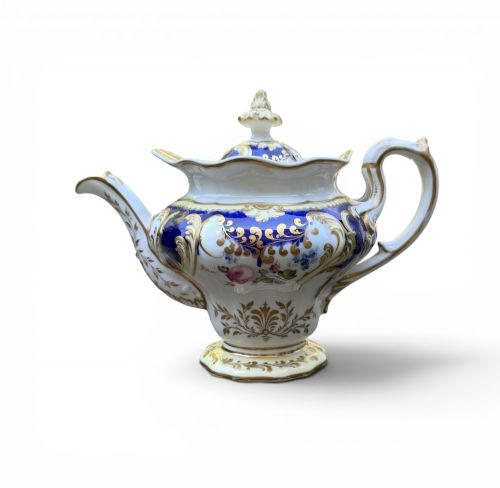
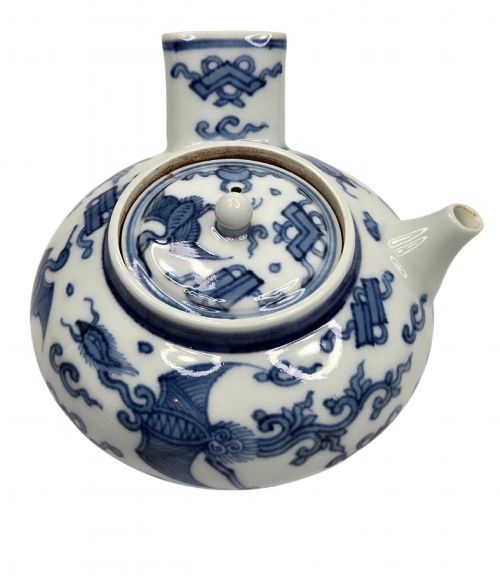
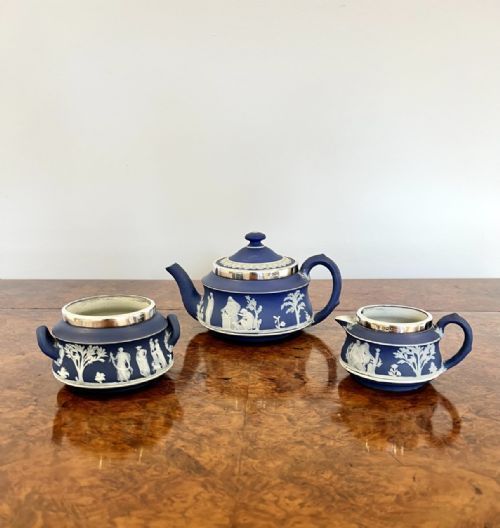
A cobalt blue teapot is a functional ceramic vessel designed for brewing tea, finished in a deep, metallic blue pigment beneath or over the glaze. The examples seen on this page span the Georgian, Regency, and nineteenth century periods.
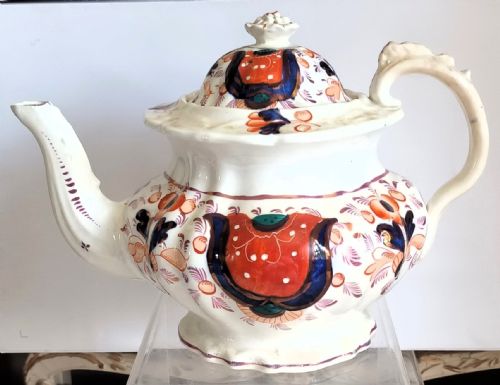
Forms range from barrel shaped bodies with matching stands to rococo revival profiles and hexagonal shapes in gaudy welsh patterns. These pieces demonstrate the varied output of English porcelain and earthenware manufacturers during the late eighteenth and nineteenth centuries.
Materials and construction
Makers utilised fine porcelain and earthenware as the foundational bodies for these vessels, shaping them into barrels, toy proportions, and geometric forms. The ceramic body was then fired to provide a stable base for decoration.
Surface ornamentation combines cobalt blue underglaze or enamel with hand applied gold leaf and gilding, alongside lustre glaze finishes. These decorative techniques required precise kiln work to fix the rich blue and metallic accents permanently to the ceramic.
Retail Price Guide 2026
Typical UK retail prices for cobalt blue teapot, calculated from the Sellingantiques database of over a million retail prices indexed since 2003. This retail price guide relies exclusively on Sellingantiques data; no external sources or auction records are used, so the figures do not describe the wider market.
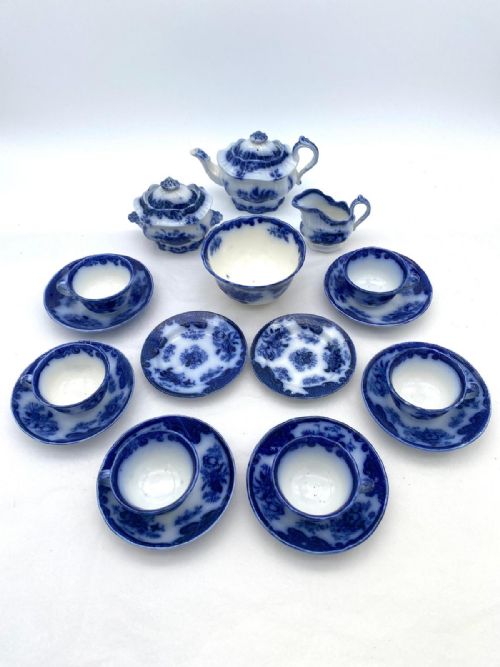
Toy teapots offered miniature luxury, letting Georgian and Regency collectors brew tea on a microscopic scale.
Assessing quality and execution
Quality rests in the precision of the form and the vibrancy of the cobalt pigment against the white ceramic ground. Superior examples display crisp moulding, particularly in rococo revival scrolls or barrel ribs, alongside controlled gilding that enhances rather than overpowers the design.
The refinement of the porcelain body and the complexity of the pattern deployment distinguish standard production from finer manufactory output. Enamel adherence and the crispness of painted motifs further separate ordinary vessels from those of notable artistic merit.
Spode
The Cobalt Blue Teapot Glossary
- Cobalt blue
- A deep blue pigment derived from cobalt oxide that remains stable at high kiln temperatures. It provides the characteristic rich hue seen across these ceramic bodies.
- Enamel
- Vitreous paint applied over the fired glaze and fixed in a muffle kiln at a lower temperature. This technique allows for a broader palette of supplementary colours on the teapot exterior.
- Gilding
- The application of gold leaf or gold paint to ceramic surfaces for decorative accent. On better pieces, this is burnished to achieve a subtle matte or bright shine.
- Lustre glaze
- A metallic glaze application that imparts an iridescent sheen to the ceramic surface. It reacts with metal oxides during firing to produce a reflective, rainbow effect.
- Rococo revival
- A nineteenth century design style characterised by asymmetrical scrolls, naturalistic curves, and ornate detailing. This aesthetic influenced the moulded contours of several teapots from the period.
Frequently Asked Questions
What is a cobalt blue teapot?
A cobalt blue teapot is a ceramic brewing vessel decorated with deep blue mineral pigments, appearing across Georgian, Regency, and nineteenth century eras.
These pieces showcase traditional forming methods, including barrel shapes, toy sizes, and hexagonal geometries.
How do I date a teapot?
Dating relies on stylistic markers such as rococo revival curves, Georgian proportions, and specific factory patterns recorded in the evidence.
Material composition, including the transition between refined porcelain and earthenware, also indicates the period of manufacture.
Were these teapots used daily?
Many vessels served practical functions in domestic households for tea service during the eighteenth and nineteenth centuries.
Smaller examples, such as toy teapots, often served decorative purposes or belonged to miniature cabinet sets.
How should I clean my teapot?
Careful washing with warm water and mild soap preserves the delicate enamel and gold leaf decorations found on these antique surfaces.
Avoiding abrasive scourers protects the historic glaze and maintains the integrity of the cobalt pigment.