


English Porcelain Teapot
An english porcelain teapot brings the warmth of eighteenth and nineteenth century tea tables into daily use.
English Porcelain Teapot
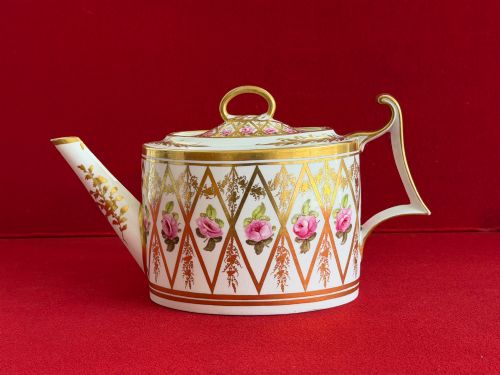
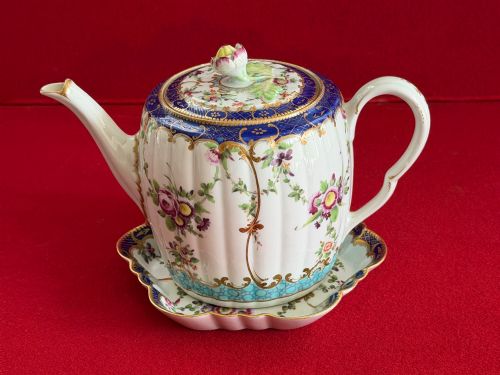
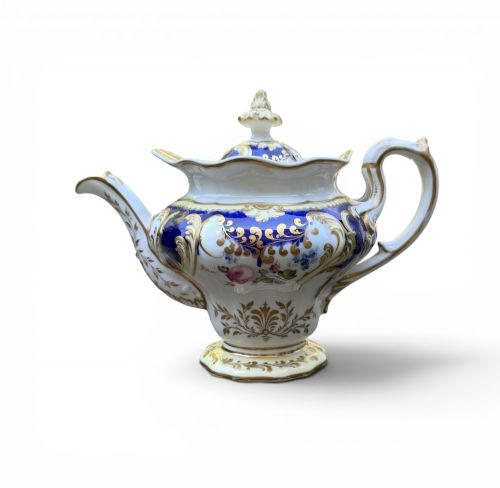
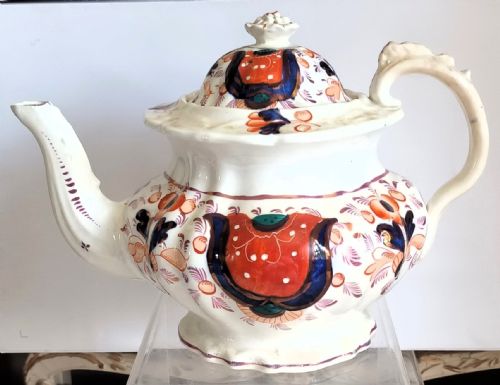
When you search for an english porcelain teapot, you encounter vessels originating from the eighteenth and nineteenth centuries, spanning Georgian and Victorian periods. The selection includes barrel shapes, oval bodies, and petite bachelor or solitaire sets designed for single drinkers.
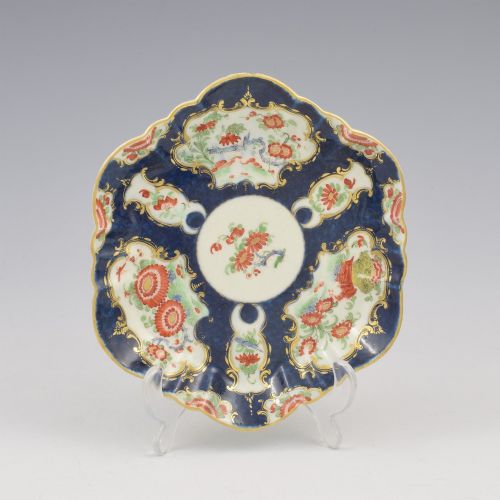
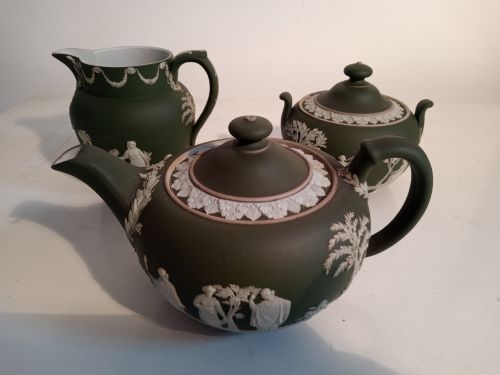
Most examples originate from prominent factories such as Worcester, Derby, and Royal Worcester, utilising traditional styles like Chinoiserie, Rococo Revival, and classical floral decoration. These pieces reflect the evolution of British ceramic manufacturing from soft-paste compositions to durable bone china and ironstone.
Materials and construction
Potters utilised soft-paste porcelain and bone china, shaping bodies on the wheel or moulding them in distinct barrel and panelled forms. Glazes were applied to seal the ceramic body before hand-painting enamels and applying gold leaf details.
Finishing touches often included moulded floral knops on the covers and intricate hand-painted motifs ranging from fence patterns to botanical studies.
Early potters occasionally included tiny perched birds as lid handles, adding a secret touch of life to the tea table.
Evaluating quality
Quality rests upon the precision of the hand-painting, the crispness of the moulded details, and the preservation of the original gilding and enamel colours. Early pieces demonstrate the subtle variations inherent in eighteenth-century kilns.
The sophistication of the pattern work and the translucency of the porcelain body distinguish standard production wares from exceptional factory output.
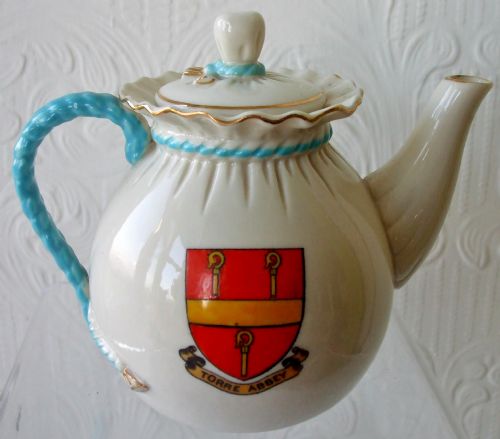
Derby Porcelain·Wedgwood·W.H. Goss·Royal Worcester·Thomas Wolfe Staffordshire·Philip Christian Liverpool·Masons Patent Ironstone·Spode porcelain·Mintons·Royal Crown Derby·New Hall Porcelain
The English Porcelain Teapot Glossary
- Soft-paste porcelain
- An early ceramic composition fired at lower temperatures than hard-paste, yielding a warm, creamy body beneath the glaze. It was widely utilised by eighteenth-century English factories.
- Gilding
- The application of gold leaf or gold paint to highlight rims, handles, and decorative motifs. On better pieces, this was burnished to a soft shine.
- Knop
- The small decorative knob on the lid of a teapot, often shaped like a flower head or bud for lifting. It is a key detail for dating and attribution.
- Chinoiserie
- A decorative style inspired by European interpretations of Chinese art, featuring figures, pavilions, and garden fences. This aesthetic was popular on eighteenth-century teapots.
- Ironstone
- A heavy, durable type of earthenware patented in the nineteenth century to imitate porcelain. It provided a robust surface for dense patterns.
English Porcelain Teapot: Frequently Asked Questions
How do I date an antique teapot?
Dating relies on identifying factory marks, paste compositions, and stylistic indicators such as Georgian Chinoiserie or Victorian Neoclassical forms. Hand-painted patterns and shape profiles provide further chronological markers.
Comparing the potting style and glaze characteristics with documented examples helps narrow the production window to a specific decade or period.
Can I still use these teapots for serving tea?
While many examples remain structurally sound, collectors generally display antique porcelain teapots to preserve fragile enamels and historic gilding. Thermal shock from boiling water can stress nineteenth-century soft-paste bodies.
Gentle handling ensures that delicate spouts and hand-painted surface decorations survive intact for future generations.
What is a solitaire or bachelor teapot?
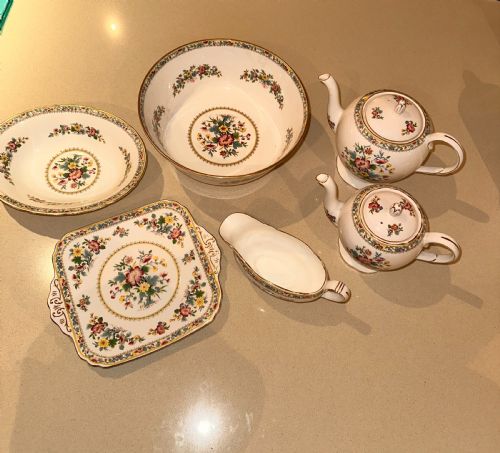
A solitaire or bachelor teapot is a smaller vessel designed to brew a single cup of tea, popular for private morning use or small sitting rooms. These compact pieces often form part of a miniature tea service.
They share the same decorative styles and manufacturing techniques as their larger counterparts but scale down the form for individual service.
What distinguishes soft-paste from bone china?
Soft-paste porcelain contains glass frit and white clay, creating a slightly creamy translucency that absorbs enamel colours softly during firing. Bone china incorporates calcined bone ash, producing a whiter, harder body.
Recognising this paste difference helps identify eighteenth-century origins from later nineteenth-century manufacturing methods.