
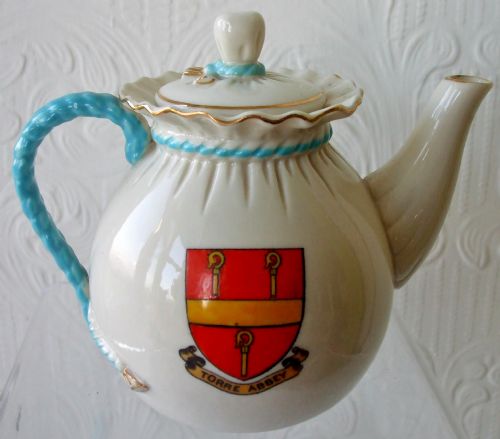


Antique Porcelain Tea Pot
An antique porcelain tea pot brings the warmth of eighteenth and nineteenth century parlours straight to the modern table.
Antique Porcelain Tea Pot
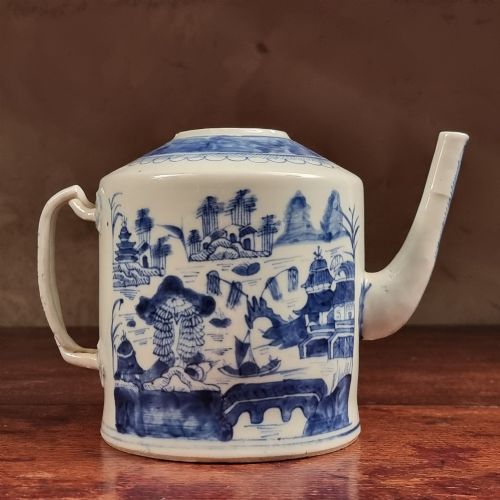
When you search for an antique porcelain tea pot, you encounter vessels shaped for brewing and serving hot infusions across generations of domestic life. The selection spans Georgian elegance through to Victorian and Edwardian revivals, alongside Chinese export wares made for the Western market.
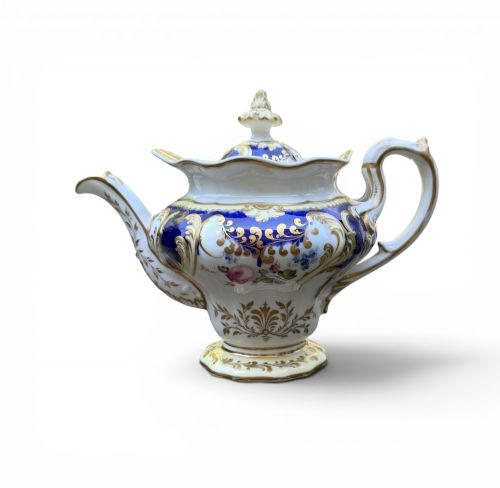
You are most likely to meet English factory pieces from the eighteenth and nineteenth centuries, featuring hand-painted floral motifs or cobalt blue designs. These range from utilitarian domestic tea pots to more elaborate cabinet specimens complete with matching covers.
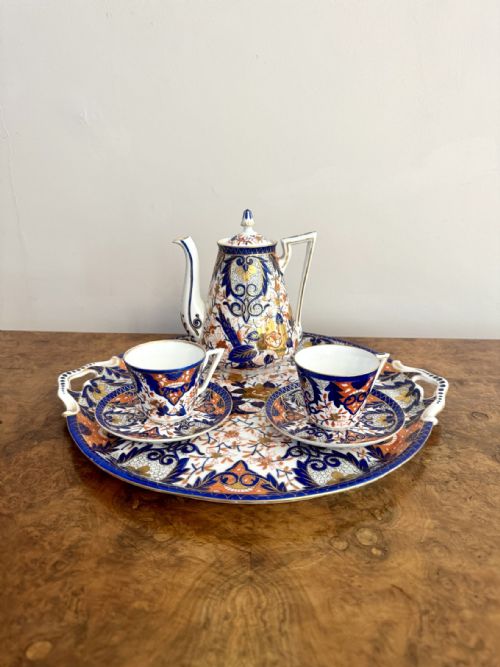
Forms extend beyond standard tea pots to encompass related coffee sets, sucriers, and biscuit barrels sharing identical ceramic traditions. Each piece reflects the social rituals of tea drinking that defined its era of production.
Materials and methods
Potters utilised hard-paste and soft-paste porcelain, shaping the body either by hand-throwing on a wheel or by pressing clay into intricate moulds. These ceramic bases provided a smooth white surface suited to both underglaze cobalt painting and delicate overglaze enamelling.
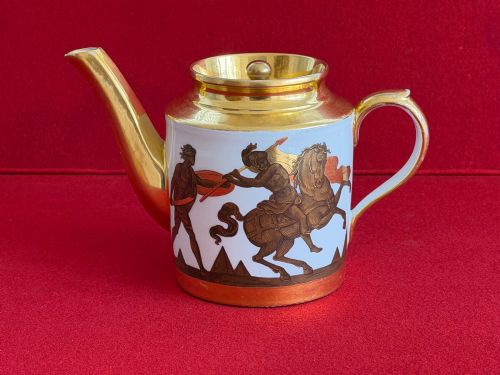
Decoration often involved hand-painted polychrome pigments, cobalt glaze, and applied gold leaf or heavy gilding fired in kilns to achieve a permanent lustre. Artisans frequently integrated wicker or silver-plated elements for handles and mounts on specific forms.
Some miniature and basket-weave tea pots include tiny wicker carrying cases for safe travel.
Assessing quality and finish
The standard of an antique porcelain tea pot depends heavily on the precision of the ceramic body and the clarity of the glaze. Finer examples display thin, translucent walls and meticulously balanced spouts and handles that integrate seamlessly with the main body.
Artistic execution dictates value at the upper end, where hand-painted details and intricate gilding show superior brushwork and compositional confidence. Pieces bearing factory marks or specific pattern numbers from established makers command greater attention from collectors.
Derby Porcelain·Spode Porcelain·Coalport·New Hall Porcelain·Russian Imperial Porcelain Manufactory·Thomas Wolfe Staffordshire·W.H. Goss·Ahrenfeldt & Asalvary·Ridgway
The Antique Porcelain Tea Pot Glossary
- Soft-paste porcelain
- An artificial porcelain composition fired at lower temperatures than hard-paste, common in eighteenth-century English factories. It produces a warm, creamy body that takes enamel colours brilliantly.
- Cobalt glaze
- A deep blue metallic oxide pigment applied beneath the transparent glaze before firing. It withstands high kiln temperatures without losing its intense colour.
- Sucrier
- A small covered vessel designed specifically for holding lump or granulated sugar. These often accompanied tea pots in matching ceramic services.
- Chinoiserie
- European artistic interpretations of Chinese and East Asian design motifs. This style frequently appears on Georgian and Victorian tea wares.
- Gilding
- The application of gold leaf or gold powder to ceramic surfaces for decorative accent. It was typically fixed by a secondary low-temperature firing.
Antique Porcelain Tea Pot: Frequently Asked Questions
How do I date an antique tea pot?
Dating relies on examining the factory marks, paste composition, and decorative style visible on the piece. Eighteenth-century examples often feature hand-painted underglaze blue, while Victorian pieces lean towards bolder polychrome transfers and heavier gilding.
Comparison with documented patterns from major English and continental factories helps narrow down the decade of manufacture. Shape and handle construction also evolve perceptibly across the Georgian and Edwardian periods.
Can I still use these tea pots?
While these vessels were originally made for daily domestic brewing, most collectors now treat them as display pieces or handle them with extreme care. Hairline fractures and historic repairs mean thermal shock from boiling water can easily damage fragile antique ceramic bodies.
If you do choose to use one, warm the pot gradually with tepid water first to minimise stress on the historic glaze and soft-paste or hard-paste body.
What is Chinese export porcelain?
Chinese export porcelain refers to ceramics manufactured in China specifically for trade and export to European markets from the seventeenth through the nineteenth centuries. These pieces combined traditional Eastern potting techniques with shapes and motifs requested by Western buyers.
Famille rose and blue and white designs from reigns such as Qianlong frequently appear alongside European-ordered armorials and tea service forms.
What is a coffee service?
A coffee service is a matched set of vessels designed for serving coffee, typically including a tall pot alongside matching cups, saucers, and sometimes a sugar bowl. These sets were produced by major European porcelain manufactories for formal hospitality.
They share the same ceramic bodies and decorative patterns as contemporary tea pots but feature taller, more slender vertical forms.