

Geometric Carved Oak Dresser
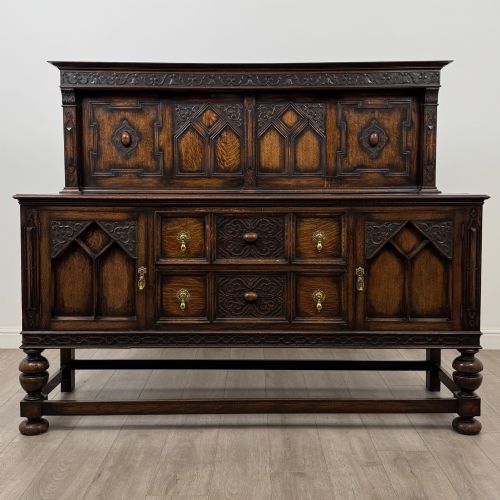
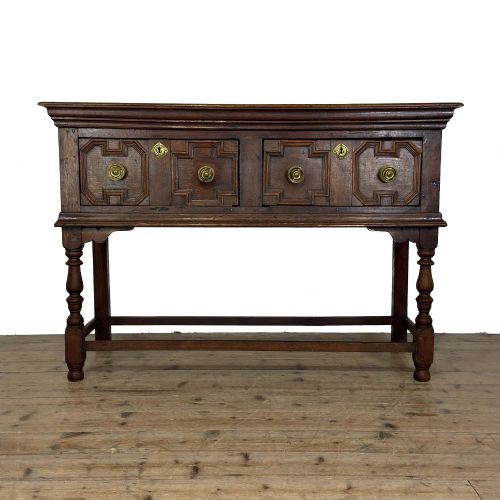
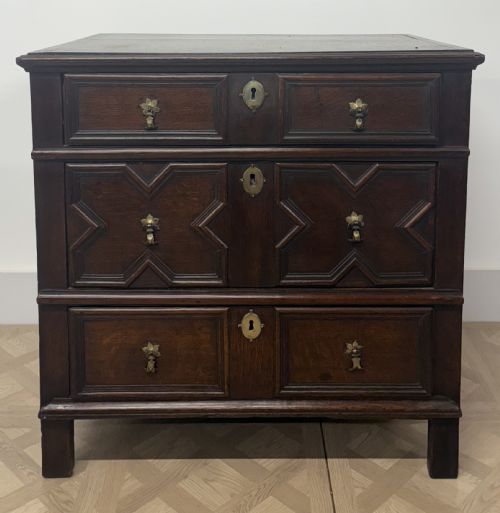
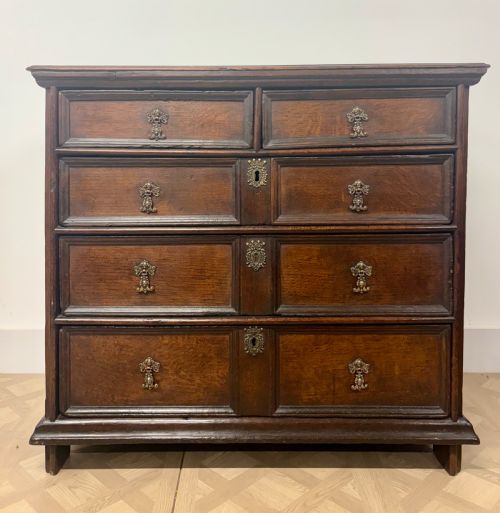
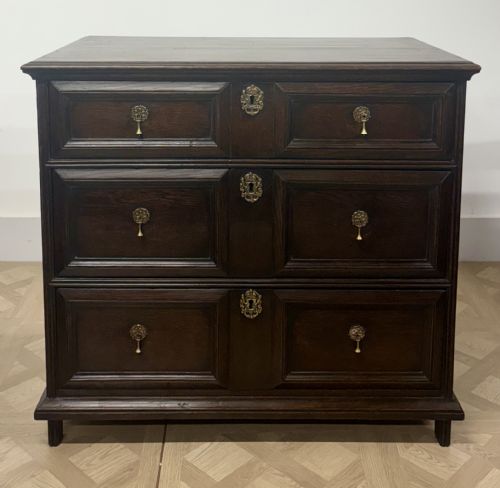
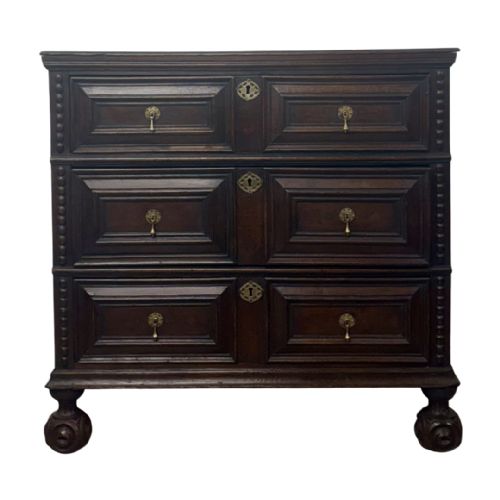
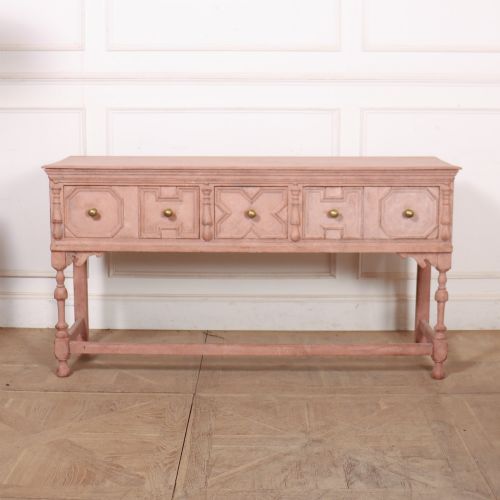
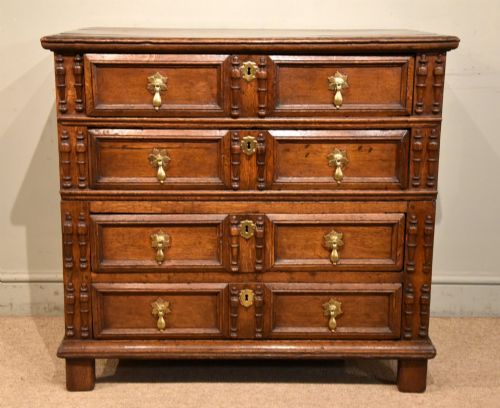
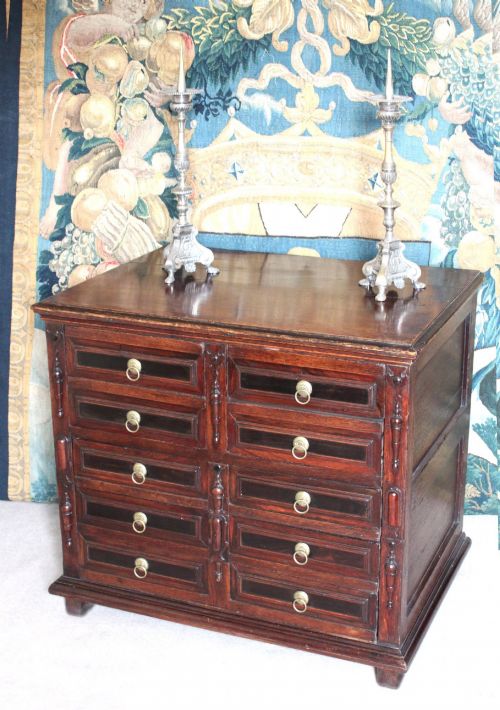
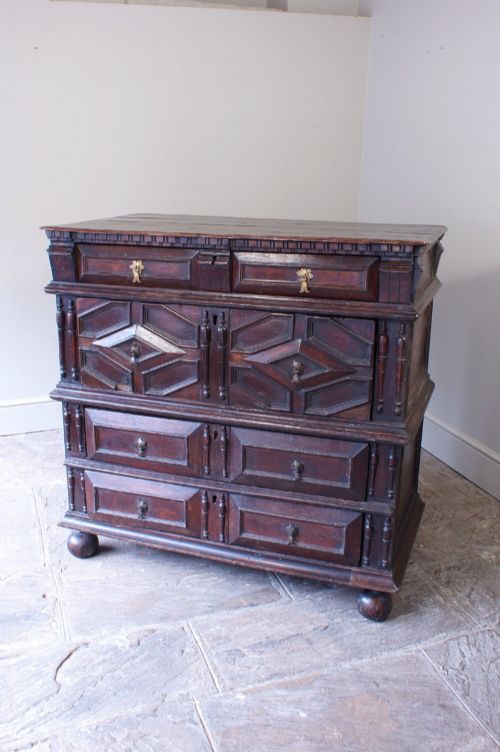
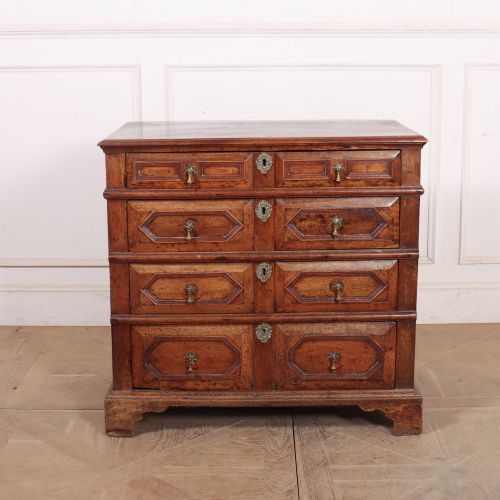
A geometric carved oak dresser brings substantial timber and disciplined symmetry into a room through deeply articulated drawer fronts.
Geometric Carved Oak Dresser
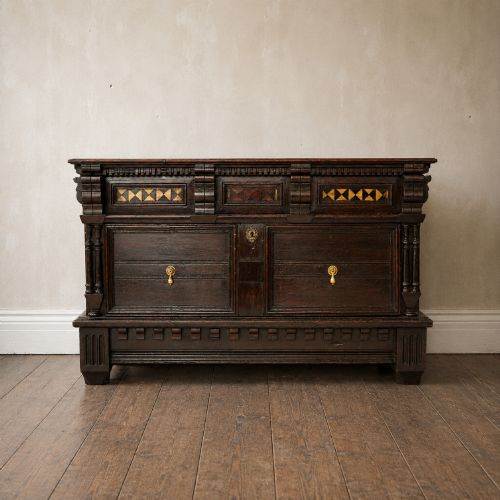
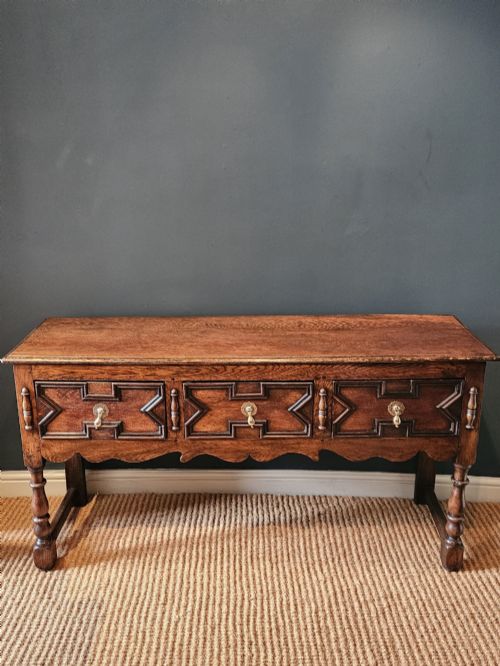
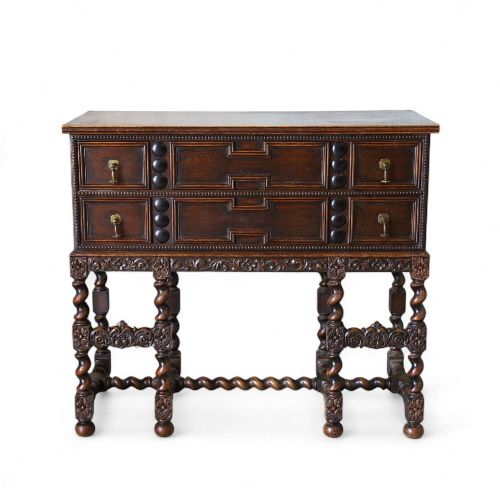
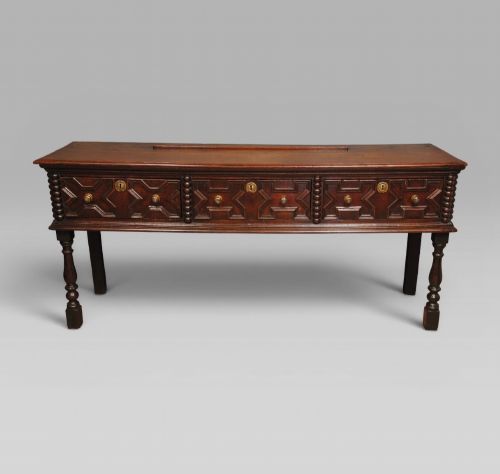
The versions met most frequently on this page date from the seventeenth century, particularly the Charles II period, alongside later nineteenth and twentieth-century revival interpretations. Collectors encounter sideboard formats, two-part chests, and low dresser bases featuring the characteristic panelled and moulded drawer configurations that define the search phrase.
Materials and construction
Makers utilised solid oak for the primary carcases and drawer structures, frequently combining it with walnut or wood inlay to create contrasting tones on decorative surfaces. Brass hardware, iron fixtures, and occasional painted finishes complete the construction of these robust items.
The signature geometric effect relies on applied mouldings fixed to drawer fronts in rectilinear, block front, or panelled patterns. Joinery techniques from the seventeenth century involve framed construction and pegged joints, while later revival pieces adapt these established methods.
Makers spent hours gluing tiny geometric blocks onto drawer fronts just to make sure future generations would spend hours staring at them.
Judging the standard
Quality rests upon the crispness of the applied geometric mouldings and the integrity of the timber framing. Crisp, deep relief work on drawer fronts and original brasses elevate an example above later assembled or heavily altered pieces.
The harmony between the secondary woods, such as walnut accents, and the primary oak structure dictates the visual success of a dresser base. Cohesion in the proportion of the drawers and the retention of period mounting hardware distinguish finer examples from standard workshop output.
The Geometric Carved Oak Dresser Glossary
- Geometric moulding
- Applied wooden strips arranged in repeating rectangular or panelled patterns on drawer fronts. This technique defined seventeenth-century decorative joinery.
- Dresser base
- A low utilitarian table form featuring drawers beneath the main surface, lacking the upper plate rack. It functions as a sideboard or serving table.
- Block front
- A drawer front configuration divided vertically into distinct planes where sections project forward. It creates pronounced depth and shadow across the furniture face.
- Barley-twist
- A turned column or support carved in a helical spiral resembling a twisted rope. This detail appears frequently on later revival furniture supports.
- Two-part chest
- A cabinet constructed in two separate modular sections stacked vertically to ease transport. The division typically occurs horizontally through the middle of the carcase.
Geometric Carved Oak Dresser: Frequently Asked Questions
How do I date a geometric carved oak dresser?
Dating relies on examining the construction methods, timber patination, and the specific style of the applied mouldings. Seventeenth-century pieces display hand-riven timber and period joinery, whereas revival items from the nineteenth or twentieth century show standardised machine sawing.
Hardware placement and the presence of secondary woods like walnut provide further chronological indicators. Comparing the drawer linings and backboards helps distinguish genuine seventeenth-century execution from later copies.
Where should I place a dresser base at home?
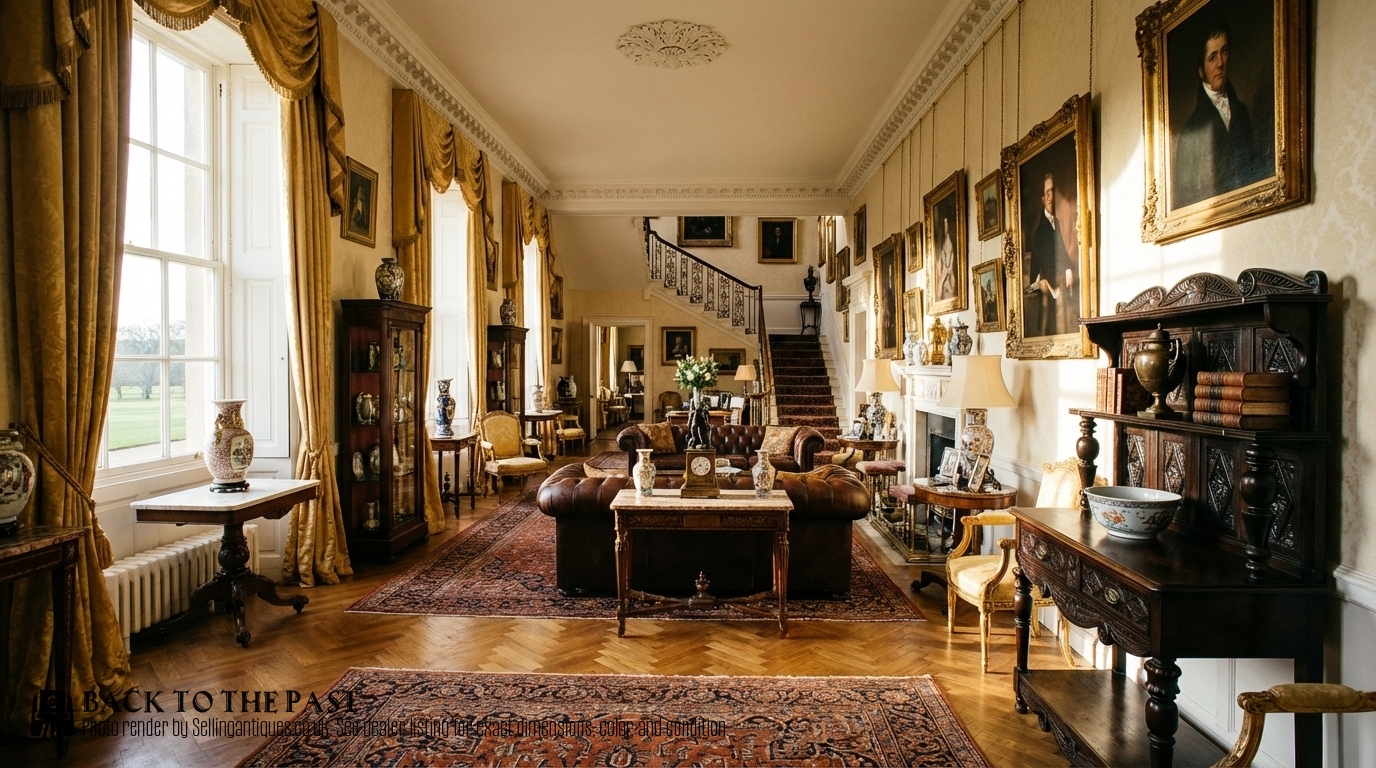
These low units suit dining rooms as sideboards or living areas where substantial wooden furniture anchors the floor plan. Their depth requires adequate clearance for drawer operation and foot traffic.
Keeping them away from direct heat sources protects the dry oak timber from splitting. The surface offers sturdy display space for ceramics or lighting.
Are these dressers used for kitchen storage?
While historic servers and low dressers originated for domestic food preparation and serving, modern interiors utilise them primarily for living room or dining room storage. Their deep drawers accommodate linens, tableware, or household items.
The sturdy oak construction easily bears the weight of stored goods. Placing them in kitchens requires careful management of humidity to protect the antique wood.
What is the difference between an original and a revival piece?
Original pieces from the seventeenth century exhibit the tool marks, wear patterns, and timber shrinkage consistent with centuries of age. Revival items, produced during the Victorian or Edwardian eras, replicate these historical styles using contemporary workshop tools.
Examining the internal drawer construction and nail types reveals the manufacturing era. Both categories offer functional storage while representing different periods of craftsmanship.